




You didn't know it was the last time.
That's the part nobody warns you about — not the final whistle, not the locker room after, not even the drive home in silence. The part that stays is the not-knowing. You walked off that field, that court, that mat, and somewhere in the back of your mind, you may have thought: there's always next season. Except there wasn't. And now, years later — or maybe just months — you're still carrying something from that game you haven't quite named yet.
Processing your last high school game is one of the more underrated emotional tasks an athlete ever faces. Most of the conversation around it gravitates toward grief: what you lost, what ended, what you'll never get back. And that framing is real. But it's incomplete. Because what actually happened in that final game — regardless of the score, regardless of whether you even knew it was your last — was a story reaching its first major turning point. Not its ending.
This is a framework for reading that story correctly.
The Game You Didn't Know Was Goodbye
There are two versions of the last game. In the first version, you knew. Senior Night, maybe. A final playoff exit. A retirement decision made before the season ended. You walked into it with some awareness that the clock on this chapter was running out, and you had time — a little, anyway — to feel that weight as it happened.
In the second version, you had no idea. A regular-season game. A mid-season injury that pulled you off the field and never let you back. A roster decision. A pandemic that canceled the season before it started. You didn't get the slow-motion moment. You got an ordinary Tuesday that turned out to be everything.
Both versions leave something unresolved. But they leave it in different places.


If you knew it was coming, the unresolved thing tends to live in how it happened — the performance, the outcome, the things you wish you'd done differently in that specific moment. If you didn't know, the unresolved thing lives in the absence of a moment at all. There was no ceremony. No conscious last breath of it. You were in it, and then you weren't.
In our experience working with athletes who've wanted to honor their playing days with a custom jersey, the ones still carrying the most weight aren't always the ones whose teams lost. They're often the ones who never got to say goodbye — to the game, to the teammates, to the version of themselves that showed up every day and did the work.
The first step in reading your last game correctly is knowing which version you lived.
What Your Last Game Was Actually Made Of
Here's the thing about final game memories that most reflection guides miss: the game itself is almost never what the memory is really about.
When you close your eyes and go back to that last time you played, what do you actually see? Most athletes, when they sit with this honestly, don't see the scoreboard. They see:
- The specific light at that time of day, in that specific season
- The weight of someone else's hand on their shoulder — a coach, a teammate, a parent
- A sound. The crowd, the sneakers on the floor, the specific crack of a ball off a bat
- Their own hands. Taped, or chalked, or just cold
These details aren't peripheral. They are the memory. And what they're encoding isn't just a sports result — they're encoding who you were in that moment. Your particular combination of nervousness and readiness. The specific team you'd built relationships with over years. The version of your body that had been trained to do something specific and knew how to do it without thinking.
That's the thing the grief framework misses. It focuses on what ended. But these details — the light, the sound, the hands — they didn't end. They became part of how you understand yourself.
The end of your sports career, when you reach it, is not the deletion of everything that came before it. It's the moment all of it gets sealed in. Preserved, actually. Unchangeable in the best possible way.
The Narrative Framework: Reading Your Last Game as a Founding Story
Joseph Campbell spent decades studying the stories cultures tell about themselves and found a consistent structure underneath nearly all of them: the ordinary world, the challenge, the guide, the transformation, and the return. The hero doesn't end at the climax of the story. They return — changed, capable of things the person in the ordinary world couldn't have done.
Your last game is not the climax at which the story ends. It is the moment of transformation — the specific event that marks the line between who you were becoming and who you now are.
Here is a concrete way to map your last game onto that arc:
1. Name the Ordinary World you left. Before that final season — before that final game — what was normal? What was the daily texture of being an athlete in your sport? Early mornings, specific smells, the routine of practice, the particular dynamics of your team. That ordinary world built something in you. Name it specifically. Not "it taught me discipline" — what specific habit, what specific threshold of discomfort, what specific way of showing up did that world build into you?
2. Name the Challenge the game presented. Not just the opponent. The internal challenge. Were you playing through something — injury, doubt, a team dynamic that was fraying? Were you trying to prove something to yourself? Were you trying to hold something together? The challenge inside the game is almost always more defining than the external score.
3. Identify the guide who showed up. Every athlete's story has at least one. A coach who said something that stayed. A teammate whose presence made the difference. A parent in the stands you could feel without looking. Sometimes the guide is a moment of internal clarity — a breath between plays where you suddenly knew exactly what you were doing. Who or what guided you through the challenge of that final game?
4. Name the transformation. This is the hardest one, and the most important. What is different about you because that game happened — because that entire career happened and ended there? Not what you wish were different. What is actually different. What can you do, tolerate, or understand now that you couldn't before?
5. Describe the return. The hero doesn't stay at the peak. They come back. You came back — to school, to work, to relationships, to a life that no longer had practice schedules in it. What did you bring back? What did the return feel like, and what does that feeling tell you about the value of what you carried out of the sport?
One Athlete's Story
Maya T., 24, was a competitive swimmer who finished her high school career at a mid-season regional meet her senior year — not a championship, just a regular qualifying event that turned out to be her last. She didn't make the cut for states. She drove home with her parents, ate dinner, and went to bed thinking she'd train harder over the winter.
Then a shoulder injury in November ended it. No farewell meet. No Senior Night in the water. Just a Tuesday in November when her orthopedist said the word "surgery" and her swimming career quietly closed.
What Maya said, years later, was this: "The grief framework made me feel like I'd lost something. The story framework made me realize I'd built something. The injury didn't take away the years. It just meant I didn't get to choose the last chapter."
She eventually had a jersey made — not her state championship team's jersey, but her club team's colors, the ones she'd worn from age nine. She keeps it framed in her apartment. It's not a trophy. It's a founding document.
The Three Questions That Unlock the Memory
Processing the last time you played doesn't require a therapist or a journal prompt system (though neither of those hurt). It requires answering three questions with specificity rather than sentiment.
Question 1: What did you prove in that game — to yourself, not to anyone watching?
The audience's verdict on your performance is almost never the one that matters most. What verdict did you reach? Not about your talent, but about your character. Were you someone who showed up when it was hard? Someone who stayed composed or someone who lost composure and learned from it in real time? Both of those are worth knowing.
Question 2: Who were you on that team, and is that person still operating inside you somewhere?
Athletes often describe a specific version of themselves that only existed in the context of their team. The communicator. The anchor. The one who held the energy. The one who asked the questions everyone else was afraid to ask. Where does that person show up now? In your work, your relationships, the way you handle pressure? Locating that person in your current life is one of the most productive things you can do with a final game memory.
Question 3: What would you tell the version of yourself who was about to play that last game?
Not "enjoy it" — that's sentimental but not useful. What specific thing would you tell them? "You already know more than you think you do." "The outcome isn't the point." "Pay attention to [specific moment or person]." That answer tells you what you actually learned — and what part of the experience you're still integrating.
Why the Story Doesn't End There
The biggest misconception about the end of a sports career — at any level — is that what's lost is the identity. The athlete identity, specifically. And yes, there's a version of that loss that's real. The structure, the belonging, the clear metric of performance.
But identity isn't a jersey you hand in at the end of the season. It's a set of neural pathways carved by years of showing up, competing, losing, recovering, and trying again. Those pathways don't dissolve when the sport ends. They go looking for new terrain.
The athletes who navigate this transition best — in our experience engaging with this community — are the ones who recognize that their playing career wasn't where their story happened. It was where their character happened. And character, unlike eligibility, doesn't expire.
Your last high school game was the final entry in a specific chapter. But you've been writing with that chapter's lessons ever since, whether you recognized it or not.
The score of that game is almost certainly not what you remember most vividly. What you remember is something harder to quantify and far more durable: the specific texture of what it felt like to be fully committed to something. To be part of something larger than your individual performance. To know exactly who was counting on you and to show up anyway.
That's not a sports memory. That's a self-knowledge document. And it belongs to you permanently.
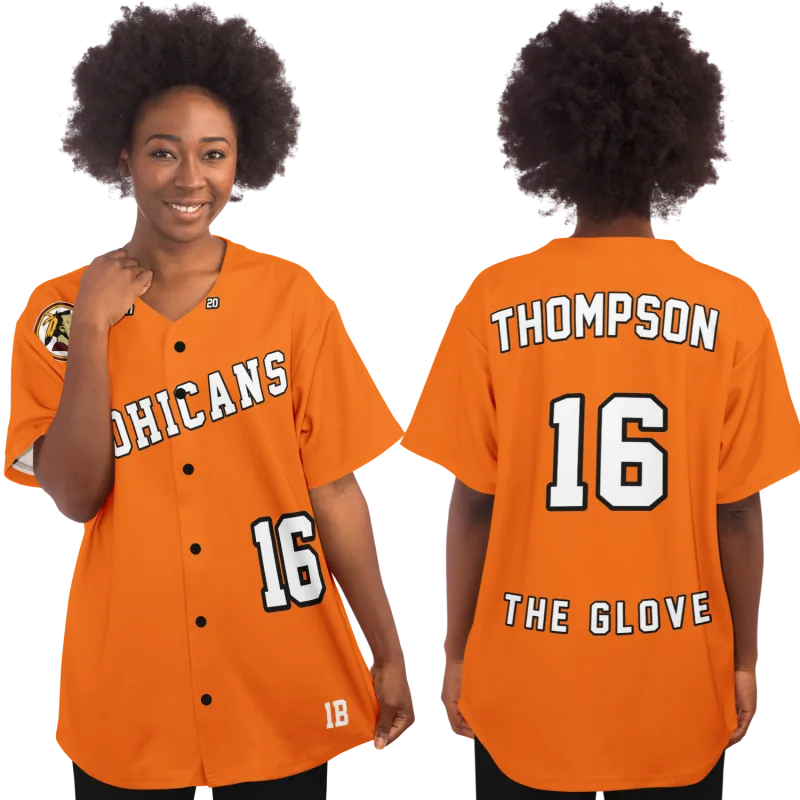
Your jersey is still out there waiting.
Design yours in minutes and see your name and number exactly the way you remember it.
Frequently Asked Questions
How do I start processing my last high school game if I never got proper closure?
Start with the specific detail, not the feeling. Close your eyes and locate one sensory memory from that game — the sound, the light, a specific moment before or after play. Then ask: what does this detail tell me about who I was in that moment? Closure isn't a ceremony; it's a recognition. You can create that recognition at any distance from the event itself. The founding story framework above gives you a structured way to do it without needing the goodbye you didn't get.
Is it normal to still feel emotional about my last game years later?
Completely. The research on athletic identity — including work published through the Journal of Sport Behavior — consistently shows that former athletes who strongly identified with their sport often carry unresolved emotional material from their exit for years, especially when the exit was abrupt or unrecognized. What's worth examining isn't whether you feel it, but what you're feeling. Grief, yes. But also, often, pride, longing, and a complicated form of gratitude that doesn't fit neatly into either. All of those are valid entries in the same story.
What if my last game was a bad performance or a painful loss? Does that change the story?
It changes the texture of the story, not its value. Some of the most formative athletic memories are the ones where things went wrong — where you faced something beyond your ability to control and had to decide who you were going to be in that moment. A difficult final game is often the one that generates the most useful self-knowledge, precisely because it stripped away the comfortable version of the outcome and left you with something rawer and more honest. The question isn't "was it a good game?" The question is "what did that game reveal about you?" That answer is almost always worth having.
What if I played multiple sports — which "last game" do I process?
The one that still carries the most emotional weight when you think about it unprompted. You already know which one it is. Start there. The framework applies identically regardless of sport, and the founding story questions are specific enough that working through one sport's final chapter often creates clarity about the others as well.
See also: the grief that comes with the end of your athletic career | why your senior season memories feel so permanent and clear | the athletic identity you carried long after the final whistle | why high school sports still matter so deeply to the adults who played