

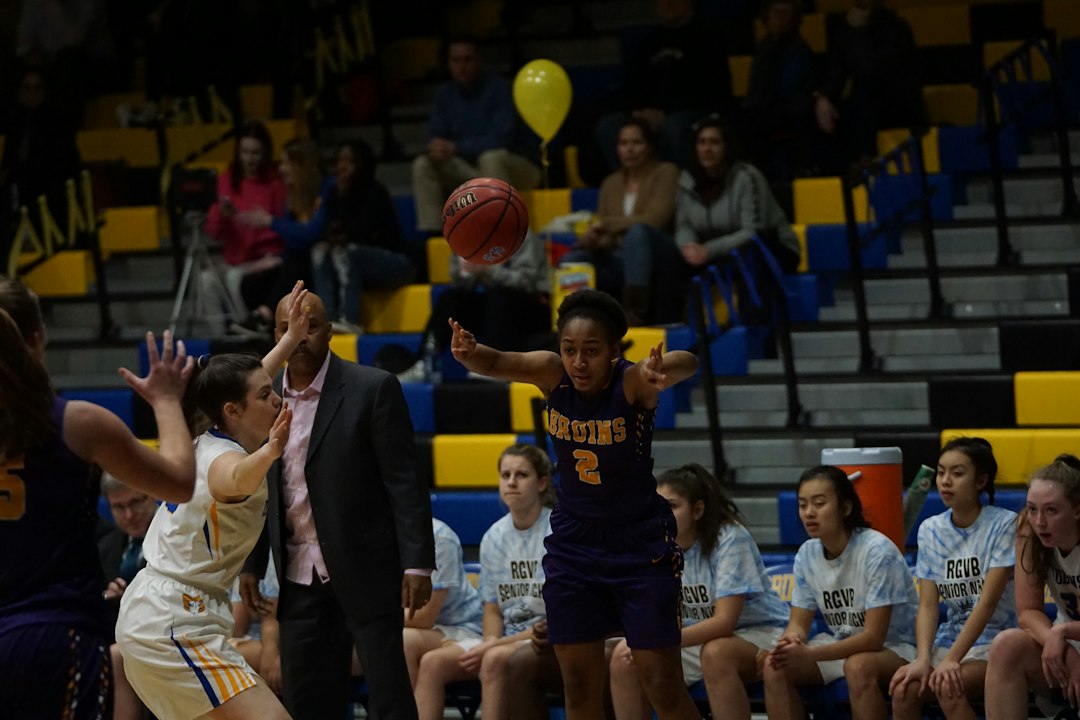




There's a moment during senior night basketball when the gym gets quiet in a way it never has before—not the quiet before a big game, not the quiet after a bad loss. A different kind of quiet. The kind that settles over a place when everyone in it understands, at the same time, that something is ending.
You've been in this gym hundreds of times. You know the squeak of the floor near the free-throw line on the south end. You know which light flickers when the heat kicks on. You know the smell of it—sweat and rubber and old wood and something you could never name but would recognize anywhere for the rest of your life.
Tonight is the last home game. And the last home basketball game is nothing like you thought it would be.
The Ceremony Starts Before You're Ready
Most seniors will tell you the same thing: they thought they were prepared. They'd watched the ceremony happen for older players. They'd stood in the stands and clapped and assumed that when their turn came, they'd hold it together.
They were wrong.
The senior night ceremony begins in the locker room, really—before you're introduced, before your parents walk out, before the announcer finds his mic. It begins when someone on the team says "this is the last time we do this" and points at the whiteboard where the coach has written the game plan. The last time for this whiteboard. The last time for this locker room configuration with these specific people standing in these specific spots.
When you jog out for warmups, something is different and you can't locate it precisely. The gym is fuller than usual. Parents who usually sit in their regular spots are down near the floor. There are flowers somewhere. Someone's mom is already crying, and the game hasn't started.


The warmup layup lines feel strange because you're paying attention to them in a way you never have. You've done this ten thousand times. Tonight you're counting them.
When They Call Your Name
The ceremony itself—the formal part, the senior night ceremony that every school does in some version of the same way—takes maybe twenty minutes. You'll remember it for the rest of your life.
They line you up in the tunnel or the hallway or behind the bleachers, depending on the gym. Someone hands you a flower or a small gift or a framed photo. You stand with your parents on either side of you, or the people who filled that role, or just the parent who was there through all of it.
The announcer reads what your coaches and teammates submitted about you. He gets the pronunciation right or he doesn't. He calls you by your first name and your number and the year you started, and something about hearing that number—the number you picked or were assigned four years ago—lands differently now. That number is almost retired. It won't be yours much longer.
You walk out to the center court. The crowd claps. Your teammate puts his arm around you for a photo. Your mom is doing the thing she promised she wouldn't do.
And then it's over. Thirty seconds. A minute at most. And you walk back and they call the next name.
The brevity of it is what gets people. You spend four years building toward something, and the acknowledgment lasts about as long as one possession of basketball.
What the Parents Are Feeling That You Don't Fully See
Marcus T., 44, has two daughters who played high school basketball in suburban Ohio. His younger daughter's senior night was the one that broke him—not because it was harder than expected, but because he'd been quietly dreading it since the first practice of her freshman year.
"I watched her walk out to half-court with her mom and I just thought: I drove her to her first practice at eight years old. Now she's walking out there as a senior and I don't know where that time went. I don't know what happened to it."
That's what the parents are carrying out onto the court with them. They're not just there for a ceremony. They're there holding every early morning and every long drive and every game they rearranged their life to attend. They're there holding the version of you that was eight years old and could barely dribble with their left hand. They're there holding the argument you had sophomore year and the conversation that fixed it and the way you got better after that.
When your parent walks out next to you on senior night, they're not walking a straight line from the sideline to center court. They're walking across the entire arc of your basketball life. And they're doing it in about twelve steps while trying not to trip on the floor your coach just told them not to touch.
The Last Home Basketball Game Itself
Here's what nobody really prepares you for: the game after the ceremony.
You still have to play. The gym is more emotional than it's ever been, your parents are in seats they don't usually sit in, and now you have to go compete—to box out, run the plays, talk on defense—as if this is just another Tuesday.
Except it isn't. And you know it. And your teammates know it. And even your opponents, if they're paying any attention, know it.
The last home game has a texture to it that's hard to describe without sounding dramatic, but here it is anyway: every play has a shadow version of itself. When you hit a shot, there's a fraction of a second where you think that might be the last shot I make in this building. When you turn the ball over, you think I don't want that to be one of the last things I do here. When you hear your name in the crowd, you listen differently because you're counting.
Some seniors play the best game of their career on senior night. Some play poorly. Most play somewhere in the middle. What almost all of them say afterward is that they weren't fully present in the game—that part of them was already somewhere else, watching.
That's not a failure of focus. That's just what it is to be human in a moment that you know is finite.
Walking Off the Court for the Last Time at Your Home Gym
The final buzzer sounds.
Win or loss, there's a version of this moment that you don't get a second take on. You walk off the court. You cross that end line. And you are no longer a player on that floor.
In our experience talking with players and parents and coaches across high school basketball—and it comes up consistently enough to say out loud—the walk off the court at the final buzzer of the last home game is the moment that hits hardest. Not the ceremony. Not the announcements. The walk.
Because the ceremony is structured. Someone is telling you where to stand and when to smile. But the final walk off? That's just you and the floor and the particular weight of a door closing on something that won't open again.
Some players slow down without realizing it. Some look back at the court once and then don't look back again. Some go straight to their parents and some stand with their teammates and some find a corner of the locker room and stay there for a minute by themselves.
All of them are doing the same thing: they're processing the fact that it's over.
There's a specific grief to walking off a court you love for the last time as a player that doesn't have a clean name. It's not sadness exactly—though there's sadness in it. It's not regret, though sometimes there's that too. It's more like the feeling of having arrived at the edge of something you didn't know you were walking toward the whole time.
Four years of practices. Four years of games. Four years of that building being the center of your athletic identity. And now you're on the other side of the door.
The Things You Carry Out With You
The trophy stays in the case. The banner (if you got one) stays on the wall. The photos your parents took on senior night go into a folder on someone's phone, get printed eventually, maybe get framed.
But the things you actually carry out of that gym are harder to point to.
You carry the version of yourself that got cut down to size and had to decide whether to get better or get comfortable. You carry the teammate who believed in you before you believed in yourself. You carry the coach who demanded more than you thought was fair and was right. You carry the specific sound of that gym on a game night—the feet on the floor, the horn, the way the crowd sound bounced off the ceiling and came back at you different than anywhere else.
You carry the muscle memory of a game that shaped how you move through the world. How you receive criticism. How you compete. How you show up when you don't feel like it.
None of that stays in the gym.
The jersey, though—that goes somewhere specific. Most of them end up in a drawer or a closet or a storage bin within a year. That number that felt like part of your identity for four years ends up folded under something else. And then one day, a few years later, you find it and you hold it and you are suddenly in that gym again. You can hear the crowd. You can feel the floor.
That jersey is the most portable version of everything you just walked away from.
Your jersey is still out there waiting.
Design yours in minutes and see your name and number exactly the way you remember it.
Frequently Asked Questions
What makes senior night basketball different from other games?
Senior night is the last home game for graduating players, but what makes it genuinely different isn't the ceremony—it's the awareness. Players, parents, and coaches all know going in that this is a closing, not just another game. That shared awareness changes the texture of everything from warmups through the final buzzer. The ceremony formalizes what everyone is already feeling: this is the last time for something that mattered.
Do most players cry at their senior night ceremony?
Some do, some don't—and both are completely normal. What tends to be true across the board is that players who thought they'd hold it together are often surprised, and players who expected to cry sometimes go numb from the adrenaline of game preparation. The emotion tends to arrive more fully after the final buzzer than during the ceremony itself. The ceremony is structured and public. The walk off the court afterward is private in a way that catches people off guard.
How do parents typically feel at their child's last high school basketball game?
Most parents describe a compound emotion that's hard to separate into clean parts: pride, grief, gratitude, and disorientation all at once. They're proud of what their player accomplished. They're grieving the phase of family life that organized itself around practices and games. They're grateful for the time, even the hard parts. And they're often disoriented by how fast it went—the gap between the first practice they ever drove to and this last home game feels like it should be longer than it is.
What should seniors do to be present during their last home game?
This comes up a lot, and the honest answer is: don't try too hard. The instinct is to maximize the moment—to document everything, feel everything fully, miss nothing. But the players who seem to carry the best memories of their last home game are the ones who stayed in their normal routines during warmups, played the game as a game, and let the emotion arrive when it arrived instead of forcing it. The moment is significant enough on its own. It doesn't need help.
Is it normal to feel grief after senior night, even if the team won?
Yes. Winning the last home game doesn't resolve the grief of it being the last home game—it just adds relief and celebration to the emotional mix. The grief is about time, not outcome. You're leaving something you built your identity around for four years, and that's a real loss regardless of the scoreboard. Many seniors find that the full weight of it lands not on senior night itself but in the days and weeks that follow, when normal life resumes but the rhythm of the season doesn't.
See also: why your last home game ceremony still gets you emotional | the grief that comes with the end of your athletic career | why senior season memories stay so vivid decades later | losing your athletic identity after high school ends | why high school sports still matter so much to us as adults