

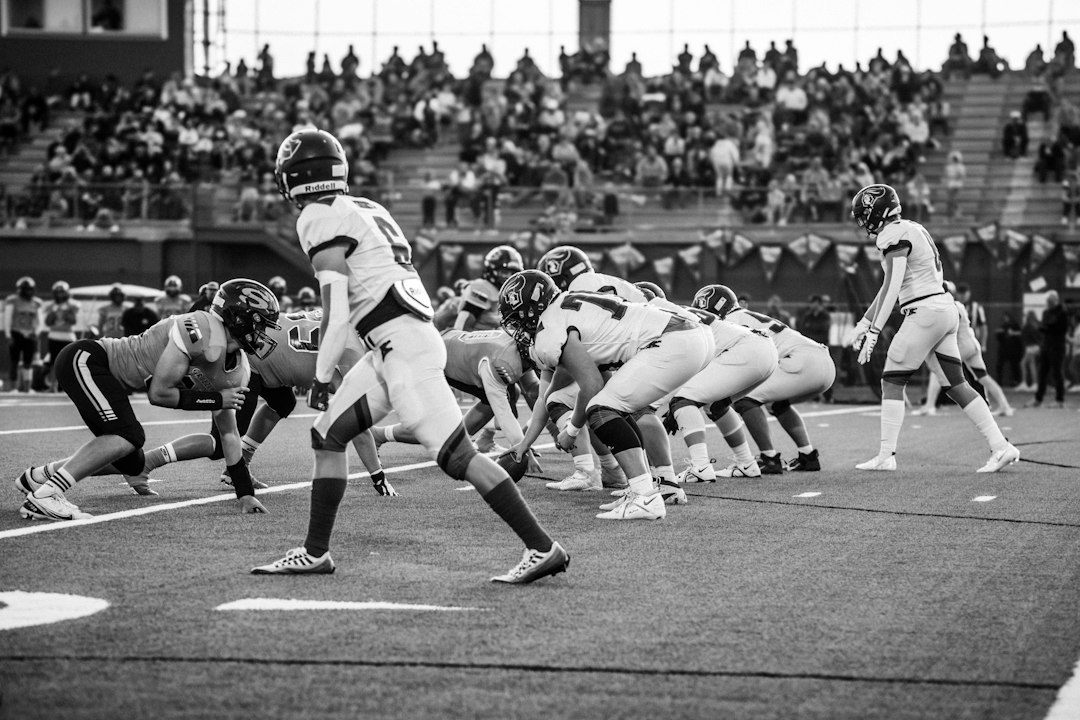



There was no video. No highlight reel. No algorithm deciding whether your junior-year performance was worth sharing with a Division II program three states away.
If you played high school sports in the 1980s, your best game exists in exactly two places: the memory of everyone who stood in those bleachers, and yours. That's it. And for a generation of athletes who gave everything they had on fields and courts and tracks from coast to coast, that turned out to be enough — more than enough, actually — to shape who they became.
This isn't about nostalgia for nostalgia's sake. High school sports in the 1980s operated inside a set of conditions that no longer exist anywhere in American athletics. The training methods were different. The communication between coaches and athletes was different. The entire relationship between effort and recognition was different. And understanding what that era actually felt like — not the pro sports version, which has been covered endlessly, but the Friday night, small-town, nobody's-watching version — tells you something important about what sports are for in the first place.
When the Coach Was the Only Algorithm That Mattered
Long before recruiting databases, before Hudl, before a sophomore's 40-yard dash time could appear in a national ranking by Monday morning, the intelligence of high school athletics lived entirely inside the people on the sideline.
Your coach knew your strengths because he had watched you practice every afternoon for two years. He knew your mechanics were breaking down under pressure because he had seen it happen in a specific game, on a specific play, in a specific quarter — and he told you about it at 6:45 the following morning while you were still lacing your shoes. That feedback loop was immediate, human, and deeply personal in a way that has no clean equivalent today.
The 1980s high school athlete received no data dashboard. No sleep-tracking wearable. No software that charted your vertical jump trajectory over a six-week training block. What you received was a coach who either saw your potential or didn't, who either knew how to develop it or didn't, and whose judgment you had no external source to check against. That made the relationship between athlete and coach something closer to an apprenticeship than a performance management system.

In our experience, former 1980s athletes describe their coaches in one of two ways: as the most formative figures in their lives, or as the reason they quit. There was very little middle ground. The absence of institutional accountability structures meant that exceptional coaches became legends — and that poor coaches stayed in their positions far longer than they should have. The same pre-internet privacy that protected great coaches from interference also protected bad ones from consequence.
What it produced, at its best, was a culture of genuine trust. When Coach told you that your footwork was wrong, you fixed your footwork. Not because a video confirmed it, but because Coach had been watching feet for twenty years and you had no reason to doubt him.
Training on What You Had — Which Was Usually Nothing
The weight room, if your school had one, probably smelled like rubber mats and old metal and something vaguely chemical that no one had ever identified. The equipment was heavy, minimal, and almost entirely without adjustment mechanisms. If the barbell was too heavy, you took plates off. If you needed to go heavier, you borrowed someone else's session.
Conditioning was almost entirely coach-designed and almost entirely non-individualized. Everyone ran the same sprints. Everyone did the same agility ladder. Everyone finished the same two-mile time trial on the same afternoon in August, and the number you posted was the number that told the coaching staff where you stood in the depth chart. There was no periodization model. There was no recovery science. There was Tuesday, and you went as hard as you could on Tuesday, and then you did it again Thursday.
The 80s sports culture around high school athletics operated on a simple, brutal principle: the athlete who wanted it most would find a way. That was the entire philosophy. It produced some extraordinary athletes — people who developed an internal drive that required no external metric to sustain, because there were no external metrics. You ran harder because you wanted to be better. Full stop.
Summer training happened informally, in driveways and on public courts and in backyards, because there was no organized access to facilities outside the school calendar. You found a teammate who was serious, and you showed up at the same place at the same time, and you worked. No facility. No trainer. No documented program.
What's interesting, looking back at what exercise science now tells us about intrinsic motivation and athlete development, is that this environment — despite its lack of sophistication — generated exactly the conditions that research now identifies as optimal for long-term athletic commitment. The athletes who stayed weren't staying for the metrics. They were staying for the game.
The Communication Structure That Made Friday Night Mean Everything
There was no GroupMe. There was no team app. There was no notification at 10:47 PM on a Thursday telling you that practice was pushed back fifteen minutes due to field conditions.
There was the phone tree.
Coach called one player. That player called two players. Each of those players called two more. If the chain broke — if Marcus didn't call Darnell because Marcus forgot — Darnell showed up at the wrong time or the wrong place, and the whole thing unraveled slightly, and then everyone talked about it for a week. The phone tree was a system of distributed accountability. Every person in the chain understood that their one call was genuinely load-bearing. The failure had a name and a face.
Game-week information was distributed at practice, written on a whiteboard, and expected to be memorized. The bus left at 4:30. You were responsible for knowing that. If you missed the bus, you found your own way, and you had better be there before warmups ended.
What this communication structure created — unintentionally, as a byproduct of limitation rather than design — was a strong sense of collective responsibility. The team's logistics were a shared problem. Everyone's participation in the information chain was necessary for it to work. This is something that current team communication apps, which are elegant and efficient, quietly eliminate: the experience of being genuinely needed by the group before the game even starts.
Donna P., 56, ran cross country at a small Catholic school in Ohio in 1987. She describes finding out about a schedule change through three separate phone calls from three different teammates, each of whom had slightly different information. "By the time the third person called me," she says, "I had basically assembled the correct picture from the three versions. And then I called two more people and passed along what I'd figured out. The whole team became like this information organism." She ran in college and still runs competitively today. She credits the cross-country team's chaotic communication culture with teaching her to stay calm when information is incomplete.
The Raw, Unrecorded Nature of the Games Themselves
Here is the specific thing about high school sports before the internet that gets lost when people talk about this era: the games were gone the moment they ended.
A great play in 1986 did not become a GIF. It did not get replayed at the end of the local news broadcast (unless you were the rare program in a large market with a dedicated sports segment). It did not exist in any retrievable form. It happened, the people in the stands witnessed it, and then it dissolved into the atmosphere of that specific Friday night.
This created an unusual relationship between performance and memory. The 1980s high school athlete performed exclusively for the people who were present. There was no future audience. There was no possibility of a moment aging into something larger than it was at the time. The crowd in the stands was the only crowd that would ever see it. That made the crowd's reaction — real, immediate, and human — the only form of recognition available.
Former high school athletes from this era consistently describe a specific quality of presence in those games. Not self-consciousness. Not performance anxiety directed at a camera. But a clean, total absorption in the game as it was happening, because the game as it was happening was all there was.
Football memories from this era tend to have a particular texture: the cold, the mud, the specific sound of shoulder pads hitting in cold air, the halftime smell of industrial coffee and bleacher wood. These details survived because they were all there was to hold. No video compressed them into a highlight. They lived in the body and in the telling.
80s sports culture at the high school level was, in this specific sense, a profoundly local phenomenon. The great athlete at a school in rural Kentucky was great there. That school's rivalry game mattered there. The regional identity of high school athletics was total, because there was no mechanism for it to be otherwise.
What Recruiting Looked Like Without the Internet
If you were good enough to attract college interest in the 1980s, the process looked nothing like what current high school athletes navigate.
A college coach drove to your school. He sat in the bleachers. He watched. He talked to your coach after the game, standing in the parking lot in whatever the weather was doing. He might come back. He might not. The evaluation was entirely in-person, entirely dependent on who happened to see you, and entirely without the supplemental evidence that athletes can now compile on their own behalf.
This meant that recruitment was almost entirely a function of geographic proximity and coaching connections. If your high school coach had a relationship with a college coach — if they'd worked at a camp together, if they'd grown up in the same region — you had a channel. If they didn't, you relied on being extraordinary enough that someone drove out specifically to watch you play.
The athletes who made it through this filter were athletes who were either exceptionally talented or exceptionally connected, or — most commonly — both. Talent that didn't get in front of the right eyes simply never converted. There were no film submissions. There were no self-promotional mechanisms. You played, and either someone noticed, or you went to work.
High school sports before the internet, at the recruiting level, operated as a profoundly high-variance system. It produced both extraordinary injustices — talented athletes who were never seen — and extraordinary stories of coaches who believed in something they'd witnessed once in a cold bleacher on a Tuesday night and changed a kid's life because of it.
The Lasting Mark of Playing When No One Was Watching
The former 1980s high school athlete carries something that is genuinely difficult to explain to someone who came of age in a different athletic environment: the experience of having competed fully, completely, and without any form of external documentation, and of that competition having mattered as much as anything in their life.
The games are gone. The phone trees are gone. The chalk on the blackboard is gone. What remains is the internal experience of having been part of something that required everything you had on a specific Tuesday afternoon in October, and of having given it.
That generation of athletes learned something about effort that the absence of metrics makes unusually pure: the work was its own record. You knew what you'd done. Your teammates knew what you'd done. Your coach knew. That was the entirety of the accounting.
It produced athletes who, decades later, still carry the specific physical memory of their sport — the stance, the breath before the start, the weight of the equipment — and who find, when they try to explain what those years meant, that the explanation keeps returning to the same place: it was real in a way that's hard to make understood now.
Your Jersey Is Still Out There Waiting
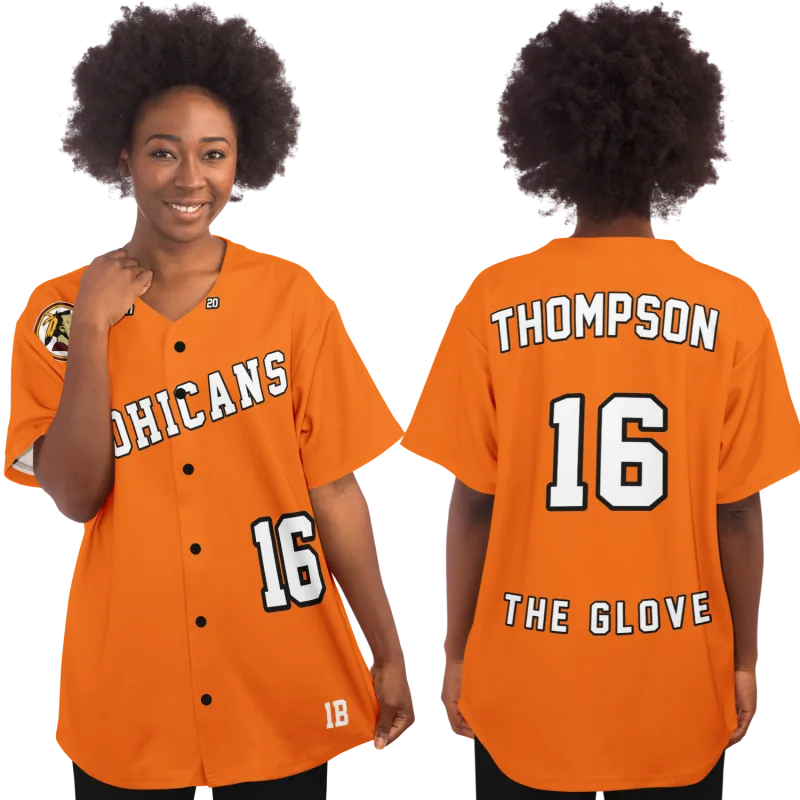
Design yours in minutes and see your name and number exactly the way you remember it — the school colors, the number you wore, the name on the back that meant something to the people who watched you play.
Frequently Asked Questions
What made high school sports in the 1980s different from today's high school athletics?
The primary difference was the absence of documentation and digital infrastructure. 1980s high school athletes trained without data, communicated without apps, and competed without any form of video record. Recruiting happened through in-person evaluation and coaching connections rather than film submissions or recruiting platforms. The result was a localized, relationship-driven athletic culture where performance was witnessed live or not at all.
Did 1980s high school athletes have access to strength and conditioning programs?
Access varied significantly by school and region. Many schools had basic weight rooms with minimal equipment, and conditioning programs were coach-designed without the benefit of modern sports science. Training was largely non-individualized — athletes followed the same program regardless of position, body type, or specific athletic needs. Summer training was almost entirely informal and self-directed.
How did college recruiting work for high school athletes before the internet?
College coaches relied on in-person scouting, high school coaching networks, and geographic proximity. A coach would drive to a school, watch a game or practice, and make an evaluation based on what they personally witnessed. There were no film submissions, no recruiting databases, and no mechanism for an athlete to independently distribute their performance record to multiple programs. The process was high-variance and heavily dependent on personal connections between coaches at different levels.
Why do former 1980s athletes describe those games with such specific sensory detail?
Because there was no video to externalize the memory. With no film record, the experience of a specific game lived entirely in the body and in the telling. The physical details — the cold, the sound, the smell of the equipment — became the primary carriers of the memory. Former athletes from this era frequently describe their strongest sports memories in intensely physical terms, which reflects how those memories were stored in the absence of any external recording.
See also: why high school sports still matter so deeply to adults | the athletic identity that stayed with you long after your last game | why your senior season memories from that era are so unusually vivid | what it actually felt like to play under the Friday night lights