


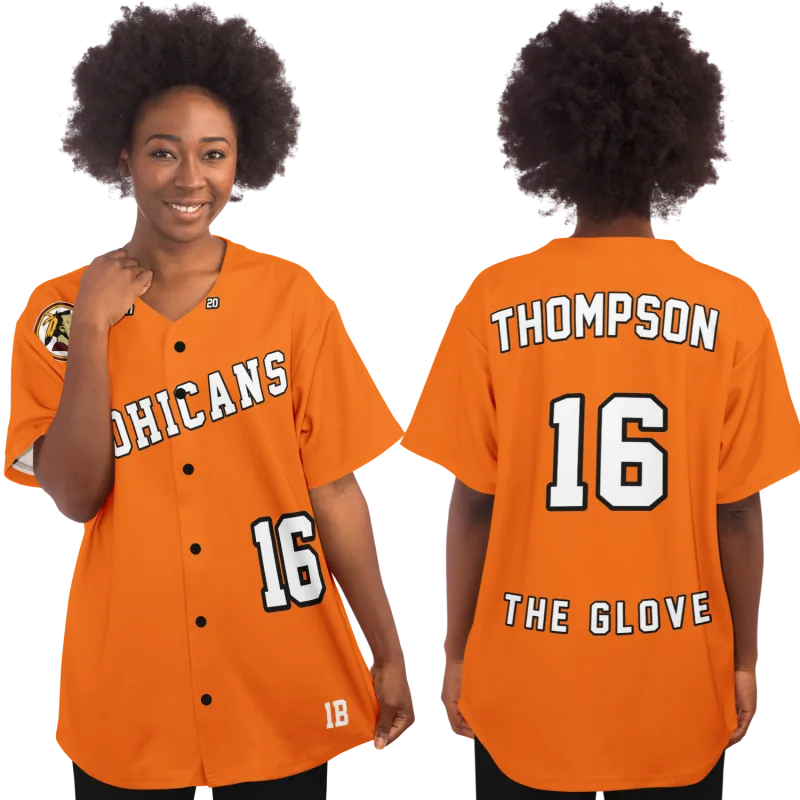



You remember the number. Not approximately — exactly. The yards, the points, the batting average, the saves. You remember the game it happened in, the weather that night, the sound the crowd made. You can close your eyes right now and feel the moment the number became real.
Remembering high school sports stats from twenty or thirty years ago isn't a quirk. It isn't selective nostalgia or athletic ego. There is a specific reason those numbers are still sharp while so much else from that period of your life has softened into blur — and once you understand it, you'll never think about athletic memory the same way again.
This is for every former athlete who has ever surprised themselves by reciting a stat they earned decades ago without a single moment of hesitation.
The Numbers Aren't Stored the Way Other Memories Are
Most of what happens to us in life gets filed as episodic memory — the what-happened, when-happened, roughly-where-happened storage system that your brain uses for the general log of your experience. That memory degrades. Details fall away. The emotional coloring fades. Ask someone what they had for lunch on a Tuesday three weeks ago and you'll get a shrug.
But sports statistics — your sports statistics — don't live there.
They live in something researchers call self-defining memory: the category of recollections so tightly bound to your sense of who you are that the brain treats them differently from the start. They get encoded with more context, more sensory detail, more emotional depth. They get retrieved more readily. And they resist the ordinary erosion of time in ways that standard episodic memories simply do not.
The stats you made aren't data points your brain archived. They're identity markers it protected.
When neuroscientists study self-defining memory, they consistently find that memories tied to peak moments of performance — the moments when you exceeded your own expectations or validated years of effort — carry a quality of vividness and durability that mundane memories cannot match. Your brain was not trying to remember your stats. It was trying to remember who you were when you earned them. The number just came along for the ride, welded to the moment permanently.


What Was Actually Happening When That Number Was Made
Every former athlete remembers the specific texture of the moment a number became significant. Not just what the number was — the whole surrounding experience. The gym smell. The cold air on the field. The specific voice of a coach or teammate. The physical exhaustion that made the accomplishment feel real in your body, not just in your head.
That sensory specificity is not accidental. It is the direct result of how emotion and memory interact during high-stakes physical performance.
When you are competing — genuinely competing, with something real on the line — your brain releases a precise cocktail of neurochemicals that function as a kind of biological highlighter. Norepinephrine and cortisol work together to tell the hippocampus: this matters, encode it deeply. The emotional intensity of competition doesn't just make the moment feel important in the present. It physically strengthens the memory trace being formed. The higher the stakes, the more resources your brain commits to preserving what's happening.
For most people, this level of neurochemical encoding happens rarely in daily adult life. We go to meetings. We answer emails. We run errands. The emotional register stays moderate and the memories formed stay thin. But as a high school athlete competing in the thing you'd devoted years to, you were living inside one of the highest-stakes emotional environments your adolescent brain would ever encounter. Your memory system responded accordingly.
Every stat you remember from that era was formed inside that environment. That's why it stayed.
The Identity Layer That Makes It Permanent
Here is the part that goes deeper than neuroscience alone.
You were not just an athlete in high school. For most people who played seriously, athletics was the primary identity structure of that period of life. It determined your schedule, your social circle, your sense of purpose, your self-concept. When you performed well — when you put up the number you remember — you weren't just succeeding at a game. You were confirming who you were.
That kind of identity-level confirmation doesn't get stored in the same drawer as other achievements. It gets woven into the self-model your brain maintains about what kind of person you are. And self-models are remarkably stable over time. They don't erode the way episodic memories do because they aren't just records of what happened — they are the working architecture of how you understand yourself.
Maria T., 41, played varsity volleyball through her junior and senior seasons and still quotes her senior block percentage without thinking twice. "It comes up in the strangest contexts," she says. "Someone will talk about pressure at work, and I'm back in that gym, and the number is just there. It's not even a memory I have to reach for — it's more like something I am." That's not unusual. Among former athletes, the stats from peak competitive years don't feel like history. They feel like evidence — still-relevant proof of something real about who they are.
This is the identity layer. It's why you don't just remember the stat — you remember it with a specific quality of pride that doesn't diminish with distance. The number still means what it meant the day you made it.
Why These Numbers Are Sharper Than Things You Studied Intentionally
Here is the counterintuitive part that confuses people when they think about it: you probably worked much harder to memorize material in school than you ever did to memorize your stats. Nobody sat down with flashcards and drilled their yards-per-carry. Nobody tested themselves on their save percentage before bed. The numbers were never studied. They were just known.
And yet the stats survived and the studied material largely didn't. Your GPA has become an approximation. The specific formulas from chemistry are gone. The historical dates you memorized for exams dissolved within a semester of the test. But your junior season scoring average is right there, precise and immediate.
The reason is retrieval. Memories don't just sit in storage passively — they are strengthened or weakened by how often and under what circumstances they are retrieved. Academic material studied for a test and not applied afterward loses its neural pathways through disuse. The retrieval routes thin out and eventually become inaccessible without deliberate reconstruction.
Your sports stats get retrieved constantly — and retrieval under emotional arousal is the most powerful form of memory consolidation there is. Every time someone asks what you played, every time you watch a game and feel the old competitive instinct, every time a smell or a song takes you back, the memory gets retrieved. And every retrieval in that emotionally engaged state re-strengthens the neural pathway. The number gets more accessible, not less, with every passing year of living as someone who used to play.
The studied facts had no retrieval mechanism. The stats were connected to identity, which gets retrieved constantly and involuntarily. That's the whole difference.
The Stats as Anchor for an Era That Would Otherwise Blur
Something else happens to memory across long stretches of time: the texture of a period compresses. Ask someone to describe their high school years in general terms and you get impressions, atmospheres, vague emotional colorings. "It was hard." "It was the best time." "I don't know, it's complicated." The specific days collapse into each other and become a general sense of an era.
But sports seasons resist that compression because they have structure. They have a beginning, a schedule, a culminating event. They have a statistical record — a literal numerical accounting of what happened — that gives the memory system something specific to hold onto. The stats function as anchors that keep individual moments from dissolving into the general blur.
This is why athletes tend to have sharper recall of their high school years in general, not just the athletic parts. The discipline of competition — the practice schedules, the game weeks, the seasons — imposes a structure on time that keeps the whole period more vivid. The stats are just the sharpest anchor points in an already well-organized stretch of memory.
The number you remember isn't isolated. It's connected to everything around it — the teammates, the field, the season arc, the version of yourself who was living that year. Pull the number and the whole context comes with it.
What It Means to Carry This Number Forward
There's a question worth sitting with: what does it say about you that you still carry this?
Some people feel mildly embarrassed by how precisely they remember their athletic stats from decades ago, as if it's a sign of misplaced priorities or an inability to move on. That reading is exactly backward.
The persistence of athletic memory isn't evidence that you're stuck. It's evidence that you built something real. That the years you spent in practice and competition weren't just extracurricular filler — they were identity formation of the highest order. The numbers stayed because what they represent stayed: the discipline to work toward something over years, the capacity to perform under pressure, the experience of being part of something larger than yourself.
These aren't things that expire when the season ends. They are characteristics that shaped the person you became. The stat is just the compressed, numerical version of that proof.
In our experience working with former athletes across every sport, the ones who remember their numbers most vividly are almost always the ones who brought the same intensity to whatever came next — careers, relationships, the way they approach anything that matters to them. The competitiveness didn't disappear. It redirected. The athletic identity didn't end. It evolved.
The number is still sharp because the person who made it is still present.
The Stat Is Part of Something Bigger Than the Game
There's one more dimension worth naming: the social function of athletic memory.
When two former athletes meet — even if they played different sports, different positions, different eras — the exchange of stats is a form of recognition. It is not showing off. It is mutual acknowledgment of a shared category of experience. The numbers are a dialect that former athletes speak with each other, a shorthand for communicating: I know what that costs. I know what that means. I was there too.
This social function is another reason the numbers stay sharp. They are actively used. They are the vocabulary of an ongoing identity conversation that never fully ends. As long as former athletes connect with each other — and they always do — the numbers have a function beyond memory. They are a living part of an identity that continues to operate in the present.
The stat you remember isn't a relic. It's part of how you understand yourself, how you connect with others who share your experience, and how you carry forward everything that athletic competition taught you.
That number will still be exactly right when you're seventy. You'll know it then the way you know it now — immediately, precisely, and with the same specific weight it's always carried.
Your jersey is still out there waiting.
The number meant something then. It still means something now. Design yours in minutes and see your name and number exactly the way you remember it.
Frequently Asked Questions
Why do I remember my sports stats but forget other things from the same period?
Sports statistics are encoded as self-defining memories — memories tied directly to your sense of identity — rather than as ordinary episodic memories. They were formed during high-stakes competition, which triggers stronger neurochemical encoding, and they've been retrieved repeatedly through the emotional filter of athletic identity ever since. Academic facts and general experiences don't benefit from either of those mechanisms, which is why they fade while your stats remain precise.
Is it normal to remember stats from twenty or thirty years ago down to exact numbers?
Completely normal, and actually very common among people who competed seriously at any level. The specificity of athletic memory is a direct function of how emotionally significant the performance was and how tightly the result was tied to identity. Research on self-defining memory consistently shows that identity-anchored memories resist the ordinary erosion of time. The more the stat mattered to who you were, the more precisely it persists.
Does remembering high school stats mean I'm too focused on the past?
No — and the framing actually gets it backward. The persistence of athletic memory reflects how much identity and character development happened during those years, not an inability to move forward. Former athletes consistently draw on the discipline, resilience, and performance capacity built during their competitive years throughout their adult lives. Remembering the stat is simply the most concrete, numerical expression of remembering who you were becoming during one of the most formative periods of your life.
Why do the sensory details — the smells, the sounds, the weather — come back with the stats?
Because the stat and the sensory context were encoded together. During peak performance, your brain's emotional arousal system activates rich, multi-sensory encoding — the hippocampus receives detailed input from across the brain simultaneously. When you retrieve the number, you're not just retrieving the number; you're retrieving the entire memory trace it was stored in, which includes the ambient sensory environment of the moment. This is why athletic memories from decades ago often feel more vivid than things that happened last month.
See also: why high school sports still matter so deeply to adults | the science of why your senior season memories are so vivid | why the end of your athletic career hit harder than anyone expected