


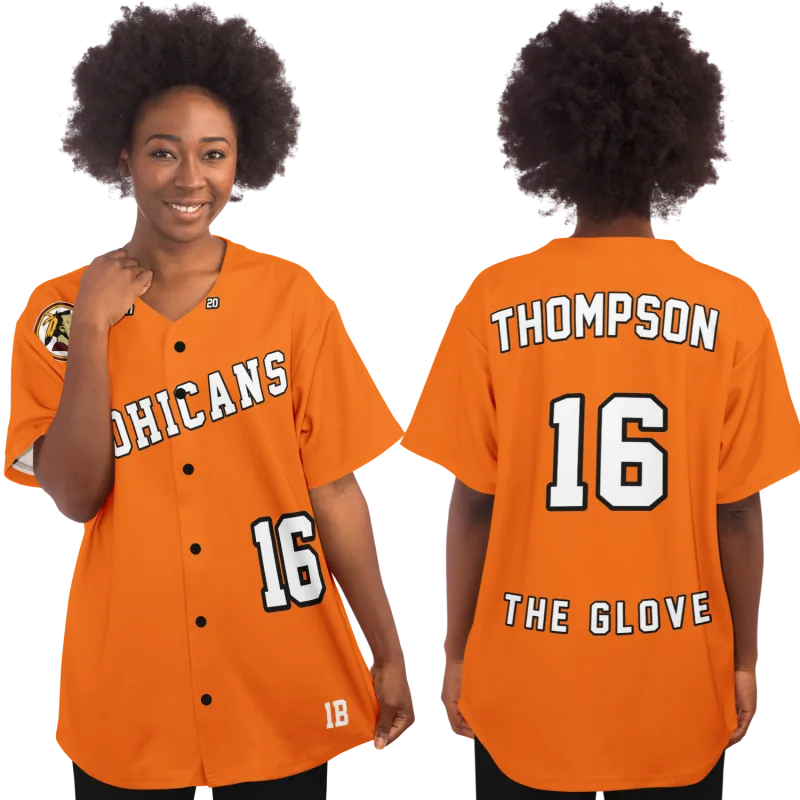

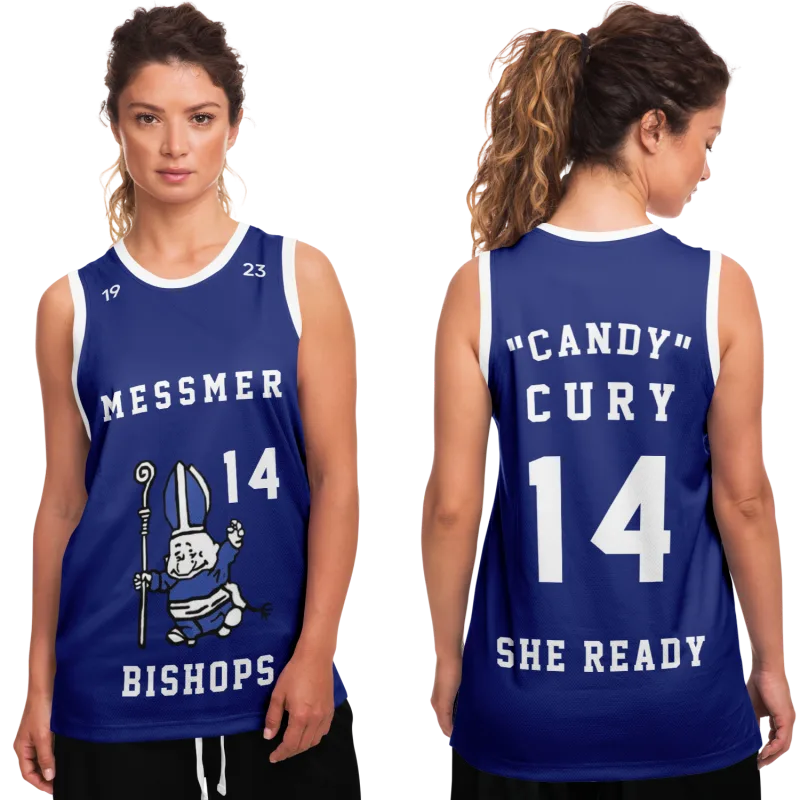
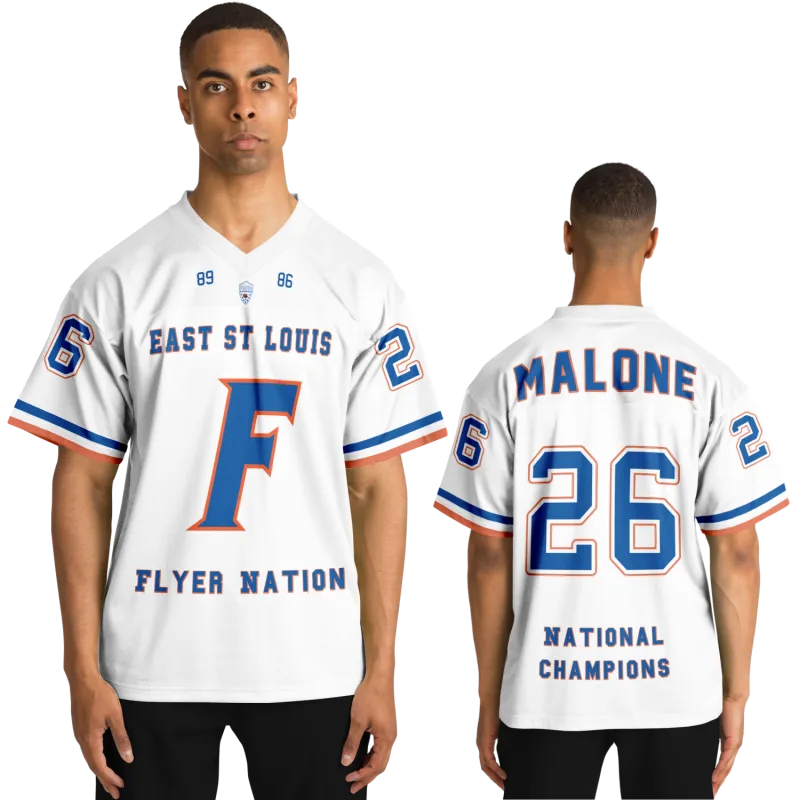
If you were a high school athlete no college scholarship came for — if you trained through summers, gave four years to a sport you loved, and watched the season end without a signing day — this article is written for you. Not for the 3% who went on to compete collegiately. For the overwhelming majority: the athletes who played their hearts out and whose careers ended at graduation, without ceremony, without announcement, and without nearly enough acknowledgment of what that actually meant.
The recruiting articles aren't written for you. This one is.
The Number Nobody Talks About
According to the NCAA's athlete participation research, roughly 7% of high school athletes go on to compete at the college level in any capacity — Division I, II, or III combined. For scholarship athletes specifically, the number is smaller still. In most sports, the probability of earning an athletic scholarship sits somewhere between 1% and 2% of all high school participants.
Read that again.
Ninety-three to ninety-seven percent of high school athletes do not play in college.
That is not a failure statistic. That is the actual shape of sport. Every pyramid has a base, and the base is where the vast majority of the real story happens — in the early morning practices, the summer conditioning, the games that nobody outside the county ever heard of, the relationships forged in the weight room and on the bus ride home after a loss nobody wanted to talk about.
The recruiting industry exists to serve the 3%. Almost no infrastructure exists to serve the 97%.
That gap is what this article addresses.
What "Not Getting Recruited" Actually Means
There's a version of this story that gets told as a cautionary tale — the athlete who wasn't quite good enough, who peaked too soon, who should have worked harder. That version tends to be told by people who were in the 3%.

Here is what not getting recruited for college sports actually means in most cases.
It means you competed inside an extraordinarily deep talent pool. High school sports in the United States involve approximately 8 million participants annually. The filtering process that produces college athletes is not a clean meritocracy. It involves geography, school enrollment size, coaching network visibility, the specific graduation year you happened to share with other athletes in your position, whether a college coach saw the right game on the right night, and whether your sport even had available roster spots at the schools where you were otherwise a competitive candidate.
It means the end of your career had more to do with circumstances than with the quality of what you built.
It means you were a high school athlete — and that phrase contains more than the recruiting statistics ever capture.
What most athletes who didn't play in college never hear, and what the data makes clear, is this: the characteristics developed through serious high school athletic competition — discipline, coachability, tolerance for discomfort, the ability to function under pressure inside a team structure — are among the most durable professional and personal assets a person can carry. The scholarship isn't what created those qualities. The years of competing did.
The Identity Gap Nobody Prepares You For
Here's what sports psychology research is consistent about, and what almost no one tells the athlete standing in the locker room for the last time: athletic identity is one of the most deeply embedded components of self-concept a person can carry.
When you've been "the athlete" since age eight — when your schedule, your social circle, your sense of purpose, your morning alarm, and your relationship with your own body have all organized themselves around competition — the end of that career creates a gap that isn't just emotional. It's structural. You don't just miss the sport. You lose the container that organized your days, your relationships, and your understanding of who you are.
This isn't weakness. It's the predictable consequence of genuine commitment.
The transition out of competitive athletics — especially when it arrives at 18, without the runway of a college career ahead — is something sports psychologists call athletic retirement. The research on it is consistent: athletes who retire without a sense of narrative around what their career meant, and without a clear identity outside of sport, report higher rates of anxiety, disorientation, and unresolved grief than those who have support structures in place.
Most high school athletes get none of those support structures. The season ends. School ends. Everyone moves on, as though four years of competitive training and identity formation can be folded up and filed away without consequence.
They can't. And the athletes who try to pretend otherwise often carry a low-grade grief for years without being able to name it.
Because how do you mourn something you were told wasn't significant enough to mourn?
The Recalibration: What Happens When You Name It
*Marta V., 34, was a three-sport athlete in high school — volleyball, basketball, and track — and never received a single recruiting call. She walked on at a Division III program and was cut before the first season ended. For years, she described this as the thing she "didn't talk about." Last fall, her younger sister gave her a custom replica of her varsity volleyball jersey. She wore it to Thanksgiving dinner. "I didn't realize how much I still needed that to be real," she said.
A custom sports shadow box is one way former athletes make that career visible — pairing the jersey with photos, newspaper clippings, and other artifacts from the season that mattered.*
There is a specific psychological shift that happens when a former athlete is able to say, without apology: I was a competitive athlete. My career ended at graduation. That career mattered.
Not "I played sports in high school." Not "I used to be pretty decent." Not the reflexive deflection.
The full sentence. The honest sentence.
Sports psychologists who study the post-athletic transition describe healthy recovery from athletic retirement as moving through three stages:
- Acknowledgment — naming what was real and what was lost, without minimizing the career because it didn't continue past high school.
- Integration — recognizing how the values, competitive habits, and identity formed through sport carry forward into everything that follows.
- Reinvestment — actively applying those qualities to new domains: career performance, relationships, creative work, leadership, community.
The athletes who move through all three stages are not the ones who "got over it." They are the ones who allowed themselves to honor what it was before moving through it.
The ones who skip stage one — who accept the cultural script that says a career ending at graduation isn't a real career — often carry the unresolved version for a long time. Because stage two and stage three are only accessible after stage one is complete.
You name it. That's how it starts.
What the Long View Actually Shows
The long view is significantly kinder than the moment of ending suggests.
Former high school athletes who go through the identity recalibration that follows a high school-only sports career frequently report, years later, that the formation happened inside those years became foundational to everything that followed. Not metaphorically. Practically.
The former distance runner becomes the person at the company who outlasts every deadline. The former setter becomes the executive who reads the room and puts the right people in position at the right moment. The former middle linebacker becomes the surgeon who doesn't flinch under pressure. The specific competitive identity built through high school sport doesn't disappear when the uniform is retired. It reorganizes and reinvests itself into whatever comes next.
In our experience talking to former athletes about what their high school careers meant — years and sometimes decades removed from the last game — the regret almost never sounds like "I wish I had been good enough for a scholarship." It sounds like "I wish someone had told me at the time how much that was actually worth."
The athlete who was never recruited is not the athlete who was left behind. They are the athlete who built the foundation, competed at full intensity for every season they had, and then carried that formation forward into a life where the jersey wasn't the last word on the story.
When your sports career ends after high school, it does not end your identity as someone who competed seriously. It ends the competitive phase and begins the integration phase. Those are different things.
What Your Career Actually Was
Your career was real.
It was four years — sometimes more, if you count the youth leagues and the travel circuits and the rec programs that fed into it — of systematic physical and psychological development. It was the specific smell of a gym in November. It was the weight of pads in August heat. It was the particular silence of a locker room after a loss and the particular noise of one after a win.
It was learning to lose without quitting and to win without forgetting what you were actually doing out there.
It was a relationship with teammates that doesn't have a civilian equivalent — the specific trust that forms when you've been in a weight room at six in the morning with someone, when you've watched each other fail and recover, when you've won something together that required both of you to be better than you knew you could be.
It was a jersey with your name on it and a number that was yours.
The high school athlete who didn't play in college didn't get a lesser version of sport. They got sport — the real version, the one that most people who've never competed at that level will never fully understand from the inside. The scholarship is a downstream recognition of talent and circumstance. The career is what happened before any of that filtering. And the career was yours.
That jersey was real. That name was real. That number was real. Those games were real.
The fact that they ended at graduation doesn't subtract a single thing from any of it.
If you're ready to step back onto the field, our guide to starting training again after years away provides a safe, structured return plan.
Your jersey is still out there waiting.
Design yours in minutes and see your name and number exactly the way you remember it.
Frequently Asked Questions
Does not getting a scholarship mean I wasn't good enough?
No — and the scale of high school athletics makes this clear. Approximately 8 million students compete in high school sports annually in the United States. The total number of college athletic scholarship recipients across all sports and all divisions represents a small fraction of that population. Scholarship decisions are driven by a combination of roster availability, sport-specific scholarship limits, geographic recruiting priorities, school size classifications, and timing variables that have nothing to do with an individual athlete's competitive quality or commitment. The most accurate interpretation of not receiving a scholarship is that you competed in an extraordinarily deep field where available positions were structurally limited — not that your effort or ability was insufficient.
Is it normal to still feel the loss of a high school sports career years later?
Yes, and the research consistently validates this. Athletic identity — particularly for athletes who competed seriously through their teenage years — is deeply embedded in self-concept. The end of a career that isn't acknowledged as significant tends to produce a grief response that doesn't resolve cleanly on its own. Many former athletes describe a persistent low-grade sense of something unfinished that can last years. The resolution almost always involves acknowledging the career fully rather than minimizing it — treating it as a real career rather than accepting the cultural script that it only counts if it continued past graduation.
What do former high school athletes who didn't play in college typically go on to do?
The long-term outcome data on former competitive athletes is consistently positive across professional and personal dimensions. The traits developed through serious athletic competition — disciplined work habits, performance under pressure, team-based problem solving, resilience after failure — are among the most transferable professional characteristics a person can carry. Former high school athletes appear across every field and industry, typically bringing the competitive formation from their playing years into whatever domain they've reinvested in. The end of the playing career is not the end of the athletic identity. It's the beginning of its second application.
What about walk-on opportunities or club sports in college?
Both are genuine paths that many former high school athletes pursue and find meaningful. Walk-on spots at Division II and Division III programs are more accessible than most athletes realize, and club sports programs at the college level operate across nearly every sport. Neither path carries an athletic scholarship, but both allow competitive identity to continue developing through the college years. If that was part of your story, it counts — as fully as any other chapter.
How should I talk about my athletic background when people ask if I played in college?
Directly, and without the apologetic framing. "I played [sport] through high school" is a complete sentence. It describes a real career without requiring justification or minimization. The instinct to add "but not at the college level" or "nothing serious" is a learned deflection — not an accurate description of what you built or what it cost you to build it. You competed. The career was real. State it that way.
See also: athletic identity after high school | grief that comes with the end of a high school athletic career | why high school sports still matter to adults