




You remember the exact smell of the gym on game nights.
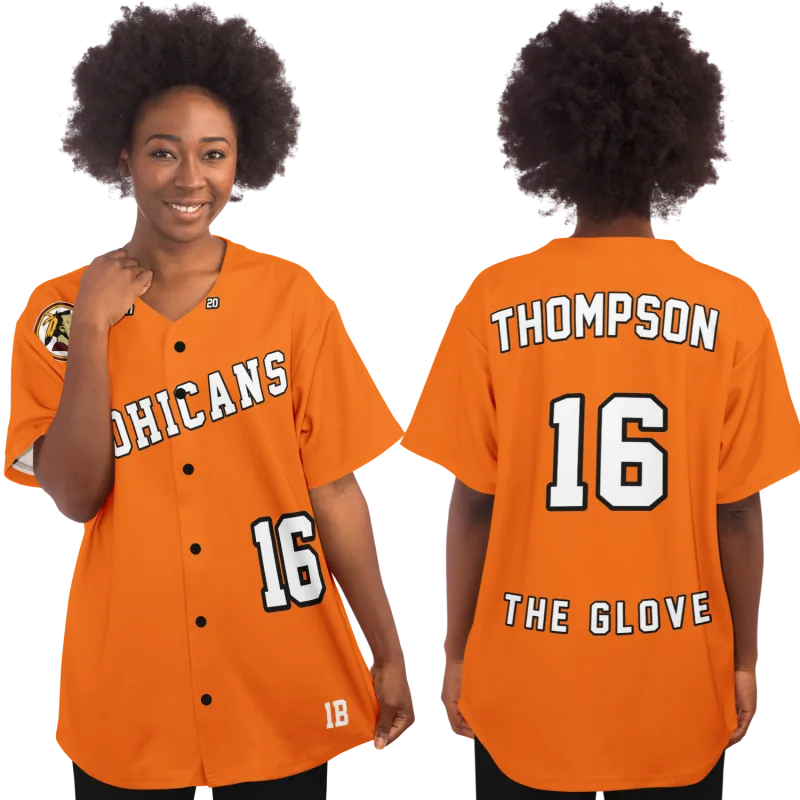
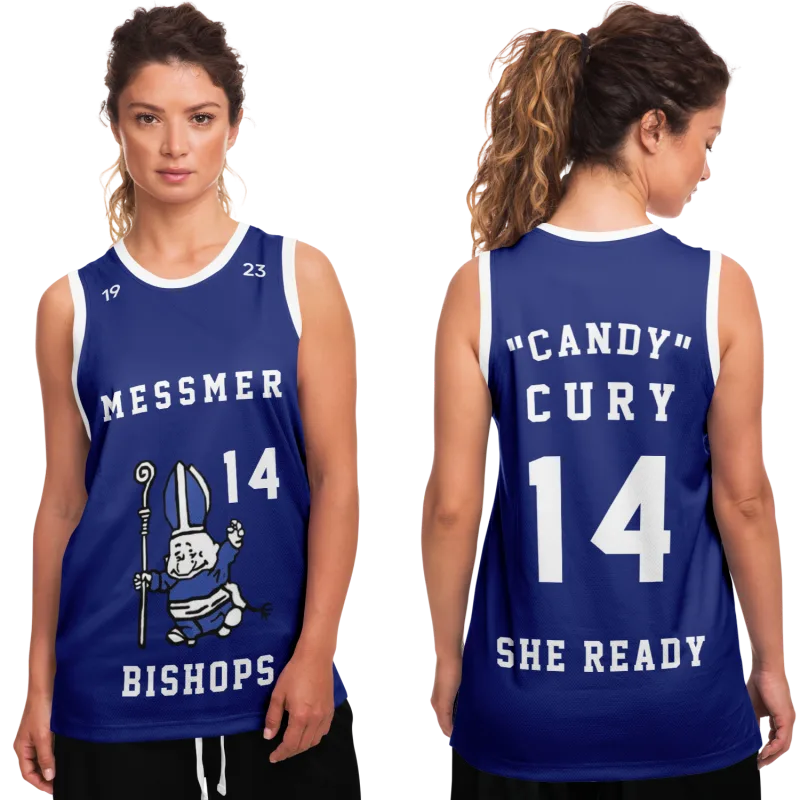
The squeak of sneakers on hardwood. The specific weight of your jersey — your name, your number, pressed into the back of it. Maybe you haven't thought about it in years. Maybe you think about it more than you'd admit to anyone.
And somewhere, in a quiet moment, the question arrives: What if I kept playing high school sports?
That question doesn't mean you made the wrong choice. It doesn't mean your life went sideways. It means something real happened in those years — something that shaped how you understand yourself — and the part of you that lived inside that identity hasn't fully finished processing it.
You're not stuck. You're not broken. You're doing exactly what former athletes do when they're being honest with themselves.
This article is for that honest moment.
The 'What If' Question Is Not a Regret. It's a Signal.
There's a difference between regret and counterfactual thinking, and most articles that touch on regrets after high school sports blur this distinction in ways that aren't particularly helpful.
Regret is backward-looking pain. It says: I made a mistake, and the outcome of my life is worse because of it.
Counterfactual thinking is something different. It's the mind's natural way of processing identity by exploring the roads not taken. Researchers who study this — including work published through the American Psychological Association's research on counterfactual cognition — describe it as a normal and often functional psychological process. The brain generates alternative scenarios not to torture you, but to extract meaning from real events.
When you ask what if I kept playing, you're not necessarily wishing you had. You might be asking something deeper:
- Who was I when I was competing?
- What did that version of me believe about myself?
- What parts of that identity am I still carrying?
The question is a door, not a dead end. The problem is that most people who push through that door find nothing but empty space — no framework, no language, no way to work with what they find. So the question loops. It surfaces every time someone mentions high school, or a sport comes on TV, or you pull an old jersey out of a box.


The loop doesn't stop because you push the question away. It stops when you actually walk through the door.
What High School Sports Actually Gave You (And What Leaving Took)
Here's something worth naming directly: high school athletics isn't just a physical activity. For most people who played, it was a complete identity system.
It told you:
- Where you belonged (the team, the locker room, the bus ride home)
- What you were capable of (your performance, your position, your role)
- How other people saw you (your number on the back, your name on the roster)
- What your days were structured around (practice, conditioning, film, games)
When that ends — whether you stopped by choice, by circumstance, by injury, or simply because high school ended — all four of those things disappear at once. You don't just lose the sport. You lose the container that held a version of yourself.
Thinking about the past in athletics often isn't nostalgia for the game itself. It's nostalgia for a self that felt whole, defined, and seen in a very specific way.
That's worth sitting with for a moment, because it reframes the question entirely. You're not wondering if you could have gone pro. You're wondering what it felt like to be that person — and whether any part of that person is still available to you.
The answer is yes. But it takes a different kind of effort than running wind sprints.
The Four Versions of 'What Could Have Been'
Not every former athlete's what could have been in sports question is the same. In our experience working with athletes who've reflected on their playing days, the question usually takes one of four distinct shapes — and each one calls for a different kind of reframing.
1. The Performance Version
"What if I had trained harder? What if I'd had better coaching? What if I'd worked on my weak side?"
This version is about capability. The person asking it is wondering whether they left potential unrealized — whether there was a higher ceiling they never reached.
The reframe: The ceiling you hit was real. It was also made from the information, resources, and life circumstances you actually had at the time. You weren't competing in a controlled experiment where the only variable was effort. You were a teenager navigating everything teenagers navigate, while also trying to perform athletically. The version of you that showed up was doing exactly what was possible with what you had.
2. The Decision Version
"What if I hadn't quit? What if I'd stuck it out that season instead of walking away?"
This version carries the most emotional weight, because it involves a specific choice — a moment the person can point to and say, there, that's where the road forked.
The reframe: Decisions don't happen in isolation. They happen inside contexts. What was the context? A difficult coach. A difficult home situation. An injury that changed your confidence. A different opportunity that seemed more important at the time. The choice you made was a response to a full, complex situation — not just the sport. The decision you made protected something, even if you can't immediately name what.
3. The Identity Version
"What if I'd kept that part of myself? What if I'd stayed an athlete?"
This is the most common and the least talked about, because it sounds almost too personal to say out loud. The person asking it isn't sure they've found anything since that gives them the same sense of self.
The reframe: You are still an athlete. Not in the sense of current performance — but in the sense of how your brain processes challenge, how your body responds to competition, how you read people in high-pressure situations, how you understand effort. That wiring doesn't leave when the jersey does.
4. The Relationship Version
"What if I'd stayed connected to those teammates? What if I hadn't drifted from those people?"
This version is about community, not performance. The person mourning isn't the game — it's the specific relationships that the game scaffolded.
The reframe: Those relationships were real. The distance that grew between you wasn't a failure of the friendships — it was a natural consequence of leaving a shared structure. The structure is gone. The people are not.
A Story from the Bleachers
Maya T., 31, played varsity soccer through her junior year before a knee injury and a complicated home situation pulled her away from the game. For years, she described the question as arriving sideways — not during big moments, but during small ones. Watching her niece play rec soccer on Saturday mornings. Seeing a pair of cleats in a sporting goods store. She didn't frame it as regret, exactly. "I just kept wondering who I would have been," she said. What changed for her wasn't resolving the question. It was designing a custom jersey with her old number — 14 — and her last name across the back. "It sounds small," she told us. "But having that physical thing again made the wondering feel like memory instead of loss."
Three Reframing Exercises That Actually Work
This is where most articles on athlete identity stop — at the emotional acknowledgment — without giving you anything concrete to work with. Here are three exercises that move the what if from a loop into something you can hold differently.
Exercise 1: The Full Inventory
Grab a piece of paper. Draw two columns.
In the first column, write everything the sport gave you. Not just skills — write the specific things. The feeling of starting lineup. The way you called plays in your head before they happened. The specific trust you had in your body during a good game.
In the second column, write what leaving gave you. This one is harder, but it's real. Time. A different kind of freedom. Other relationships that formed in the space that opened up. Skills you developed that you wouldn't have had room for.
This isn't an exercise in deciding which column wins. It's an exercise in making the full picture visible. Most people who spiral in what could have been territory are only looking at one column.
Exercise 2: The Letter to That Version
Write a letter to the version of yourself who was still playing. Not to apologize. Not to explain. Just to describe who you are now — specifically, in detail — and what you carry from those years.
What you'll often discover is that the letter writes itself into gratitude rather than grief. That the version of you who played taught you things you've been using ever since without crediting the source.
Exercise 3: The Physical Anchor
This one is concrete for a reason. Identity lives in the body before it lives in the mind. Former athletes often find that the what if loop quiets when there's a physical object that honors the past without requiring it to still be the present.
For some people, that's returning to a recreational version of the sport. For others, it's something simpler — something tangible that acknowledges the years without demanding anything from them now.
When 'What If' Becomes Productive Instead of Painful
The shift from painful counterfactual thinking to productive identity work happens when the question changes form.
Painful version: What if I had kept playing — what would my life look like? This version is comparative. It sets up a better imagined life against the actual one, and the actual one loses by definition, because the imagined one never had to contend with reality.
Productive version: What did playing teach me that I'm still using? This version is integrative. It brings the past into the present as a resource, not a loss.
Here's what the productive version surfaces for most former athletes:
- Competitive intelligence — the ability to read situations quickly, identify leverage points, and respond under pressure. This is not a sports skill. This is a life skill that sports trained.
- Body awareness — the proprioceptive knowledge of how your body works, what it needs, when it's at capacity. Athletes carry this knowledge for decades without always naming it.
- Team cognition — the ability to function inside a group, to trust people with specific roles, to subordinate individual performance to collective outcome. Organizations pay consultants to teach this. You already learned it at 16.
The what if I kept playing high school sports question, reframed, becomes: I kept playing — just differently.
Honoring the Past Without Being Held by It
There's a specific kind of freedom that comes from being able to look back at your athletic years and say: that was real, it mattered, and I'm carrying the best of it forward.
Not every former athlete gets there. Some stay in the loop. Some close the door entirely and refuse to look. The middle path — the one that actually resolves the question — is the one that makes room for both the loss and the legacy.
In our experience, the athletes who do this well are the ones who find a way to make the past present in some form. Not by trying to recreate the competition — but by acknowledging, physically and intentionally, that it happened. That it was real. That it made them who they are.
The jersey you wore was part of that. Your name on the back. Your number. The specific combination that meant you, on this team, in this season.
That combination still means something.
Your Jersey Is Still Out There Waiting.
Design yours in minutes and see your name and number exactly the way you remember it.
Frequently Asked Questions
Is it normal to still think about high school sports years later?
Completely normal — and more common than most people admit. Athletic identity tends to form during adolescence, when the brain is especially primed for identity construction. The years spent competing become part of how the nervous system understands capability, belonging, and self-worth. When that structure ends, the brain doesn't simply file it away. It continues to reference it, especially during moments of transition, uncertainty, or nostalgia. Thinking about your athletic past years later isn't a sign that you're stuck — it's a sign that those years were genuinely formative.
How do I stop regretting that I didn't keep playing?
The most useful shift is moving from the comparative question (what would my life look like if I'd kept playing?) to the integrative one (what did playing give me that I'm still using?). The comparative question has no satisfying answer, because you're measuring a real life against an imagined one. The integrative question has a very specific answer — and working through it tends to quiet the regret more effectively than trying to suppress the question. The reframing exercises in this article are a good starting point.
What if I genuinely believe I made the wrong decision by stopping?
That belief deserves respect, not immediate reframing. Sit with it honestly. Ask what specifically you believe you lost — was it the performance itself, the identity it gave you, the relationships it scaffolded, or some combination? Once you can name the specific loss, it becomes possible to address it in specific ways. For some people, returning to a recreational version of the sport genuinely helps. For others, finding a way to honor the past — rather than recreate it — is the more sustainable path. There's no universal answer, but there is always a more specific one than I just wish I'd kept going.
Does everyone who played sports go through this kind of reflection?
Not everyone, and not with the same intensity. The depth of the reflection tends to correlate with how central the sport was to the person's identity during those years. Someone who played a sport casually may feel mild nostalgia. Someone whose entire social world, daily structure, and self-concept were organized around athletics is likely to carry a more complex relationship with the question. If you're reading this article, you probably already know which category you're in.
See also: why athletic identity doesn't just disappear after high school | the grief that comes with the end of your athletic career at 18 | why you still dream about those games years later | what high school sports actually taught you that nothing else could