



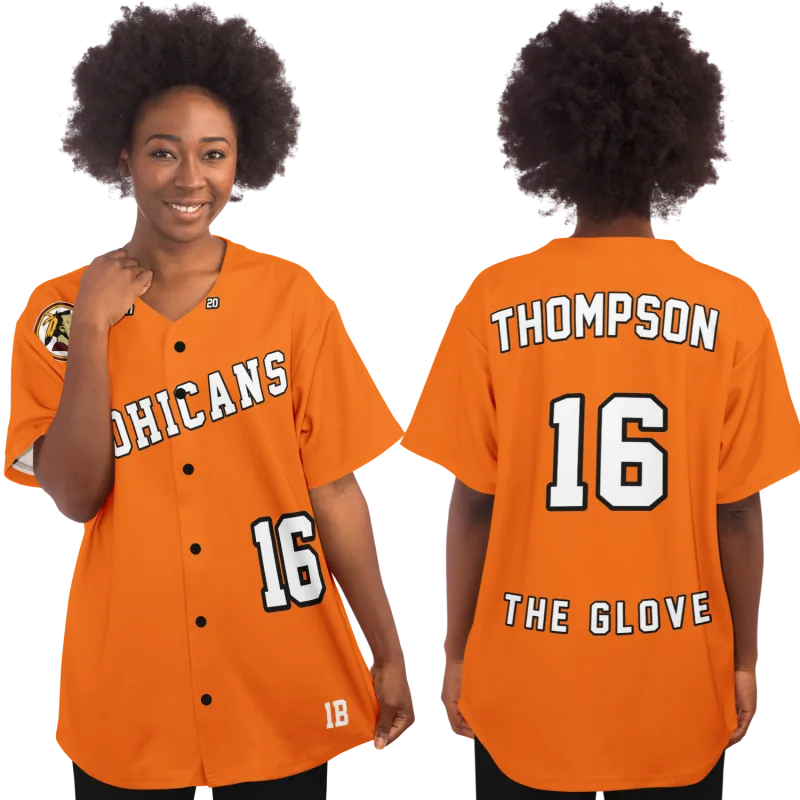


The last game ends differently than you expect. The silence that follows isn't relief — it's the particular quiet of a structure that held your days together suddenly going still. No dugout noise. No batting practice rhythm. No Friday game on the calendar. If you've lived inside that quiet, you already know why redefining success after sports isn't a motivational concept. It's a genuine reckoning with who you are when the sport stops asking you to show up.
For most high school baseball and softball players, the game was never just an activity. It organized time, measured effort, and produced a clear read on where you stood relative to yourself and everyone else. ERA, batting average, stolen base percentage — the numbers were honest. Even when they were bad, they were legible. You knew.
The transition hits hardest not when the numbers are poor, but when the numbers disappear entirely. No standings. No postgame recap. No coach circling back Monday to tell you what held up and what needs work before the next opponent. Just open, unscored life — full of decisions that don't resolve into a clean win or loss by 9 PM.
This isn't a list of skills sports taught you. You've read those. What follows is harder and more useful: a direct challenge to the win/loss thinking that structured your identity for years, and a working framework for building something more durable in its place.
The Win/Loss Binary — And Why It Eventually Stops Working
Sports resolves ambiguity in a way almost nothing else does. You step into the batter's box and the at-bat produces an outcome. The inning ends and the score updates. Recruiters, coaches, and opponents evaluate you through statistics that haven't fundamentally changed in over a hundred years. In a world full of subjective judgments and moving goalposts, baseball and softball offered something genuinely rare: outcomes you could read clearly.


That clarity builds valuable habits. High school athletes learn to track progress in real time, connect effort to result, and adjust when the feedback says they're off. These are not soft skills — they are specific, practiced cognitive patterns developed over years of structured competition.
The habits aren't the problem. The problem arrives when the measurement system is gone but the need for one isn't.
When a playing career ends — at graduation, after a non-recruited senior season, or somewhere in between — the athlete's internal feedback system doesn't automatically update to match the new environment. In our experience covering this transition, two patterns emerge consistently. The first: a former player pours serious effort into a new goal, achieves it, and feels almost nothing — because there was no scoreboard to confirm it mattered. The second: a former player avoids new pursuits entirely, because without clear metrics, both success and failure feel invisible and therefore pointless.
Neither is weakness. Both are the predictable outcome of spending formative years inside a beautifully precise feedback structure that the rest of life simply doesn't provide.
Redefining success after sports starts here — not with finding a substitute scoreboard, but with asking honestly why you needed one, and deciding whether that framework still serves the life you're actually living now.
What the Game Actually Taught You (Beyond the Standard List)
Ask any former athlete what sports gave them and you'll hear the same catalog: discipline, teamwork, work ethic, resilience. These are real. But reducing the game's contribution to a skills list is like describing a season by its final record — technically accurate, completely incomplete.
Here's what baseball and softball actually built in you, beneath the headline attributes:
A calibrated relationship with failure. Elite hitters fail seven times out of ten, by design. You didn't just learn to bounce back from a bad game — you learned to remain functional, even sharp, inside a structure where failure is the statistical norm. Most people spend their adult lives trying to build this tolerance. You practiced it under live conditions for years.
The capacity to perform while being watched. Every at-bat was public. Every error had witnesses. You learned — not abstractly, but through repeated exposure — to separate your self-concept from your visible mistakes. That specific skill follows you into every job interview, every difficult conversation, every moment when the stakes are high and people are watching.
Periodization as an instinct. Preseason, regular season, postseason, offseason — athletes understand intuitively that sustained performance requires structured variation. You can't go full intensity indefinitely. The offseason isn't failure; it's the preparation that makes the next season possible. Most people discover this principle after their first significant burnout. You already carry it.
These aren't transferable skills from sports in the résumé sense. They are the structural features of a particular kind of character — one that was built through years of intentional, pressurized repetition. The question isn't whether that character carries forward. The question is whether you're choosing to bring it into new arenas, or leaving it behind because you haven't seen where it fits yet.
The Framework: Four Questions That Score a Life
Marcus T., 22, played varsity softball for three seasons before graduating and starting a pre-med program at a state university. Six months in, she was excelling academically but described feeling like she was going through the motions — performing without feeling anything about the performance. She started journaling specifically about what competing had felt like at its best. Three entries in, she realized she hadn't been chasing wins. She'd been chasing the feeling of being completely absorbed by something that demanded everything she had. Once she named that as the actual goal, her approach to coursework, study groups, and long-term planning reorganized around it almost immediately.
Marcus's shift — from tracking outcomes to identifying the underlying drive — is the essential move in building a framework for success in life after sports. It doesn't require abandoning your competitive instincts. It requires aiming them at something you've actually chosen.
These four questions form that framework. They're not rhetorical. They produce better answers in writing than in your head, and better answers on the third attempt than the first.
1. What Was I Actually Competing For?
Not what were you trying to achieve — what was the interior experience when the game was at its best? The precision of a perfectly located pitch? The clarity of reading a play developing in front of you and knowing exactly what to do? The specific feeling of a team operating in complete sync? The private discipline of improving your mechanics across a full season with no one tracking it but you?
The scoreboard measured outcomes. The interior experience was the actual target. Separate them and you have the first genuine clue about what to build toward now.
2. Where Does My Competitive Drive Actually Live Right Now?
Competitive drive doesn't dissolve when a playing career ends. It displaces — often into directions the athlete didn't consciously choose. Former players who don't examine this describe the same patterns: chronic dissatisfaction with pursuits that aren't structured for competition, intensity that attaches to social comparison, or a restlessness that nothing seems to resolve.
Examine yours specifically. Where do you feel the same internal alertness you felt before a big game? Where does the pull to improve — not to be praised, but to actually get better — show up? Name those environments. The drive is operational. The question is whether you're directing it or letting it find its own outlet.
3. What Does "Getting Better" Look Like Without a Stat Line?
Athletes are often unusually good at personal development because sports provided constant, specific feedback on whether improvement was happening. Losing that feedback mechanism doesn't stop the development — it means you have to build the feedback system yourself.
This is a skill, and it's learnable. The former athletes who translate most effectively into personal growth after playing are the ones who construct their own measurement systems without being assigned one — who track their own progression in a new skill, map their development across a semester, and hold themselves to standards they defined rather than inherited from a league rulebook.
4. Who Do I Want to Be When This Season Is Over?
In sports, character gets tested under pressure and evaluated at the end of the year. Coaches, teammates, and opponents all carry a version of who you are when things get hard. Most athletes care about that version — they want to be known as someone who competed with integrity, led by example, and didn't fold when the margin was tight.
That instinct doesn't have an expiration date. And outside sports, where the pressure is less visible but often no less real, it may matter more. Define the character you want to build — not the achievements you want to accumulate — and you have the most durable definition of success you will ever work from. Achievements shift. Character compounds.
Resilience Is a Practice, Not a Memory
There's a tendency among former athletes to describe their resilience in the past tense — as something the game gave them, something they have. As though the capacity is stored rather than maintained.
It isn't stored. It's trained. And like arm strength or plate discipline, it requires continued use to stay sharp.
The good news is that life after sports is not short on opportunities to practice. Academic setbacks that require recalibration. Career directions that don't develop the way you planned. Relationships that demand the same patient re-evaluation you gave your mechanics when your swing was off. The framework is identical to what you already know. The arena is different.
Personal growth for former athletes doesn't happen automatically on the strength of past athletic identity. It happens when the athlete makes the deliberate choice to bring the same intention to new arenas that they brought to the field — to treat difficulty as diagnostic information, to stay coachable when no one is requiring it, to value the process of improvement independent of any particular scoreboard.
The athletes who describe genuine satisfaction in their twenties and thirties share one specific trait: at some point — usually once, specifically, often in a difficult conversation or a journal entry — they decided to be an athlete in life, not just someone who used to be one. They didn't retire from competing. They chose where to compete next.
Athlete Goals After Playing: Thinking in Seasons Again
One of the most practical reframes former athletes describe is returning to seasonal thinking — not with artificial urgency, but with the intentional structure that defining a season naturally produces.
A season has a preparation phase, an active phase, and a built-in evaluation period. It has a goal specific enough to pursue and broad enough to allow for unexpected development. It has defined roles and built-in accountability. You already know how to live inside that structure. The question is whether you're applying it deliberately to the life you're building now.
Athlete goals after playing don't need to be large to be meaningful. A semester of focused skill development is a season. A year of building a specific professional capability is a season. A summer of rebuilding a physical practice — whatever that looks like in your current context — is a season. What matters is that the goal has a defined scope, a way to measure whether progress is happening, and a moment of honest evaluation at the end.
Most people move through goals indefinitely, never stopping to assess whether they're actually improving or whether the goal itself is still the right one. Athletes know when the season ends. They know when to evaluate. Bring that structural discipline into your new arenas, and you carry a genuine advantage into environments where most people around you are drifting without one.
The NCAA's research on athlete identity and career transition consistently shows that athletes who actively engage with the identity shift — rather than treating their playing career as a chapter that simply closed — report meaningfully stronger career satisfaction and psychological wellbeing in the years that follow. The engagement itself is the variable. Not the sport. Not the level of play. The willingness to take the transition seriously.
Your jersey is still out there waiting.
Design yours in minutes and see your name and number exactly the way you remember it — a tribute to the seasons that shaped you, built in the style of the game you gave everything to.
Frequently Asked Questions
How long does it take to feel grounded again after a playing career ends?
There's no honest universal answer. What's consistent across former athletes is that the period of disorientation tends to be significantly shorter when the athlete engages with the transition actively — through reflection, deliberate goal-setting, or finding community with others navigating the same shift — versus waiting for the feeling to resolve on its own. Active engagement tends to compress months into weeks. Passive waiting tends to extend weeks into years. The transition doesn't reward patience as much as it rewards intention.
Are the habits I built in baseball and softball actually useful outside sports?
Yes — but the transfer isn't automatic. The capacity for sustained effort under pressure, the tolerance for failure as a majority experience, and the ability to perform while being observed are real, durable traits that sports built in you. The catch is that they need to be consciously redirected toward new arenas. The athlete who assumes competitive drive will simply find its own productive outlet often discovers it found an outlet they didn't choose. The one who deliberately identifies where they want to compete and prepares for it the same way they prepared for a season finds the transfer surprisingly direct. The capability is present. The application requires a decision.
What if new goals don't feel as meaningful as playing did?
This is one of the most honest questions former athletes ask, and it deserves a straight answer. The meaning that sports produced came from a combination of factors that rarely arrive together in something new: a tight community, physical engagement, genuinely high stakes, and years of accumulated identity investment. New pursuits almost never have all four from the start. The goal isn't to find something that immediately feels the way the game did. The goal is to build meaning in a new arena through the same mechanism that built it in sports — sustained commitment, real challenge, and community. That takes time and a willingness to stay in the early, unglamorous phases of something new long enough for it to become genuinely yours. Most former athletes who describe deep satisfaction in their post-playing lives point to a window of two to four years before something new felt as meaningful as the game once did. Start building now. Give it the same patience you gave your development as a player.
Is it normal to grieve the end of a playing career even when you knew it was coming?
Completely normal — and worth naming accurately. The end of a playing career is a real loss: of identity, of community, of a daily structure that gave your effort a clear context. Anticipating a loss doesn't reduce its size when it arrives. Many former athletes resist the word grief because the career ended naturally rather than in tragedy. But grief isn't reserved for catastrophic events. It's the fitting response to genuine loss, and naming it accurately is usually the first step toward moving through it rather than around it.
See also: losing your athletic identity after high school | the grief that comes with walking away from the game | what high school sports actually taught you about competing and succeeding