

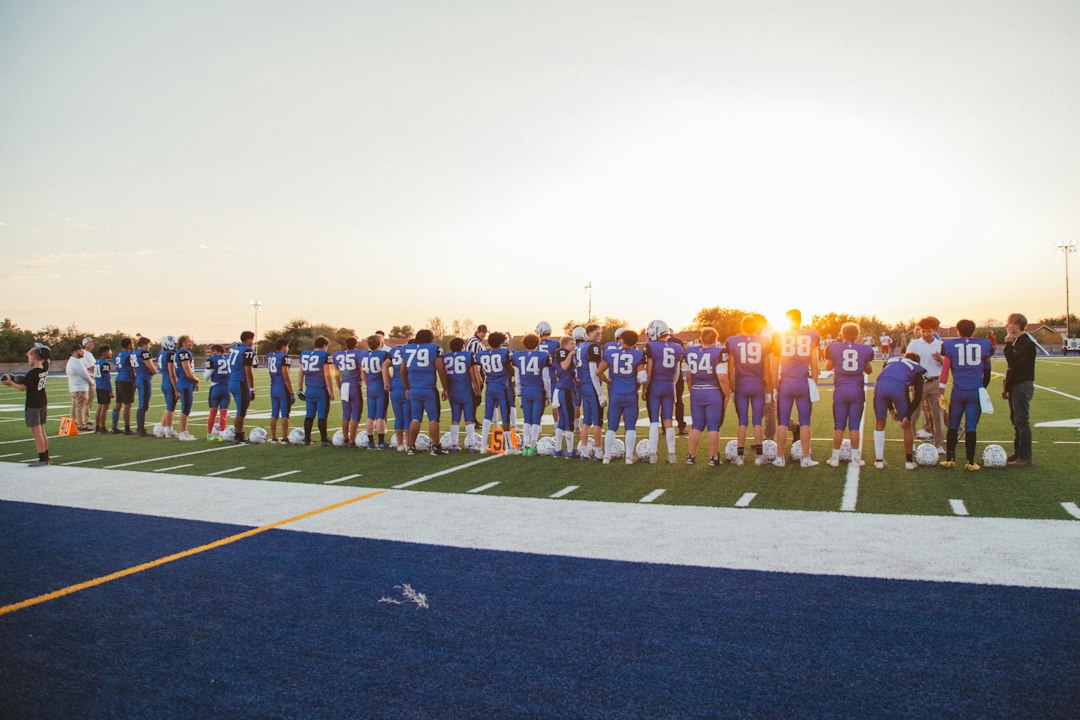




You didn't think about it consciously. Then someone mentioned a gymnasium smell — that specific blend of hardwood floor wax and rubber sneaker — and suddenly you were seventeen again, heart hammering before a game you haven't thought about in a decade.
That's what the types of high school sports memories do to former athletes. They don't fade the way ordinary recollections do. They sit somewhere deeper, filed under something more permanent than "the past." They're filed under who you were becoming.
What's interesting — and what almost nobody has mapped out — is that these memories aren't random. They cluster. Every former athlete, regardless of sport, regardless of era, regardless of whether their team won a single game, carries the same distinct categories of athletic memory. The same psychological taxonomy. The same seven types.
This isn't a list of great moments. It's a framework. A way of understanding why certain memories stay with you while entire years of your life blur into nothing. Understanding the kinds of athletic memories you carry — and which category hits you hardest — tells you something real about what those years actually built in you.
Let's name them properly, one by one.
The First: When Everything in Sports Was New
Before the calluses. Before you knew how to read a defense. Before you had opinions about warm-up routines.
There was a first.
First practice. First uniform. First time a coach called your name in a way that meant you belonged here. First time you executed something technically difficult and felt your body understand a movement before your mind did.
The Firsts are a distinct athlete memory type precisely because of their sensory density. When your nervous system encounters something genuinely novel — a new physical skill, a new social role, a new identity — it encodes the experience with unusual completeness. The sights, sounds, and feelings of that first day in the locker room, that first bus ride in a team jersey, that first starting lineup announcement — they're recorded in high resolution.


Most former athletes remember their first game in more detail than games they played hundreds of times. That's not sentiment. That's how memory actually works. Novelty forces the brain to pay attention, and attention is what makes memories stick.
The First memory category carries a specific emotional texture: the simultaneous terror and exhilaration of not yet knowing what you were capable of. You were, in that moment, standing at the threshold of a version of yourself that hadn't been built yet.
If the Firsts hit you hardest, it usually means the sport gave you your first real taste of earned competence. The first place you discovered that sustained effort produced a measurable, visible result. That lesson — that you could build something by working at it — often outlasts everything else.
The Failures: The Ones You Still Replay
You know exactly which one you're thinking of right now.
The missed free throw. The fumble. The relay leg you lost by a step. The vault that didn't open the way it was supposed to in a meet where it mattered. The error in the seventh inning. You don't need to search for it — it's available, always, in startling clarity.
The Failures are among the most psychologically complex kinds of athletic memories, and also among the most underrated in terms of what they actually produced. Research from the American Psychological Association on resilience consistently points to failure processing — not success — as the primary driver of psychological toughness in adolescents. High school athletics is one of the few environments where teenagers are regularly given the chance to fail publicly, process that failure within a supportive structure, and try again.
The failure you still replay wasn't wasted. In most cases, it was the event that taught you what you actually believed about yourself when things went wrong. Did you come back the next day? Did you make the adjustment? Did you learn to separate what happened from who you are?
In our experience talking to former athletes, the Failure memories split into two types: the ones that still carry a sting of unresolved "what if," and the ones that carry something closer to pride — because you know what you did the morning after. Both are instructive. Neither is something to file away as simply "hard times."
If the Failures are your dominant memory category, the sport handed you something that classrooms rarely deliver: a real test, with real stakes, and the chance to find out what you were actually made of.
The Team Bus: The Space Between
This one is harder to explain to people who weren't there.
It wasn't the game. It wasn't the locker room speech. It was the bus. Two hours each way on a road trip you've long since forgotten the destination of. The specific weight of a teammate's shoulder when someone fell asleep against you. The songs someone's phone played too loud from the back row. The particular quality of conversation that only happens in a moving vehicle in the dark when nobody's performing for anyone.
The Team Bus is its own athlete memory category, and former athletes almost universally recognize it the moment you name it. It represents something precise: the texture of belonging. Not the achievement of belonging — the daily, ordinary, unglamorous experience of being part of something.
Sports culture tends to celebrate the peak moments. The wins. The championships. The highlight plays. But ask most former athletes what they actually miss, and the answer is surprisingly consistent: the between times. The bus. The stretch lines. The thirty minutes in the weight room before school when the team was the only people awake. The group text that started as logistics and became a friendship that outlasted the sport by fifteen years.
The Team Bus category captures the social architecture of high school athletics — the fact that the sport built a community that didn't require anything from you except showing up. In that community, you were known by more than your academic performance or your family situation. You were known by how you showed up when it was hard, and whether your teammates could count on you.
That, for a lot of people, was the first time they'd been known that way. It's no surprise the bus ride home stays with them.
The Big Game: Pressure, Stakes, and the Version of You That Showed Up
Every sport has a version of this. The playoff. The championship. The rivalry game that the entire school knew about. The meet where the qualifier spot was on the line.
The Big Game memory category is the one that comes with the most pre-existing narrative weight — because everyone around you told you it was significant before it started. Your coaches referenced it in practice. The student section showed up in numbers it never did for a regular-season contest. You went through a different warm-up. You felt something in your stomach that you didn't feel on an ordinary Tuesday.
What makes this memory category distinct isn't the game itself. It's the encounter with pressure at a scale most teenagers have never faced. The Big Game is, for many former athletes, the first time they were in a situation where the stakes felt genuinely high — and where they had to find out, in real time, whether they could perform anyway.
Some did. Some didn't. Both outcomes produced something real.
Marcus T., 34, ran the anchor leg of the 4x400 relay at his state qualifier and came from behind to put his team over the line by two-tenths of a second. He says he can still feel the exact texture of the track surface through his spikes in the last hundred meters — the way time seemed to reorganize itself, slower and faster simultaneously. He went into finance. But he says every presentation he's ever given under pressure has some strand of that race running through it.
The Big Game memories are the ones former athletes describe when someone asks them about being tested. What the category actually contains is not a game result. It's an answer to a question about themselves that they've been carrying ever since.
The Coach's Speech: Words That Are Still in Your Body
You might not remember it word for word. But you remember the feeling of it.
The halftime speech that shifted something. The quiet conversation in the parking lot after a bad loss where the coach said the exact right thing. The pre-season talk that laid out a standard so clearly that it became an internal measuring stick you still use. The moment of individual feedback — delivered in the gym, or on a practice field, or in a brief exchange at the water cooler — that landed somewhere permanent.
The Coach's Speech memory category is not about oratory. It's about the specific experience of being seen and spoken to by someone who had standing in your world. At sixteen or seventeen, a coach's opinion carried a particular weight. They weren't your parent, which meant they had no obligation to encourage you. When they said something true and hard, you believed it. When they said something affirming, you filed it under a different category than compliments from people who were required to love you.
The speeches that stayed weren't always the motivational ones. Former athletes just as often cite a coach's honesty — the moment someone told them precisely what they needed to work on, without softening it, with the clear implication that they believed the improvement was possible — as the formative coaching memory.
What the Coach's Speech category really contains is the experience of being invested in. Of having a competent adult focus attention on your development and decide it was worth their time. For some athletes, that was the first time anyone had related to them primarily in terms of their potential rather than their current performance.
Those words — even the fragments of them that survive — have a way of persisting into the decisions of adult life.
The Sweat and Grind: What You Built Before Anyone Was Watching
This one never makes the highlight reel. It doesn't photograph well.
It's the 5:45 AM conditioning session in November when the field is frozen and nobody knows you're there. The summer workout in a gym without air conditioning. The three hundredth repetition of a footwork drill that you finally got right on the three hundred and first. The long weeks of preseason when the team hadn't yet become the team — when it was still just a group of people suffering together and finding out who would stay.
The Sweat and Grind is the memory category that former athletes reach for when they want to explain something about themselves that's hard to explain otherwise. It's the category that answers the question: "How did you get to be someone who finishes hard things?"
Because that's what the grind built. Not just fitness. Not just skill. The repeated experience of doing something difficult, in conditions that did not reward it immediately, with no audience. The internalization — so gradual it was almost invisible at the time — that the standard you held yourself to when nobody was watching was the actual standard. Not the game-day version. The practice version.
In our experience, the athletes who credit this memory category most heavily are often the ones who translated the discipline of sport most directly into the discipline of adult professional life. The morning routines. The consistency. The capacity to do the work before the result is visible.
The Sweat and Grind category is how high school sports built character without ever announcing that it was doing so.
The Last Time: The One You Didn't Know Was Coming
Here it is. The one that hits differently.
You didn't know it was the last time. That's the thing. You walked off the field, or the court, or the track, or the pool deck, and you didn't know you were walking away from something for the last time. There was no ceremony. No announcement. No opportunity to stop and look around and try to record it properly.
The game ended. The season ended. The eligibility ended. And the version of you who was an active athlete — who had a team, a practice schedule, a jersey with your name on it, a specific role in a specific community — quietly concluded.
The Last Time memory category is the one former athletes describe with the most complexity, because it contains something that the other six categories don't: the awareness that a door closed before you were ready. That you would have done something differently if you'd known. That the ordinary Tuesday afternoon workout you didn't fully appreciate was, in some technical sense, it.
This isn't only about loss. It's also about the specificity of what the years built. The Last Time memory carries its weight precisely because the thing it ended mattered. You wouldn't feel the finality so sharply if the sport hadn't given you something real.
The Last Time is why jerseys last. Why the number means something. Why a forty-year-old who hasn't competed since high school can still recall the specific weight of their uniform on their shoulders. The sport didn't just give you experiences — it gave you an identity. And that identity doesn't expire when the eligibility does.
Your jersey is still out there waiting.
Every one of these seven categories — the Firsts, the Failures, the Team Bus, the Big Game, the Coach's Speech, the Sweat and Grind, and the Last Time — lives somewhere in the specific number, name, and colors you wore.
Design yours in minutes and see your name and number exactly the way you remember it.
Frequently Asked Questions
What are the main types of high school sports memories former athletes share?
Research and anecdotal evidence from former athletes consistently point to seven distinct athlete memory types: the Firsts (novelty and initial identity formation), the Failures (resilience and self-knowledge), the Team Bus (belonging and community), the Big Game (pressure and performance under stakes), the Coach's Speech (mentorship and being seen), the Sweat and Grind (discipline and character), and the Last Time (finality and the weight of what was built). These high school sports moments categories appear across sports, genders, competitive levels, and decades — they're not specific to any one athletic experience.
Why do high school sports memories feel more vivid than other teenage memories?
Several factors converge. First, the emotional intensity of athletic experiences — especially competition, physical exertion, and team belonging — triggers stronger memory encoding than routine events. Second, adolescence is a period of active identity formation, and sports participation provides repeated, structured opportunities for identity-building experiences. Third, many athletic memories involve genuine novelty and genuine stakes — two conditions that research consistently links to deeper, more durable memory formation. The result is that a relay race from twenty years ago can feel more immediate than an entire school year that contained no moments of comparable intensity.
Can the "Last Time" memory be triggered even if you knew in advance it was your final season?
Yes, and in some ways the advance awareness makes it more complex rather than less. Athletes who knew their senior season was their last often report a specific kind of double consciousness — watching themselves have experiences while also trying to record them, which paradoxically makes some moments feel less real in the moment and more significant in retrospect. The Last Time memory category is less about the specific final event and more about the recognition, which can arrive years later, that a particular chapter of identity concluded. Many former athletes report the full weight of it surfacing not at the final game but years later — at a reunion, or when watching a child play, or when handling an old jersey.
Which memory category do most former athletes say shaped them most?
This varies significantly by individual, but in structured conversations with former athletes across sports and competitive levels, the Sweat and Grind and the Failures categories come up most frequently when athletes are asked what the sport built in them rather than what it gave them. The distinction matters: the Big Game and the Firsts are often described as gifts — experiences received. The Grind and the Failures are described as constructions — things the athlete built by getting through something difficult. The latter category tends to produce the more durable sense of earned identity.
How do these kinds of athletic memories differ from professional or college sports memories?
High school athletic memories occupy a distinct psychological territory because they occur during the period of primary identity formation — roughly ages 14 to 18. The experiences don't just happen to an already-formed person; they participate in forming that person. College and professional athletic memories are often described by former athletes as achievements — things they did. High school athletic memories are more often described as formative — experiences that shaped who they became. The absence of professional stakes in high school sports also means the community and relational dimensions of the Team Bus and Coach's Speech categories tend to register more strongly than they might in higher-level competition.
See also: why high school sports still matter to adults | why your senior season memories are so vivid | the grief of losing your athletic identity after high school | why you still dream about high school games | what high school sports teach you that nothing else could