

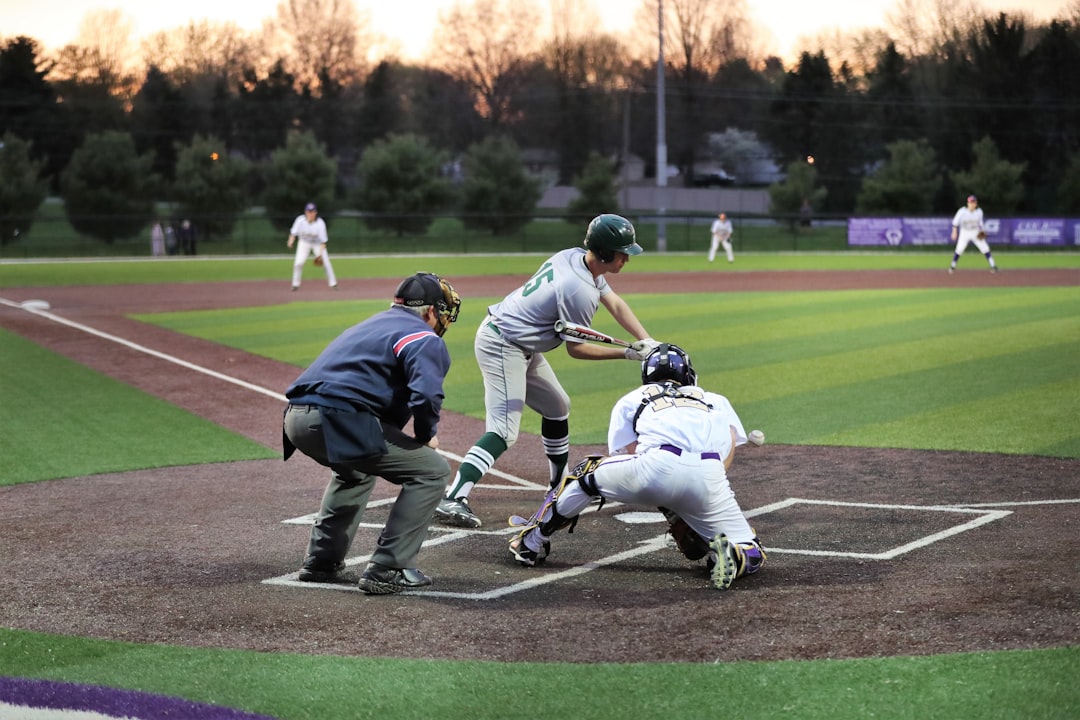




The alarm goes off at 5:47 a.m. Not because it was set for 5:47 — but because you've been lying there since 5:30, already mentally running through the cooler inventory. Ice. Check. Sunscreen. Check. Camp chairs, scorebook, extra batting gloves, the playlist that always seems to get the team right when they're down two in the fourth. The summer baseball tournament season doesn't ask if you're ready. It just arrives, the way summer always does: all at once, smelling like cut grass and possibility.
This is the culture. If you're living it right now — as a player, a coach, a parent on a folding chair behind the chain-link — you already know what we're talking about. And if you're standing at the edge of your first full summer tournament schedule, trying to figure out what you're actually signing up for, this is the piece that tells you precisely what it is.
The Tournament Circuit: What It Actually Looks Like
The summer baseball tournament schedule isn't a single event. It's a season within a season — a string of weekends from late May through August that collectively define the summer for thousands of players across every age bracket.
A typical tournament runs Friday evening through Sunday afternoon. Pool play on Friday and Saturday morning establishes seeding. Single elimination — or double, if the bracket allows — takes over from there. By Sunday afternoon, you know precisely where you stand.
What makes the summer tournament circuit distinct from regular-season rec league play is the concentration. You might play two or three games in a single day. You're seeing pitchers you've never faced. The defensive alignments are sharper, the coaching is more deliberate, and the stakes — even when nothing official is on the line — feel real in a way that Tuesday night league games sometimes don't.
For the players, this compression is everything. Nothing accelerates development like playing under that kind of repeated pressure, in sequence, with no off-days to forget what you just did wrong or right.


In our experience talking to coaches at the youth and high school level, the players who make the biggest jumps between spring and fall tend to be the ones who logged the most tournament weekends over the summer. The repetition of high-stakes situations — pitcher down 3-2, two outs, runner on second — isn't replicable in practice. Tournaments build it in real time.
The Road Trip: Where the Memories Actually Live
Here's the part nobody puts on the tournament flyer: the drive.
The four-hour caravan to a regional tournament in a city you've never visited. The two-vehicle convoy with the coaches following the GPS while the parents follow the coaches. The stop at the fast-food place off the highway exit where everyone orders the same thing they always order, because by week six of summer ball, the crew has its road food traditions locked in.
The hotel the night before. The team dinner where someone inevitably tells a story about the game from two weeks ago — the one where the shortstop made the throw that nobody should have been able to make — and it gets bigger every time. These are the moments that survive. Not every at-bat. Not every score. But the hotel lobby at 10 p.m. the night before a big bracket game, when the team is loose and loud and completely unaware that they're in the middle of something they'll remember for twenty years.
Marcus T., 38, coaches a 14U travel squad out of the Chicago suburbs and has been running the summer tournament circuit with his team for six consecutive seasons. He keeps a road trip journal — just a notes app on his phone, nothing formal — and says the entries he goes back to most aren't the championships. They're the drives home after the losses. "That's when you actually coach," he says. "Everybody's quiet for about forty minutes. Then somebody starts talking. And that's when you find out who your team is." For players who grew up on the tournament circuit, summer ball was a high-intensity version of what it was really like playing high school baseball or softball — the same dugout banter, the same pre-game rituals, just packed into weekend-sized doses.
The road trip isn't a side effect of summer tournament baseball. For a lot of families and a lot of teams, it's the main event.
The Smell of It: Sensory Memory and Summer Ball
Let's be specific about the smell of cut grass and ballpark hot dogs, because both deserve better than generic mention.
Cut grass at a well-maintained tournament complex on a Saturday morning — that specific combination of moisture from the overnight dew still burning off, the chalked foul lines, and the dirt of a freshly dragged infield — is one of the most immediately evocative smells in American sports. The science of olfactory memory shows that smell has a more direct route to the brain's memory and emotion centers than any other sense. Which is why a grown adult can catch that specific scent on an October morning and be immediately, physically transported back to July.
The ballpark hot dog at a summer tournament is its own category. Not the fancy ballpark food that the major league parks have leaned into. The aluminum foil dog from the snack bar run by the booster parents, sitting in water that's been warm since 7:30 a.m. You know the one. You've had fifteen of them. You would have fifteen more.
Then there's the specific sound layer that completes it: the aluminum bat ping that carries differently in summer heat than it does in April. The infield chatter. The coach's voice doing the same three encouragements on a loop. The PA system at the bigger complexes crackling with lineup announcements that echo a little too much.
This is what summer baseball tournament season actually is. It's a full sensory experience that happens to also have a box score.
The Jersey: The One Thing That Travels With You
Every player on the summer circuit carries two versions of themselves: the player they are at home, and the player they become when the jersey goes on.
It sounds like a small thing. It isn't. There's a reason teams obsess over their tournament uniforms in a way they don't obsess over practice gear. The jersey is the visual identity that makes a collection of individual players into a unit. When everyone pulls on the same top — same colors, same name across the back, same number — something shifts. It's not sentiment. It's psychology.
The custom jersey on a summer tournament team does specific work:
- It marks belonging at crowded multi-field complexes where twenty teams are warming up simultaneously
- It creates the visual through-line in the photos and videos that will exist long after the summer ends
- It carries the team's identity into situations where individual confidence might waver — and the collective identity steadies it
The parents keeping score in the folding chairs behind the fence know it too. They're the ones taking the photo at 8 a.m. before the first pool play game, all twelve players lined up in matching jerseys, the tournament complex stretching out behind them. That photo goes in a lot of places. It stays in a lot of places.
What we hear consistently — from players, from coaches, from parents who've been through multiple tournament summers — is that the jersey is the artifact. The bracket sheet gets lost. The scorebook gets left in someone's trunk. The jersey hangs in a closet or gets framed or shows up at a reunion decades later, and it does the whole job of bringing that summer back. Because the softball diamond never forgot your swing — and that jersey in the closet is proof that neither did you.
Making the Most of the Summer Tournament Schedule
If you're heading into your first full summer tournament circuit, or if you've been doing it for years and want to be more intentional about the experience, here's what actually works.
Before the first tournament:
- Get the travel logistics handled early. Hotels at tournament host cities book fast, especially for multi-team events at regional complexes. The families who wait until two weeks out are the ones paying twice as much for a room twenty minutes farther from the fields.
- Establish the crew's road food traditions deliberately. It sounds trivial. It becomes ritual, which is something else entirely.
- Make sure every player has their gear dialed in — not just functional, but theirs. A player who feels right in their uniform plays with a different kind of confidence.
During the tournament weekend:
- Build in recovery time between games when the schedule allows. Players who are pushed through back-to-back games on inadequate water and nutrition don't perform well in elimination rounds. This is basic, and it gets ignored constantly.
- Let the team own the experience. The coaches and parents are there to support it, not manage every moment. The team dinners, the hotel hallway time, the pre-game rituals the players develop on their own — those are theirs. Let them be.
- Watch the other games. Some of the best baseball education available on a summer tournament weekend is happening on the adjacent field. Even better when the whole team watches together — the shared "did you see that?" moments are half the point.
- Fill the downtime between games on purpose. When you've got two hours between a 9 a.m. finish and a 1 p.m. start, aimless is fine for about twenty minutes — then the whole dugout gets restless. The teams that handle tournament weekends best plan the in-between, not just the innings. Run a home run derby on a back field with a bucket of tennis balls and a chalk line for the fence, the whole roster howling for the kid who can't reach it. Host a movie night back at the hotel after Saturday's bracket games, twelve players crammed onto two beds with a bag of gas-station popcorn. Hold a board-game tournament where the loser buys the winner's first round of sunflower seeds, and watch a cutthroat bracket form over a deck of cards. It doesn't matter which one you pick. What matters is that the team has something to gather around besides their phones, so the two hours between games build them up instead of winding them down. None of it is baseball, and that's the point — the bonding carries into the dugout when the real bracket tightens on Sunday, and the whole thing turns dead time into the part of the weekend they actually talk about on the ride home.
- Protect young arms with pitch-count awareness and an off-season throwing shutdown. Overuse injuries — the kind behind the rise in teen Tommy John surgeries, which have tripled in two decades — are almost entirely preventable with rest.
After the summer:
One thing. Keep something. A photo, a program, a scorebook page, the jersey. Summer ball passes fast. The artifacts are the reason you get to re-enter it later. And if you're years removed from tournament weekends and just miss the feeling of stepping onto a diamond, there's a reason why rec league softball is the most honest version of baseball you'll ever play — no politics, no tryouts, just the game in its purest form.
Your jersey is still out there waiting.
Design yours in minutes and see your name and number just the way you remember it.
Frequently Asked Questions
What age groups typically play summer baseball tournaments?
Summer tournament baseball runs across nearly every age bracket, from 8U and 9U youth levels up through high school varsity and adult amateur leagues. The 10U–14U brackets tend to be the most heavily populated in most regions, with larger regional and national tournaments organized by associations like USSSA, Perfect Game, and AAU drawing hundreds of teams. Most players get their first tournament experience somewhere between 9 and 11 years old, and many continue playing tournament ball through their high school years alongside their school programs.
How long does a typical summer baseball tournament last?
Most weekend tournaments run from Friday evening through Sunday afternoon — roughly 60 hours from first pitch to final out. Pool play typically occupies Friday evening and Saturday morning, with bracket play beginning Saturday afternoon and running through Sunday's championship game. Some larger regional events extend to long weekends, adding a Monday bracket. Expect your team to play between three and five games over the course of a standard tournament weekend, depending on bracket size and how deep you advance.
What should we bring to a summer baseball tournament weekend?
Beyond the obvious gear — equipment bags, batting helmets, cleats — the families who have the best tournament weekends are the ones who treat it like a genuine outdoor expedition. A well-stocked cooler with real food (not just gas station options) makes a measurable difference across a long Saturday of back-to-back games. Folding chairs, a pop-up shade tent for hot complexes, and a portable battery pack for phones are practical staples. A printed or downloaded copy of the tournament bracket matters more than people realize — cell service at large multi-field complexes is often unreliable. And sunscreen. Bring genuinely more sunscreen than you think you need.
How much does summer travel baseball cost?
Most families spend between $2,000 and $8,000+ per year on summer travel baseball, and a single tournament weekend alone typically runs $500 to $1,500 once you add up the entry fee, hotel, gas, and food. That total isn't just team dues — equipment, travel, gate fees, meals, and the occasional missed workday all stack up fast. Knowing the real number up front beats getting surprised halfway through June.
How do summer tournament results affect a player's recruiting profile?
At the high school level, summer tournament baseball — particularly events run by organizations like Perfect Game or Prep Baseball Report — is one of the primary venues where college coaches evaluate talent. Scouts and college programs attend showcase tournaments specifically to watch players in competitive, high-repetition environments. For players with collegiate ambitions, the summer tournament schedule isn't supplemental to the recruiting process; it often is the recruiting process. Performance in summer tournament settings, documented on platforms that coaches actively monitor, carries significant weight in how players are evaluated going into their junior and senior years.
See also: why high school sports still matter so much to adults | why your senior season memories feel so impossibly clear | the grief that hits when the last tournament is finally over | adult recreational leagues that can bring some of that back | the bus ride home after a tournament loss