

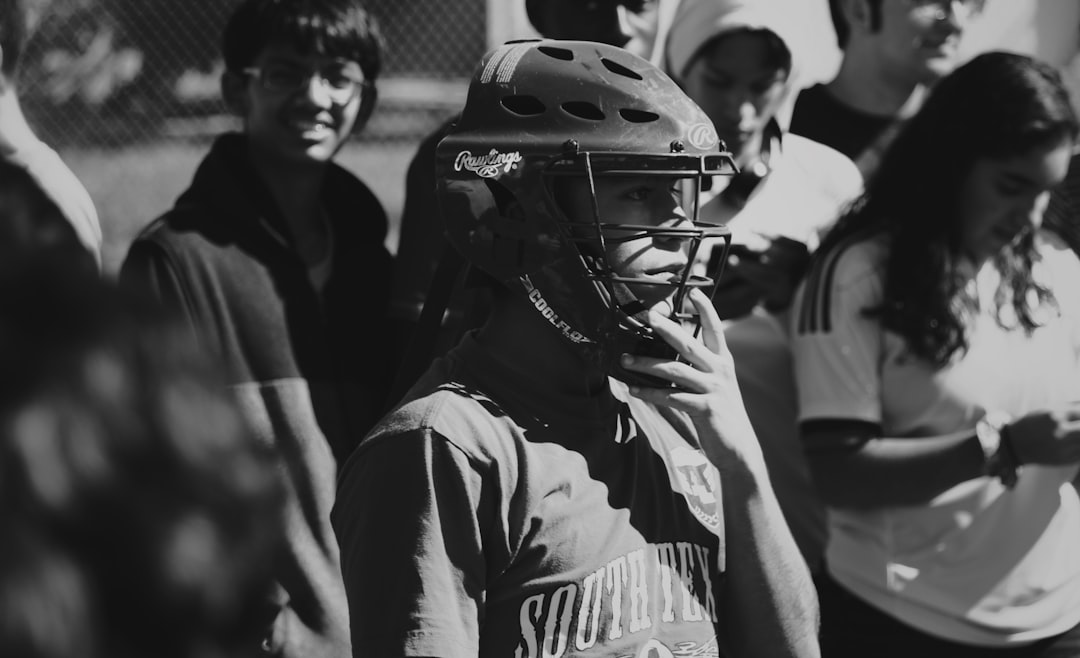



There's a specific moment that every high school baseball and softball player remembers.
It's not the game-winning hit. It's not the championship trophy photo. It's the moment before all of that — standing in the dugout, smelling the dirt and the grass and somebody's leftover sunflower seeds, watching the field fill with light at 4:30 in the afternoon, knowing that for the next two hours, nothing else in your life existed.
If you know what playing high school baseball or softball is like, you already felt that just now.
This is for the players who lived it — and for anyone who wants to understand what "playing baseball or softball in high school" actually meant when the games are over, the uniforms are folded, and the years have passed. Not the stats. Not the standings. The real thing.
The Season Didn't Start at the First Game
Every player who went through a high school program knows the truth: by the time the first pitch was thrown in a real game, you'd already been through something.
Fall workouts, winter conditioning, early spring tryouts — the season had been building since October for a game that didn't officially start until March or April. That gap is where teams were actually made.
In our experience, the players who remember their high school careers most vividly are almost never the ones who had the best individual stats. They're the ones who were there for the months before anyone was watching. The ones who ran the outfield poles in November because that's what the coach asked, and who showed up the next morning and did it again.
The pre-season taught you something important: commitment doesn't care whether anyone is looking.
The First Day of Tryouts
The specific anxiety of a high school tryout is hard to describe to someone who hasn't been through one. You knew some of the other players. You didn't know where you stood. The coaches were watching everything — your footwork, your arm, how you carried yourself between drills.

Softball players who went through fall ball tryouts after watching their older teammates get cut the previous spring had a different kind of readiness. They'd seen what the coaches were evaluating. They came in knowing the specific things that earned a roster spot — and they came in quietly determined to show them.
Baseball players who'd played summer travel ball sometimes arrived at high school tryouts expecting a confirmation of what they'd already been told about themselves. Sometimes that's what they got. Sometimes the player who'd been told he was a shortstop found out he was going to be an outfielder now, and had to figure out whether that was the end of something or the beginning of something else.
That renegotiation of identity — who you were in your travel ball world versus who you had to become in the high school program — was one of the most formative things the sport offered. Many players never had to face anything quite like it until years later, in a completely different context.
What Practice Actually Looked Like
Two hours on a Tuesday in March can pass like twenty minutes or like four years, depending on what the coaches had planned and what the weather decided to do.
High school baseball and softball practice had a rhythm to it that became its own kind of comfort after a while. Stretch together. Take ground balls by position. Hit in groups. Run. Do it again tomorrow.
The repetition wasn't mindless, though it could feel that way on a cold afternoon in early April when the coach was making you turn double plays from every angle until your footwork was automatic. The repetition was the point. The repetition was making you into someone who could execute under pressure without having to think about what to do with your feet.
The Weight of Being a Junior Varsity Player
Not everyone started on varsity, and the JV experience had its own complete ecosystem.
JV players often traveled shorter distances to smaller fields. They sometimes played with equipment that had seen better seasons. They didn't always have the stands packed on a Tuesday afternoon. But the games counted. The at-bats counted. The moments when a sophomore pitcher learned to trust her changeup in the fifth inning of a 2-1 game — those counted enormously.
The JV-to-varsity call-up was one of the most electric experiences a young baseball or softball player could have. Some players got it mid-season. Some waited until their junior year. Some never got the call and made their peace with that. The waiting, and the working while waiting, built a specific kind of character that didn't have an obvious name at the time.
The Bus Rides
Forty minutes to an away game. Eight kids in the back of a school bus with cleats clanging against the seat legs. Someone's playlist. Someone eating a granola bar. Someone with headphones in, already locked in.
The bus ride home after a loss was quieter than most people imagine. Not silent — but quieter. Everyone processing their own version of what had happened on the field. By the time you pulled back into the school parking lot, the processing was mostly done, and someone would say something to break the spell, and that was that.
The bus ride home after a win was something else entirely.
What Made the High School Game Different
The first thing you'd notice, if you'd only ever watched the pros, was that the game ended while the sun was still up. Seven innings, not nine. Nobody explained it was because of homework and jobs and the fact that half the roster had football conditioning before first period, and the lights on the field were older than your parents. You just knew a high school game fit inside an afternoon — and on a doubleheader Saturday, your legs knew it twice by the time you climbed back into the car.
The bat was the giveaway. Wood cracked; metal pinged. That sharp, ringing ping off an aluminum bat was the sound of your whole childhood, and the sweet spot was bigger than anything the big leagues were swinging. You could feel it in your hands — the ball jumping off the barrel in a way that made a fourteen-year-old feel dangerous.
And because nobody was clearing the fence every inning, you played small ball. Bunt, steal, hit-and-run, a sacrifice fly that moved the runner over. Coaches manufactured pressure instead of waiting for the big swing, because at this level mistakes were everywhere, and the team that made fewer of them won.
You also learned, fast, whether you were really a pitcher. State rules capped your count — around 105 pitches a day, with mandatory rest that scaled with how hard you'd thrown. Maybe you were a position player who came in to close once in a while. Maybe you were the guy who could only go once a week, ice on your shoulder every Tuesday night, counting the days until you were cleared to throw again.
And the week around all of it never let up. Pre-dawn practices that started while the fog was still on the grass, six days a week, the weight room after school, tee work and throwing into a pitch-back in the backyard until you couldn't see the ball anymore, homework due the same morning practice started. You didn't call it a grind. You just called it spring.
The Moments That Stayed With You
Kayla M., 31, remembers the afternoon her high school softball team won a sectional semifinal on a walk-off in extra innings. She'd gone 0-for-3 that day and scored the winning run after reaching on an error. "I didn't do anything impressive," she says. "But I've thought about that sprint from third base about a thousand times since then. I can still feel my cleats on the dirt."
The games you remember most aren't always the ones you played best. And the swing stays in the body long after the schedule clears — as plenty of former players discover, the softball diamond never forgot your swing, even if it's been twenty years.
That's one of the things that makes high school baseball and softball different from the travel ball and rec leagues that came before. The stakes were higher. The context was richer. These were your classmates in the stands. This was your school on the scoreboard. This was the team you'd been part of since early March, playing for something that would be over in a matter of weeks, and everyone knew it.
The Specific Feeling of Senior Year
Seniors in high school baseball and softball programs carry something during their final season that underclassmen can't quite access yet. Every practice has a last-time quality to it. Every road trip is one fewer remaining. The last home game — Senior Night, in many programs — comes with a particular kind of ceremony that most athletes are not emotionally prepared for no matter how many times older players warned them.
Standing on the field with your family for the pregame introduction. Getting your flowers or your plaque. Looking at the underclassmen on the team who still had time.
Some seniors play their final game and know it immediately when the last out is recorded. Others find out later — when summer arrives and there's no practice to go to — that the season ended before they'd fully said goodbye to it.
What the Sport Was Actually Teaching You
This is the part that takes years to see clearly.
High school baseball and softball were not primarily about the sport. The sport was the method. The actual subject being taught was something else, and most players didn't understand what they'd learned until they were well past it.
Accountability in a team context. You could be the best hitter on the team and still cost your team a run by not backing up a base. Every player eventually had to sit with the specific weight of an individual failure inside a collective outcome. That's not a lesson most 16-year-olds encounter in any other part of their life.
Failure as data, not identity. Even the best hitters in Major League Baseball fail seven out of ten times. High school players learned — some faster than others — that an 0-for-4 day was information, not a verdict. The players who internalized that distinction early went on to handle setbacks differently than the ones who never learned to separate performance from self-worth.
Reading a room without being told what to read. Who's up next. Who needs to be moved on the bases. Who's struggling today and needs a specific kind of encouragement versus space. Baseball and softball are slow enough between pitches that players with awareness could learn to read the emotional temperature of an entire dugout. That skill transferred.
Showing up on days when you didn't feel like it. This one is underrated and rarely discussed by coaches in terms that teenage players absorb immediately. But every athlete who played through a slump, who practiced in the rain, who stayed after to take extra ground balls when their confidence was low — they were building a relationship with commitment that most people don't develop until much later.
And then there was everything the sport taught that never made it into a rulebook — the unwritten rules of the diamond that baseball handed down player to player, in dugouts and on bus rides, long before anyone wrote them down.
The Uniform Was Part of It
There's something worth saying about the jersey.
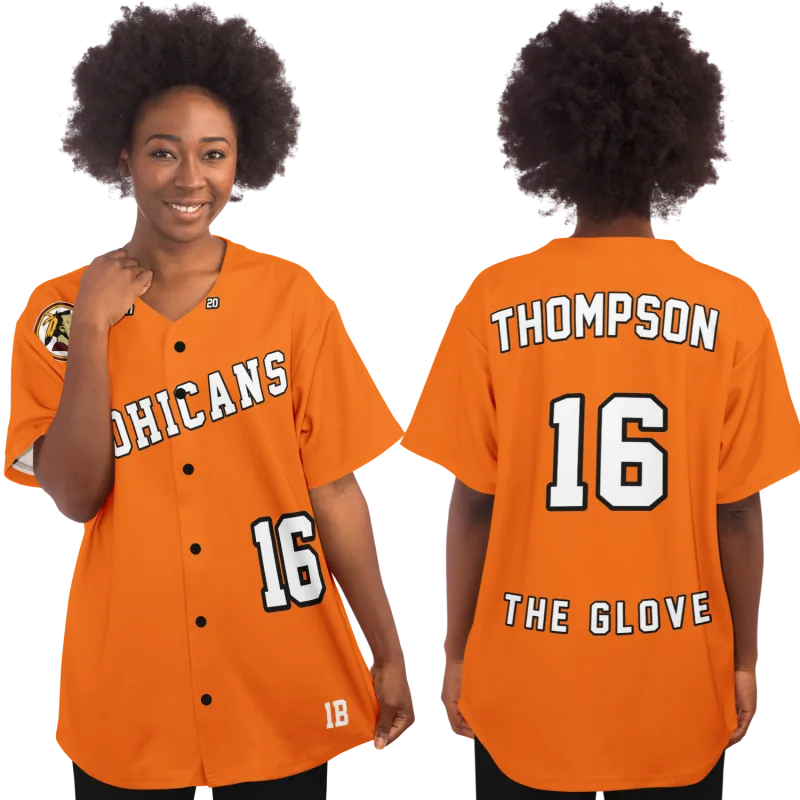
Every program's uniform meant something specific to the players who wore it. Not because of the brand or the cut — because of what it represented when it was on your back. Your name. Your number. Your school across your chest.
Softball players often remember the first time they saw their name on the back of a game jersey — the specific mix of pride and responsibility that came with it. Baseball players remember the weight of the cap, the way the stirrups felt, the smell of a jersey that had been worn through a double-header in June heat.
The uniform made the whole thing real in a way that nothing else did. It said: you're on this team. You earned this. You belong here.
That's why so many former high school players hold onto their jerseys for decades. It's not the fabric they're keeping. It's the evidence of what they were part of.
That's also what makes a jersey one of the most meaningful gifts for the baseball or softball fan in your life who actually played the game — you're not handing them fabric, you're handing back the evidence.
Your jersey is still out there waiting.
Design yours in minutes and see your name and number the way you remember it.
Frequently Asked Questions
What is high school baseball or softball really like compared to travel ball?
High school ball operates on a completely different emotional frequency than travel ball. Travel ball is largely individual-development focused — showcasing your skills to college coaches, competing for rankings, building an individual profile. High school ball is team-first in a way that travel ball rarely is, because the players in the dugout with you are also your classmates, and you're representing something larger than your personal stats. Many players who thrived in travel ball found the high school environment required a specific kind of ego adjustment. Many players who felt overlooked in travel ball found that high school programs gave them a context where their contributions actually mattered to a community that knew their name.
How hard is it to make the varsity team as a freshman or sophomore?
It depends entirely on the program, the graduating class, and the specific positions available. Some high school programs are small enough that a skilled freshman at a thin position can earn varsity minutes immediately. Others have deep rosters with multiple players at every spot, and the realistic path for an underclassman is one or two JV seasons before a varsity opportunity opens. The honest answer is that coaches are evaluating attitude, coachability, and consistency alongside raw ability — and a freshman who handles the JV experience with maturity is often on a faster track to varsity than a more talented player who visibly resents the situation.
Do high school baseball and softball players go on to play in college?
Some do, but the percentage is smaller than most high school players expect. According to the NCAA's most recent participation data, roughly 7% of high school baseball players and approximately 7.5% of high school softball players go on to play at the college level in any division. The more relevant question for most players is what the sport teaches them that carries forward — and that list is much longer than a roster spot.
What do players miss most about high school baseball or softball after it's over?
The answer is almost always the same: not the games themselves, but the daily structure of the team. Practice, pre-game routine, bus ride, game, the locker room afterward. The combination of shared purpose and specific ritual that made a Tuesday in April feel like it mattered. Former players describe it as "a container" — a structure their life had during that season that nothing afterward ever quite matched. The sport was the context. The team was the thing.
See also: why high school sports still matter so much to adults | the grief that hits when your athletic career ends at 18 | what high school sports teach you that nothing else could | how your athletic identity shapes who you become after the final out | why senior night still hits differently years later