

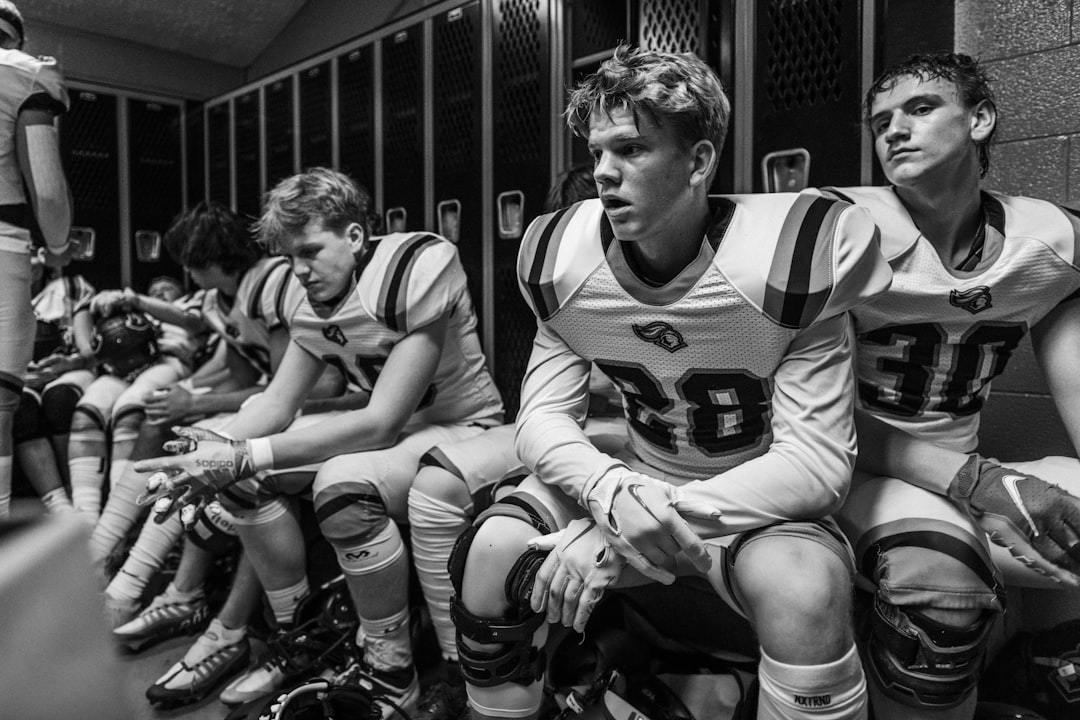




There's a specific moment every bench player knows.
The lineup card goes up on the dugout wall — the starting lineup you weren't sure you'd make. You scan it — top to bottom, then bottom to top — and your name isn't there. Again. Your teammates drift back to their gear, already in game mode. You sit down, grab your helmet even though you probably won't need it, and stare out at the field while the world moves on without you.
Getting benched in high school baseball — riding the bench in the dugout while the starters take the field — is one of the most common experiences in youth sports. It's also one of the least talked about. There are a thousand articles about how to become a starter. Almost nothing about what it actually means to not be one — and what that does to a player, over time, in ways that matter long after the final out of senior season.
This article is for the non-starters. The backup catchers, the end-of-the-bench outfielders, the relief pitchers who warm up every game and get called maybe twice a month. The players who suit up every single day knowing they probably won't play — and who show up anyway.
That's the story worth telling.
What It Actually Feels Like to Not Start
Let's not dress this up.
Being a backup player in high school baseball is genuinely hard. Not in the way people dismiss when they say "sports teach character" — hard in the specific, daily, grinding way that only the people living it understand.
It's the parent in the stands who keeps checking the lineup for your name and has stopped asking you after games how you did. It's the younger sibling who asks why you never play. It's the coach who gives you a clap on the shoulder before a game and says "be ready" — and you've heard that phrase so many times it's lost all meaning. It's watching a teammate make the same mistake you know you would have avoided, and sitting on your hands.


The frustration is real. Acknowledging that isn't weakness. It's the starting point.
But here's the part that almost no one writes about: the bench is also a classroom. And what gets taught there — over a hundred-game high school career, across three or four years of early practices and late buses and dugout innings — doesn't show up in batting averages or ERA. It shows up in your twenties, when your boss pulls you into a meeting you weren't expecting. It shows up in your thirties, when a project falls apart and you're the one who stayed calm enough to fix it.
The education on the bench is real. It's just slow, and it doesn't come with a box score.
The Specific Things the Bench Teaches That Starting Never Could
Not starting in high school sports does something that regular playing time can't replicate: it forces you to develop a relationship with the game that isn't dependent on performance.
Starters perform. Bench players watch — and watching, done right, is an education.
You Learn to Read the Game at a Level Most Players Never Reach
When you're in the field, your attention is narrow. You're tracking the ball, reading your cues, managing your own execution. There's almost no bandwidth left for observation.
When you're in the dugout for most of the game, you have nothing but bandwidth.
Over the course of a season, a high school baseball reserve player who pays attention develops a fluency that most starters don't. You learn to read a pitcher's mechanics from the dugout angle. You start anticipating pitch calls before they happen. You notice the second baseman cheating toward first on a right-handed pull hitter before the coach calls out the shift.
In our experience, the players who watch most attentively from the bench often make the sharpest in-game decisions when they do get their at-bat — because they've been studying for three innings before they ever walk to the plate.
You Develop a Tolerance for Discomfort That Playing Through Can't Build
There's a kind of resilience that comes specifically from suiting up every day knowing you probably won't be called. It's not dramatic resilience — nobody's writing a movie about it. But it's deeply practical.
A starter who has a bad game can reset through their next performance. The bench player resets with no reset mechanism available. You have to find a way to stay mentally ready, stay emotionally engaged, and stay connected to the team — without the feedback loop of playing time. That's a skill. And it is learned, not given.
You Learn What Role Players Actually Contribute to a Team
Baseball, more than almost any other sport, is built on situational execution. The pinch runner who executes a stolen base in the seventh inning of a tied game. The backup catcher who frames a borderline pitch and turns ball four into strike three. The defensive replacement who makes one clean play in the eighth that holds a lead.
The reserve player who pays attention understands something the everyday starter often doesn't: the win is assembled from contributions that don't make the highlight reel. That understanding — that you can matter without starring — is a life skill disguised as a baseball lesson.
The Coaches and Teammates Who Never Say This Out Loud
Here's something worth saying directly: most coaches are not great at communicating with their bench players.
Not because coaches are bad at their jobs. Most high school coaches are volunteers or near-volunteers, working long hours for the love of the game. But their attention, understandably, concentrates on the players who are driving the outcomes — the starters, the rotation, the lineup core.
What this means for the bench player is that you're often left to construct your own meaning without much help. The vague "be ready" from the coach. The teammates who are friendly but not fully inclusive because you're not in the foxhole with them every inning. The sense of being part of the team and slightly outside it at the same time.
Marcus T., 17, a reserve outfielder on his high school JV squad in suburban Ohio, described it this way: his team won the regional championship his sophomore year, and the celebration in the dugout was genuine and shared — but he also knew, in the back of his mind, that his four late-game appearances across the whole season hadn't decided anything. "I was happy," he said. "And I also felt kind of invisible. Both things at once."
That's the specific complexity no one prepares you for when you make the team but not the lineup. And it deserves to be named, because naming it is the first step toward making sense of it.
Benefiting From the Bench: How to Make the Most of Time You Didn't Choose
Benefiting from the bench in sports isn't automatic. The players who extract the most from non-starting time are the ones who treat it as an active assignment, not a passive sentence.
Here's what that looks like in practice.
Pick one thing to track every game. Not everything — one thing. A specific pitcher's release point. The third baseman's positioning against different hitters. How the opposing catcher calls pitches with runners on base. Narrow your observation to something specific and watch it with full attention every inning. Over a season, you will become genuinely expert in that one thing in a way no casual observer could be.
Prepare for the situation you're most likely to enter. A pinch-hitting appearance in a late, close game is a completely different context from a start. The bench player who has mentally rehearsed that specific moment — who has walked through it before the game even starts — performs better in it than the one who treats it as a surprise. Before every game, ask yourself: if I get called in the seventh inning with a runner on second and one out, what's my approach? Have the answer ready before you need it.
Build your role with the pitchers in the bullpen. The bullpen is often where bench players and pitchers develop real relationships, because they're sharing the same removed-from-the-action experience. Learn the pitchers. Give them feedback on their stuff between innings. Ask them what they're working on. This builds a form of team equity that serves you when you do get on the field — and it keeps you mentally engaged when the game on the field doesn't involve you.
Keep a mental log of what you're learning. This doesn't have to be a physical notebook. But the habit of processing — after the game, on the bus home — what you observed, what surprised you, what you'd do differently if you were the manager — turns passive bench time into active development.
What You Learn From Riding the Bench That Never Leaves You
The great irony of being a high school baseball reserve player is that many of the players who ride the bench come to understand the game more deeply than players who got automatic playing time.
The starter who plays through all four years of high school on talent alone sometimes never learns to grind. Never learns to stay ready without confirmation. Never learns to contribute without starring. These are not small gaps.
Research on youth sport participation consistently shows that long-term sport engagement and life satisfaction are linked not to whether a player started, but to whether they felt the experience had meaning. The bench player who finds the meaning — who does the work of making sense of their role — often walks away from high school baseball with something more durable than a varsity letter.
You learn what it feels like to be part of something larger than your own performance. That's the lesson starters often have to go find somewhere else, later, in a harder place — and it's just one of the life lessons from the dugout that stick with you long after the final out.
The Identity After the Season Ends
Here's the thing no one tells you when you hang up the jersey: being a non-starter in high school sports doesn't diminish what you were.
You were on the team. You were in that dugout. You wore that uniform, took those bus rides, sat through those early morning practices in March when the wind was cutting across the infield and nobody wanted to be there. You were there.
The narrative around high school athletics tends to sort players into the ones who mattered and the ones who didn't, based almost entirely on playing time. That framework is wrong, and it's worth pushing back against it explicitly — honoring the unsung heroes of your high school team is part of that pushback.
What you learn from riding the bench — the patience, the observation, the tolerance for ambiguity, the ability to contribute without recognition — these aren't consolation prizes. They're specific capacities that the box score can't capture and that life will eventually require.
The player who sat on the bench for three years and showed up every day anyway has demonstrated something real. That demonstration doesn't disappear because the box score is gone.
Your jersey is still out there waiting.
Design yours in minutes and see your name and number exactly the way you remember it — bench player, starter, or somewhere in between. The jersey doesn't care how many at-bats you had. It only carries who you were.
Start Designing My Jersey — or browse the gallery to see what other former players have made.
Frequently Asked Questions
Is it normal to feel resentful about not getting playing time in high school baseball?
Yes — and it's worth saying that directly. Resentment is a natural response to an experience that feels unfair, especially when you've put in genuine work and effort. The more useful question is what you do with that feeling. Players who use the frustration to sharpen their preparation tend to perform better in the moments they do get. Players who let it fester tend to disengage. Acknowledging the feeling is step one. The second step is deciding it won't determine your effort level.
Should I talk to my coach about not getting playing time?
In most cases, yes — but the conversation matters as much as having it. The most productive framing isn't "why aren't I playing?" but "what specifically do I need to improve to earn more opportunities?" This reframes the conversation from a complaint into a development question, which coaches are much better equipped to answer. Ask for one or two specific things you can work on. Then actually work on them. The follow-through is what communicates seriousness.
Does being a bench player in high school hurt your chances of playing in college?
For most players, the honest answer is that high school playing time is one of many factors college coaches evaluate — and that it matters less than development trajectory. A player who can demonstrate improvement, baseball IQ, and the kind of team-first character that coaches at every level value can absolutely attract college attention despite limited high school starts. The players who close the door on themselves are the ones who let limited playing time stop their development. The bench players who keep working, keep learning, and keep showing up are the ones who give themselves a real chance.
How do you stay mentally engaged when you know you probably won't play?
The players who manage this best are the ones who give themselves a specific job during the game. Not "be ready in case I'm called" — something more active. Track one specific thing. Chart pitches. Watch the opposing team's defensive tendencies. Give yourself an assignment that makes you an active participant even when you're not on the field. The mental engagement this creates keeps you sharp for the moments when you are called — and it makes the long innings in the dugout significantly more tolerable.
See also: the grief that comes with leaving high school sports behind | how athletic identity shapes who you become after the final season | why high school sports still matter so much to adults who lived them