

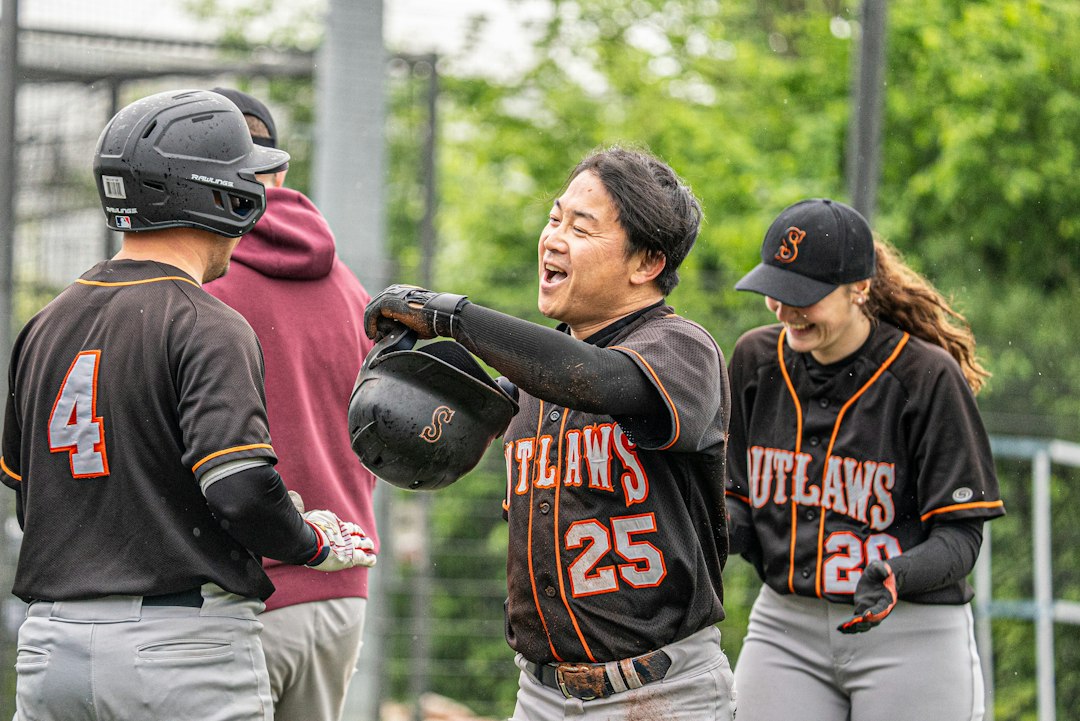




High school baseball bench players rarely get a story written about them that tells the truth — not the motivational version, not the "everyone has a role" speech, but the actual texture of what it was like to occupy that specific spot in the dugout for an entire season.
This is that story. And if you lived it, you'll recognize every detail before the second paragraph.
The Dugout Had Its Own Geography
Every dugout develops a culture the scoreboard never captures. The starters had their rhythms — pre-at-bat rituals, between-inning jogs, superstitions the coach tolerated because they seemed to work. The bench had its own rhythms, just as precise and considerably less visible from the stands.
The first two innings were always quiet. Everyone was reading the opposing pitcher, tracking how the ball came off the bat, running calculations nobody announced out loud. People who weren't in the dugout assume bench players disengage early. What actually happens is the opposite — in those opening frames, the bench was the most concentrated group of observers in the entire park.
Then the third inning arrived. And the bench loosened.
By a mid-week Tuesday in April, deep into the fifth or sixth inning, the bench had built its own parallel narrative — completely separate from the one happening on the field and completely dependent on it at the same time. A bad hop that kicked up a cloud of infield dirt would generate one comment from your left that set off three people down the line. A called third strike that the batter clearly disagreed with would produce a shared, wordless look that traveled the entire length of the bench — because you'd all been watching the same strike zone for six innings and arrived at the same conclusion simultaneously.
The bench was the editorial team of the game. Nobody outside it ever heard the commentary. That was part of what made it theirs.


In our experience covering the stories of former athletes, this is what bench players remember most vividly — not the sting of not starting, but the specific social texture of that space. The inside jokes that formed and hardened over a full season until they became a private language that only twelve people on earth understood. The kind of fluency that only develops through shared time and shared observation, game after game, week after week.
Riding the Bench Was a Specific Skill Nobody Taught
Here is what nobody tells you about riding the bench in baseball: it is genuinely hard to do well.
Not physically hard. Emotionally and mentally hard, in a way that rarely gets acknowledged — because acknowledging it would require adults to admit that telling a sixteen-year-old to "stay ready" is considerably easier to say than to execute across four consecutive months.
Staying ready means different things at different moments in a game.
It means sitting through three consecutive starts where your name doesn't appear on the lineup card, then being told to pinch-hit in the seventh inning of a 4–3 game against a pitcher you've been watching for two hours — and being expected to produce at the plate without the rhythm of regular at-bats in your legs. The gap between watching and doing is real. The bench players who managed it without falling apart were doing something genuinely difficult, and the fact that it happened invisibly doesn't make it less true.
Staying ready also means keeping your energy available without burning it. You couldn't treat the bench like a spectator seat — the moment could come at any time, and you had to be warm enough to run, focused enough to pinch-hit or step in on defense, but composed enough not to exhaust yourself maintaining that state across nine innings on a cold April night. That specific kind of emotional regulation doesn't appear on any college application. Every person who spent real time on that bench learned it anyway.
And then there was the contribution that happened entirely inside the dugout — the noise, the energy, the precise moment when the team went flat in the fifth inning and someone on the bench said the one thing that shifted the entire atmosphere. Those moments were real. They changed the temperature of games. Nobody put them in the box score.
The Bench Mob: How a Group Became a Team Within the Team
Marcus T., 34, played outfield for his high school program in central Ohio and spent two full seasons as a primary bench player before earning a starting role his junior year. He remembers the bench less as a waiting room and more as its own distinct ecosystem — with its own internal hierarchy, its own humor, and its own version of team pride that ran parallel to the official one.
"The starting outfield had their thing," he says. "But the bench had something different. We knew each other differently. We'd watched so many games from the same angle that we could finish each other's observations mid-sentence."
That's exactly what the motivational versions of this story consistently miss. They frame the bench as a place you pass through on the way to somewhere better — a temporary condition that builds character before real participation begins. For many players, the bench was not a waiting room. It was the room. And the people in it formed bonds shaped specifically by the experience of watching together, being patient together, and finding the same things funny because you'd all been sitting in the same spot for six innings on a Thursday night when the temperature had dropped twenty degrees since first pitch.
The non-starter athlete experience in baseball is, at its core, a collective experience. The starting pitcher exists in a solitary rhythm. The bench is plural. And groups that spend that much time together in a confined space develop their own identity whether anyone plans it or not.
What the Bench Actually Taught (Without Anyone Calling It a Lesson)
Nobody stood at the front of the dugout and delivered a lecture on what the bench was going to give you. That's not how it works. The lessons arrived sideways, embedded in specific unremarkable moments that didn't register as lessons until years later.
Observation as a discipline. When you're not playing, you watch. Watching a baseball game from inside the dugout for an entire season produces a literacy that's genuinely different from what you build as a starter. You see the pitcher's arm slot change when he's tired. You see the shortstop creep two steps toward second base when a pull hitter steps in. You see the catcher set up inside before going outside, and you start to anticipate it before the pitch. By the end of a full season on the bench, you knew the opposing lineup's tendencies better than anyone in the stands ever would.
Patience that stays active. There's a version of bench experience that becomes passive — you stop watching, you count down innings, you go home. The players who got something real from the bench figured out how to stay engaged with a game they were not part of. That distinction — between patient and passive — is one coaches talk about but rarely teach effectively. The bench taught it through repetition, whether anyone intended it to or not.
Reading the room, precisely. A dugout is a room with emotional weather. Some games the energy builds naturally and the bench feeds off the field. Other games something is off — a teammate is struggling, the score has curdled, the mood has gone sideways — and the bench has to decide what to do with that. The players who learned to read that room correctly, whether by going quiet or by being the person who said exactly the right thing at exactly the right moment, learned something about group dynamics that is hard to develop in any other setting.
Knowing your moment. Bench players develop a specific awareness of timing — when to speak, when to hold back, when to be loud and when the situation calls for stillness. That calibration happens across dozens of games, hundreds of innings, and it becomes second nature by the end of a season.
The bench player team culture was a sustained seminar in all four. It just didn't come with a syllabus or a grade.
The Sixth-Inning Stretch and Other Rituals That Were Only Yours
Every bench developed unofficial rituals. Not the sanctioned ones — not the seventh-inning stretch or the post-game handshake line. The ones that existed only because a group of people had occupied the same space often enough that repetition quietly became ceremony.
The way certain players always stood at the exact moment an at-bat reached two strikes. The running commentary one specific person delivered on every pitch in the dirt — same location, same comment, funnier every time for reasons that had nothing to do with the words and everything to do with who was saying it and who was listening. The specific collective silence that descended when the count went full with runners on base — a silence that didn't need coordination because everyone arrived at it simultaneously.
And then there was the sixth-inning stretch.
Not the stadium tradition. The bench version — the moment in a long game when the dugout collectively decided to stand, pace, refill water, and exist in a slightly different configuration before settling back in. It happened organically, at roughly the same point in every game, initiated by nobody and participated in by everyone. Your lower back knew it was coming before you did.
You know exactly what that felt like. The mild relief of standing. The way the field looked slightly different from two feet higher. The ambient noise of movement before everything went quiet again and the game pulled everyone back in.
That's a specific memory. It belongs to a specific group of people. Nobody else has that exact version of it.
The Jersey You Wore on the Bench Still Meant Something
There's something particular about wearing a jersey you didn't play in every game — you know with precision what it cost to earn it. Not in terms of statistics or performance, but in terms of showing up, staying ready, and contributing in ways that never got recorded anywhere.
Starters earn their jersey. Bench players understand something different about what it means to wear one — to wear it to school on game day without knowing whether your name would appear on the card that night, to wear it through a nine-inning loss in which you didn't take the field, to pull it on for the bus ride home and still feel like it was exactly the right jersey to be in. Because it was.
The jersey wasn't a reward for starting. It was a marker of belonging. And belonging to that specific bench, in that specific season, with those specific people — that was real membership in something worth remembering. The scoresheet never recorded it. That doesn't make it less true.
The number on the back, the name across the shoulders — those things meant something on the bench just as much as they did at the plate. Your jersey was yours. Full stop.
Your Jersey Is Still Out There Waiting
The bench is one of the most specific places in baseball — and one of the least photographed. The game happened on the field. The story happened in the dugout.
If you wore that jersey, you were part of something that no stat line captures. But memory has a way of wanting a physical anchor. A jersey inspired by that season — your name, your number, your team's colors — is one way to hold onto what that chapter actually felt like.
Design yours in minutes and see your name and number exactly the way you remember it.
Frequently Asked Questions
What do high school baseball bench players actually contribute to a team?
Bench players contribute in ways that rarely appear in a box score but are well-documented in sports psychology research on team cohesion. A 2019 study in the Journal of Applied Sport Psychology found that collective team identity — the sense that every roster member belongs to a shared project — is one of the strongest independent predictors of team performance. On a practical level, bench players provide dugout energy, morale stabilization during long or difficult games, defensive and pinch-hit flexibility, and institutional knowledge about opposing hitters and pitchers built through careful, sustained observation across a full season.
Is riding the bench in high school baseball as common as it feels?
More common than most people outside the sport realize. A standard high school varsity baseball roster carries between 14 and 20 players, but only 9 start each game. In most programs, at least five to nine rostered players are non-starters on any given day. Across a typical season of 20 to 30 games, a significant portion of the roster will spend the majority of their game time in the dugout. The non-starter athlete experience in high school baseball is not the exception — it's the statistical norm. Most players who make a varsity roster spend meaningful time on the bench at some point in their careers.
How do coaches describe the role of bench player team culture?
Most coaches who have managed successful programs will tell you that dugout atmosphere is set primarily by players who are not in the starting lineup. Starters are focused on their own execution — at-bats, defensive reads, pitch sequencing. The bench has bandwidth for the collective mood. Coaches who have navigated long postseason runs frequently credit bench players as the group that held the emotional temperature of the dugout steady through adversity. The bench mob is not informal terminology — it describes a functional role within a competitive program that experienced coaches actively cultivate.
What made the bench experience different from other roles on the team?
The specific combination of sustained observation, enforced patience, and close proximity to a fixed group of people over an entire season produces a social and perceptual environment unlike any other role in team sports. Bench players develop a reading of the game — and of each other — that starters rarely have time to develop. The rituals, the shared language, the specific humor that forms over a season: those are products of that particular combination of conditions. Players who experienced it recognize it immediately when someone describes it accurately. Players who only ever started often don't know it existed at all.
See also: what high school sports actually teach you that classrooms never could | the grief that comes when your playing days end | the athletic identity that doesn't disappear just because your role was limited