




There's a specific moment every benchwarmer knows.
The buzzer sounds, or the final whistle blows, and the starters jog off the court or field — cleats clicking, jerseys damp — while you rise from a seat you've kept warm for the better part of two hours. The scoreboard says something. The crowd starts to thin. And somewhere in the noise, you ask yourself a question you'll carry for years: Did I actually matter out there?
If you ever spent a season being a benchwarmer in high school, you already know that question. What you may not know yet is the answer.
This isn't a consolation piece. This isn't a participation-trophy speech. This is an honest look at what the role player, the substitute, the backup actually contributed — and why the contributions that don't show up in a box score are often the ones that shaped a team's entire season.
What Nobody Tells You About Riding the Bench in High School
Most content about benchwarmers treats the experience as a problem to be solved — a setback, a wound to be dressed with motivational language. The framing is almost always remedial: How to cope with not playing. How to stay positive. How to earn more minutes.
That framing misses the point entirely.
Riding the bench in high school is not a diminished version of the athletic experience. It is a specific version of it — one that demands a particular kind of mental toughness that starters often never develop because they never have to.
Consider what the substitute player actually does across a full season:
- Shows up to every practice without the guarantee of reward. The starter has a clear incentive loop: perform well in practice, earn minutes in the game. The role player's loop is murkier. They practice with intensity knowing the game-day equation may not change in their favor. That is discipline operating without the fuel of external validation, which is by any measure the harder form of discipline.
- Provides the competitive pressure that makes starters better. Coaches know this. In practice, the player pushing the starting point guard in one-on-one drills, the outside hitter who makes the starting rotation sharper by forcing them to earn every rep — these players are manufacturing the starting lineup's excellence. Without them, the starters don't sharpen. The scout team is not filler. It is the whetstone. It's the quiet underside of the day the coach posted the starting lineup — every name on that list was sharpened by someone who wasn't.
- Holds team culture together when the game isn't going well. Watch closely the next time you're in the stands at a close, high-pressure game. The noise on the bench — the voices, the encouragement, the energy — does not come from the players already deep in the game's mental tunnel. It comes from the sideline. It comes from the role players who are watching every possession with a devotion that is, arguably, purer than the starter's, because it costs them something to sustain it. That devotion is a big part of what makes a high school team a family.
The experience of life as a substitute player develops something specific: the ability to contribute to a shared goal without requiring personal recognition. That is not a minor life skill. That is, depending on where you end up, a rare one.
The Contributions That Don't Fit in a Box Score
Every sport has its official metrics. Points. Assists. Saves. Yards. Errors. The statistical record of a season is built from these numbers, and those numbers belong almost entirely to the players who saw meaningful game minutes.


The benchwarmer's contributions don't appear there. That doesn't mean they don't exist — it means the sport's measurement system wasn't built to capture them. They're more than a stat line, and the value they carry follows you long after the final whistle.
Here is what actually happened during a season of riding the bench that no scorebook recorded:
The practices the team needed most. There is a specific kind of practice session (usually midseason, usually after a demoralizing loss) when veterans start going through the motions. They're sore, they're frustrated, and the muscle memory of effort competes with the muscle memory of discouragement. In those practices, it is often the player who is hungry for any chance at all who sets the tone. Not because they gave a speech. Because they went hard on the first rep, and the first rep changed the room's temperature. That player was frequently the backup.
The knowledge the team carried. Role players, precisely because they're not running plays in real-time competitive situations, often become the team's most thorough students. They watch the game from a distance that provides a clarity the starters don't have mid-possession. In my experience as a former player, the backup quarterback, the second-string setter in volleyball, the utility player in softball — these athletes could often diagnose what was happening on the field faster than the players inside it. That knowledge didn't disappear when the season ended. It became the foundation of how they eventually understood competition, leadership, and systems at every level after high school.
The morale that held through adversity. Teams don't lose seasons only to the other team. They lose them to themselves — to the dissolution of belief that happens when a deficit feels insurmountable or when a key player goes down. The players who hold the room together in those moments are, disproportionately, the players for whom simply being on the team is already the reward. Their emotional investment is unconditional in a way that creates a stabilizing force precisely when unconditional commitment is what the team needs most.
A Jersey Still Means Something: Real People, Real Roles
Marisol V., 34, spent two seasons as a backup midfielder for her high school soccer team in New Mexico. She played in parts of seven games across those two years — roughly 40 minutes of varsity soccer total. She recently ordered a custom jersey with her name and number from iPlayedFor.
"I almost didn't," she said. "I kept thinking: I barely played. Do I deserve one of these? And then I thought about what I actually did for that team. I ran every sprint. I took every hit in practice. I made our starting midfielder sharper every single day. I earned that number."
She did.
That number doesn't certify minutes played. It certifies membership. It certifies that she was on the team — which means she was part of every win, every loss, every early morning and late bus ride that the season required. The jersey belongs to her as completely as it belongs to anyone who ever wore it.
What Matters About Being a Backup: The Character Argument
There is a case to be made — and it is not a soft one — that the experience of being a backup in high school athletics is among the more formative things that can happen to a developing young person.
Not because adversity is inherently good. It isn't, and the romanticization of struggle for its own sake is its own kind of condescension. But because the specific adversity of the bench position requires developing a set of internal resources that, in adult life, turn out to be extraordinarily functional.
Delayed gratification at scale. The role player practices for months toward a game opportunity that may arrive in fragments: two minutes in the fourth quarter, a single at-bat, a late substitution. They develop, necessarily, the ability to sustain effort across long time horizons without the reward arriving on schedule. Research into long-term achievement consistently identifies this capacity (the ability to maintain motivation when the external reward is delayed or uncertain) as one of the strongest predictors of professional success. The American Psychological Association's summary on self-regulation and goal pursuit connects this directly to outcomes in career and academic performance.
Identity built on effort rather than outcome. A starter who defines themselves by their statistics has built their identity on something outside their control: the scoreboard. The role player, by necessity, builds their identity on something they can control: the quality of their effort and their contribution to the team's process. That internal locus (grounding identity in effort rather than external results) is the psychological architecture of resilience. It doesn't break when the scoreboard goes wrong.
The ability to find meaning in a supporting role. Not every important thing in life comes with a starring credit. Most of the highest-impact work in any organization, in any relationship, in any community happens in supporting roles that require precisely what the benchwarmer learned: genuine, enthusiastic investment in someone else's success. The coach's favorite backup was almost always the one who understood this — not as resignation, but as craft.
These are not small things dressed up as large ones. They are the actual curriculum of what the bench teaches. The game was just the classroom.
How to Honor the Experience — For Yourself and for the Players You Remember
If you were a benchwarmer, here is the honest accounting you deserve to make:
-
Claim the full membership of the season. You were on the team. You were part of every outcome that team produced. The wins belong to you. The losses belong to you. The jersey belongs to you.
-
Recognize the specific skills you built. Be specific. What did that season teach you about showing up without reward? About learning from observation? About sustaining commitment when the external incentives weren't aligned? Name those things. They didn't evaporate when the season ended.
-
Consider who deserves to be honored. If you were a starter who had a backup who made you better every day in practice — you know who that person is. The fact that the sport's formal recognition structure didn't reach them doesn't mean the recognition isn't owed.
If you're a parent, a coach, or a fan thinking about the role players from a team you loved: the same accounting applies. The benchwarmer's contribution to that season was real. It ran through every minute the starters played, every practice that sharpened the team's edge, every moment of sideline energy that refused to let the team's belief collapse.
The Legacy the Scorebook Missed
Seasons end. Box scores survive. The statistical record of a high school athletic season outlives the memory of most of the people who were in the stands — but it was never a complete picture of what that team was.
The complete picture includes the player who knew every play but ran most of them only in practice. The one who was first to the sideline when a teammate came off injured. The one who started every warm-up in the right frame of mind because they'd decided, early in the season, that this was what they could control.
That player shaped the team. They did it quietly, without the scoreboard's help, without the crowd's awareness. They did it in the unglamorous middle distance of a season — the Tuesday afternoon practices in October, the film sessions nobody required them to care about, the bus rides where the starter slept and the backup watched film on their phone.
The contribution was real. The season was better for it.
And the jersey — the number they wore, the name on the back — still means exactly what it meant on day one of the season: this person was part of this team. Fully. Completely. Without asterisk.
Your jersey is still out there waiting.
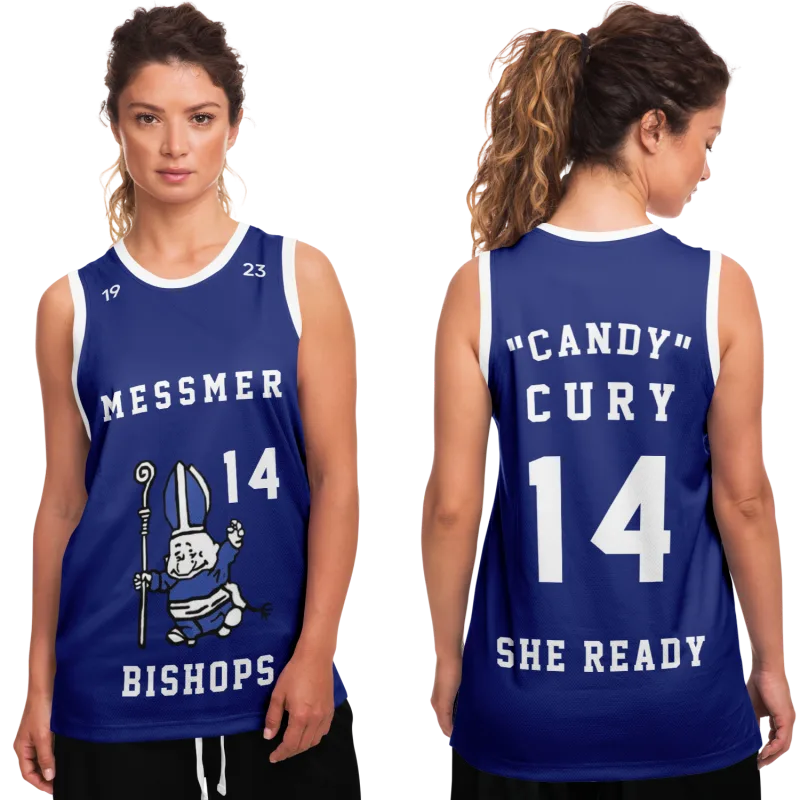
Design yours in minutes and see your name and number exactly the way you remember it.
Want to see finished jerseys before you start? Browse the gallery.
Frequently Asked Questions
Does being a benchwarmer in high school still count as "being on the team"?
Completely and without qualification. Team membership is not conditional on playing time. Every athlete who practiced, traveled, followed the team's protocols, and was listed on the roster was a full member of that team. The season's outcomes — wins, losses, championships, and heartbreaks — belong equally to every player who was part of the program. Playing time is a coaching decision. Membership is categorical.
What are the real benefits of riding the bench in high school — beyond the motivational clichés?
The most concrete benefits are psychological and professional rather than athletic. Role players develop a specific capacity for sustained effort without guaranteed reward — which directly predicts performance in careers where feedback loops are slow. They also develop strong observational intelligence (watching the game from the outside sharpens pattern recognition in ways active play doesn't always allow), and they build identity around effort rather than outcomes, which is the more resilient psychological foundation. These aren't platitudes — they're specific, transferable skills.
Is it worth getting a custom jersey if I only had limited playing time?
Yes — the jersey commemorates membership, not statistics. The number you wore in warmups, in practice, on picture day, and in whatever game minutes you saw was your number for that season. It belonged to you, and it still does. Ordering a custom jersey from iPlayedFor is one way to claim the full weight of what that season meant — including the contributions the box score didn't record.
How can coaches better recognize the contributions of substitute players during a season?
The most effective approaches are specific rather than generic. Rather than end-of-season acknowledgment, coaches who recognize role player contributions in the moment (naming a specific practice effort, calling out a specific piece of scout-team work that sharpened the starting lineup) create the most durable impact. The recognition doesn't have to be public. A direct, specific acknowledgment from a coach to a role player ("what you did in practice this week made our guard sharper, and that's why we won tonight") communicates that the contribution was seen and that it mattered to the outcome. That specificity is what the role player needs to hear: not that effort is its own reward, but that their specific effort produced a specific result.
See also: the grief that comes when high school sports ends | athletic identity doesn't disappear just because your playing time was limited | what high school sports actually teach you that no classroom can | why those years on the bench still matter more than people realize