

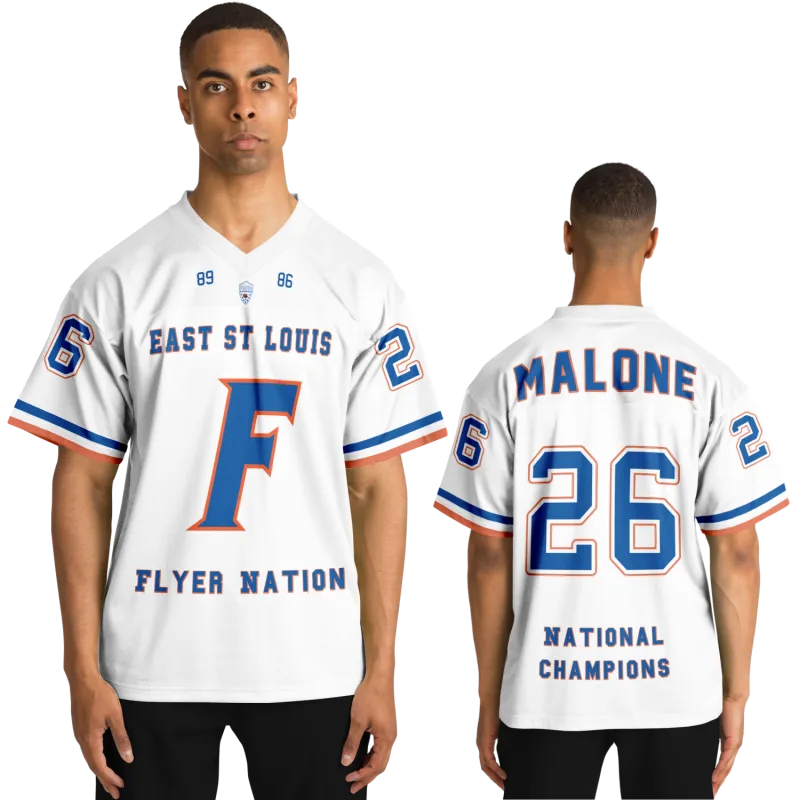
You still know the number.
Not the locker combination from the same era. Not your childhood phone number, not the address of the apartment you lived in during those years. But the number on the back of your jersey — that one stayed. Ask any former athlete why athletes remember jersey numbers the way they do, and you'll get a shrug and a smile. I just do. But the reason is more specific than memory. It's identity. And it's been woven into who you are at a level most people never examine.
This isn't about superstition. It isn't about the mythology of professional athletes who retire their numbers into the rafters. When a jersey number gets retired at the high school level, the number lives on in a very different way — it becomes part of the community's memory, not just your own. This is about you — the 38-year-old former shooting guard, the 51-year-old former midfielder, the woman who played travel softball through her junior year and still, at 44, writes her old number in the corner of to-do lists without thinking about it. The number attached to you during the years you were still figuring out who you were. And those kinds of attachments don't come loose.
The Years When Numbers Become Names
There is a window in human development — running roughly from late childhood through early adulthood — when the brain is doing something extraordinary. It is not just learning. It is deciding who the person is. Psychologists call this the identity formation period, and the research on it goes back to Erik Erikson's foundational work on psychosocial development: the stage he labeled "identity versus role confusion" sits squarely in the adolescent and young adult years, which is precisely when most athletes receive their first real jersey number.
What gets encoded during that window is different from what gets encoded before or after it. Experiences, relationships, symbols, and roles that arrive during identity formation don't get filed as facts. They get filed as self. They become part of the answer to the question "who am I?" rather than just the question "what happened to me?"

Your number didn't arrive when you were a neutral adult picking a preference. It arrived when you were a 14-year-old standing at a locker, pulling a jersey over your head for the first time, and becoming — in some meaningful sense — the person whose name appeared above that number. The brain treated that number as a defining attribute. And defining attributes, once encoded during identity formation, are among the most durable memories we carry.
This is why jersey number identity psychology isn't really about memory science. It's about the science of self.
What "Embodied Memory" Actually Means for Athletes
The phrase gets used loosely, so let's be specific about what it means.
Embodied memory refers to knowledge that is stored not just as a cognitive representation — a fact you can retrieve — but as a physical pattern. A motor program. A felt sense. When you rode a bike after a decade off, your body remembered. When you hear a song from high school, your chest changes before your brain processes the lyrics. That's embodied memory: information encoded in the body's responses, not just in conscious recall.
Athletes accumulate enormous quantities of embodied memory during their playing years. Every footwork drill, every free throw routine, every pre-pitch breath — these are encoded in the nervous system through thousands of repetitions during a period when the brain's neuroplasticity is at a developmental peak. The number on the jersey is part of that physical world. It appeared on scoreboards when your body was performing. It was called out in lineups when your nervous system was at maximum alertness. It was sewn into the fabric that touched your skin during the highest-intensity experiences of your young life.
The result is that your number didn't get stored as a standalone piece of data. It got stored as part of the felt experience of being an athlete — woven into the same neural network as the sound of the gym, the weight of the ball, the feeling in your legs at the end of the fourth quarter. When the number surfaces in memory, it doesn't come alone. It arrives with the body's memory of what it felt like to be that person.
That's why it doesn't fade the way other memories do. It's not stored as a fact. It's stored as a state.
The Social Amplifier: How Teams Turned Numbers into Identity
Here is something the individual psychology alone doesn't fully explain: your number didn't just become your identity. It became your identity as confirmed by other people.
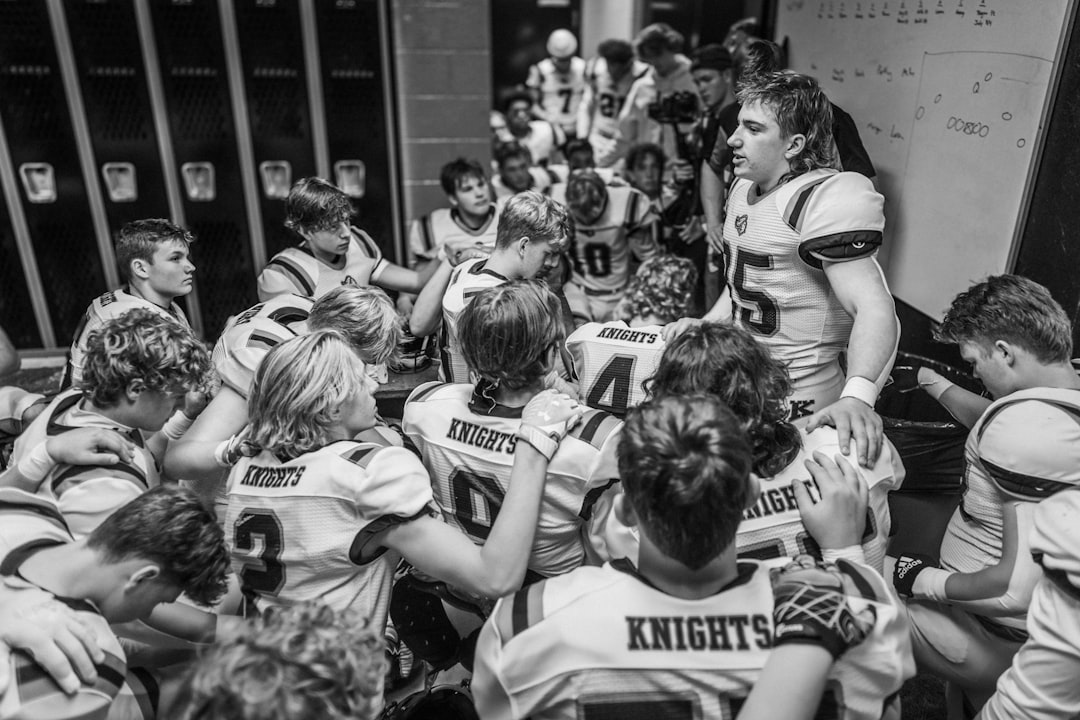
Think about what actually happened during your playing years. Coaches called you by number in drills. Teammates identified you by it on the court or field. Crowd announcements, scorebooks, roster sheets — every external reference to you as an athlete used the number. If your name appeared anywhere in that athletic context, the number appeared alongside it. The two were indistinguishable.
Robert Cialdini's research on social proof and identity makes this dynamic clear: we don't just build our identities from the inside out. We build them through the mirror of other people's recognition. When the people in your athletic world — coaches, teammates, opponents, parents in the stands — consistently referred to you through your number, they were collectively confirming: this number is you. The social reinforcement loop ran thousands of times across seasons. The number wasn't just what you wore. It was what the community knew you as.
This is why the emotional attachment to sports numbers often intensifies rather than diminishes at reunions and milestone events. When a former teammate calls you by your number — even 25 years later — what happens is neurological. The old social confirmation loop fires. You feel recognized not just as the person you are now, but as the athlete you were then. The number functions as a social key that unlocks a version of yourself that has no other consistent entry point.
Marcus T., 46, Tells the Story Better Than Any Study Can
Marcus T. played point guard for his high school and then a Division III program in the mid-1990s. He wore #11 for six consecutive years. Today he works in logistics in Charlotte and hasn't played competitive basketball in over a decade.
At his 25-year high school reunion, he walked in and within ten minutes, three different people had called him "Eleven." His words, relayed to us: "My wife thought it was a nickname. I had to explain that it was literally just my jersey number. But here's the thing — I felt more like myself in that moment than I had in years. Not nostalgic. Just... located."
That word — located — is more precise than Marcus probably realized. What the number gave him wasn't a trip into the past. It was a coordinate. A fixed point in the geography of his own identity.
Why Certain Numbers Feel Like They "Belong" to You Even After the Season Ends
This gets into the specific psychology of ownership and what researchers call the endowment effect — the well-documented tendency for people to value things more once they've been associated with the self. When something becomes "mine," its perceived value increases, often dramatically, independent of any objective change in the thing itself.
Jersey numbers are a nearly perfect case study in this phenomenon. You didn't choose most of your numbers — they were assigned. Yet within a season, they felt irreplaceable. The attachment formed not through selection but through integration. The number was assigned to your body, confirmed by your community, and rehearsed through thousands of game-day experiences. By the time the season ended, it didn't feel like the team's number that happened to be yours. It felt like your number that happened to be used by the team.
This is why retired athletes frequently report mild but genuine discomfort when they see their old number worn by a current player. The intellectual understanding that numbers are reassigned is completely intact. But the felt sense of possession — the endowment — doesn't respond to intellectual arguments. It responds to years of embodied experience and social confirmation. The number carries a claim that isn't about ownership. It's about identity.
Two specific things make this possession feeling especially durable:
- Timing: The number arrived during identity formation, when the brain was actively building — not just storing — the self
- Repetition under activation: It was repeated thousands of times while your nervous system was highly aroused (games, competition, performance stakes), which deepens encoding more than calm, routine repetition ever could
The Research on Athletic Identity — and What It Actually Says About Former Athletes
The academic literature on athletic identity is more specific than most popular summaries suggest. Brewer, Van Raalte, and Linder's foundational Athletic Identity Measurement Scale research established that athletic identity — the degree to which a person defines themselves through their role as an athlete — is not simply a function of current activity level. Former athletes who scored high on athletic identity during their playing years showed persistent self-concept effects well into middle age, even after sustained periods of non-participation.
In plain terms: if being an athlete was central to who you were during your formative years, that centrality doesn't evaporate when you hang up the jersey. It reorganizes. The behaviors change. The practices end. But the part of your identity that was shaped by athletic participation — the discipline, the team orientation, the specific way you relate to competition and effort — those remain structural features of the self, not archived memories. This is why you still call yourself a basketball player — and you should. Athletic identity persists long after the final whistle.
Your jersey number is the most concrete, portable symbol of that identity structure. It's a two-or three-digit shorthand for an entire era of self-concept. No wonder it surfaces at reunions, in idle conversations, in the margins of notebooks. It's not nostalgia retrieving a number. It's identity recognizing a mirror.
Why My Jersey Number Matters — A Framework for Understanding Your Own Attachment
If you're reading this and nodding, here is what is likely true about your specific situation:
- Your number arrived during a period of high developmental significance — adolescence, early adulthood, or a formative transition
- You wore it not once but across many games and practices, which means it was encoded during repeated high-arousal states
- Other people — coaches, teammates, family — used it to identify you, running the social confirmation loop hundreds or thousands of times
- When the playing years ended, nothing fully replaced the number as a symbol of that version of yourself
The last point is worth sitting with. For most former athletes, the cessation of competition doesn't provide a new identity symbol to replace the old one. The number remains the clearest, most legible marker of a self that existed during some of the most intensely felt years of a life. It persists not because you're stuck in the past but because the past — specifically, the athletic identity wired during those years — is still actively part of who you are.
That's not something to outgrow. Athletic nostalgia, when engaged with intentionally, is healthy — it reconnects you to who you were, not traps you there. And, when the moment is right, to honor.
Your jersey is still out there waiting.
Design yours in minutes and see your name and number the way you remember it — in your school colors, on a jersey that belongs on your wall, not in a box in the attic.
Start Designing My Jersey | Browse the Gallery
Frequently Asked Questions
Why do athletes remember their jersey numbers so clearly when other memories from the same era fade?
Jersey numbers have two properties that most memories lack: they were encoded during high-arousal states (games, competition, performance pressure), which deepens neural encoding, and they were confirmed thousands of times by other people through lineups, scoreboards, and direct address. Most memories from adolescence are stored as singular events. A jersey number was stored as a repeated identity signal — which is why it remains accessible when more episodic memories fade.
Is the attachment to a jersey number the same thing as athletic identity, or are they different?
They're related but distinct. Athletic identity is a broad psychological construct describing how central the athlete role is to a person's self-concept. The attachment to a specific jersey number is one concrete expression of that broader identity. Think of athletic identity as the structure and the jersey number as one of its most durable, specific anchors. A person can have strong athletic identity without strong attachment to a number, but strong attachment to a number almost always reflects strong underlying athletic identity during the formative years.
Why does hearing your old number called out in conversation still produce a physical response?
Because the number was encoded as embodied memory — stored in the nervous system's state-response network, not just as a cognitive fact. When the number surfaces in a social context that resembles the original athletic environment (a reunion, a conversation with former teammates, a game-watching situation), the brain pattern-matches and activates the associated state. The physical response — the catch in the chest, the slight alertness — is the body recognizing the signal before the conscious mind has finished processing it. This is the same mechanism that makes certain songs transport you to specific years. The number is a sensory cue connected to a deeply encoded experiential state.
Does this attachment fade over time, or does it persist regardless of age?
The research on athletic identity suggests it reorganizes rather than fades. The behaviors associated with the athletic self change — most former athletes don't train at the same intensity at 50 as they did at 17. But the identity structure itself, and the symbols that represent it, tends to remain stable across decades. Many former athletes report that the attachment to their number actually becomes more significant as they age, because it represents a version of the self that is no longer accessible through action but remains vivid through memory and symbol.
Can someone develop this kind of attachment to a number even if they weren't a competitive athlete?
Yes, though the intensity and specificity varies. The conditions required are: the number arrived during an identity-relevant developmental period, it was used to identify the person repeatedly in a community context, and it was associated with high-arousal or high-stakes experiences. Competitive athletics creates all three conditions reliably. Other contexts — theater, academic competitions, military service, even specific community roles — can create similar attachments to identifying symbols when those conditions are met. The athletic context is simply among the most consistent and intense environments for producing this kind of durable identity encoding.
See also: why athletic identity doesn't end when the final whistle blows | the psychology of why high school sports memories stay with us so long | why senior season memories are encoded so differently than anything else