

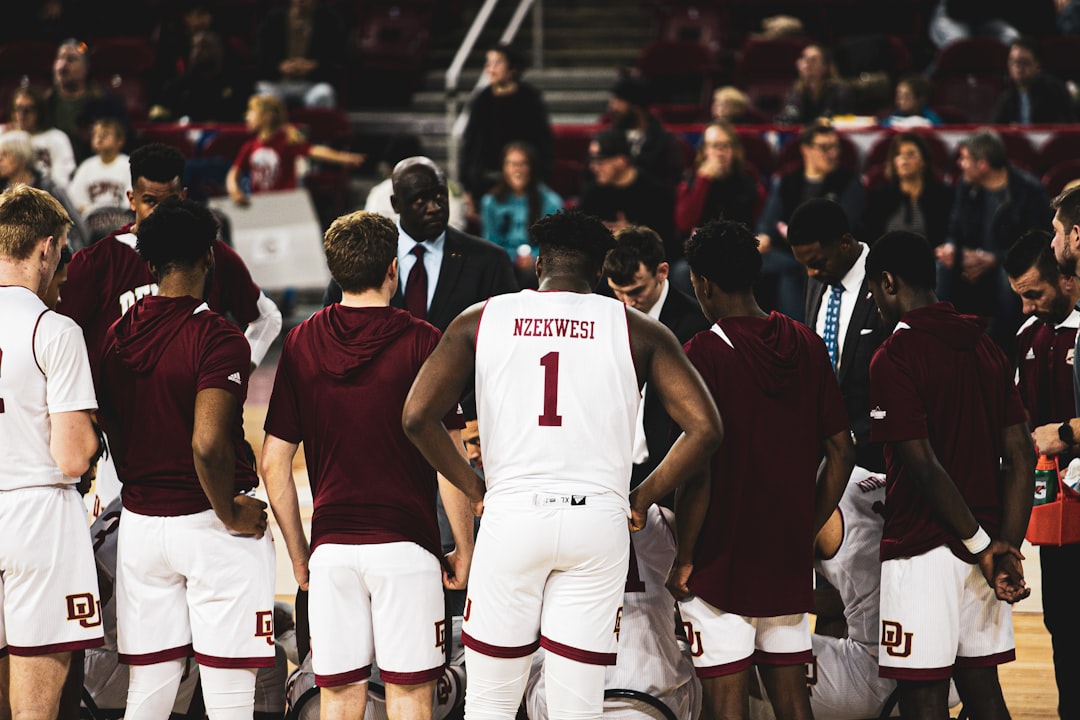
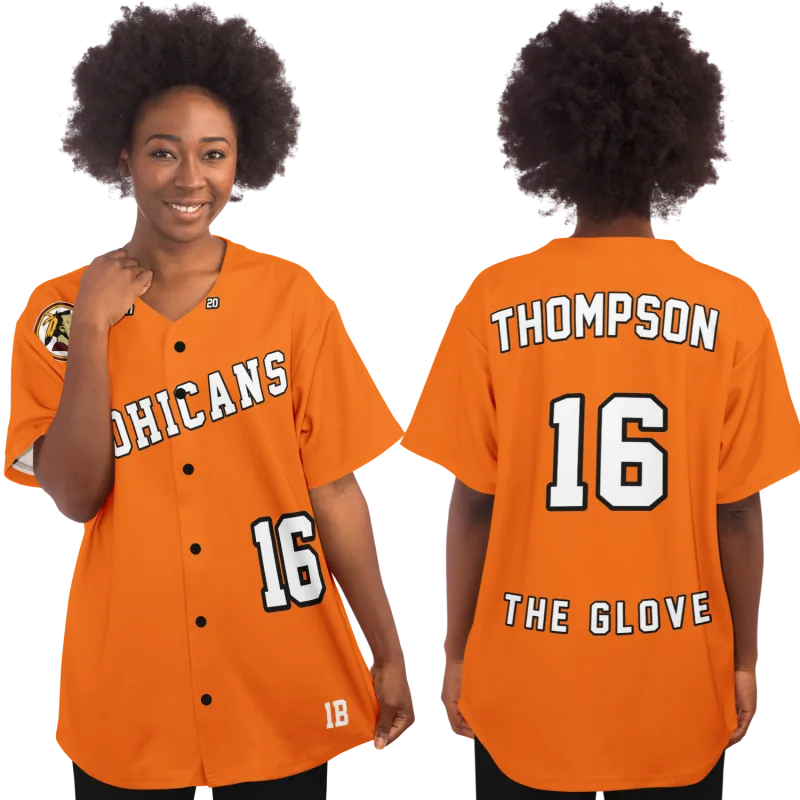
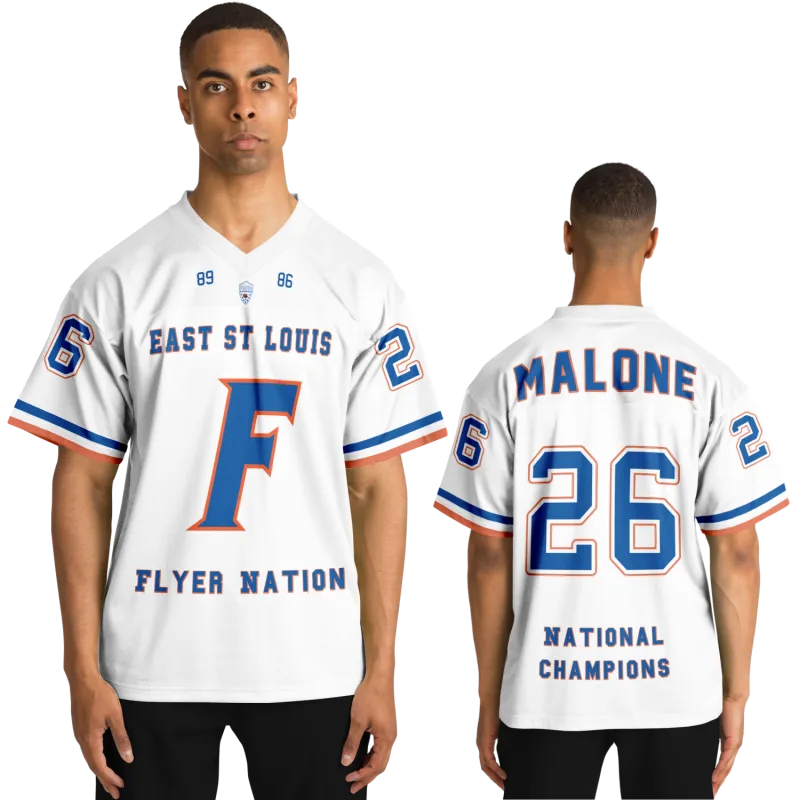


There's a banner hanging in the gymnasium. You've walked past it two hundred times without really looking at it. Then one day you do look — and you see a number, a name, and a year that was a long time before you ever set foot in this building.
That's the moment most people first understand what a high school retired jersey number actually means. Not the ceremony. Not the trophy case. The banner itself, quietly suspended above the daily noise of practice and pep rallies and everything that's happening right now, insisting that something that happened then still matters.
This article is for everyone who has lived on either side of that banner: the player whose number was raised, the player who wore it afterward, the family in the bleachers who still remembers, and the community that decided a number was worth preserving forever. No other sport content covers this. Every search you've run has returned results about the NBA, the NFL, the MLB. None of them talk about what this means when it happens in a gym where the bleachers creak and the coach has been coaching since before you were born.
This is that article.
What Does It Actually Mean to Retire a Jersey Number at the High School Level
Professional sports jersey retirement is a business decision wrapped in ceremony. The franchise calculates legacy, marketability, and fan loyalty. There are committees. There are sponsors. There is a halftime show.
High school jersey retirement is none of that.
When a high school retires a number (whether it's a football program hanging a framed jersey in the field house, a basketball program raising a banner to the rafters, or a baseball program stenciling a name on the outfield wall), it is a community making a deliberate, unsponsored decision that one person's contribution to something they all shared together was irreplaceable.
That's the definition hiding inside the ceremony. Not "this player was statistically excellent." But: this person is irreplaceable in the story of who we are.

In my experience as a former player, nothing produces a more immediate, visceral response than asking someone about a jersey retirement they witnessed in a small community. The stories are different every time. The feeling underneath them is almost always the same.
Retired number high school sports traditions vary widely: some schools have formal policies, some act on a unanimous coaching staff vote, some wait a decade before making a decision permanent. But the emotional logic is consistent everywhere: this number shouldn't belong to anyone else now, because it already belongs to someone.
The Difference Between a Trophy and a Retired Number
Trophies celebrate winning. Retired numbers celebrate personhood.
A state championship trophy sits in a case with other trophies. A retired number singles out one human being, or one moment, and says: this is the specific shape of something we don't want to forget.
That distinction matters more than it seems. It means jersey retirement is an inherently intimate act, even when it happens in front of a crowd. The school board doesn't vote on it because of a stat line. The community doesn't remember it because of a score. They remember it because of the person — how they played, how they carried themselves, what they meant to the people around them. It's the same reason the lessons high school sports teach off the scoreboard outlast every trophy in the case.
That's why retired number high school sports traditions often feel more emotionally significant than professional ones, despite the smaller stage. The community is smaller. Everyone in the gymnasium knows the family. Half the crowd has a story. The absence of corporate ceremony is not a limitation. It's the source of the power.
Ask anyone in that gymnasium what does retiring a jersey number mean, and they won't talk about policy or criteria; they'll talk about the person. That's the test that separates high school retirements from every other kind: the answer is always a name, not a rule.
How Jersey Retirement Ceremonies Actually Happen at High Schools
There is no standardized process. That's worth saying directly, because if you've been searching for a formal rulebook, you won't find one. The NCAA does not govern high school athletics. State athletic associations set eligibility rules, not legacy protocols. Schools make their own decisions through their own processes.
That said, the most common path follows a recognizable shape.
The Nomination
Someone nominates the player. Sometimes it's a coach who carries the tradition personally, a coach who played for the coach who coached the player. Sometimes it's a parent, a booster, a former teammate who contacts the athletic director years after graduation. Sometimes an anniversary approaches and someone says: we should do something.
What makes this phase remarkable is how informal it usually is. There is rarely a form. There is rarely a committee. There is, most often, a conversation.
The Decision
The athletic director and coaching staff, current and sometimes former, deliberate. The criteria vary, but they cluster around four things:
- On-field or on-court achievement (conference championships, state appearances, individual records)
- Character and conduct (how the player represented the school and program)
- Legacy impact (influence on the players who came after, the culture of the program)
- Community resonance (whether the broader community — not just the team — carries the memory)
Schools with formal policies sometimes require that a certain number of years have passed since graduation. Others act quickly when the moment is right. There is no universal standard.
The Ceremony
The ceremony itself is almost always a home game. The player or their family is invited back. There is a presentation: a framed jersey, a banner, a plaque. There are remarks. There is applause.
What happens when a jersey number is retired, beyond the ceremony itself, is that the number exits the available roster permanently — but the story of the person who wore it only grows larger.
What happens in the bleachers during those remarks is the actual ceremony. Grown adults who graduated a decade or two ago are suddenly in their high school bodies again. Parents who watched from these same bleachers remember the specific play, the specific game, the specific night everything came together. The player being honored is simultaneously twenty-three years old holding a framed jersey and seventeen years old on the floor they've never really left. It's the same reason the memories from your playing days never really fade.
The jersey retirement ceremony at the high school level is, when it works, a community deciding to be the same community it was on a specific night — for just long enough to feel it again.
The Weight of Inheriting a Retired Number's Legacy
Here is the part that never gets written about.
What about the player who was assigned that number before the retirement decision was made? What about the player assigned the number in the years leading up to the decision? What about the player who really wanted #22 and was told, quietly, that #22 isn't available — has never been available, won't ever be available — because of someone who wore it fifteen years ago?
This is the lived experience of retired number culture that professional sports coverage completely misses: the weight of the number before it's officially gone, and the weight of nearly having worn it after.
There's a version of this that plays out in district gyms every year. A player grows up watching someone else's banner hang above the floor, and by the time she reaches varsity she assumes the number is hers to inherit. Then the athletic director tells her it isn't going into the available pool, and won't be, because of the player it already belonged to. The first reaction is usually a quiet kind of disappointment. The second, if she sits with it, is a realization: that number already carries a whole story, and her own number doesn't yet. That part is still hers to write. More often than people expect, she chooses a different number instead, pours everything into it, and gives it a meaning no inherited number ever could, because what the number on your back actually meant was never just about the digit itself.
That reframing — from loss to inheritance of a different kind — is how high school athletic legends actually pass something forward. Not by giving the next player their number. By making every other number available feel like open territory. Like something to be claimed.
When You Were the Player Who Made the Number Famous
The other side of this is equally complicated.
Most players whose numbers are eventually retired did not know, when they were playing, that the number would mean anything beyond their career. They were focused on the next game, the next season, the scholarship possibility, the teammate who needed them. The meaning came afterward — built by others, confirmed by a ceremony they were invited back to attend.
The players who handle this most gracefully are the ones who quickly understand that the ceremony is not actually about them. It's about what the community built around them. They provided the raw material. The community made the meaning.
That's a genuinely unusual thing to process at any age.
What the Number Means to the Community After the Banner Goes Up
A retired number at the high school level functions differently than it does in professional sports, because the community that created the meaning is still present.
In the NBA, a retired number hangs above fans who mostly weren't there. At a high school, the banner hangs above parents, younger siblings, and neighbors who were right there in the stands — who remember the night, the season, the player's face when the final buzzer sounded.
This creates a living legacy rather than a historical one. The banner isn't in the past tense for the people beneath it.
That sustained proximity produces something specific: the retired number becomes a community reference point. When the current team struggles, someone will say, unprompted, what the holder of that number would have done in this moment. When a young player shows a flicker of the same gift, someone will mention the comparison. The number becomes a shared shorthand for a kind of excellence — not just athletic excellence, but the specific way one person made everyone around them feel like the game mattered. There's a reason those digits stay lodged in memory decades after the final whistle — and the psychology behind why jersey numbers stick with us runs deeper than nostalgia alone.
Ask what does it mean to retire a jersey number at the high school level, and the most complete answer is this: it means a community has chosen to keep someone in the present tense.
Professional franchises retire numbers to honor the past. Small-town high schools retire numbers to stay connected to someone they love.
The Programs That Take This Tradition Most Seriously
Some programs retire numbers sparingly — one or two in a century of athletics, treating it with the gravity of a Supreme Court appointment. Others are more generous, creating a tradition of recognition that functions as a cultural record of the program's history. A third group never retires the number at all — they keep it in the game, re-awarding it every year to the player who best carries the person it once belonged to.
Three approaches, each with merit, and schools rarely agree on which is right.
The sparse approach argues that rarity is the source of meaning. If every good player gets a retired number, no retired number means anything. The ceremony is only powerful because it almost never happens.
The generous approach argues that a program's history should be legible: that walking into a gymnasium and seeing a row of banners tells you, at a glance, who this program has been and what it has valued. The banners are not diminished by their company; they are deepened by context.
The living-number approach argues that a name on a banner eventually fades, but a number still being worn never does. When Great Falls High in Montana lost Derek Dowson in 2005, they retired his number 40 — then, years later, brought it back to the field, worn each season by the player who best reflected his selflessness and work ethic. At Pittsford Mendon in New York, the number 9 became the uniform of honor after Todd Pelino died on September 11th — every year the team votes to hand it to the kid who most embodies his character. And Mike Trout, who grew up in Millville, New Jersey and became one of the best baseball players on earth, asked his old high school to stop retiring his number 1 and instead give it to the team captain every season.
The reasoning these communities give is the part worth sitting with. When a uniform is retired, they say, nobody knows who wore it in the past — the banner hangs, the name slips from memory, the number becomes a museum piece. Keep the number active, let a new kid pull it on every fall, and the person's legacy stays alive in the present tense. Every time somebody asks who wears that number and why, the story gets told again.
What all three approaches share is intentionality. The programs that handle this tradition with the most integrity, regardless of how they act on it, are the ones where the decision is never casual. Where someone thought carefully about what the number carried, and decided the answer was: too much to ever be just a number again.
The Weight of a First
Every program has a first. The first banner in the rafters. The first framed jersey in the field house. The first name read over the gymnasium speakers at halftime. That first retirement carries a different kind of weight than the ones that follow, because it is the moment a community decides, out loud, that this is a thing they do now.
Before the first, retirement is abstract: a tradition that might exist somewhere else, at some bigger school. After it, the program has a precedent, and every honor that comes later gets measured against it. The first is also the hardest to earn. There is no list yet, no set of names to compare against. The people making the call are not choosing between candidates; they are deciding whether the category should exist at all.
For most of that history, the first had a predictable shape. Jersey retirement traditions grew up around the loudest sports, mostly men's football and basketball, the programs with the largest crowds and the most visible facilities. The banners in the rafters reflected who the community had been taught to look at.
That is changing. When a school retires the number of the first female athlete in its history to be honored that way, it does more than celebrate one career. It redraws the answer to a question every young athlete in that building is already asking: who counts here? A girl in the stands looking up at that banner sees an argument being made about her, that her name belongs in the same rafters, held to the same standard, remembered the same way. The first female banner is a correction, and like every first, it sets a precedent the whole program will live with afterward.
That is what a first does that later honors cannot. It changes the rules of who gets remembered.
Your jersey is still out there waiting.
The numbers that meant something don't disappear — they live on in the people who wore them and the communities that remember. If you played the game, your number meant something too. Rebuilding it starts with the basics, and the steps to recreate your high school jersey turn out to be simpler than they sound.
Design yours in minutes and see your name and number exactly the way you remember it. And choosing the right number for a custom jersey today is a decision that carries all of that history with it — not recreating the past, but continuing the story.
Frequently Asked Questions
What criteria does a high school typically use to retire a jersey number?
Most high schools consider a combination of on-field achievement, character, program impact, and community resonance. There is no universal standard — each school and athletic department sets its own criteria. Common factors include earning state-level recognition, demonstrating exceptional sportsmanship, significantly shaping program culture, and remaining a meaningful presence in the community's athletic memory long after graduation. Some schools require a waiting period of five to ten years before a number becomes eligible for retirement consideration.
Can a high school retire a number for a player who passed away?
Yes, and this is one of the most common circumstances that prompts a jersey retirement. When a player dies — whether during their high school years or in the years following — programs frequently retire their number as a form of permanent tribute. These retirements often carry the most emotional weight in a community, and the ceremonies can draw attendance far beyond the normal game-night audience. Schools typically handle these decisions with particular care, involving the family throughout the process.
What happens if a new player is assigned a number before the school knows it will be retired?
This situation arises more often than people realize, particularly in programs that don't have formal retirement policies. If a player wears a number for one or two seasons and the program later decides to retire it in honor of a previous player, the current player is typically given a respectful explanation and offered a different number. In some cases, the school waits until the current player graduates before officially retiring the number. The transition is almost always handled privately and with care, recognizing that the new player has also formed an attachment to the number they wore.
Is a jersey retirement ceremony at a high school different from a professional sports retirement ceremony?
Significantly. Professional jersey retirements are large-scale media events with sponsor involvement, league coordination, and elaborate production. High school jersey retirements are community events, usually held during a regular home game, attended by people who personally knew the player, and conducted with the kind of informal warmth that only a small community can produce. Many people who have attended both describe the high school ceremony as more emotionally affecting, precisely because of its intimacy and the shared history in the room.
Do all high school sports retire jersey numbers, or is it mostly football and basketball?
While football and basketball programs retire numbers most visibly (because their banners and displays are prominent in facilities that the whole community uses), the tradition extends across virtually every sport. Baseball and softball programs frequently honor players with retired numbers painted on outfield walls or displayed in dugouts. Swimming, wrestling, and track programs have their own variations, sometimes retiring numbers on record boards or through named annual awards. The form varies; the impulse is the same.
See also: why high school sports moments still carry so much emotional weight decades later | the way athletic identity shapes who you become long after the final whistle | what senior night ceremonies reveal about the rituals we never forget | why the memories from your playing days are still so sharp and vivid