



Every high school football player story has a defining moment — not the moment you scored, not the moment you won — but the moment the game became bigger than the game itself. The moment you pulled that jersey over your shoulder pads, looked down at the name of your town stretched across your chest, and understood, somewhere below conscious thought, that you were carrying something that belonged to other people too.
That moment does not announce itself. It arrives quietly, usually mid-season, sometimes in a tunnel before a game you were supposed to lose. And it stays. Former players carry it for decades — quietly, like a second name — long after the jersey has been folded and the cleats have been retired.
This is not a story about recruiting stars or championship rings. It is about what it actually meant to line up under those lights, what it meant to the town that raised you, and what kind of brotherhood forms in the hours nobody outside the program ever sees. It is about an identity that does not require maintaining, because it never really leaves.
The Town Didn't Just Watch. The Town Showed Up.
In small communities across the country, Friday night football is not a recreational option. It is a civic event. The barbershop closes early. The diner empties out before kickoff. The elementary school principal — the same one who was there when your parents graduated — is standing three rows up behind the visitor section, wearing the school colors she has worn for thirty years running.
This is what separates high school football from nearly every other organized athletic experience: the weight of collective investment. Youth leagues cheer. College stadiums fill. But high school football in a small town carries something those contexts cannot offer — the stakes of actual community identity. The scoreboard is not just a scoreboard. It is a reflection of a place and its people.

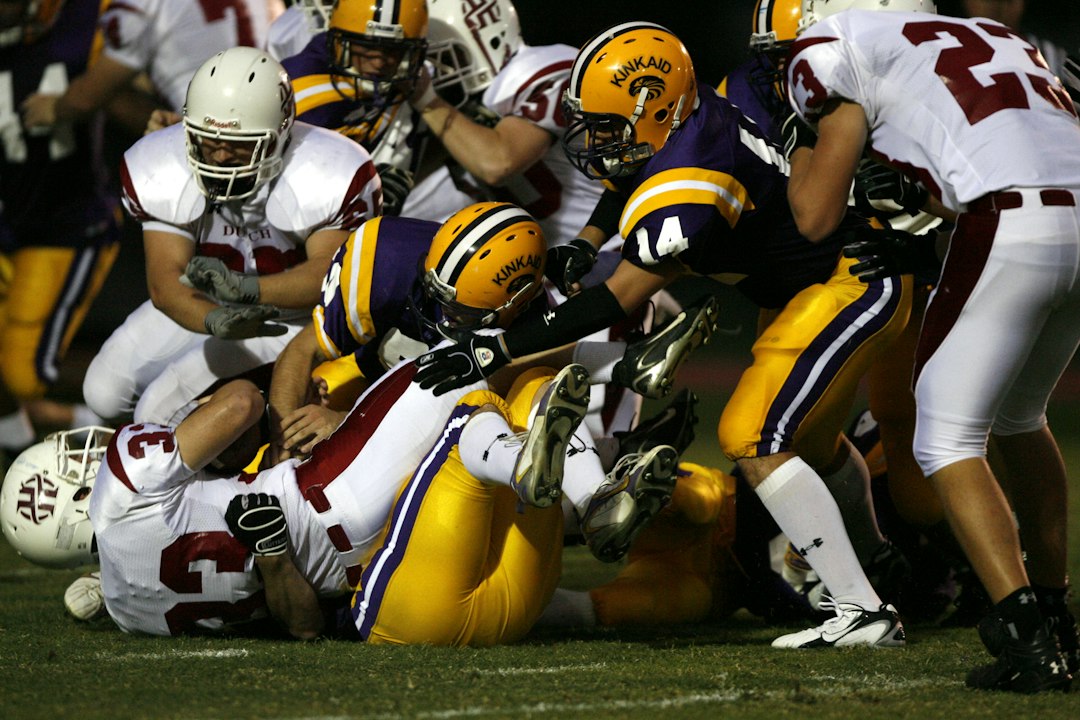
When you ran out of that tunnel, you were not representing an institution. You were representing every adult in that town who ever dreamed of doing what you were doing — and every adult who never got the chance. The man who works the grain elevator and has not missed a home game in thirty-two years. The woman who hand-sews the booster club banners and keeps the stats book in pencil. The kid in the stands who is eight years old and has already decided that number twelve is the number he is going to wear one day.
If you played, you know what it felt like to carry that. The slight heaviness of it. The honor that was also a responsibility. You were not playing for a coach's approval or a college scout's attention. You were playing because the town needed something to believe in on Friday night, and you were the ones who showed up to give it to them.
According to the National Federation of State High School Associations, more than one million athletes play high school football in the United States in a given year — each of them, in their own town, carrying exactly this weight.
That is not a small thing. That is not something that goes away when the final whistle blows on senior night.
What Brotherhood Actually Means — and Where It Gets Built
The word gets used loosely. Team bonding. Camaraderie. Chemistry. None of those words come close to the specific thing that forms between players who have suffered through the same August two-a-days, who have pushed each other off the turf in the third quarter when every muscle is signaling stop, who have sat in silence on a bus ride home after a loss that felt like a funeral.
Brotherhood in high school football is built in the unglamorous hours. Not the highlight-reel moments.
It is built in the film room at six in the morning, when nobody is watching and no scoreboard is running and everyone is still half-asleep in folding chairs. It is built in the weight room in January — the offseason, when there is no crowd and no opponent and nothing to play for except the version of the team you are going to become. It is built in the locker room after a hard loss, not in what anyone says, but in the specific silence of people who understand each other's grief without requiring an explanation.
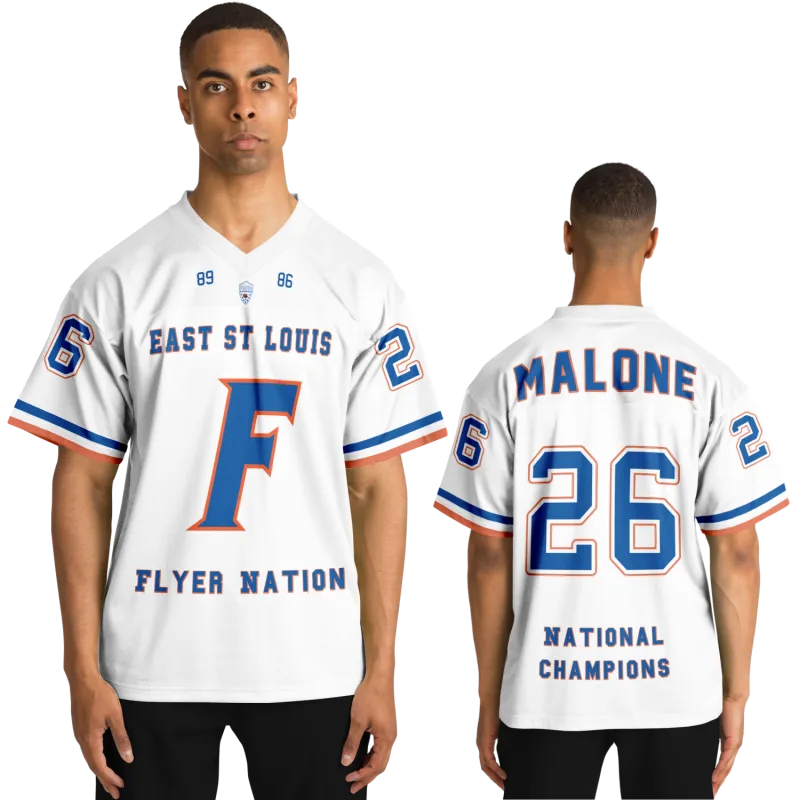
Marcus T., 34, played offensive line for a 4A school in central Oklahoma that never advanced past the second round of the playoffs. When he designed a custom jersey honoring his playing days — number 67, the number he wore all four years — the detail he kept returning to was not a win. "My kids need to understand what that number meant to the guys I played with," he said. "Not what we won. What we went through together."
That is the specific texture of this brotherhood. It is not built on outcome. It is built on shared experience — the kind that does not require a victory to be meaningful. Players who lined up through winning seasons carry the bond. Players who lined up through losing seasons carry it just as tightly. Sometimes more.
Every former player has a name that surfaces immediately when they think about who they would want beside them in any genuinely difficult situation. That name almost never belongs to someone they met later. It belongs to someone who played.
The Jersey as a Social Contract
There is a reason coaches talk about the name on the front of the jersey versus the name on the back. It is not motivational rhetoric deployed for effect. It is an accurate description of what the uniform actually represents in a small-town high school football context.
When you wore that jersey, you were absorbing a history larger than your own. The players who wore it before you — some of them your uncles, your father's teammates, the man who now coaches your youth league — had already attached their stories to that fabric. When you pulled it on, you borrowed all of that. When you graduated, you added your chapter and passed it forward.
That is the contract the jersey represents. It is not clothing. It is a vessel for collective memory — a physical object that holds decades of Friday night stories in its threads.
In our experience talking with former athletes across sports and eras, the jersey almost never represents the game itself. It represents what the game stood for. The specific intersection of youth, community, and belonging that a person rarely finds again in quite that form — and that becomes sharper, not softer, as the years accumulate.
The details former players recall are rarely the final scores. They remember the specific smell of the locker room before a playoff game. The sound of cleats on the concrete floor of the tunnel. The way the field looked from the visitor's sideline under lights so bright they washed out the sky. The handshake after a hard game with a rival, when respect replaced everything else. These details are not nostalgic decoration. They are constitutive. They are part of how former players understand who they are.
What Happens to That Identity After the Last Game
Every former player who suited up for high school football can identify the exact moment the last game ended. The specific whistle. What happened in the immediate seconds after. Some of them won. Some of them lost. Most describe the same core sensation regardless of outcome: the sudden, unmistakable awareness that something had ended in a way it had never ended before.
This is the transition that nobody in the culture around high school football adequately prepares athletes for. The game ends. The team disperses. The jersey goes into a drawer. Life continues — college, work, family, responsibility — and the identity that was so completely organized around a team, a number, and a town begins the long process of integration into a different kind of life.
If you played, you know the specific shape of this. The first fall that passes without a practice schedule. The first Friday night spent somewhere other than a stadium. The odd, floating sensation of watching a game from the stands and realizing you are now on the other side of an invisible boundary — visible only to yourself.
What does not dissolve is the brotherhood. Former players who have not spoken in fifteen years can meet in a parking lot, and within ninety seconds, they are back inside the shared language of the team. The intervening years are still present, but underneath them is something older and more durable — the specific recognition of shared experience that only forms when people have been through something genuinely hard together.
That identity does not require maintenance. It persists on its own. It shows up in the way former players approach adversity at work, in how they talk about loyalty, in the instinct to show up for people when things are difficult. The lessons absorbed through high school football — not the schemes and play calls, but the real lessons about accountability and trust and what it means to carry a shared responsibility — these transfer completely into adult life.
They transfer so thoroughly that most former players do not consciously notice the transfer occurring. They simply know what they value. They know what they are willing to fight for. They know who they want beside them.
The Players Who Never Really Left the Field
Every small town has them. The former players who are now the coaches, the boosters, the scoreboard operators, the parents running the chain gang on Friday nights. The men and women who found a way to stay connected to the game that formed them — not because they could not move forward, but because they understood, consciously or not, that the game was a mechanism for passing something essential forward.
The coach who breaks down film with a fifteen-year-old offensive lineman on a Thursday evening is handing forward something he once received. The woman driving the booster club fundraiser year after year because she remembers what the program meant to her brother's life is holding a thread of continuity and extending it. These people are not living in the past. They are maintaining something a community needs to survive intact across generations.
This is what the small-town high school football story is, at its most fundamental: a vehicle for the transmission of values between people who will never all be alive at the same time. Brotherhood. Accountability. Pride in something larger than oneself. The willingness to do the difficult thing when stopping would be easier. These values are not taught in the traditional sense. They are experienced. And the jersey — that specific, worn, numbered piece of fabric — is the artifact around which that experience organizes and is remembered.
Your jersey is still out there waiting.
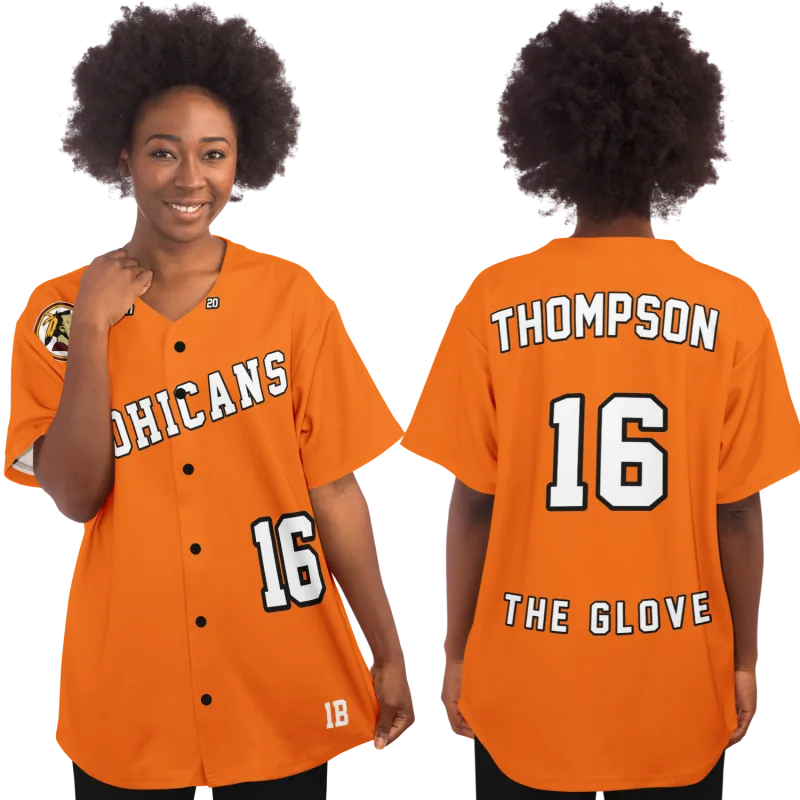
Design yours in minutes and see your name and number exactly the way you remember it — the colors, the font, the number that meant something to your team and your town. A tribute to the game that made you.
Frequently Asked Questions
What makes the high school football player story different from other levels of the game?
High school football — particularly in smaller communities — carries a level of personal community investment that college and professional football cannot match. The players are neighbors, classmates, and the children of people who have watched the program for decades. When you play for your high school, you play for the specific people who raised you and the specific place that shaped you. That dimension of the experience creates an identity that outlasts the playing years by a wide margin.
Why do so many former players say the brotherhood mattered more than the wins?
Because wins are outcomes, and outcomes eventually become statistics. Brotherhood is a relationship — built through shared difficulty, shared sacrifice, and the specific trust that forms when people have depended on each other under genuine pressure. Outcomes fade in memory; the people you went through it with do not. Most former players can name every member of their position group with more precision than they can recall final scores. The human bond outlasts the result.
How does the identity from high school football carry forward into adult life?
The values that form through team athletics — accountability, the willingness to do difficult things without immediate recognition, a clear understanding of what genuine trust between people looks like — transfer into adult professional and personal life in ways that are often invisible to the people carrying them. Former players frequently describe a specific comfort with adversity, a default instinct toward showing up for others, and a defined sense of what they are willing to work for. These are not coincidences. They are the durable outputs of an identity formed on a practice field long before adulthood arrived.
Is the small-town high school football experience meaningfully different from a large suburban program?
In important ways, yes. Large suburban programs can be exceptional — talented, well-resourced, deeply competitive. But the specific relationship between a small town and its football team produces a density of community investment that is difficult to reproduce at scale. In a small town, the football team is not one of many weekend entertainment options. It is often the central communal gathering of the week. That specificity shapes what it means to play for that team — and stays with former players in a particular way because the community they represented was personal and knowable, not abstract or institutional.
See also: what playing under the lights actually felt like | why high school sports still matter to adults long after the final whistle | the grief that comes when that chapter ends | how athletic identity shapes who you become after high school | the bus ride home after a loss that every teammate remembers