





There is a specific smell that hits you the moment you walk into a gym at the start of volleyball season. Hardwood floors, rubber soles, the faint trace of chalk and sweat baked into the walls from every season before yours. It is not a pleasant smell, technically. But the second it reaches you, something in your chest loosens — because you're back.
Volleyball season has a way of doing that. Before the first serve ever leaves anyone's hand, the season already feels like something. The nets go up. The lineup gets posted, and the memory of seeing your name on it still lives somewhere in your chest. Someone's parents show up forty minutes early to claim the good seats on the bleachers. And somewhere in the gym, a setter is already running footwork patterns in the corner because she never really stopped.
This piece is for everyone who played. Who ran the system, passed the ball, swung at a kill, and felt the gym move when it connected. The season was more than a schedule — it was a version of your life you still carry. Let's walk back through what made it.
The Gym Before the Crowd Arrived
There is something about a volleyball gym before tip-off — before warmups officially start, before the other team's bus pulls into the parking lot — that belongs exclusively to the people who played.
The court looks different when it's empty. You can hear the echo of your own footwork. The lights in older gyms hum at a frequency you only notice in that silence. A libero you played with in high school would tell you she used to walk the service line alone before every home match, just to feel the floor. That ritual had nothing to do with strategy. It was the whole thing.
This is where volleyball season actually starts — not with the first whistle, but with that private moment of claiming the court. The moment before the crowd fills in, before the scoreboard lights up, before anyone is watching. Just you and the people who trained all summer to be ready for just this — the ones who made the roster back when volleyball tryouts were cuts day and friendship got tested first.


The transition from that silence to the noise of a full gym is one of the most specific athletic experiences a volleyball player carries. One moment you can hear the ball hitting a passing target in the far corner. Then families start filing in. Then someone's little brother starts running the bleachers. Then the other team arrives and the gym gets louder in a different way — that particular kind of competitive pressure that vibrates through warm-up and doesn't let go until the final rotation.
In our experience covering athletes across sports, volleyball players describe pre-game gym atmosphere with unusual specificity. The reason is architecture. A volleyball gym is small compared to a football field or a baseball diamond. The sound compresses. A full gym in a high school fieldhouse can feel like a playoff atmosphere even in a regular season Tuesday night match — because everyone is close, the ceiling is low, and the game is fast enough that emotional momentum swings are audible.
That closeness is also what makes a great play hit the way it does.
The Kill That Brought the House Down
Every player who went through a volleyball season has one. The kill they still think about.
Not always the prettiest shot. Not always the most important point in the match. But the one where everything lined up — the approach, the set, the timing, the angle — and the ball hit the floor before anyone on the other side could process what happened.
The gym noise that follows a kill like that has a specific texture. It starts with a half-second of silence as the crowd registers what they just saw. Then it comes — full bleachers, parents on their feet, the bench erupting, the setter who threw you that ball pumping her fist before she even fully turned around.
That sound — the moment the crowd got loud and you were the reason, the memory every former athlete carries — is not something you forget.
It compounds with the physical sensation of the hit itself. When you swing correctly through a volleyball — full arm extension, contact at the peak, the snap of your wrist sending the ball on the angle you chose — there is a sound the ball makes and a feeling in your shoulder and forearm that is entirely distinct from every other sport. Players who haven't swung in years will tell you that feeling is retrievable on request. They can feel it right now if they close their eyes.
The great kills of a volleyball season don't stay in the match. They migrate into the identity of the team. They become the shorthand for something — "remember when you went line on that back-set in the third set of districts?" becomes the sentence that unlocks an entire year.
What the Season Was Really About
Here is what the record never captured.
Volleyball season, at its best, is a study in precision and trust. The sport requires six people operating in coordinated roles at a tempo that doesn't allow for miscommunication. A back-set works because the setter trusts the hitter will be where the set expects her to be. A dig to target works because the passer trusts that her arm angle in a split-second reaction will place the ball where the setter can work with it.
This trust is not built in matches. It is built in the weeks before — in passing drills that go until the gym goes dark, in serve-receive repetitions until the response becomes automatic, in the kind of practice that feels less like training and more like negotiation between athletes who need to understand each other completely.
This is what makes volleyball season feel different when it arrives. You don't just show up for games. You show up knowing how much invisible work went into being ready for them. Every rotation change, every coverage shift, every line-up decision made in the middle of a set — these are fluent in a language your team spent months building together.
Marisol V., 24, still remembers the moment her team's chemistry clicked. It was a late October away match, her senior year — down a set, middle of the second, when her setter called an audible on a play they'd only run twice in practice. "She looked at me for maybe half a second," Marisol says. "I knew where she was going. The whole bench knew. We ran it, we won the set, and we never talked about it because we didn't need to." That match was seventeen months before Marisol found her old game jersey in a storage box. She ordered a custom jersey that week.
The Crowd That Knew the Game
One distinction that separates volleyball from other fall sports: the fan base tends to know what they're watching.
A volleyball crowd at a competitive level is not passively cheering. They understand rotation violations. They track serve-receive patterns. A parent in the second row of bleachers has probably run through the rotation in their head and spotted that the opposing libero favors her right shoulder when receiving high floaters. This creates a specific kind of engagement — a gym that reacts not just to dramatic moments but to precision.
The setter who throws a back quick when the other team's block is tilted gets a knowing reaction from the crowd, not just the bench. The libero who digs a ball that had no business being dug — and keeps it playable — gets a different kind of recognition than a spectacular swing. Volleyball crowds have an appreciation for the invisible save.
This is part of what makes match atmosphere in a volleyball gym feel earned. The crowd is a participant in the tactical story of the match, not just a backdrop for the athletic performance.
Four things that characterize a volleyball crowd that knows the game:
- They react to a perfectly-placed short serve into the seam as loudly as a kill
- They go silent in a way that communicates respect when the libero makes an impossible dig look routine
- They track momentum shifts and their noise level reflects it — the energy in the gym is a real-time read on which team has the run
- They understand that a stuff block on a quick is a different kind of play from a roof on a power shot, and they treat them accordingly
When the Season Ended and What It Left Behind
Volleyball season ends the way all seasons end — with a final match that one team wins and one doesn't, and then the silence afterward that is different from any other silence in a gym.
For the team that wins, the noise stays. For the team that doesn't, there is a particular kind of quiet that settles over the locker room after the last match. Players who haven't experienced it before aren't sure what to do with it. Players who have been through it know to just stay in it for a minute.
What the season leaves behind, regardless of the final result, is harder to describe and more durable than any trophy.
It is the specific shorthand a team builds for itself. The warmup song that becomes the team's unofficial anthem. The inside language of a huddle that a coach and six players developed over months of practice and matches. The knowledge of what your team was capable of at its best — the game where everything ran at the right tempo, the set was clicking, the serve-receive was locked in, and you felt for two complete sets like the other team genuinely couldn't stop you.
That version of your team — the one that existed in those peak moments of the season — is what players carry forward. It is the version that made you want to play the next year. The version you still reference when you think about what playing at your best actually felt like.
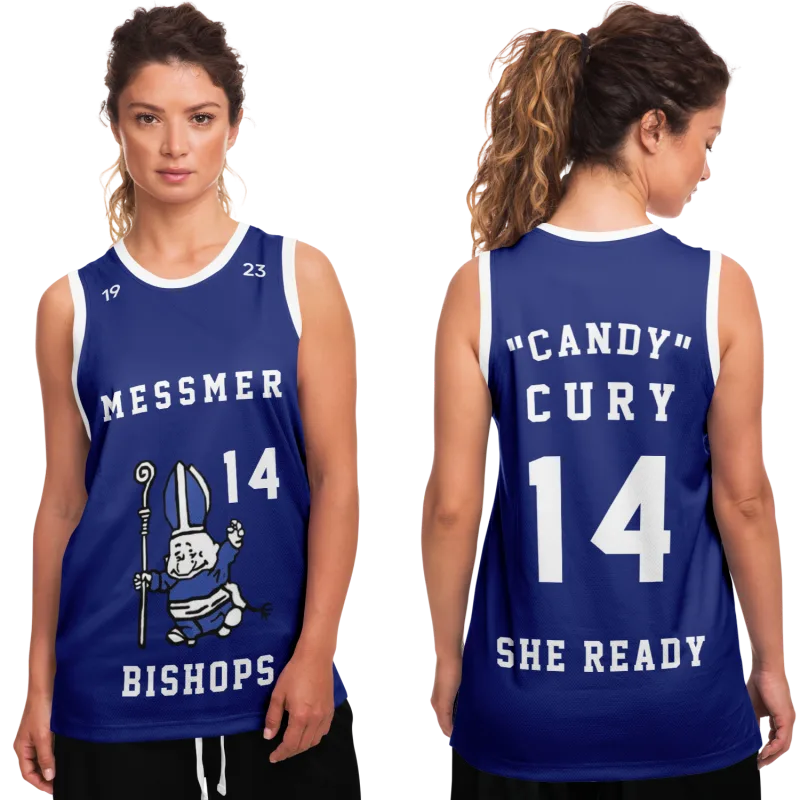
The jersey you wore during that season is one of the few physical anchors to it.
Your jersey is still out there waiting.
Design yours in minutes and see your name and number just the way you remember them.
Frequently Asked Questions
When does volleyball season typically start and end?
For high school programs in the United States, volleyball season generally runs from late August through November, with most state championship tournaments concluding before Thanksgiving. College volleyball programs vary by division — NCAA Division I programs run their primary season from late August through December, with the national tournament typically in December. Club volleyball operates on a separate calendar, with many programs running January through May for their competitive season.
What positions have the most impact on a volleyball team's momentum?
Every position contributes to momentum differently. The setter controls tempo and is the single most influential tactical position — her ability to read the block, distribute the ball, and call the right play at the right moment shapes how the entire offense functions. The libero controls defensive rhythm and serve-receive consistency, which directly affects how cleanly the offense can run. The outside hitter often carries the largest share of the attacking load and is typically the player whose rhythm reflects the team's overall offensive health. In our experience, momentum swings in tight sets are most often traced back to a setter making an unexpected play-call or a libero making a defensive save that kept a rally alive.
How do you capture a great volleyball season moment for the long term?
The clearest records of a season tend to be the most specific ones — not just scorelines and stats but the details only players and staff would know. What was the team's warmup music that year? What was the inside language of the huddle? Which match had the best crowd atmosphere? Players who do the work of preserving those specific details — in photographs, in writing, in the objects they keep from that season — find that the memories stay sharper and more retrievable over time. A jersey with your name, your number, and your school's colors is one of the most immediate physical anchors to what the season was. It brings the specific version of you that played in it back into focus.
Does the experience of volleyball season differ significantly between high school and college?
Yes, in ways that are both expected and surprising. High school volleyball is often more community-embedded — the crowd knows the players personally, matches are held in gyms where everyone has history together, and the program's culture is shaped by years of institutional memory. College volleyball introduces a level of tactical complexity and athletic intensity that changes how the game feels from the inside, but many players note that the emotional peak of high school volleyball — the specific weight of playing for your school, your town, the people in those bleachers — is something that college volume and competition level doesn't automatically match. Both experiences produce distinct versions of what a volleyball season means, and most players who went through both hold them separately.
See also: why high school sports still matter to adults | why your senior season memories are so vivid | the grief that follows the end of your athletic career | what playing under the lights actually felt like | senior night and why it still gets you emotional