





There is a sound that lives in your body that no one else in the room can hear.
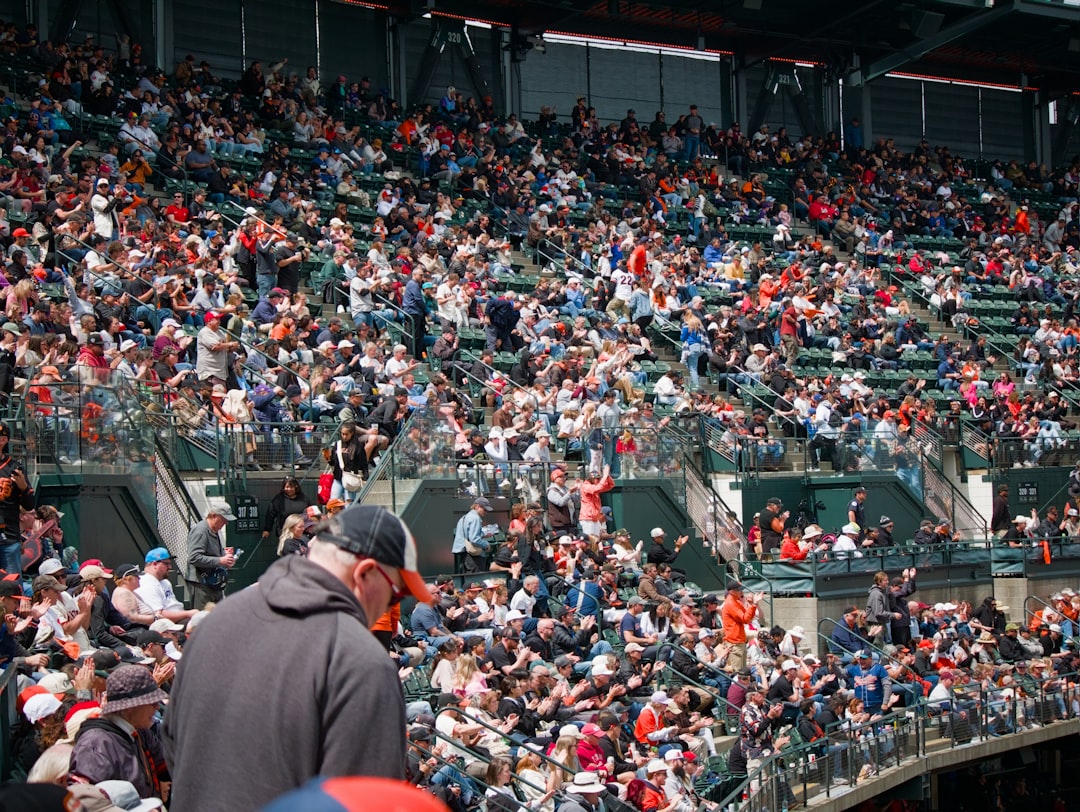
You might be sitting at a desk, standing in a kitchen, pushing a cart through a grocery store — and something trips it. A distant cheer from a television in another room. The particular pitch of a gym's echo. The way sound bounces off bleachers on a cold night. And just like that, the former athlete crowd memory you've been carrying for years surfaces in your chest before it ever reaches your brain.
You were the reason the crowd got loud. And some part of you has never fully left that moment.
This piece is for that part of you.
The Sound That Never Actually Fades
Sports science has a name for the way certain sounds encode themselves differently than ordinary memories. But you don't need a laboratory to explain this. You already know it in your body.
Think back. Not to a general sense of "playing," but to one specific moment. Maybe it was a goal, a tackle, a three-pointer that caught the back of the net, a serve that nobody touched, a run that broke free of the pack. The exact moment when the thing you'd practiced ten thousand times happened in front of people who were watching — and they responded.
The sound came a half-second after you did it. That gap between the action and the crowd's recognition is one of the most particular sensations in athletic life. Time stretches. Your body is already moving to the next thing — positioning, celebrating, processing — and the noise catches up to you like a wave that started somewhere behind your head.
If you played, you know exactly what that wave feels like.
It doesn't travel through your ears the way ordinary sound does. It comes from everywhere at once. Bleachers, rafters, sidelines, opponents' families who couldn't help themselves. It arrives as pressure as much as sound — something physical that pushes against your skin and your sternum in the same instant.


Every former athlete carries this. The specific pitch. The specific context. The way the crowd's energy didn't feel separate from your own body in that moment but continuous with it, like the sound was coming out of you.
What's remarkable is not that you remember it. What's remarkable is how precisely you remember it. Not as a general feeling of "it went well." As a sensory archive. The precise smell of the floor or the grass. The specific weight of what you were wearing. The particular texture of that half-second before the wave arrived.
What the Crowd Was Actually Responding To
Here's what most people who never played at a competitive level don't understand about that sound: it wasn't just about success.
The crowd roared for you — specifically for you, in that specific moment — because something true happened. The crowd is not a sophisticated critic. It doesn't measure technique or tactical correctness. What it responds to is the unmistakable quality of a human being doing what they were built to do at just the right moment.
Part of what makes that recognition land so deep is how pointed it feels — hearing your name over the loudspeaker carries the same kind of emotional tug, and it's the specificity that stays with you.
You had prepared for that moment in ways the crowd couldn't fully see. The 5 AM practices. The repetitions that turned a motion into something automatic. The hours of conditioning that meant your legs were still working properly at the end of a game when other people's legs had given up. The crowd didn't know any of that. But it felt the result of all of it.
In our experience talking to athletes from nearly every competitive level — high school, college, recreational leagues, semi-professional, the full range — the crowd memories that hit hardest are almost never from the biggest moments. The championship-defining play matters. But what players describe most vividly is frequently a moment that felt unlikely. A comeback nobody expected. A play from a player the crowd had underestimated. A moment when something hard was done precisely, and the crowd recognized the difficulty before they consciously processed it.
The roar, in those moments, is the crowd telling you: we saw that. We know what that cost.
That is not a small thing to carry.
Why Former Athletes Reach for This Memory
Michelle T., 38, a former collegiate volleyball player, describes it this way: she was driving home from a work presentation that had gone particularly well — a room full of people engaged, a pitch that landed, applause at the end — and she cried in the car for ten minutes. Not from sadness. From recognition. "It was the first time in years I'd felt the room respond to something I did," she said. "And my body went immediately back to the gymnasium. The echo off those walls. The way the home crowd sounded at set point."
She hadn't been thinking about volleyball. But her body had been waiting.
This is the thing that nobody prepares you for when your playing days end: the crowd memory doesn't archive itself neatly. It doesn't file away with "things from before." It stays active. It stays in the present tense. Because it isn't primarily a memory of an event. It's a memory of a feeling about yourself — and that feeling doesn't have a natural expiration date.
Former athletes reach for this memory in moments of high stakes. Before a job interview. After a hard conversation. At the starting line of a first race in a new sport they've picked up in their forties. The body knows that it has been here before — in the territory of "something real is about to happen, and people are watching, and I am capable." The crowd memory is the evidence file the body reaches for.
This is not nostalgia in the diminishing sense of the word — longing for something lost. It is something more useful. It is the record of a demonstrated capacity. The crowd's response was an external confirmation of something internal that is still true.
The Specific Architecture of an Athlete's Best Memory
Ask any former athlete to describe their crowd moment and you'll notice the same structural architecture underneath the specific details.
First, there is the approach. The moment before the moment. The setup, the read, the shift in body position that preceded the action itself. Athletes remember the approach with almost photographic clarity — which direction the play was developing, where the defenders were, what the score was, how tired their legs felt. The brain was in a particular mode: narrowed, fast, pre-cognitive.
Then there is the execution. Not always clean. Not always textbook. Sometimes the thing that made the crowd respond was precisely the improvisation, the recovery from a near-mistake, the physical adjustment that shouldn't have worked but did. The execution happened in a kind of silence — inside the athlete's own nervous system, the noise of the crowd had temporarily disappeared.
Then the half-second gap.
Then the wave.
And then — the part that often goes unmentioned — the immediate return to the game. Because athletes don't get to stop in the crowd's noise. They have to keep playing. The crowd's roar is something you absorb while already moving to the next assignment. You carry it forward into the next seconds of the game without pausing to inhabit it.
Which may be exactly why it stores so cleanly. You never fully experienced it in real time. You were already somewhere else. The crowd memory exists as this slightly unprocessed thing — never fully consumed in the moment, still alive decades later because you never quite got to finish it.
What the Memory Tells You About Yourself Now
There is a reason this doesn't just read as nostalgia. The crowd memory is evidence. It is a data point about who you actually are — not who you were at seventeen or twenty-two, but who you demonstrably have been under pressure, in front of people, when it mattered.
The competitive athlete's training builds more than physical capacity. It builds a specific orientation to difficulty: the expectation that preparation is possible, that performance is learnable, that the gap between where you are and where you need to be can be closed with enough focused work. That orientation doesn't leave when the season ends. It transfers.
The former athletes who carry their crowd memories most productively are the ones who recognize that the feeling — not the sport, not the specific context, but the feeling of performing at capability level in front of witnesses — is reproducible. It requires different equipment. Different arenas. Different definitions of the play. But the feeling of having prepared for something and then doing that thing well, in front of people who can see what it costs — that is available to you for the rest of your life.
The crowd will not always be a gymnasium full of people in bleachers. Sometimes it's a conference room. Sometimes it's a dinner table where someone needed you to say the right thing. Sometimes it's yourself at 5 AM, deciding whether to show up for something you've committed to when no one is watching and nothing external is requiring it.
And when you do find yourself back in the bleachers as a spectator, the game reads differently to you than it does to everyone around you — having an athlete's past changes how you watch sports.
But the athlete who has heard the crowd loud once — really heard it, in their chest, because they were the reason — has a reference point that most people don't have. They know what they are capable of when they prepare and when they commit.
The memory isn't a relic. It's a resource.
What Former Athletes Do With the Sound
Some people spend years not quite knowing what to do with it. The crowd memory surfaces and then recedes, and it can leave a residue of mild grief if it's only ever understood as something lost.
But the athletes who seem to navigate the post-playing chapter most fully are the ones who find ways to honor the memory without trying to recreate it perfectly. They coach. They mentor. They build things with the same intensity they brought to training. They take up endurance sports that provide a different but related version of the feeling — the starting gun, the field, the finish line where someone is watching.
And sometimes, they do something simpler. They find a physical object that anchors the memory — something that makes the playing days feel honored and present rather than filed away.
The jersey was always the most visible part of the identity. The name on the back. The number you wore through every practice, every game, every moment where the crowd might or might not get loud — from the starting lineup announcement, when you first heard your name called to the final horn. Wearing a jersey was a declaration: I play. I compete. I show up for this. The former athlete who keeps that connection alive — who holds the proof of the playing days in something tangible — often reports that the crowd memory becomes less like grief and more like gratitude.
Your jersey is still out there waiting.
Design yours in minutes and see your name and number exactly the way you remember it.
Frequently Asked Questions
Why do crowd memories feel more vivid than other sports memories?
The intensity of the crowd moment — the sound, the physical sensation, the high-stakes emotional state — activates multiple memory systems simultaneously. Sports psychologists note that memories formed under high emotional arousal tend to encode with more sensory detail and remain more stable over time than memories formed in neutral emotional states. For athletes, the crowd roar is one of the highest-arousal moments of competitive life, which is likely why the specific sensory details — the smell, the weight, the physical feeling of the sound — stay sharp while other memories from the same era blur.
Is it normal for the playing-days crowd memory to surface unexpectedly in everyday life?
Completely normal, and reported across virtually every sport and competitive level. The crowd memory is not stored as "a thing that happened in sports" — it is stored as a memory of a peak performance state, which the brain can retrieve when current circumstances share emotional or physiological similarities. High-stakes presentations, competitive situations, or even music with the right rhythm can trigger the retrieval. This is the body recognizing pattern similarity, not confusion between past and present.
Does the crowd memory change over time, or does it stay consistent?
Both. The emotional core of the memory — the particular feeling of the wave of sound, the specific pride and aliveness of that moment — tends to remain remarkably stable across decades. Former athletes describing crowd memories from twenty or thirty years ago use present-tense language and sensory specificity that is consistent with well-preserved episodic memory. The narrative frame around the memory — how you understand its meaning, what you believe it says about you — often evolves as life provides new contexts for interpretation. The feeling stays. The meaning deepens.
What if I never played at a level that filled a stadium — does this still apply?
Yes. Crowd size is largely irrelevant to the memory's emotional power. The mechanism is not volume — it is the experience of performing for witnesses who respond authentically. A gymnasium with forty parents, a soccer field with a home sideline of thirty, a wrestling meet in a school cafeteria — the structural elements are the same. You prepared, you performed, and people who were watching responded to what they saw. The wave comes in proportion to the context, not in proportion to the stadium capacity. Every former athlete who competed in front of any audience has a version of this memory.
How do athletes who played individual sports experience crowd memory differently from team sport athletes?
In team sports, the crowd memory is often shared — the roar belongs collectively to the moment, and individuals may experience it as part of a group accomplishment. In individual sports, the crowd's response is unmistakably specific to you — there is no distributing the attribution. Former individual sport athletes often describe the crowd memory as more intensely personal and occasionally more isolating to carry, because the memory belongs entirely to them with no teammate to reference it with. Both versions are powerful. The individual sport version can be particularly difficult to recapture later in life, which is why individual sport athletes sometimes pursue high-accountability solo endeavors — endurance events, competitive performance — with particular intensity.
See also: why high school sports still matter to adults decades later | the science behind why those moments stay so vivid | what playing under the lights actually felt like | the athletic identity that never fully goes away after high school