



There is a second — a single, specific second — between when the PA system crackles and when your name comes out of the speakers. You already know it's coming. But that doesn't prepare you for it.
Hearing your name over the loudspeaker in sports is one of those experiences that sounds simple until you've lived it. And if you've lived it, you already know that "simple" is the wrong word entirely. It is, for many former players, one of the most vivid and permanent memories they carry from their athletic life. Not the wins. Not the final scores. The sound of their own name in an open field, bouncing off bleachers and sky.
This piece is about that moment. What it felt like. Why it still feels like something. And what it tells us about what sports actually give us: beyond the stats, the trophies, the participation ribbons.
The Specific Sound of It
It wasn't just your name.
It was your name through that particular speaker system, the one with the faint buzz on the high frequencies, or the one that was perfectly clear and too loud, or the one that cut in and out and always chose the worst possible moment to do so. It was your name read by whoever was behind the mic that day: a volunteer parent with a clipboard, a student from the school, the athletic director who always put too much emphasis on the first syllable, the professional announcer at a summer tournament who made every name sound like it belonged on a big-league field.
The delivery varied. The feeling did not.
Every sport leaves its own sound behind, and those sounds behave the same way. The specific sounds a football field leaves behind cling to memory just as stubbornly.
There is something neurologically particular about hearing your own name that researchers have studied with genuine curiosity. A well-known finding in auditory neuroscience is that the brain responds to one's own name even when other stimuli are filtered out — it is one of the few sounds that bypasses the noise and lands directly. The effect holds up outside the lab as well, where the brain still singles out your own name from background speech you aren't even trying to follow. Your name is the one word in the language that has always meant you. When it comes through a loudspeaker and out across a diamond or a field, the effect isn't subtle.

You stand up straighter. You exhale. You feel, for reasons that are hard to articulate quickly, seen.
Not by the crowd specifically, though that's part of it. Seen by the moment. Acknowledged by the game itself, which has just said, formally and publicly: you are here, you are playing, you belong in this.
That is not a small thing. For a fifteen-year-old who has been working toward a starting spot for three seasons, it is not a small thing at all.
The Feeling of Being in the Starting Lineup
There's a particular version of this moment that lives in its own category.
Hearing your name as part of the starting lineup announcement (not just called to the plate mid-game, but introduced before the first pitch, as part of the ritual that says these are the players who will be on this field today) carries a weight that is difficult to explain to someone who hasn't waited for it.
The feeling of being in the starting lineup is anticipation layered on top of validation layered on top of identity. You were chosen. You made the cut. And now, in front of everyone who came to watch, the game is telling the crowd who you are and where you stand.
For many players, that pre-game lineup announcement is the first time they feel genuinely, officially athletic. Not just someone who plays a sport. An athlete. Recognized. Named. Placed.
Kira M., 34, played high school softball for four years in central Ohio. She remembers the first time she heard her name in the starting lineup like it was a different kind of birthday. "I'd played JV for two years," she says. "The day they announced the varsity lineup before a home game and my name came over the speaker, I had to look at the ground because I didn't want anyone to see my face. I was crying. I don't know what I thought that would feel like, but it wasn't that."
That specific collision, the private emotion arriving inside the public moment, is what makes the memory so stubborn. It won't let go because it was real in a way that most moments aren't. It was witnessed. It was announced. It was official.
Why This Memory Lives So Long
Most of what happens in a high school season fades. Specific plays dissolve. Scores become approximate. Opponents blend together.
The loudspeaker moment doesn't dissolve.
There are a few reasons for this, and they're worth naming clearly, because understanding why a memory endures is part of understanding what it meant.
It combined the personal and the public in a single instant. Your name is the most intimate word in your life. The loudspeaker is the most public voice in that space. When the two collide — when something that belongs entirely to you is projected to every set of ears in the building — the contrast creates a kind of emotional electricity. The private becomes shared. The internal becomes undeniable.
It was one of the few moments where you weren't performing: you were simply being recognized. The at-bat that followed required performance. The game required performance. But the announcement required nothing of you except to exist. To arrive. To be the person whose name was being called. There is profound relief in that. You didn't have to do anything yet. You just had to be there, and the moment said: that's enough for now.
It was time-stamped in a way most memories aren't. You know exactly when it happened: before that specific game, at that specific age, in that specific place. The concreteness of the memory is part of its permanence. Vague experiences fade. Specific ones stay.
It connected you to something larger than yourself. Hearing your name over the loudspeaker in sports is one of the moments where you genuinely felt like part of the game's history: not just a participant, but someone the game acknowledged. The PA system has called legends and unknowns alike. In that second, you were in the same register as everyone who had ever stood on that field and heard their name come through those speakers.
The Memory of Being Announced in a Ballpark
Ballparks — even the small ones, even the ones with chain-link fences and bleachers that wobble slightly when people stand up — have an acoustics that is almost designed to make the moment feel significant.
The memory of being announced in a ballpark is partly a memory of sound, but it's also a memory of space. The open air above the field. The way the crowd noise is different outdoors, lower, somehow more real than the canned echoes of an indoor arena. The way your name doesn't bounce off walls but instead reaches, traveling out across the infield grass and dissipating somewhere past the warning track.
That spatial quality changes the experience. Indoor sports have their own version of this moment, and it is powerful in its own right. But there is something about a baseball or softball diamond (the geometry of it, the tradition embedded in every chalk line) that gives the announcement a specific texture.
The emotion of being announced in a game at a ballpark carries, for many former players, the composite sensory memory of everything that was happening at once: the smell of the clay, the weight of the helmet, the sound of the bench behind you, the specific quality of afternoon light or the stadium lights at dusk. Your name came over the speaker and landed in the middle of all of that. It became inseparable from it.
That's why, decades later, a certain quality of outdoor light (or the smell of cut grass, or the sound of a public address system at a minor league game) can bring the whole memory rushing back with startling completeness. The brain filed it all together. Pull one thread and the rest follows.
The same is true of the crack of a bat across an empty field: it lands in the body before the mind has time to place it.
What the Moment Actually Gave You
Here is what most people mean when they say they miss being announced:
They don't miss the specific sound. They miss what the sound represented.
They miss the version of themselves who was standing there: young, specific, invested in something with the whole weight of their attention. They miss the clarity of that moment, when the most important thing in the world was the game they were about to play and the name that had just been spoken over a loudspeaker to a crowd that included people they cared about.
They miss feeling like they were somewhere. Like they had a place (a literal position on a literal field) that was theirs, that the public address system was prepared to testify to.
Adult life rarely offers that kind of clarity. You are rarely assigned a position, announced, and then asked simply to do your job well in front of the people who matter to you. The structure of sport — the clarity of roles, the public acknowledgment of participation, the clean beginning that a lineup announcement represents — is something most of us spend years quietly missing without quite knowing what we're missing.
When the role goes away, so does the version of you that it held together. The identity shift that arrives when you stop being the player is the same loss wearing a different name.
Hearing your name over the loudspeaker in sports was, for many of us, one of the last times everything was that clear.
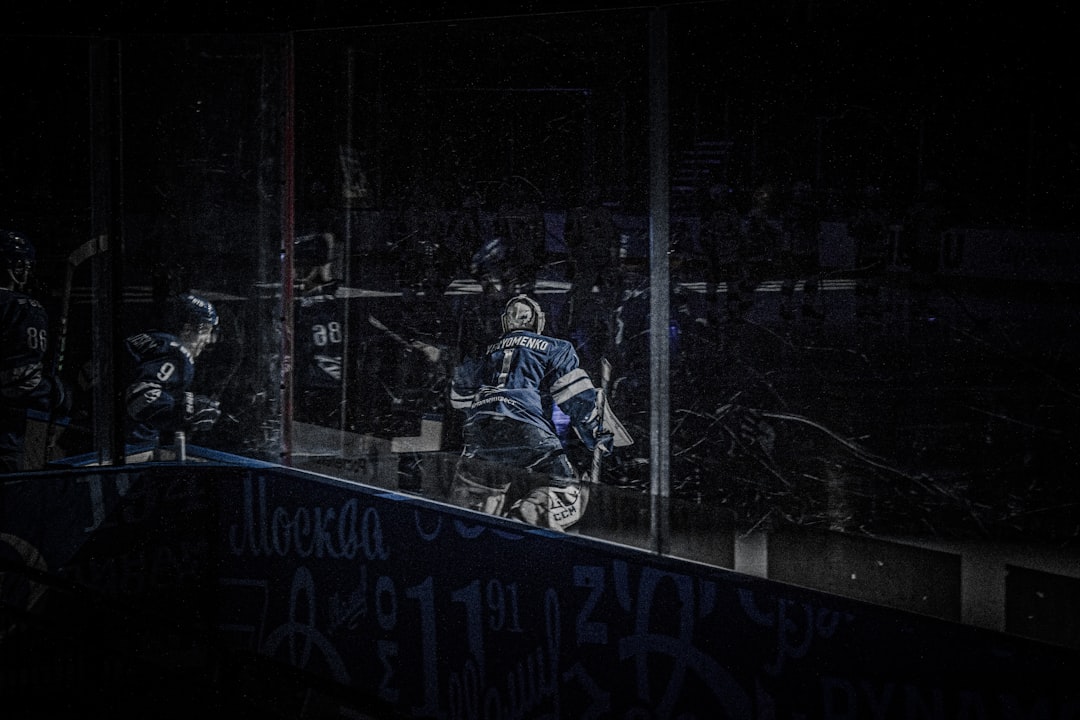
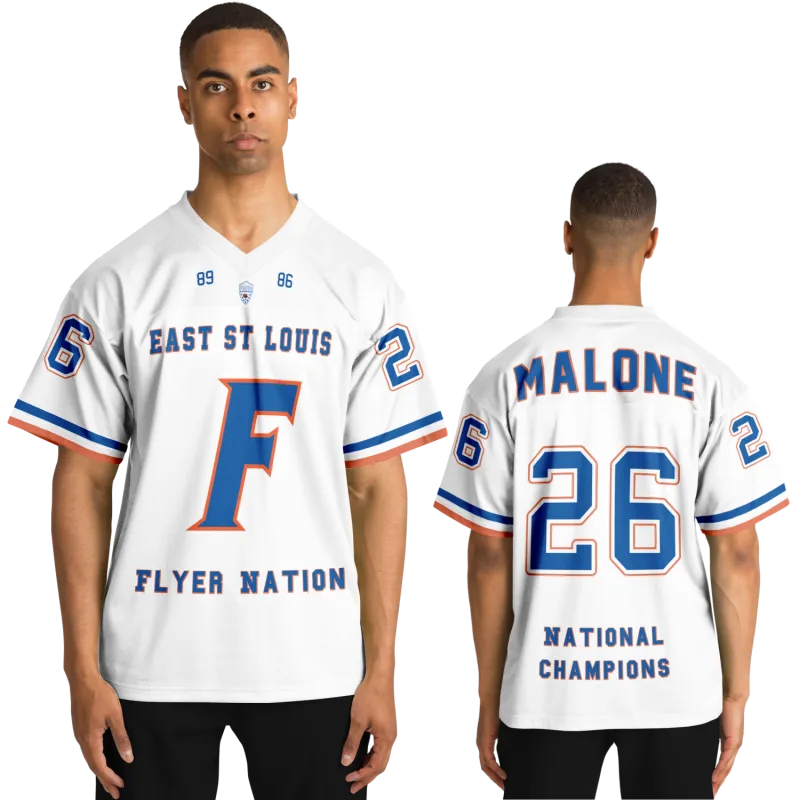
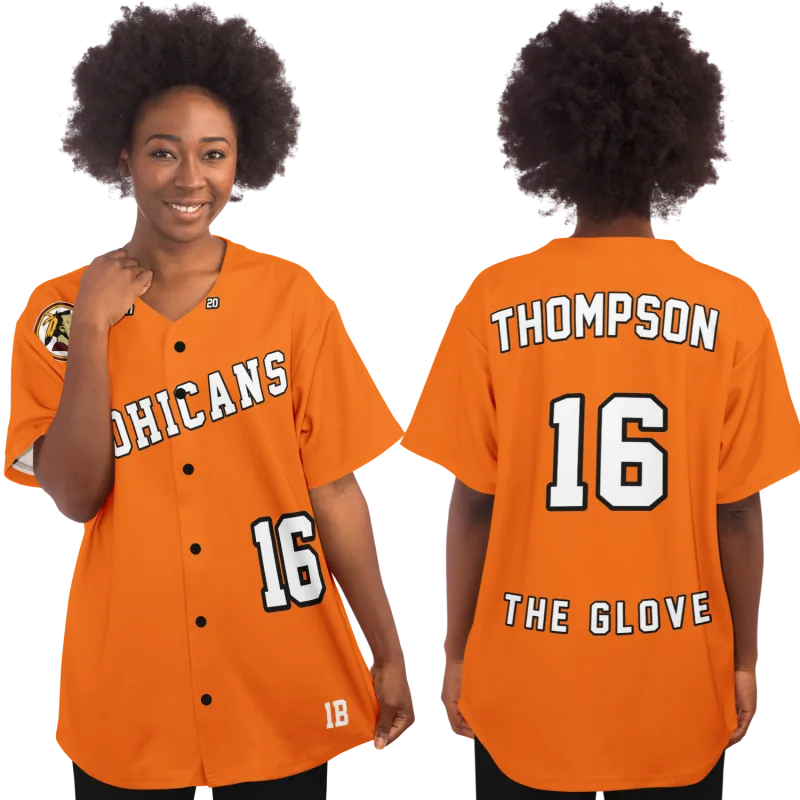
Your jersey is still out there waiting.
Design yours in minutes and see your name and number exactly the way you remember it.
Frequently Asked Questions
Why does hearing your name over a loudspeaker feel so emotional, even years later?
The loudspeaker announcement combines two powerful psychological elements at once: the intimacy of your own name — the word your brain is most hardwired to respond to — with the public, official quality of a PA system in a shared space. For young athletes, it often represents the first time they felt formally recognized as part of something significant. The memory is vivid because it was multi-sensory, time-stamped to a specific moment, and emotionally charged in a way that most experiences are not. Years later, the emotion returns because what the moment represented never fully disappears: clarity, belonging, recognition.
Is the feeling of being announced different in baseball and softball than in other sports?
There is something specific to baseball and softball that intensifies the announcement moment. The individual nature of the sport plays a role: when your name is called before an at-bat, the spotlight is entirely on you in a way that a team sport announcement rarely replicates. The open-air setting of most diamonds also changes the acoustic quality of the moment. And the deep tradition embedded in the sport gives the PA announcement a weight that feels, even at the high school level, connected to something larger than the game in front of you. That said, former players in every sport report versions of this same emotional response to hearing their name read aloud in competition.
Why do people search for gifts related to hearing your name announced in sports?
Because the loudspeaker moment is one of the most universal and specific memories former players share, it becomes a powerful anchor for commemorating athletic experience. When someone wants to honor a player — or honor their own past — they look for something that references that specific feeling. A custom jersey with your name and number is one of the most direct ways to recreate the visual identity of that moment: to hold something that says, in the same formal, public way the PA system once did, this is who you were on that field, and it mattered.
Can you recreate that feeling as an adult?
Not exactly, and that's okay. What you can do is honor it. The loudspeaker moment was real, it happened, and nothing about the present removes what it meant. Former players who reconnect with their athletic identity — through reunions, recreational leagues, coaching, or commemorating their experience with something tangible — often report that the memory becomes something other than just nostalgia. It becomes a source. A reminder of a version of themselves that was capable, specific, and recognized. That version doesn't disappear. It just needs something to anchor to.
See also: why high school sports still matter so deeply to adults | the science of why those senior season moments are burned so clearly into memory | the grief of losing your athletic identity after high school | what playing under the Friday night lights actually felt like | senior night ceremonies and why they still make grown adults cry