

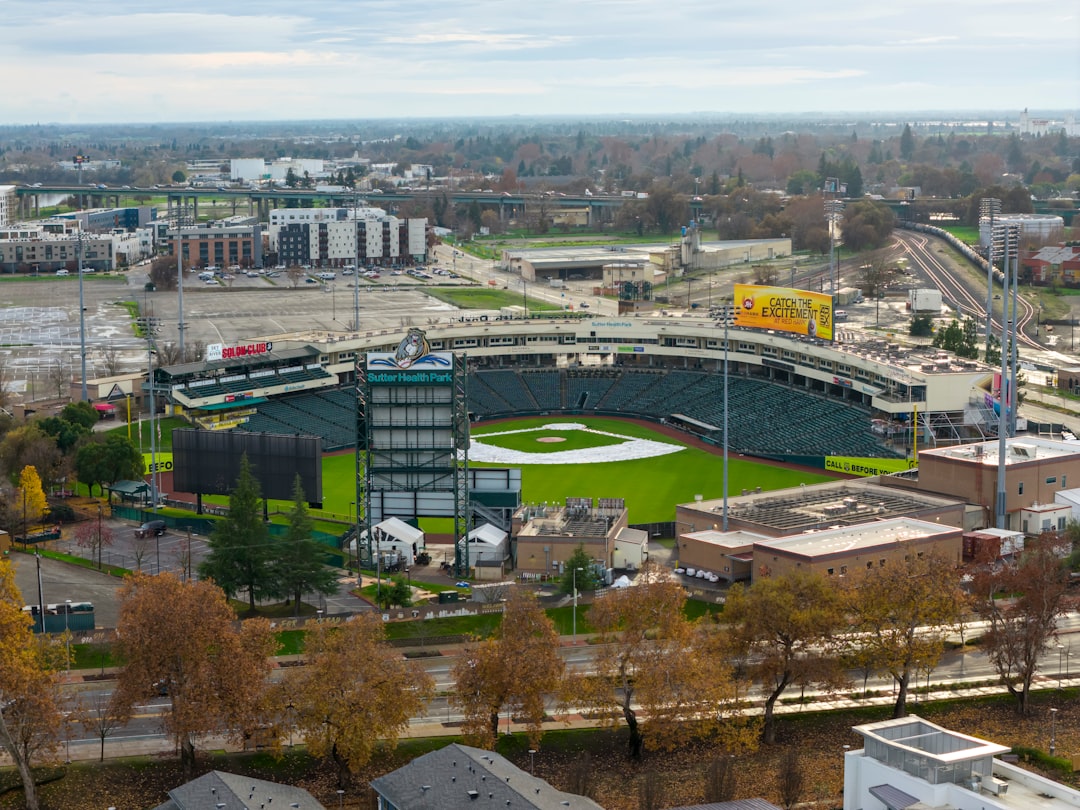

Baseball nostalgia for a former player lives almost entirely in the nose — and the proof is the moment you walk past a freshly cut diamond and lose the thread of whatever you were thinking about completely.
It happens without warning. A park tucked behind a school. A community field with a hand-painted scoreboard and base paths worn to bare clay. A Little League complex glimpsed from a highway exit. You don't have to see it clearly. One breath is enough. The fresh-cut outfield grass, the dry mineral sharpness of infield dirt baking in the afternoon sun — and you're gone. Mid-conversation. Mid-thought. Somewhere else entirely, for a half-second that feels much longer than that.
That smell doesn't just remind you of baseball. It is baseball, compressed into a single involuntary breath. And the reason it hits so fast, so completely, has nothing to do with sentimentality. It has to do with how your brain is actually built.
The Shortest Distance Between Now and Then
There's a specific reason smell reaches the past faster than any other sense.
The olfactory system connects directly to the amygdala and hippocampus — the brain's emotional processing and long-term memory centers — through what neuroscientists call the olfactory-limbic pathway. Every other sense (sight, sound, touch, taste) gets routed through the thalamus first. Processed. Filtered. Categorized. Smell skips that step entirely. It goes straight to the place where your most emotionally loaded memories live.
This is the structural reason a song from your playing days might remind you of a summer, but a smell from your playing days returns you to it. The song is a reference. The smell is a portal.
For former players, that portal doesn't open to a highlight or a final score or even a specific game. It opens to something more foundational than any of that.
It opens to the feeling of being someone who belongs on a field.

Who has a position. A number. A role. A set of teammates who expect you to be in a specific place when the ball is hit. Adult life rarely delivers that kind of clarity — the unambiguous, embodied knowledge of exactly who you are and exactly where you're supposed to be. Baseball gave it to you every time you stepped between the lines. The smell of the diamond is the fastest route back to that feeling.
If you played competitive baseball at any level (recreational, travel, high school, college, or beyond) you didn't just participate in a sport. You lived inside a complete sensory world for years, and your nervous system catalogued every detail of it. The smell of a freshly cut diamond is one master key. The locker room smell you will never forget is another: different triggers, same door, same certainty rushing back the moment it hits you.
What the Diamond Actually Smells Like — And Why Every Layer Matters
Most people who haven't played would describe it simply as "grass." Former players know it's never that simple. A well-maintained baseball diamond has at least four distinct scent layers, and each one carries its own specific emotional charge.
The outfield cut. Freshly mowed grass releases a family of compounds called green leaf volatiles — most prominently cis-3-hexenol, the molecule responsible for that sharp, clean, almost overwhelming green smell that hits you from a distance before you've even found the chalk lines. Groundskeeping crews cut outfield grass low, typically between one and two inches, which maximizes volatile release. This is the smell that reaches you first, across a parking lot or through a car window.
The infield clay. Red clay and decomposed granite (the standard infield mixture at any diamond above recreational level) carry their own distinct signature: earthy, faintly metallic, bone-dry in summer heat, richer and more complex after rain. When a groundskeeper drags the infield before a game, that smell rises and spreads. When a player slides and kicks up a cloud of it, you're essentially breathing the field itself.
The tarp in the morning. Any player who ever showed up early to practice knows this one: the heavy canvas tarpaulin rolled back from the mound and home plate, wet canvas mixing with cold air and damp grass into something completely specific to that hour, that anticipation, that particular stage of the day before anything has happened yet.
The leather in the dugout. A well-broken-in glove warmed by sun carries lanolin and treated leather (organic, slightly animal) into the ambient air of the dugout. Add pine tar, rosin bags, sunflower seed shells, and whatever everyone had for lunch, and you get a microclimate that exists nowhere on earth except a baseball dugout.
No single layer produces the response. It's the specific ratio of all of them together — grass to earth to warmth to leather — that your brain filed under this is where I belong. When the ratio is right, it doesn't matter how far you are from your playing days. The recognition is immediate.
The Ritual Smells Every Former Player Remembers
If you played, you know the smell arrived as a sequence, tied to the specific rhythm of a game day, each stage with its own distinct version of the diamond's scent.
There was the smell of arriving. The walk from the parking lot, the sound of a gate, the first breath of field air before you'd touched a single piece of equipment. Your body was already shifting into game mode. The smell was the trigger before anything else.
There was the smell of pre-game work. Infield practice stirring up clay dust. The drag crew finishing the basepaths. The first warmup throws releasing that particular combination of effort and anticipation. If your program had a trainer, the sharp pharmaceutical smell of analgesic spray drifting into everything else. Every former player has this smell memorized at a cellular level.
There was the smell of the game itself, and this one changed. A hot July afternoon game smelled entirely different from an April night game under lights. A wet early-season field smelled nothing like a baked-out August diamond. Former players don't remember baseball generically. They remember specific conditions — specific temperatures, specific humidity levels, specific versions of the diamond's smell in different weather and different light.
And there was the smell of after, which might be the most emotionally complex of all. Grass stains worked into fabric. Clay dust in everything. The particular mix of exhaustion and relief and the fifteen minutes after competition when your body is still fully present in what just happened and your mind hasn't caught up yet.
Your memory didn't file these as separate entries. It stored them as one continuous sensory world. When any element of that world appears unexpectedly (a passing field, a kid's game at the park, a maintenance crew on a Tuesday afternoon) the whole thing loads at once.
That's why the sentence stops mid-word.
Marcus T., 41, Never Quite Left the Field
Marcus T., 41, grew up in central Georgia playing travel ball from age nine through his senior year of high school, then walked on at a small Division III program where he played two seasons before a shoulder injury ended his career. He works in logistics now, covers a regional territory, and spends most of his week on the road.
He mentioned once that he pulled off a highway ramp because he could smell a freshly dragged infield from the road (a summer league field behind a church, nothing remarkable about it) and sat there for a few minutes with the window down and the engine running. "I wasn't sad," he said. "I just needed to sit in that for a second. It still felt like mine."
That pause wasn't sentimentality. It was recognition — a former player's nervous system doing exactly what it was trained to do.
What the Smell Is Actually Reporting
Here is what stops you in your tracks and what it is actually telling you.
It is not telling you that you miss baseball, though you might. Nor is it telling you that life was simpler then, though some days it felt that way. It is telling you something more precise than either of those.
It is telling you that you were someone specific there.
When you played, you weren't a job title or a zip code or a credit score or a role in someone else's story. You were a position. A number. A player with a defined set of responsibilities that you had earned through ten thousand repetitions — a specific place in a specific system with specific people depending on you to be exactly who you were.
That level of clarity — the complete, unambiguous knowledge of who you are and what you're doing — is genuinely rare in adult life, and it's what defined the entire high school baseball and softball experience even on the days when nothing went right. The diamond gave it to you automatically. You stepped between the lines and the question was answered.
The smell returns you to that clarity. Not to the games themselves. Not to the wins and losses. To the feeling of being definitively, specifically yourself in a context that made total sense.
In my experience as a former player, this is what you describe when you talk about missing the game: not the competition, not the physical peak, not even the teammates, though all of those matter. What you miss most is the clarity. The certainty of knowing exactly who you are and exactly where you belong.
Every former player remembers at least one moment when they caught the smell of a field unexpectedly and felt the full weight of that certainty return, just for a second. The details change: the field, the age, the circumstances. But the feeling is identical across every level of the game, from recreational leagues to professional organizations. The diamond smells the same. The recognition feels the same. And softball players describe that same recognition on their own diamonds: the field remembers you long after you think it's forgotten.
What You Do With It
The nostalgia doesn't have to stay passive.
Some former players find their way back to the diamond actively: coaching youth teams, umpiring on weekends, playing in recreational leagues that take the game seriously enough to maintain real fields with real infields. Every former player knows the specific pleasure of standing near a field in any of these capacities and letting the smell do its full work without having to pretend they're not noticing it.
Then there is the version of coming back that has nothing to do with your own stat line: passing the game down. Coaching your kid's team. Oiling a glove for a son or daughter whose fingers don't know how to break it in yet. Standing behind the backstop at their game with a coffee in one hand and a bucket of balls at your feet. In this role the smell does something it never did when you were the one between the lines. It stops being a memory of who you were and becomes something live, something happening right now to the kid who now wears the number.
The first time it lands this way, it catches you off guard. You are not the player anymore. You are the adult on the other side of the fence. Yet the grass is cut the same way, the clay carries the same dry mineral edge, the morning tarp rolls back with the same damp canvas smell — and the whole thing arrives differently. It isn't yours anymore. It's theirs. The smell is no longer a record of your seasons; it is the air their seasons are being made of. It comes full circle in the moment you watch them step between the lines and understand that the field is doing to them what it once did to you.
That is the deepest work the diamond does. It doesn't only return you to the person you were. It lets you hand that person's field to the next one — and smell the handoff as it happens.
But there's something worth naming directly: the identity the diamond gave you is not a period piece. The number you wore, the position you played, the team you were part of — these aren't artifacts of a chapter that closed. They're part of how you understand yourself, and that understanding doesn't have an expiration date.
The player you were is still part of who you are. The smell on the wind is the most efficient reminder — the shortest possible distance between the person you are now and the person you were when baseball was the organizing principle of your days.
When it hits you — at a park, on a drive, through an open window on a warm afternoon — let it do its work. That half-second pause isn't distraction. It's your nervous system executing a function it has been calibrated to perform for years: returning you, briefly and completely, to the version of yourself who knew exactly where to be when the game started.
That version is worth the pause. Every time.
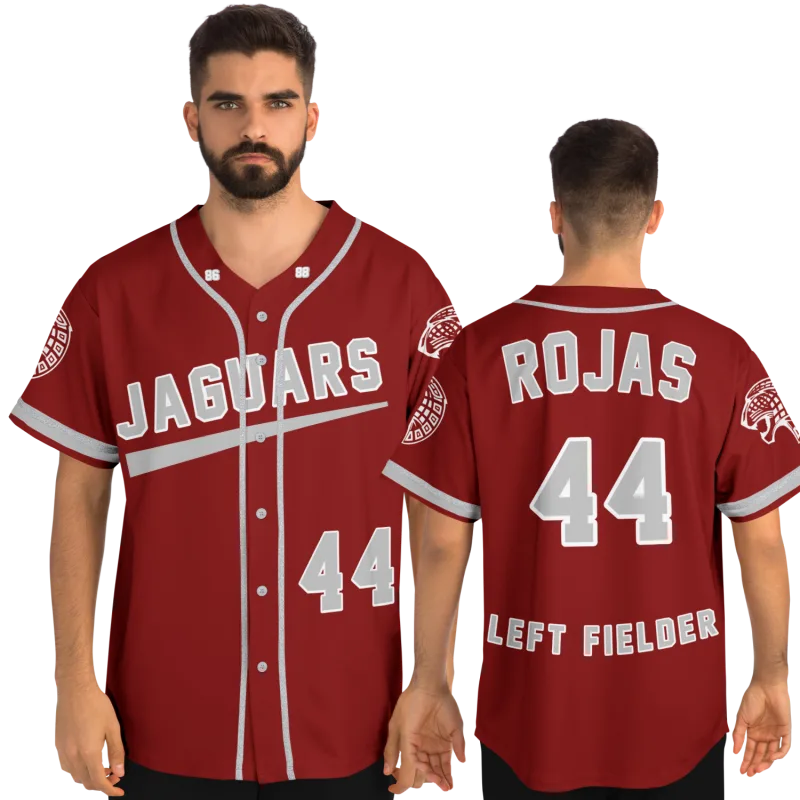
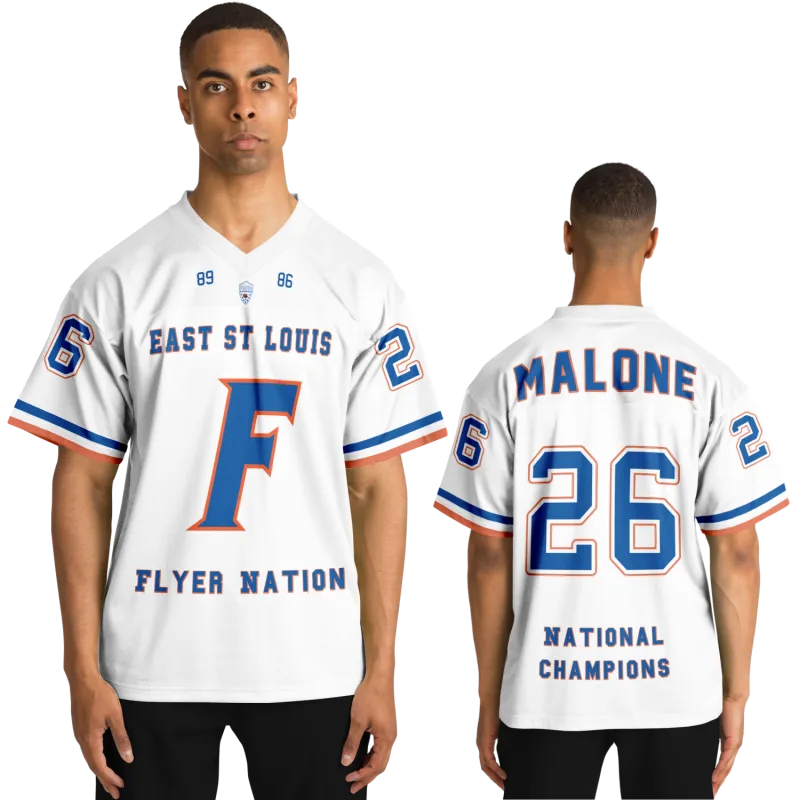
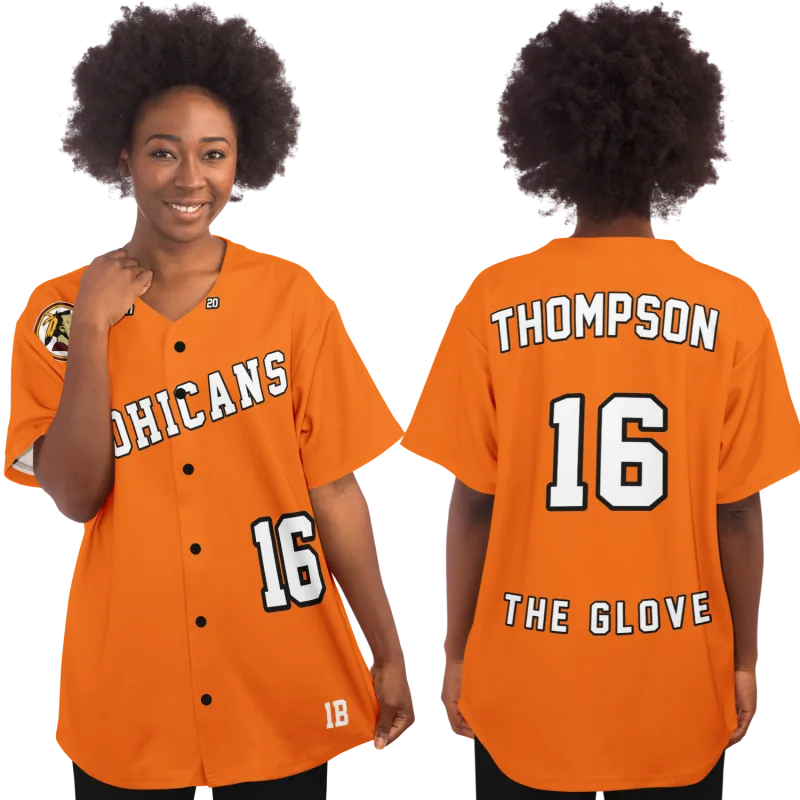
Your jersey is still out there waiting.
Design yours in minutes and see your name and number exactly the way you remember it.
Frequently Asked Questions
Why does the smell of a baseball field trigger such strong memories for former players?
The olfactory system connects directly to the brain's memory and emotion centers (the hippocampus and amygdala) without the filtering step every other sense goes through. This means scent-triggered memories tend to arrive with unusual emotional intensity and specificity. For former players, the compound smell of a baseball diamond was experienced repeatedly across years of emotionally significant events, which creates deeply encoded sensory memory. When that smell appears unexpectedly, the brain retrieves not just a single memory but the entire emotional context of the playing years simultaneously.
Is baseball nostalgia for a former player different from nostalgia for a lifelong fan?
Meaningfully different, yes. A fan's baseball nostalgia tends to organize around games, teams, broadcasts, and specific memorable events: mediated experiences. A former player's nostalgia organizes around embodied experience: what it felt like to field a ground ball in the gap, to step into the box with two outs, to be in the dugout during a game that mattered. The sensory triggers differ (a fan might respond most to a broadcast voice or a stadium sound) and the emotional content differs too. Player nostalgia is primarily about identity and belonging, not spectatorship.
Does the intensity of baseball nostalgia fade over time after a playing career ends?
Research on olfactory memory suggests these memories are exceptionally durable: some studies document vivid scent-triggered recall decades after the original experiences. For former players, intensity tends to depend less on how many years have passed and more on how central baseball was to their identity during their playing years. Players who competed seriously through high school or college often report nostalgia responses just as immediate in their forties and fifties as they experienced in the years immediately after they stopped playing. The portal stays open. The field just has to be there.
What other sensory triggers commonly return former baseball players to their playing days?
Beyond smell, former players most frequently cite the sound of a bat making clean contact, the weight and feel of a broken-in leather glove, the sensation of cleats on a clay warning track, the specific sound of a ball hitting a chain-link backstop, and the tactile feel of a baseball's seams under the fingertips during a grip. Smell is typically the fastest and most involuntary trigger, but any of these sensory cues can produce the same sudden, complete return to playing-day identity that a freshly cut diamond delivers through the window of a passing car.
See also: the psychology of athletic nostalgia | why your senior season memories are so vivid | what it actually felt like to play under the lights | grieving the end of your athletic career