

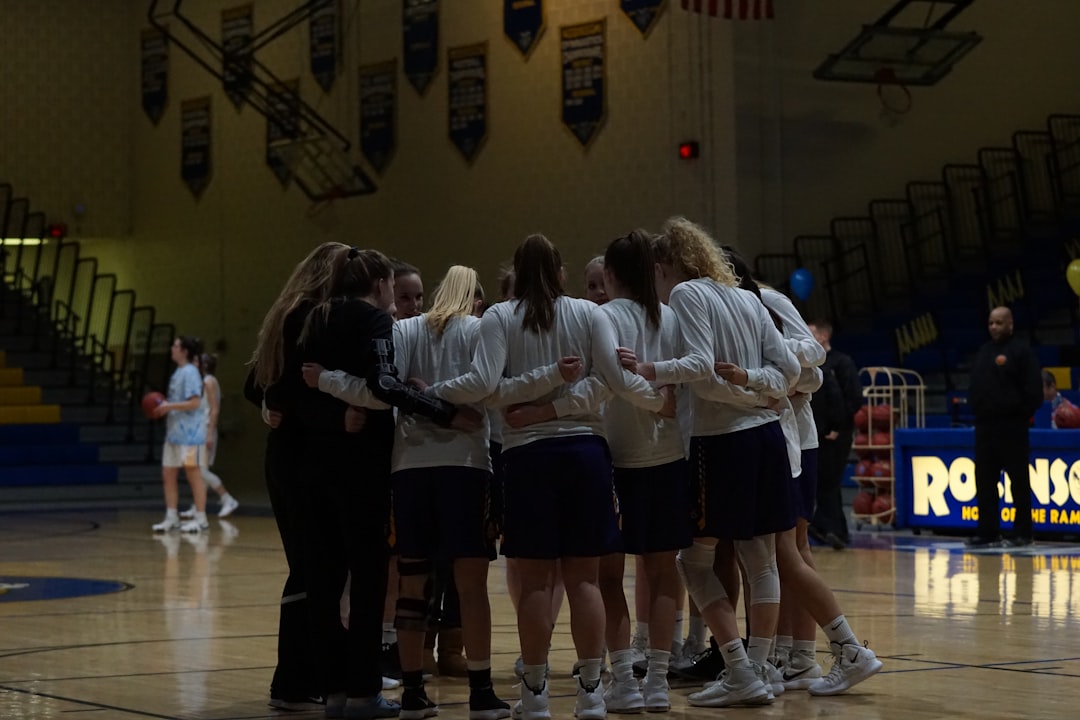




You know exactly which season it was.
You don't have to think about it. There's no searching through years of games and practices and road trips to find it. It surfaces on its own: at odd hours, during long drives, in the quiet after a loud room goes still. That season. The one that had everything. The one that should have gone further. The former athlete championship memory that lives in a category entirely its own: not quite grief, not quite pride, but something that contains both and refuses to let go.
Every former athlete carries one. The details are different. The sport is different. The year, the opponent, the moment everything turned: all different. But the feeling is identical across every locker room, every sport, every era. You were there. You were that close. And some part of you never entirely left.
This isn't about pain. It's about something more interesting than pain: the way certain seasons become permanent fixtures in your identity, not despite their incompleteness, but because of it.
The One That Got Away Never Really Got Away
There's a particular quality to the near-miss season that separates it from everything else in your athletic memory.
The championships you won? You remember them warmly. You're proud of them. They sit in the right place: completed, resolved, filed under achievement. You can revisit them at will, and they feel good in a clean, finished way.
But the season that should have gone further doesn't sit still like that.
It lives in the present tense. Not "we almost won" (the past tense of something over) but "we were going to win," a sentence your memory never finishes. Psychologists who study what's called the counterfactual mind, the brain's tendency to simulate alternative outcomes, have noted that near-misses activate mental replay in a way that completed events simply don't. The closer you came, the more vivid the alternative version remains.


Which is why you can still feel the specific weight of that week. The practice energy. The way the team moved differently, talked differently, believed differently than any other stretch of your playing days. You were a version of yourself that you haven't entirely been since.
That's not nostalgia. That's identity.
Every former athlete remembers not just the games from that season, but the person they were during it. The one who showed up differently. Who understood, maybe for the first time, what it felt like to be genuinely dangerous as a team: to feel the season gathering behind you like water behind a dam.
You were that person. You still are, in the places that don't require a jersey to access. The walk from the locker room to the field, those thirty seconds of tunnel, of cleats on concrete, of everything about to happen, is the part your memory keeps in sharp focus long after the scores blur together.
What the Replay Is Actually Doing
If you've ever caught yourself walking through that season (play by play, possession by possession, quarter or set or inning by inning), you've probably wondered, at least once, why you still do it. The outcome doesn't change. You know how it ends.
But the replay isn't about changing the outcome. It never was.
And here's the part most people miss: the replay doesn't live only in your head. It lives in your body — and the body gets there first.
Think about what actually happens when that season surfaces uninvited. It rarely arrives as a thought. More often it arrives as a tightening in the chest, a lift in the shoulders, the sudden alertness of a body that remembers being ready. Before your mind has assembled a single detail of the game, your nervous system has already downshifted back into it. The season ended years ago, yet some part of you never got the signal that it was over: the part that spent months primed to move, to react, to be ready at a level ordinary life rarely demands. That readiness didn't vanish with the final whistle. It just went quiet, and it still stirs at the oddest times.
You can catch it in the small moments. The way your pulse quickens when a highlight reel finds that one play. The way your hands remember the feel of the ball, the grip, the tension of a set before it began. The way a song from that year can put your body back in the tunnel before your mind has named a single memory. The body remembers the week before the mind narrates it. That feeling is something other than regret. It is a physical echo of a self that was fully switched on.
So the replay is more than the mind circling an unfinished story. It's the body keeping the door open to a version of you it recognized as fully alive. The mind asks the question. The body keeps answering it: you're still in here.
The ones who replay the near-miss most vividly are often the ones who drew the most meaning from the game itself, not just from winning. The replay is a return visit to a version of yourself that felt coherent, purposeful, and fully alive within a structure that demanded everything you had.
That's rare. Most adult life doesn't demand that kind of total engagement. You can get through a week, a month, a year on partial attention. A championship run demands your whole self: physically, emotionally, strategically, relationally. The replay is how your memory holds onto the feeling of being that fully present.
There are two things the replay is doing simultaneously, and they matter:
- It's preserving something true. The you that showed up for that season was real. The replay is evidence.
- It's asking a question. Where does that person live now? Is there still access?
The answer, if you're paying attention, is always yes. The access just looks different outside of organized competition.
Why the Near-Miss Hits Differently Than the Championship
If your teams won championships, you know this already: the near-miss season is the one you talk about more.
Not because winning doesn't matter. It does. But the championship season tends to feel, in memory, like a completed sentence. Satisfying. Proper. The near-miss season feels like an interrupted one: a sentence with no period, hovering in grammatical suspension for decades.
Marcus R., 41, played collegiate volleyball and made it to the regional final his senior year before losing in five sets to a team they'd beaten twice in the regular season. He describes it as "the match I've played in my head every year since, not because I'm still angry, but because I genuinely don't know how it ended the way it did. We were better that day. I know we were. The scoreboard just disagreed."
That phrase, the scoreboard just disagreed, is something every former athlete who's carried a near-miss understands in their bones. The scoreboard was not wrong. But it also wasn't the whole story. And some part of you has been holding the rest of the story ever since, waiting for somewhere to put it.
What makes the near-miss uniquely powerful as a memory is the completeness of almost everything within it. The preparation was complete. The belief was complete. The effort was complete. Only the outcome was incomplete. And the brain, which does not easily accept incomplete narratives, keeps returning to finish the story — knowing it can't, but unable to stop trying.
This is not a wound. It is, in a very real sense, the highest form of athletic memory: proof that you were in something that mattered enough to leave a permanent mark.
The Season as a Chapter, Not a Verdict
Here is what takes time to understand, and what the best former athletes eventually arrive at, about the season that should have gone further:
It was not a verdict on what you were capable of.
The way that season ended was one outcome inside a thousand possible outcomes. You played in the version where it ended the way it did. In precisely the same conditions, with precisely the same effort, a different version ends differently. This is no consolation. It is literally true of any competitive outcome decided by margins: a half-step, a redirect, a single call.
What the season was, undeniably, permanently, beyond any revision, was a testament to who your team became together. The arc of that season, the way it built, the way the locker room changed, the way you learned things about yourself under pressure that you couldn't have learned any other way. That part is not in dispute. That part is yours completely.
The scoreboard settled one question: who advanced. It settled nothing else.
Former athletes who carry the near-miss with the most grace are usually the ones who've made this separation clearly. The outcome is one data point. The season is the whole story. And the whole story (the practices, the adjustments, the team dynamics, the moments when it came together and the moments when you had to dig for something you weren't sure was there) belongs to you entirely, regardless of what the bracket said.
This matters for how you carry it forward.
What That Season Made Possible
There's something the near-miss season does that the championship doesn't always do in the same way: it leaves questions open.
The championship answers the question. The near-miss asks it back at you, year after year: What were you made of? What would you have done with one more game?
And here's the thing about living with that open question — it tends to make people interesting. The former athletes who carried a near-miss into their post-playing lives often carry with them a quality that's genuinely useful outside of sport: comfort with unresolved tension. The ability to do everything right and still not control the outcome. The knowledge that full effort and incomplete results can coexist, and that the effort still mattered.
That's not a small thing to carry into a career, a family, a life.
Every former athlete remembers a teammate who seemed almost energized by the near-miss, not destroyed by it. The person who said, in the aftermath, something like: I'd rather have played in this and lost than not played at all. At the time, it might have seemed like coping. In retrospect, it was wisdom. The season happened. It was real. The realness doesn't require a trophy to confirm it.
And if you were lucky, you had the teammate who pushed you harder than any coach ever did, the one who refused to let you be less than you could be, who made sure you showed up as the version of yourself that season demanded.
The four things that season gave you, regardless of how it ended:
- Proof of what you were capable of under maximum pressure
- Relationships with people who were in the fire with you
- A permanent reference point for what total commitment looks and feels like
- A standard you still measure effort against, quietly, in situations that have nothing to do with sport
None of those things live in a trophy case. They live in you.
Why You Still Wear the Memory
There is a reason former athletes hold onto the artifacts from the near-miss season with particular care. The jersey from that year. The photograph from that locker room. The warmup gear from the tournament where it ended. These are not items from a loss. They are items from a moment, and the moment is worth preserving.
The jersey doesn't remember the outcome. It remembers the season. The number on the back, the name, the colors. They don't contain a scoreboard. They contain the practices at 6am, the film sessions that ran too long, the team dinners, the bus rides, the moments when you looked across the huddle and knew, genuinely knew, that something was happening.
Wearing that identity is not living in the past. It acknowledges that the past built something permanent.
The former athletes who stay most connected to who they were as competitors, not stuck but connected, are the ones who keep some version of that season visible in their lives. Not as a monument to an unfinished ending, but as a reminder of what they were capable of being. What they still are, under the right conditions.
The number on that jersey was yours. The name was yours. The season was yours.
It still is.
Your jersey is still out there waiting.
Design yours in minutes and see your name and number exactly the way you remember it.
Frequently Asked Questions
Why do near-miss seasons feel more vivid in memory than championship seasons?
The near-miss season stays vivid because it remains unresolved in the brain's narrative processing. Completed events — wins, championships — are filed and stored. Incomplete outcomes trigger ongoing mental simulation: the mind keeps returning to replay the sequence, looking for the moment where things diverged. The closer the result, the stronger this effect. Psychologists refer to this as the counterfactual pull — the brain's tendency to simulate "what if" scenarios more actively around near-misses than around clear victories or clear defeats. The former athlete championship memory that lingers most intensely is almost always the one with the narrowest margin.
Is it healthy to keep replaying that season, or does it mean I haven't moved on?
Replaying the near-miss season is a normal and, for most former athletes, healthy part of athletic identity. It becomes a problem only when it's accompanied by ongoing distress, resentment, or a sense that life after sport is somehow lesser. If the replay brings a complex mix of pride, longing, and meaning — without bitterness — that's your memory doing exactly what memory is supposed to do: holding onto something that mattered. Moving on doesn't mean forgetting or neutralizing the memory. It means integrating it — understanding what that season built in you and carrying that forward.
Why do former athletes from different sports all describe the near-miss experience the same way?
Because the near-miss experience is not fundamentally about sport — it's about the collision between full human effort and an outcome that cannot be fully controlled. Every sport creates the conditions for that collision: you prepare completely, you compete completely, and then the result depends on variables that exceed your control. That dynamic is identical across basketball, soccer, swimming, wrestling, volleyball, baseball, and every other competitive context. The sport changes the details. The emotional architecture is universal. That's why a former swimmer and a former football player, comparing notes on their near-miss seasons, recognize each other immediately — the sport is just the container. The feeling is the same.
Can you fully make peace with a season that ended that way?
Most former athletes arrive at something better than peace: meaning. Full peace — genuine indifference to the outcome — is rare, and arguably not the goal. The near-miss season made you who you are in ways that a clean championship run might not have. The tension in that ending, the incompleteness, the question it left open — all of that shaped how you handle pressure, ambiguity, and unfinished business in everything that followed. Making peace with that doesn't mean the season no longer matters. It means understanding that it matters in a way that serves you rather than diminishes you. Most former athletes who've carried a near-miss for a decade or more will tell you the same thing: they wouldn't trade it. Not even for the easier version where it ended cleanly.
See also: the psychology of athletic nostalgia | why your senior season memories are so vivid | grief nobody talks about when your athletic career ends | why you still dream about those high school games