




You remember the sound before you remember anything else.
Not the crowd — not yet. Something underneath the crowd. A low, pressurized hum coming through the concrete walls of the tunnel, the kind of sound that doesn't exist anywhere else in the world except in that specific corridor between the locker room and the field on a Friday night. The air changed in there. Colder. Sharper. Smelling of grass and chalk and something electric that nobody has ever been able to name.
Those thirty seconds are among the most vivid friday night football memories any former player carries. And most of us have never fully explained why.
This is an attempt to do that.
The Threshold Had a Name — You Just Didn't Know It Yet
In every story that has ever mattered, there is a moment where the ordinary world ends and something larger begins. A doorway. A bridge. A tunnel.
Joseph Campbell spent a career documenting this moment across cultures and centuries (the threshold crossing, he called it). The instant when the hero leaves the familiar and enters the arena. He found it in mythology, in religion, in literature. He found it everywhere human beings gathered to tell stories about becoming something.
He never watched high school football.
But he was describing your Friday nights precisely.
The locker room was the ordinary world. Your teammates in various states of tape and superstition. Coach's voice moving through the room at a register that felt different from any other voice you'd ever heard — lower, slower, landing somewhere in the chest rather than the ears. The smell of liniment and cold metal. The specific weight of the uniform (not heavy, but present). Worn. Like it had absorbed something from every practice, every morning in August heat, every Tuesday film session where you sat in the dark and watched yourself get it wrong and then get it right.

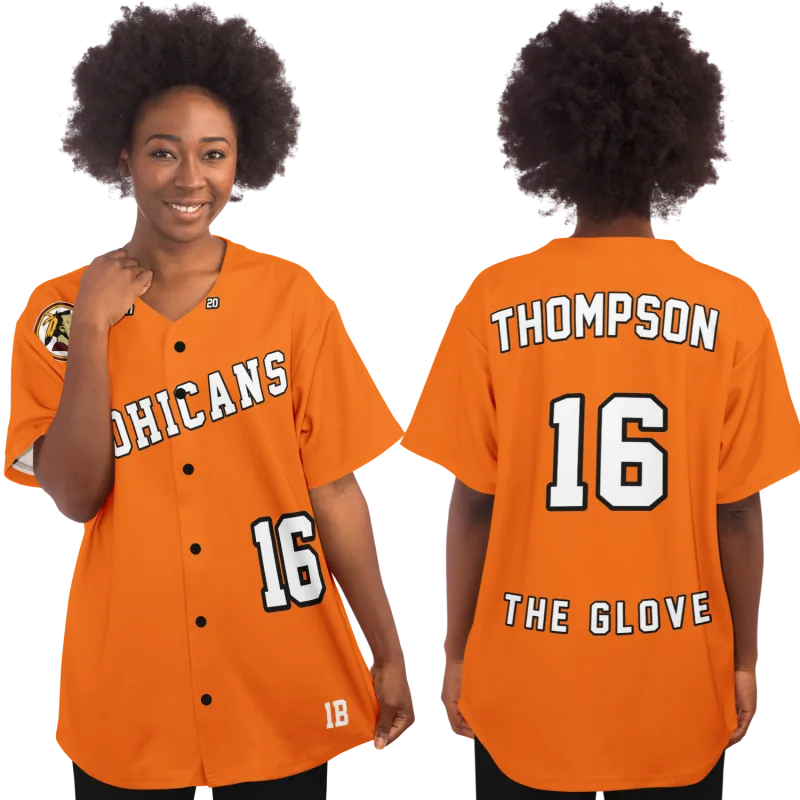
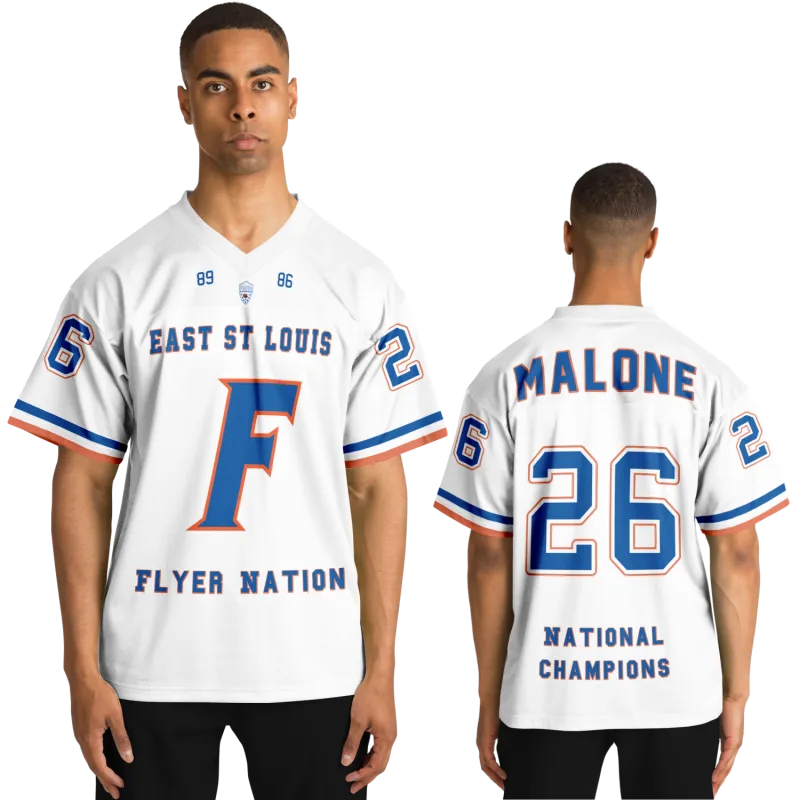
You had dressed for games before. Practices. Scrimmages. But game night, the uniform meant something different. It wasn't equipment anymore. It was declaration.
And then someone opened the door to the tunnel.
What the Walk Actually Was
The walk from locker room to field was approximately thirty seconds long, give or take the length of the tunnel, give or take whether you ran it or moved through it deliberately the way the seniors did, because the seniors always knew something about that walk that you didn't understand until you were one of them.
What the seniors knew was this: you don't rush a threshold crossing.
The sound built as you moved. That's the thing most people who weren't players never understand about a stadium before kickoff. From the stands, from the parking lot, from anywhere outside, it's just crowd noise: ambient, general, undirected. But inside the tunnel, moving toward the light at the far end, the sound had direction. It was coming at you. It was building in your chest cavity before your ears fully registered it. The body knew something was happening before the mind had processed it.
By the time you hit the field — when the tunnel opened up and the lights were everywhere at once, the grass impossibly green under those stadium floods, the stands suddenly real and present and loud — you were already changed.
You crossed over.
You were no longer the person who had walked through the school that morning, sat through classes, eaten whatever you ate for the pre-game meal. You were the name on the back of the jersey. You were the number. You were, for the next three hours, precisely who you had spent an entire week preparing to be.
But you never made that crossing alone. That's the part the retellings usually leave out, because the memory always plays back in first person, but the walk itself was a shared procession, and the sharing was what gave it its weight.
You came around the bend moving as one line. Forty of you, give or take, shoulder pads nearly touching, some guys arm-in-arm or hand-in-hand because that's how it had been done since freshman year and nobody ever decided to stop. The seniors set the pace at the front; the freshmen fell in behind and tried to match it. You weren't a collection of individuals walking toward the light. You were one unit with one heartbeat, and the tunnel seemed to demand it — the width of it, the way it funneled you into a single file, a single line, a single intention.
Then you turned the corner.
That was the moment — the turn where the concrete opened up and the noise finally got in. It's the detail former players always come back to, the thing people who never walked it can't quite picture: for those first few seconds you walked behind the stands, and the sound was muffled, distant, almost polite. Then you turned the corner and the full force of it hit you in the chest, and the first thing you heard — before the crowd resolved into individual voices — was the fight song. Not the whole band. Not the crowd yet. The fight song, carried on a wall of noise, and it was being played for all of you at once.
For those thirty seconds you were all the same thing — a team moving as one — and you wouldn't be that again until the next Friday night. The game would tear you apart into eleven positions and individual assignments within minutes. But for the length of that walk, you were whole.
Why does it persist? Because the feeling goes away the moment your last Friday night ends, and then it comes back, unbidden, at the thresholds that matter most: a wedding, the birth of a child, any moment that asks you to become someone. It was about the person you became walking toward the light with your team beside you. The field was only where it happened.
If you played, you know there is nothing else in civilian life that replicates this. Not a work presentation. Not a wedding entrance. Not a graduation. Nothing else sends you through a tunnel into a roar toward a lit field on a Friday night and asks you to be the fullest version of yourself for the next three hours.
That's not nostalgia. That's an accurate description of something genuinely rare.
The Rituals Inside the Ritual
Every player carried something personal into that tunnel. The walk itself was the shared ritual, but nested inside it were a hundred individual ones.
Some guys had songs: specific songs that had to reach a specific moment before the tunnel. The kind of precision that sounds obsessive until you understand that the ritual was about control. You controlled the tunnel walk when you could control almost nothing else. The other team had been preparing all week. The crowd was going to do what the crowd was going to do. The weather was whatever the weather was in October in your part of the country.
But you could control precisely when the song hit its bridge.
Some players touched the same spot on the tunnel wall every single time. Upper right corner, three steps before the field opened up. Left hand, flat palm. Some did it unconsciously: they didn't even remember starting the ritual, couldn't tell you the first time they did it, couldn't tell you what would happen if they didn't. They just knew they always had.
Some walked in silence so complete it looked like a different kind of noise.
Marcus T., 34, played linebacker at a 4A school in central Texas and still dreams about the specific gravel texture of the tunnel entrance at his home field — the way it transitioned from concrete to turf and how his cleats sounded different the precise moment he crossed that line. He keeps a photo of that tunnel on his phone. Not of the game. Of the tunnel.
That detail — the cleats on the turf, the sound changing underfoot — is precisely the kind of thing that stays. Not the scoreboard. Not the stats. The moment of crossing.
What It Gave You That You Didn't Know You Were Receiving
The tunnel walk was, among other things, a training ground for something that had nothing to do with football.
You learned, probably without anyone naming it for you, that fear and readiness can occupy the same body at the same time. That the tightness in your chest walking toward the light wasn't weakness — it was calibration. Your nervous system getting specific. Your focus narrowing from everything to precisely one thing.
Every former athlete remembers the first time they realized the butterflies weren't going away. Some coach or older player eventually said something like: you don't want them to go away. You want to learn to use them. And in that tunnel, with the sound building and the grass getting closer, you were doing precisely that whether anyone told you you were doing it or not.
You were practicing the management of high-stakes presence.
You were learning how to walk into a room (a field, a moment, a situation) that was bigger than your comfort zone and behave like you belonged there anyway. Not because you weren't nervous. Because the nerves were fuel, and you had learned to run on that kind of fuel.
This is not a metaphor. The neurological patterns reinforced by repeated high-stakes performance (the cortisol regulation, the attentional focus, the physical ritual that cues the psychological state) are documented by sports psychology research as genuine transferable skills. The tunnel walk wasn't just ceremony. It was training.
The boardrooms and the job interviews and the difficult conversations and the moments when you had to stand up and be counted later in life, you had a framework for those moments that most people never develop. You walked through the tunnel first.
The tunnel walk is one of the moments that made you an athlete, a threshold crossing so powerful it became the template for every high-stakes moment that followed.
The Jersey Was Part of It
There is a reason the uniform mattered.
Not vanity. Not aesthetics. Something more functional than that.
In my experience as a former player, the players who talk most about the tunnel walk almost always describe the uniform in physical terms: the weight of the shoulder pads settling, the way the jersey fit differently during games than during practice because of how your body was holding itself. The number on the back functioning as something almost like a second identity — one you had earned, been assigned, taken responsibility for.
A jersey number is a strange thing. You didn't choose it, in most cases. It was given. But over the course of a season, over the course of a career, it became yours in a way that felt biographical. When someone called out your number from the stands, they were calling you. Not your name. Your number. And you answered to it.
This is part of why former players return to the uniform long after the playing days are over. Not because they're living in the past. Because the jersey represents something specific about who they were (and still are) in a way that nothing else in adult life quite captures. The game is over. The identity it shaped is not.
The Walk Ends. The Player Doesn't.
Here is what nobody tells you when the last Friday night is behind you:
The walk doesn't stop. It just changes shape.
The threshold moments keep coming. Different arenas, different stakes, different uniforms if you're wearing one at all. But the pattern — the preparation, the tunnel, the roar, the crossing over — that pattern becomes the template your nervous system runs when it matters most.
This is the difference between being a sports fan and being someone who played. The fan watched the tunnel from the stands. You walked through it. That distinction — between spectating and crossing — is something your nervous system never forgot.
Former athletes often describe a specific feeling in high-stakes adult moments: a narrowing of attention, a steadying of the hands, a sense that the noise outside is just noise. They don't always connect it to the tunnel. But it's the tunnel. It's thirty seconds of concrete and rising sound and the field getting closer, repeated thousands of times until the nervous system knows precisely what to do when everything is on the line.
You walked through that tunnel on a lot of Friday nights.
You're still walking through it.
You just don't always recognize the field on the other side.
Your jersey is still out there waiting.
For the guy who still talks about Friday nights — the one who can still feel the concrete under his cleats and the humming in the tunnel wall — there is a way to wear that identity again.
Design yours in minutes and see your name and number just the way you remember it.
Frequently Asked Questions
Why do Friday night football memories feel so vivid compared to other memories from the same period?
Emotional intensity is one of the primary factors that determines how strongly memories are encoded. The combination of physical arousal, social identity, high stakes, and ritual repetition that Friday night football produced creates what neuroscientists call "emotionally enhanced memory consolidation." You were doing more than experiencing an event. You were in a physiological state that told your brain: this matters, store it completely. The tunnel walk, the crowd sound, the smell of the grass: these sensory details attached to high-arousal states become some of the most durable memories a person carries.
Is the feeling of the tunnel walk common across different sports and different levels of play?
The threshold-crossing experience is not unique to football or to any particular level of competition. Athletes across sports (swimmers on the pool deck before a meet, basketball players emerging from the locker room into arena noise, track athletes at the line before a race) describe structurally identical experiences. The specific sensory details change; the psychological architecture is the same. The uniform, the ritual, the building anticipation, the crossing into a space where a different version of yourself is required: these patterns appear wherever human beings engage in high-stakes physical competition as part of a team or community.
Why do so many former athletes say the jersey or uniform was important — not just the game itself?
The uniform functions as what psychologists call an "identity cue": a physical object that reliably triggers a specific self-concept. When you put on the jersey, your nervous system had learned through hundreds of repetitions that a particular version of yourself was required: focused, committed, prepared, accountable to teammates. Over time, the uniform itself began to cue that state before the conscious mind engaged. This is why former athletes often describe putting on their old jersey again and feeling something shift — not nostalgia precisely, but a kind of recognition. The identity the uniform represents didn't disappear when the playing days ended. It became part of who you are.
What makes the locker room pre-game atmosphere different from other team experiences?
The pre-game locker room is one of the few environments in modern life where a group of people voluntarily enter a shared psychological state together, in real time, for a shared purpose. The combination of ritual, physicality, mutual accountability, and impending high stakes produces a group cohesion that most social environments never approach. Coaches understand this intuitively: the pre-game speech exists to synchronize the emotional state of the room. The locker room before a Friday night game is, in this sense, a rare example of genuine collective presence. Former players miss it not because of sentiment but because nothing else in adult life quite replicates it.
See also: why high school sports still matter to adults | what playing under the Friday night lights actually felt like | why your senior season memories are so vivid | why you still say 'I played' | senior night and the weight of your last home game