




There's a voice you still hear sometimes.
Not your coach's. Not your parents' from the bleachers. Not even your own internal monologue mid-competition. It's the voice of a specific person who stood beside you in the same uniform, in the same exhaustion, with the same stakes on the line, and said something that either lit you up or refused to let you collapse.
That's the voice that actually shaped you.
Sports teammate bond memories are among the most durable things the human mind carries. Research on autobiographical memory consistently shows that emotionally intense shared experiences (particularly those involving collective effort and mutual vulnerability) form the kind of long-term neural encoding that stays vivid decades after the event itself has faded. But any former athlete already knows this without needing a neuroscience explanation. You know it because you can still picture the exact expression on their face. You can still hear the specific words. You can still feel the particular combination of irritation and gratitude that only that one person ever produced in you.
This article is about that person. About what they were actually doing when they pushed you. About why peer-driven accountability hit differently than anything a coach could manufacture. And about why, if you played long enough to have one of those teammates, you are permanently changed by the fact that you did.
The Thing a Coach Could Never Quite Do
Coaches carry authority. Real authority: the kind backed by consequences, playing time, and the formal power structure of a team. A coach's opinion of you determines whether you start. Whether you travel. Whether you get the ball in the moment that matters. That's not a small thing.
And yet.
Most former athletes, when they really sit down and trace the specific moments that shaped their competitive character, don't land on something a coach said. They land on something a teammate did. A teammate who stayed after practice without being asked. A teammate who called them out in a team meeting and didn't flinch. A teammate who simply refused (flatly, stubbornly, without drama) to accept a lesser version of what you were capable of.

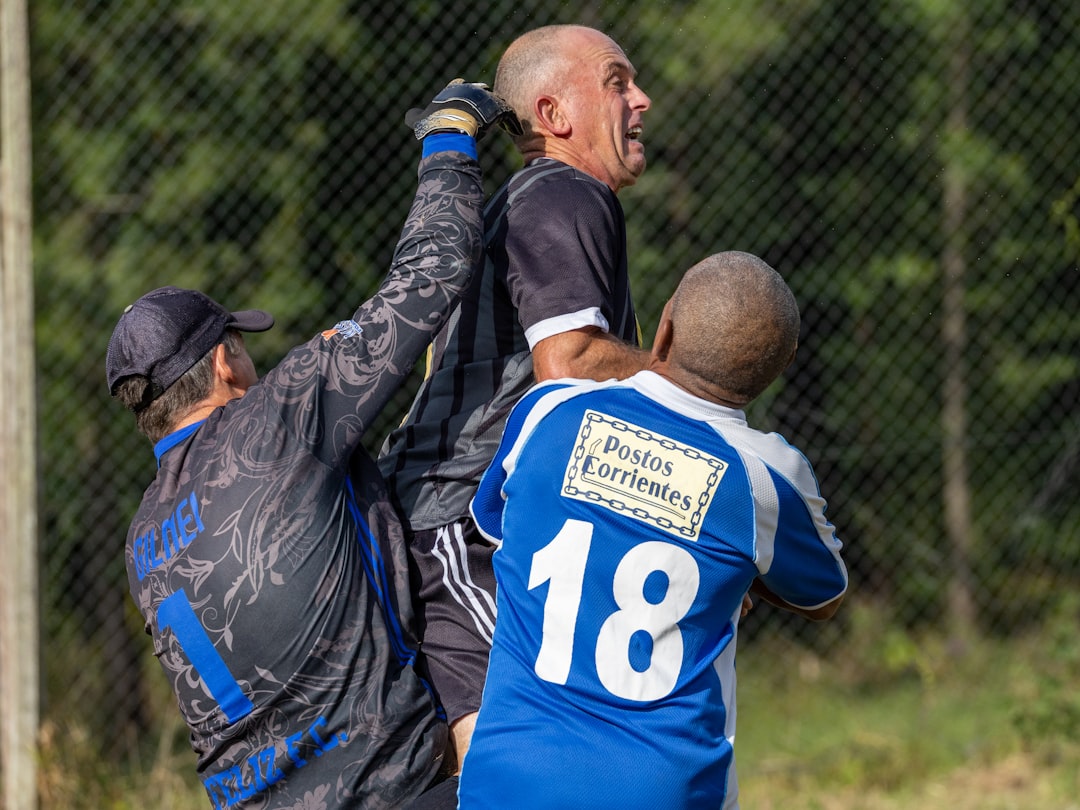
The reason this works the way it does comes down to something fundamental: a coach sees you from the outside. A teammate sees you from beside you.
When your coach says "you can do more," there is always, at some level, a gap between their certainty and your experience. They're not in your body. They don't feel the specific weight of your fatigue, the specific texture of your doubt, the exact moment when your mind tells you it's reasonable to ease up. Their belief in you, however genuine, carries that gap.
When your teammate says "you can do more" — especially when they're just as tired as you are, facing the same conditions, carrying the same weight — that gap closes. Completely. Because there's no authority dynamic to interpret, no performance to manage, no subtext to decode. It's just someone who is exactly where you are telling you that stopping here would be a lie.
That lands differently. It always has. It always will.
This doesn't erase the coach's impact: the coach who shaped you in a different way left a mark as permanent as any teammate's. But peer accountability operated on its own frequency, and it always will.
What Peer Accountability Actually Looks Like in Practice
If you played, you know the exact flavor of this. It doesn't always arrive as encouragement. Sometimes it arrives as silence. A teammate who simply keeps going when you've stopped, without comment, without drama, in a way that makes stopping feel like a choice you have to own. Sometimes it arrives as a look. The specific look that means: I know you have more, I know you know it, and I'm not going to pretend otherwise.
Sometimes it arrives as pure competitive friction. The teammate who never let you win anything in practice. Who challenged every rep, every sprint, every rep of technique, not out of ego but out of a standard they held for themselves and refused to lower for you out of politeness. Those teammates were often infuriating in the moment. They are almost universally the ones former athletes credit most clearly, most gratefully, when they look back.
Kira M., 34, ran middle-distance track in college and remembers her training partner with a specificity that makes it clear she hasn't thought about this rarely. She's thought about it often. Her partner never said anything particularly profound. She just showed up every single morning in a condition that made excuses feel impossible. "She never told me I could run faster," Kira says. "She just never accepted that I couldn't. There's a difference, and it took me years outside of sport to understand how rare that was." Design your own custom track jerseys.
That distinction — between telling someone they can do something and simply refusing to accept that they can't — is the precise mechanism of elite peer accountability. It doesn't require a speech. It doesn't require confrontation. It requires only consistency and the specific kind of respect that refuses to soften its expectations out of comfort.
The Trust That Made It Work
Here's what made peer-driven accountability land where coaching sometimes couldn't: it was built on trust that neither party asked for or negotiated. It simply accumulated.
You practiced together. You traveled together. You lost together in ways that required no explanation because you were both inside the same loss. You saw each other at less than your best — genuinely less than your best, not the performed humility of a post-game press conference — and neither of you left. That's the foundation.
When you share genuine vulnerability with someone inside a competitive environment and they don't use it against you, something happens that has no clean athletic vocabulary for it. It becomes something more like: this person has seen what I'm actually made of, and they still believe in what I can become.
That's not a coaching relationship. That's not even a friendship, exactly, though it often becomes one. It's its own specific thing, a bond shaped by shared physical effort and shared investment in each other's growth that produces a particular kind of loyalty and accountability that doesn't exist outside of sport.
It is what people who never played will never understand about being part of a team. Not because anyone lacks empathy, but because the texture of shared physical effort is unreproducible anywhere else.
Part of why that bond felt so specific is that, more often than not, it formed between people who would never have chosen each other outside the sport. A roster doesn't sort itself by who you'd have picked as a friend. It assembles people from different neighborhoods, different social circles, different family situations, and different versions of the same town, people whose lives never overlapped until a coach read a name off a sheet and put you on the same line together. In ordinary life, those paths don't cross. On a team, you had no choice but to share a bench, a locker room, and a standard.
That unlikeliness is part of what made the accountability so potent. It's easy to receive a hard truth from someone who's like you, someone who already shares your background, your assumptions, your way of talking. It lands differently when it comes from a person whose whole world is different from yours, who had no reason to invest in you, and who nevertheless refused to let you be less than you were capable of. The friction that mattered didn't happen in spite of the difference. It happened because of it.
And that's what makes the person who pushed you hardest feel irreplaceable. You didn't select them the way you select your friends. Circumstance handed you to each other, and out of that unlikely pairing came the person who saw you most clearly. The fact that you'd never have picked them — that you might not have spoken a word to them if a sport hadn't thrown you together — is the reason the gift they gave you carries so much weight. They pushed you hardest, and they were often the person you would have least expected to.
Every former athlete remembers the moment they realized their teammate knew them better — in some specific, essential way — than people who'd known them far longer. The teammate who knew before you did when you were getting in your own head. Who could tell by the way you warmed up whether today was going to be difficult. Who knew the specific adjustment you needed to hear without knowing they knew it, and said it anyway, because they'd been paying the kind of attention that's only possible when you're building something together.
That's the part that stays. Not the wins. Not the trophies. The being known in the middle of effort, and having that knowledge wielded generously.
When the Push Didn't Feel Like a Gift
Not all of it was warmth. That's worth saying directly.
Some of the most formative peer accountability doesn't feel like support in the moment. It feels like confrontation. Like unreasonable expectation. Like someone refusing to give you the out you were quietly hoping for.
If you played, you know the specific kind of teammate who made practice harder than it needed to be, not out of cruelty, but because their personal standard had no off-switch. Who called you on a mental error with a directness that your coach might have softened out of relationship management. Who didn't let a bad week become a personality trait.
Those interactions sting. Sometimes they cause genuine conflict. The teammate who pushed hardest is not always the one you went to dinner with, stayed close to after graduation, or thought of most warmly in the immediate aftermath of a difficult season.
And yet.
Years out from competition, the athletes who pushed hardest tend to become the ones most clearly remembered as formative. The directness that stung in the moment reads, from a distance, as the highest form of respect — the belief that you were worth the friction of a real expectation.
There's a quality in human relationships where the people who hold the highest standard for you without apology are signaling, in the clearest possible way, that they believe you are capable of meeting it. The teammate who eased off on you out of politeness was, in some sense, holding a lower opinion of your potential. The one who wouldn't back down was betting on you — aggressively, relentlessly, in a way that didn't require your gratitude or even your agreement in the moment.
That's a particular kind of love. It doesn't announce itself as love. But it is.
What You Carry Out of the Locker Room
The teammate relationship doesn't end with the final buzzer, the last whistle, or the graduation that stops the clock on eligibility. It ends — if it ends — much later, and often not completely.
What former athletes carry out of the locker room is a standard. An internalized expectation of effort and accountability that was set, not by a rulebook or a coaching manual, but by watching someone they respected refuse to accept less than their best. You carry the specific voice that said keep going when stopping was available. You carry the image of someone beside you doing the hard thing without complaint, which made the hard thing possible for you.
These are the moments that define you as an athlete, not just memories you revisit, but experiences that permanently altered what you believe you're capable of.
In careers: former athletes regularly describe a threshold of discomfort that they're able to tolerate in professional environments because it doesn't approach what they experienced in training. The job is difficult. It doesn't compare to a specific session with a specific teammate at a specific point in a season when everything was on the line and neither of you quit.
In relationships: the template for what genuine investment in another person's growth looks like — not comfortable, always honest, never softened out of ease — often traces directly back to the teammate who modeled it.
In the private interior of how you talk to yourself: somewhere in there is a voice that isn't quite yours. It's the voice of the person who ran beside you, competed against you in practice, refused to let you settle, and handed you a version of yourself you might not have found alone.
That's the deepest part of what sports teammate bond memories actually are. They're not nostalgia. They're not sentimentality. They're the memory of a formative relationship that handed you capabilities you still use, daily, sometimes without realizing where they came from.
The Bond That Doesn't Need Maintenance to Last
Here's something former athletes often notice with quiet surprise: the teammate who shaped you most doesn't always stay in your life. People scatter after sport ends. Careers diverge. Geographies separate. The infrastructure of a shared schedule that held the relationship together dissolves, and ordinary life doesn't always rebuild it.
And yet the bond persists in a form that doesn't require regular contact. You can go years without speaking to that person and then find yourself, in a specific moment of pressure or doubt, accessing something they gave you. A standard they held. A moment they modeled. The specific memory of what it looked like when someone refused to back down.
That's a different category of relationship than most adult life produces. It was built in conditions (physical exhaustion, shared stakes, genuine vulnerability) that most adult environments never replicate. The depth it reached in the time it had available is permanent in a way that slow, comfortable relationships sometimes aren't.
If you played long enough to have one of those teammates, you know exactly who they are right now, reading this. You know their name. You know the specific moment that comes to mind first. You know, if you're honest, what they gave you that you're still using.
Wear what you earned with that teammate beside you.
The uniform meant something because of who you wore it with. Your name. Your number. The colors of the team where someone pushed you past what you thought you had — and refused to accept anything less.
Design yours in minutes. See your name and number on colors that never crack, peel, or fade.
Frequently Asked Questions
Why do teammate relationships often feel more impactful than coaching relationships?
Coaches operate with formal authority and observe athletes from a position of evaluation. Teammates share the same physical conditions, the same fatigue, and the same stakes, which removes the interpretive gap between belief and experience. When a peer who is equally exhausted refuses to accept a lesser effort from you, the accountability lands with a specificity that coaching authority cannot always replicate. The trust is built through shared vulnerability, not through role definition.
Is it normal to think about a former teammate years or even decades after playing together?
Completely. The conditions that produce deep teammate bonds (shared physical effort, collective vulnerability, genuine high-stakes investment) are among the most powerful triggers for long-term autobiographical memory. Neuroscientific research on episodic memory consistently shows that emotionally intense, socially embedded experiences form durable memory traces. The fact that a specific teammate's voice or example still surfaces in moments of pressure is not nostalgia. It's evidence of how formative the relationship was during a critical developmental period.
What made the "hard" teammates — the ones who pushed without softening — so formative in retrospect?
The athlete who holds an uncompromising standard for you is, implicitly, betting on your capacity to meet it. There's a form of respect embedded in refusal to lower expectations: it communicates a belief in your potential that comfortable accommodation doesn't. Former athletes often recognize, with distance, that the teammates who made things hardest in the moment were operating from the highest opinion of what they were capable of. The friction was the compliment.
How do you honor a teammate bond that has drifted over the years?
The bond built inside athletic competition doesn't require active maintenance to remain meaningful: the formative impact is already embedded. That said, many former athletes find that a simple, direct acknowledgment (reaching out to say specifically what a teammate gave you and how you still carry it) is received with immediate recognition and genuine depth. The shared context never disappears. It simply waits.
See also: why the relationships formed through high school sports carry so much weight into adulthood | what high school sports taught you that no classroom or coach could replicate | how to find and reconnect with former high school teammates | the grief that comes when that chapter of your athletic life closes