





The former athlete aging body is one of the most specific and least-discussed transitions in adult life, and if you've started noticing it in yourself, you already know why it hits differently than ordinary aging.
It's not just that things hurt. It's that the body you're living in was once a precision instrument you understood completely, and now it seems to be operating on terms you didn't agree to. You reach for something on a high shelf and your shoulder responds in a language it never spoke during training. You take the stairs the way you always have and your knees file an objection. You wake up and the first five minutes feel like negotiations.
This guide is not about accepting decline. It's about understanding what's actually happening — at the biological level — after years of serious competitive sport, and what you can do right now and over the long term to protect the physical investment you made across every early morning, every training session, every game.
What's Actually Happening Inside the Former Athlete's Body
Most guides describe post-athletic aging as "wear and tear." That framing misses almost everything that makes the former athlete's experience distinct.
When you trained seriously, your body remodeled itself at a structural level over years. Bone density increased above population averages. Muscle fiber recruitment patterns became highly specialized for your sport's specific demands. Your cardiovascular system built an engine calibrated for sustained output. Tendons and ligaments thickened to handle repeated high loads. Your nervous system learned to fire muscle groups in coordinated sequences that the untrained population never develops.
That's not an incidental adaptation. That's a decade or more of deliberate biological remodeling.
What changes after competition ends is not that your body forgets any of that. It doesn't, entirely. What changes is that the maintenance stimulus that kept all of it functional was your training schedule. Without that consistent input, each adaptation begins regressing at its own rate. The adaptations that required the most sustained stimulus to build are typically the first to show regression — which is why former power athletes notice strength losses acutely, and why former endurance athletes feel cardiovascular decline as particularly disorienting.


Muscle mass declines at roughly 1% per year after age 30, a process called sarcopenia. For former athletes who carried significantly above-average muscle mass, the absolute losses feel dramatic even when the rate matches a non-athlete's. You're losing from a higher baseline, so the gap between "how I used to feel" and "how I feel now" is wider, even if the underlying biology is identical.
Joint health is more nuanced. High-impact sports — running, basketball, football, soccer — accelerate cartilage degradation in load-bearing joints. Former athletes in these sports show measurably higher rates of early-onset osteoarthritis in knees and hips compared to age-matched non-athletes. The picture isn't entirely negative: the muscle mass built through training provides better joint stabilization than a sedentary person's, which partially offsets the degradation. The operative word is partially.
Recovery capacity slows because the hormonal environment shifts. Testosterone and growth hormone (both central to tissue repair) decline steadily through the 30s and 40s. What your body processed in 24 hours at 22 may genuinely require 48 to 72 hours at 45. That's not a failure of effort or discipline. It's physiology. Treating slower recovery as a mental obstacle rather than a biological variable to be managed is one of the most consistent errors former athletes make.
Tendon and ligament elasticity decreases as collagen composition shifts with age. This is why the Achilles, the rotator cuff, and the patellar tendon become common failure points in former athletes well into their 40s and 50s, not from new trauma, but from accumulated stress on tissues that have progressively lost capacity to absorb it.
None of this is inevitable in its worst form. But you have to understand what you're actually dealing with before you can build a credible response to it.
When the Training Stimulus Stops: Metabolism and the Heart
The muscle and joint changes get most of the attention, but two quieter shifts matter just as much, and they're the ones former athletes most often miss.
Your metabolism doesn't coast. It reverses. While you trained, your body ran a high-throughput engine: high daily calorie burn, insulin sensitivity tuned to process heavy carbohydrate intake, and a body-composition baseline built on lean mass. Stop the stimulus and that engine idles down while the appetite patterns largely stay. The result is a well-documented pattern: inactive former athletes can reach midlife with a higher body fat percentage and worse cardiometabolic markers than the general population. The muscle-memory advantage that once let you rebuild quickly now works against you: the same appetite and intake habits that fueled performance overshoot a body that no longer needs them.
Your cardiovascular fitness fades on a fixed schedule. VO2 max (the ceiling on how much oxygen your body can use) declines roughly 10% per decade regardless of training history. Past athleticism slows the descent but doesn't stop it. And here's the part former athletes tend to assume away: a decade of sport does not override your genetic cardiac risk. Elevated LDL cholesterol and Lipoprotein(a), a largely inherited risk factor, can sit undetected for years in someone who assumes "I played, so my heart is fine." You cannot feel arterial plaque the way you can feel a tight hamstring.
What to do about it: Build a low-and-steady aerobic base with zone 2 work two or three times a week, the effort level where you can still hold a conversation, which defends cardiac output without beating up joints that have already absorbed a career's worth of load. Get a yearly blood panel and watch the three numbers most former athletes never check: LDL, Lipoprotein(a), and A1C. And keep resistance training and protein intake high: together they're the real lever for defending body composition as the metabolic baseline drifts. The athlete's heart and metabolism are not protected by history. They're protected by what you keep doing now.
The Identity Layer That Doesn't Show Up on Any Scan
The physical mechanisms matter. But any honest guide to the former athlete aging body has to name something the medical literature tends to sidestep.
Your athletic identity was not a role you played. For anyone who competed seriously, it was the organizing frame for a decade or more of daily life: how you ate, how you slept, how you understood discipline and pain, what you were proud of, what community you belonged to. It was the story you told about yourself, and the story other people told about you.
When the performance markers shift, the physical transition is real. But the internal story about who you are is in transition too. Those two things are happening at the same time, and most former athletes are managing the second one completely alone. That's the gap between your athletic memory and your current body, and it's every bit as real as the joint pain.
Ask a former collegiate swimmer who left the sport in her early 20s and the shape of the story is a familiar one. A decade later, the 40s can arrive as the first stretch of life in which the body feels like something to be managed rather than something to be used. The shoulder impingement she once trained through in her 20s has settled in as a chronic limitation. Sleep, which had been structured around training recovery for years, deteriorated without the framework that used to organize it. And the instinct that takes longest to set down is the one that insists a hard enough push will make her feel like an athlete again. What actually helps is accepting that the training is over and that maintenance is the work now. That maintenance needs its own kind of seriousness.
That shift, from performance-oriented goals to health-oriented ones, is a recalibration rather than a surrender. The goal isn't to recover the athlete you were. The goal is to protect the body that athlete built, and to keep it functional, capable, and responsive for as long as possible. That is a serious and worthy goal. In some ways it's the harder one, because it demands that you work with your current biology instead of against it.
Specific Interventions That Actually Move the Needle
Resistance Training: The Approach Has to Change, Not Stop
The single most evidence-backed intervention for a former athlete aging body is continued resistance training. A 2022 analysis in the Journal of Strength and Conditioning Research confirmed that progressive resistance training in adults over 40 not only slows sarcopenia but can partially reverse it, increasing muscle fiber cross-sectional area even in populations past 60.
The methodology, however, has to shift from what worked at 22.
The former athletes who get this right make two specific adjustments: they reduce training frequency per muscle group while building in genuine recovery time, and they de-prioritize maximal load in favor of consistent load across higher volume. In practice:
- Train each major muscle group twice per week, not four or five times. Tissue repair is slower now. The schedule has to reflect that.
- Work at 60–75% of your one-rep maximum for the majority of sets. This range drives muscle protein synthesis without the joint stress that near-maximal loads produce in connective tissue that has less elasticity than it did a decade ago.
- Add eccentric emphasis to your major movements: the lowering phase of a squat, a pull-up, a press. Eccentric-focused training produces greater tendon adaptation than concentric-dominant training, which directly addresses the Achilles and patellar tendons that former athletes routinely compromise.
- Treat rest intervals as part of the work. Former athletes conditioned to minimize rest between sets are often shortcutting the recovery that makes the set useful. Two to three minutes between working sets is not wasted time for a 45-year-old training for health.
The error to avoid: running your gym sessions like conditioning sessions because conditioning is the template you know. The adaptation goals are different now, and the methodology has to follow.
Mobility: Address What Your Sport Created
Former athletes typically have exceptional strength in the planes of movement their sport demanded — and significant restrictions in every other plane. These asymmetries were functional during competition. After competition ends, they become the mechanical contributors to the chronic pain that most former athletes learn to accept as a permanent condition when it frequently isn't.
A former offensive lineman has extraordinary hip flexor tension and restricted hip extension. A former swimmer has strong shoulder internal rotation and limited external rotation. A former distance runner has powerful hip flexors and tight hip external rotators. Each of these patterns, left unaddressed, progressively concentrates load on specific joint structures that were not designed to bear it exclusively. Correcting them is the whole project of moving differently as a former athlete, since the old routine tends to reinforce the asymmetry rather than resolve it.
Fifteen minutes of daily targeted mobility work produces measurable improvements in joint range of motion within six to eight weeks. Not general stretching: targeted work on the specific restrictions your sport created. Two patterns that benefit nearly all former athletes regardless of sport:
- Hip 90/90 work: addresses internal and external hip rotation simultaneously, directly improving knee and lower back mechanics
- Thoracic spine extension: reverses the anterior rounding that comes from years of athletic forward-load postures, which is compounded dramatically by the desk work most former athletes move into after competition
Recovery Is a Variable, Not a Luxury
The most consistent structural mistake former athletes make is treating recovery as something that happens when they're not busy rather than as a scheduled component of their physical health.
Sleep quality directly affects muscle protein synthesis, cortisol regulation, and tissue repair. Former athletes sleeping fewer than seven hours consistently are working against their own physical maintenance, regardless of training quality. During playing days, team schedules and the sheer physical demand of training created sleep pressure that organized this automatically. Without that structure, sleep often deteriorates without anyone noticing it's the variable responsible for the plateau.
Protein intake is the other element most former athletes under-manage post-competition. Training systems and team nutrition often handled this by default. Without that framework, daily protein drops toward general population levels. The target for adults over 40 engaged in regular resistance training is approximately 1.6 to 2.0 grams per kilogram of bodyweight daily, meaningfully above the standard recommendation of 0.8g/kg that applies to sedentary adults.
These are maintenance goals, not performance goals. That distinction is the one worth internalizing.
What Consistent Implementation Produces Over Time
Former athletes who make these specific adjustments (structured resistance training twice per week per muscle group, targeted mobility work on sport-created restrictions, managed sleep and protein intake) typically describe a transition that arrives somewhere in the 12-to-18-month range.
The body stops feeling like something they're managing around and starts feeling like something they're working with again.
Joint pain doesn't disappear. Recovery doesn't return to its 24-year-old pace. But the trajectory shifts from progressive, unmanaged loss to deliberate, monitored maintenance — and for most former athletes, that shift changes how they relate to their own physical life in ways that compound over the following years.
The former athletes in their 50s and 60s who still move with confidence and capability are, almost uniformly, not the ones who tried hardest to hold onto their peak performance. They're the ones who accepted the recalibration early and built consistent practices around their current biology. What you built through years of training is still present in your body. The job now is to protect it with the same intentionality you used to build it, just pointed in a different direction.
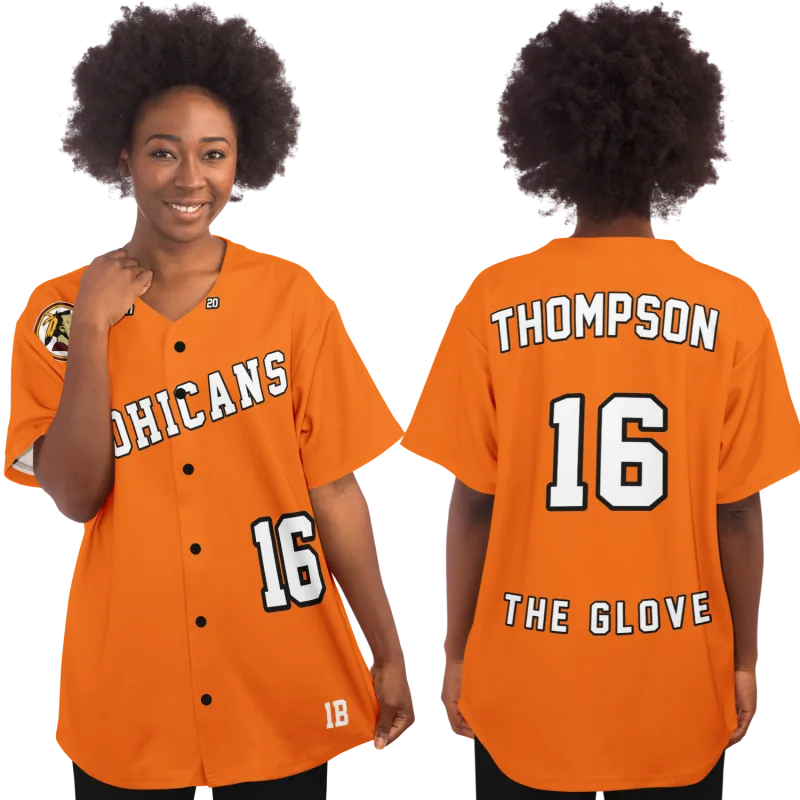
Your Jersey Is Still Out There Waiting
Design yours in minutes and see your name and number exactly the way you remember it. Whether that's game day or a Tuesday at the office, we've written about wearing your number in everyday life.
Frequently Asked Questions
Is it too late to start resistance training if I've been inactive for years since competition ended?
No, and the evidence on this point is consistent across multiple populations. Muscle tissue retains its capacity to respond to resistance stimulus well into later life. Former athletes returning to structured training after extended inactivity tend to show faster initial strength gains than sedentary age-matched non-athletes, likely because neuromuscular recruitment patterns from training years remain partially intact even after long periods without use. The key is starting with load that feels conservative and progressing slowly over 8 to 12 weeks. The limiting factor in early return to training is connective tissue adaptation, which takes longer than muscle adaptation. Push the load progression and you risk the tendons and ligaments before the muscle gains are established.
My knees and hips hurt consistently. Is that just the cost of having played?
Chronic joint pain in former athletes is common, but common isn't the same as permanent or unaddressable. A significant portion of the persistent joint pain former athletes carry is driven not by irreversible structural damage but by movement pattern compensations: the body has rerouted mechanics around old injury sites in ways that load adjacent structures inappropriately. A single assessment with a physical therapist who works with post-competitive athletes is often more useful than years of self-managed avoidance. Targeted hip strengthening for knee pain, rotator cuff and posterior chain work for shoulder impingement, and glute activation for lower back issues can produce meaningful, lasting reduction in pain levels within 6 to 10 weeks when the mechanical source is correctly identified.
What nutritional factors matter most beyond protein for the former athlete aging body?
Protein is the highest-leverage variable for preserving muscle mass, but two others are worth specific attention. Omega-3 fatty acids — specifically EPA and DHA from fish oil or algae-based sources, not ALA from plant sources — have documented anti-inflammatory effects on joint tissue and have been shown in clinical trials to reduce exercise-induced muscle damage and support tendon health at doses of 2 to 4 grams daily. Vitamin D3, ideally paired with K2 for absorption, supports both bone density maintenance and muscle function. Former athletes who trained primarily indoors (swimmers, gymnasts, basketball and hockey players) are disproportionately likely to be deficient. A standard blood panel measures your 25-OH vitamin D level; anything below 40 ng/mL is worth discussing with your physician before addressing through supplementation alone.
See also: the grief that comes with losing your athletic identity | the gap between your athletic memory and what your body can do now | how to start training again after years away from your sport | what athletic identity really means after high school ends | adult recreational leagues built for athletes who still need to compete