





There's a specific moment most former high school athletes remember. Not the final game — something smaller than that. It's the first morning you woke up with no practice, no conditioning, no coach expecting you somewhere at 6 AM. Maybe it felt like freedom. Maybe it felt like something had been taken away. Usually, it felt like both at once.
If staying active after high school sports has been harder than you expected (harder than you thought it would be when you were still playing), you're not alone, and you're not failing. You're navigating something that very few people outside the athletic world fully understand: what happens to your body, your identity, and your relationship with movement when the structure of organized sport disappears. There is a reason why working out feels different after your playing days are over, and it goes deeper than being older now: the entire context for movement changed, and the gym doesn't replace the field house.
This article is for the former athlete who still thinks of themselves as an athlete, even when life doesn't look much like one right now.
Your Body Was Built for a Sport You're No Longer Playing
Here's what most fitness articles for former athletes get wrong: they treat the transition out of sport as a motivation problem, but it is actually a physiology problem first.
When you were competing in high school, your body adapted specifically to the demands of your sport. A swimmer develops an oversized cardiovascular system and exceptional shoulder strength. A soccer midfielder builds a diesel engine: the capacity to run at moderate intensity for 90 minutes without thinking about it. A defensive lineman develops explosive power and a body composition optimized for contact and force production.
Those adaptations didn't disappear the day your eligibility ended. But the stimulus that maintained them did.
What follows isn't weakness. It's biology. Your body is exquisitely efficient: it doesn't maintain expensive tissue (muscle mass, cardiovascular capacity, bone density) without a reason to. Without the training load that built those systems, they recede. This happens faster than most former athletes expect, and slower than most fear. But it does happen, and understanding the mechanism changes how you approach staying active.


The metabolic shift is the one that catches people off guard. During your playing years, your caloric needs were calibrated to your training volume. A three-sport high school athlete might require 3,000 to 4,000 calories per day to maintain weight. Without sport, but with the same eating habits, the math changes dramatically within months. This isn't a character flaw. It's arithmetic. The weight gain after sports ended is one of the most common experiences former athletes report, and it follows directly from this metabolic math, not from any loss of discipline or willpower.
The identity shift is the one that's harder to name. For many high school athletes, sport was far more than an activity: a primary social structure, a daily source of competence, a place where effort had an immediate, visible result. When that structure disappears, some people feel its absence without being able to articulate what's missing. They just know that going for a run alone on a Tuesday morning doesn't feel like anything close to what they used to have.
Both of these problems are solvable. But they require different solutions, and most generic fitness content addresses neither directly.
What the Research Actually Shows About Former Athletes and Long-Term Health
The good news about having been a high school athlete is real and well-documented. A long-term study tracking former collegiate athletes found that those who maintain even moderate physical activity in adulthood retain measurable cardiovascular and metabolic advantages over age-matched non-athletes — meaning the foundation your sport built has lasting value, even if it's been years since you trained consistently.
But the same research reveals a counterintuitive risk: former athletes who remain sedentary after sport ends show worse metabolic outcomes than individuals who were never highly trained. The working hypothesis is that a body conditioned to process high caloric intake and high training stress responds more poorly to abrupt sedentary living than a body that was never trained that way.
Translation: being a former athlete is a fitness asset, but only if you stay in motion. Your history gives you a head start. It doesn't give you a free pass.
This matters at homecoming season particularly, when former athletes return to campuses and stadiums and find themselves taking stock of the decade or two since they last suited up. That reckoning is useful if it leads somewhere. This article is about where to go from there.
The Four Fitness Mistakes Former Athletes Make Most Often
Understanding these patterns is not about blame; the point is to recognize which one applies to you, because each one has a specific fix.
Trying to Pick Up Where You Left Off
The most common mistake, and the one most likely to end in injury. Your 32-year-old body is not your 17-year-old body even if your competitive identity still is. Jumping back into a training program at your former intensity (or worse, trying to compete with your former self as the benchmark) is the fastest path to a hamstring pull and six weeks on the couch.
The fix is not lower ambition but recalibrated starting points. A former distance runner who hasn't trained in five years doesn't begin with their old pace; they begin with 20 minutes at a comfortable effort and build from there. The body responds to progressive overload now just as it did then. The starting point just needs to be honest.
Choosing Fitness Activities That Have Nothing to Do With Why You Loved Sport
If you loved the game because of competition, camaraderie, and the feeling of being on a team, and your post-sport fitness plan is a solo treadmill program, the plan is going to fail. Not because you lack discipline. Because you removed everything that made movement feel meaningful in the first place.
The former athletes who maintain consistent fitness into their 30s and 40s are almost always doing something with a competitive or social structure: recreational leagues, group fitness classes with coaches, CrossFit communities, masters swimming programs, pickup basketball. The activity matters less than the structure around it.
Treating Fitness as Punishment for Not Being Who You Were
This is the most psychologically damaging pattern, and the least discussed. Some former athletes approach fitness from a place of shame, trying to get back to a body composition or performance level that is no longer realistic or relevant. Every workout becomes a reminder of what's been lost rather than a building block for what's possible now.
The reframe is specific: you are not a diminished version of your high school self. You are an adult with a different set of physical capacities, different demands on your time, and different reasons to stay active. Training for that person (not as a consolation prize but as a legitimate goal) changes the emotional relationship with fitness entirely.
Ignoring Recovery in a Way Your Younger Body Would Have Forgiven
At 16, you could practice for two hours, eat a bag of chips, sleep six hours, and do it again the next day. That is no longer true. Recovery (sleep quality, nutrition timing, mobility work, stress management) has a proportionally larger impact on fitness outcomes in your 30s and 40s than it did in your teens. Former athletes who try to apply their old training-to-recovery ratios to their current body get hurt, stall out, or burn out.
Building a Training Life That Actually Fits Who You Are Now
Maya R., 34, played four years of varsity volleyball and went on to play club ball in college before life (a career in hospital administration, two kids, a commute) gradually squeezed the sport out. By her early 30s, she'd stopped thinking of herself as an athlete at all. She joined a recreational volleyball league on a friend's suggestion and described the first night back on the court as "the first time in years I felt like myself." The fitness came back faster than she expected. The identity came back at the same time.
What Maya found isn't unusual. The former athlete's path back to consistent movement almost always runs through something that resembles sport more than it resembles a gym program. Here's how to construct that path deliberately.
Find Your Competitive Outlet — Even a Small One
Most cities have more adult recreational sport infrastructure than most people realize. Adult soccer leagues, masters swimming programs, recreational basketball, tennis ladders, CrossFit competitions, obstacle course racing, pickleball leagues. The options have expanded significantly in the last decade. But availability is rarely the real barrier. The deeper adjustment is psychological: learning how to stay competitive when you don't have a team anymore, when the built-in rivalries, coaches, and daily accountability of high school sports are no longer part of the equation.
The goal isn't to recapture your high school performance. The goal is to have a context where effort is rewarded, where other people are counting on you to show up, and where there is something at stake beyond your personal motivation on any given morning. Those three elements (accountability, stakes, and reward for effort) are what organized sport provides that solo fitness programs don't.
There's one outlet the list above leaves out, and for a lot of former athletes it's the one that fits best: coaching. Not competing — coaching. Youth leagues, rec teams, and club programs are perpetually short on adults who actually know the game, and the reward isn't the workout, it's the connection. Coaching keeps you around the sport (the season rhythm, the practice structure, the pregame nerves) long after your own knees have said no to game days. It gives you teammates in the form of a coaching staff, accountability in the form of kids waiting for you at 6 PM, and a reason to stay sharp on the fundamentals you once drilled every day. If the thing you miss most isn't the sprint itself but being part of a team with a shared goal, coaching is how you keep that without asking your body to relive high school.
And whatever outlet you pick, give it a target that isn't "winning." Win doesn't transfer well out of organized sport — there's no conference championship in a Tuesday-night league, and chasing one usually just feeds the frustration of comparing your 34-year-old self to your 17-year-old self. What transfers is a goal you can track: a 5K with a time on it, a masters meet with an entry date, a squat number you're working toward by summer. Concrete goals give your training a shape the way a season used to. You don't need to win anything. You need a finish line that's real, written down, and close enough to train for.
Build Strength as the Foundation
Regardless of your sport of origin, resistance training is the single highest-value physical activity for former athletes in their 20s through 40s. The reasons are specific:
- Muscle mass is the primary driver of metabolic rate. Maintaining or building muscle tissue directly addresses the metabolic shift described earlier.
- Strength training is the most effective intervention for joint health, protecting knees, shoulders, and hips that absorbed years of sport-specific stress.
- It's the one fitness category where improvement is clearly measurable: a lifter who adds 20 pounds to their squat in three months can see precisely what they've built, which satisfies the former athlete's need for quantifiable progress.
Two to three sessions per week of compound movements (squat, hinge, press, pull) is sufficient. You do not need to become a powerlifter. You need to maintain the lean tissue that your sport built, and build more deliberately than your sport allowed.
Treat Mobility as a Non-Negotiable, Not an Add-On
This is the one area where former athletes are almost uniformly behind their non-athlete peers. Years of sport-specific movement patterns create specific tightness and imbalance: swimmers with internally rotated shoulders, soccer players with hip flexors that have never been stretched, baseball pitchers with thoracic rotation asymmetries.
Ten minutes of daily mobility work (specific to your sport's imbalances) prevents the injuries that derail fitness programs for months at a time. Our team recommends treating it the way you'd treat a required warm-up: not optional, not skipped when time is short, just part of the session.
Calibrate Your Cardio to Your Actual Life
If your sport was an endurance discipline (cross country, swimming, soccer), you likely have a cardiovascular base that will return faster than you expect when you train consistently. If your sport was power and speed (sprints, volleyball, football), your aerobic base may need more intentional development than your sport required.
Either way, three to four hours of moderate-intensity cardiovascular activity per week is the evidence-supported baseline for long-term metabolic and cardiovascular health in adults. That's 30 to 40 minutes, four or five days per week: manageable by any measure when it's scheduled with the same intentionality your high school coach applied to your practice schedule.
The Identity Piece: You're Still an Athlete
This is the part of the conversation that most fitness articles skip because it doesn't fit neatly into a workout program. But it's the part that matters most for whether the program sticks.
Athletic identity is durable. Research in sport psychology consistently shows that former athletes who maintain a strong athletic self-concept (who still think of themselves as athletes, even years after their last competition) maintain higher levels of physical activity throughout adulthood than those who compartmentalize sport as a "former" identity.
This is practical, not mystical. If you believe being active is part of who you are, not just something you do, you make different decisions. You schedule the workout. You sign up for the league. You buy the shoes. You tell your kids about your playing days not with nostalgia but with the casual confidence of someone who is still in the game, just in a different form.
Homecoming season has a way of surfacing all of this: the old photos, the old teammates, the field or the gym that shaped some of your best early years. Use that surfacing for something. Let it remind you not just of who you were, but of who you're capable of being now.
The former athlete's body has a memory. The muscle memory, the competitive instinct, the tolerance for hard work: those don't disappear. They go dormant. Staying active after high school sports is about waking that memory back up in a form that fits your actual life, rather than recapturing the past.
Your jersey is still out there waiting.
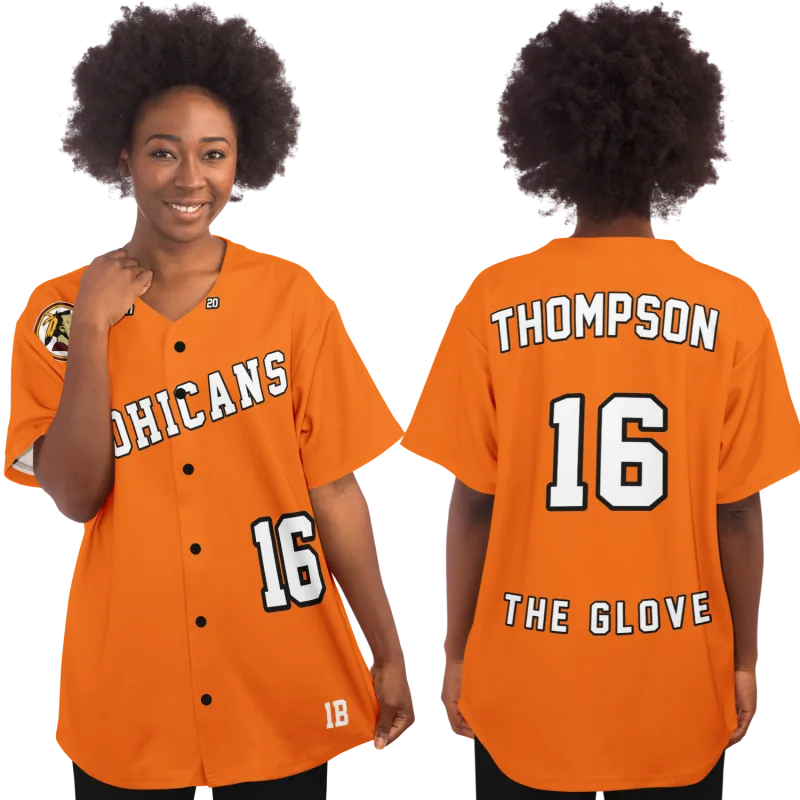
Design yours in minutes. Pick your sport, choose your school colors with colors that never crack, peel, or fade, and see your name and number the way you remember wearing it. Browse the jersey gallery to see what other former athletes have created for their own commemorative jerseys.
Frequently Asked Questions
How fast will I lose my fitness if I stop training after high school sports?
The timeline varies by fitness component. Cardiovascular capacity begins to decline meaningfully within two to three weeks of complete inactivity, and most people notice reduced endurance within a month. Strength takes longer to diminish, with research suggesting significant muscle loss begins after three to four weeks without resistance training. The good news: fitness returns faster in former athletes than in people who were never trained, because your body has established the neuromuscular pathways before. A former athlete returning to training after a two-year break will regain baseline fitness significantly faster than a beginner would build it from scratch.
What sport is the best replacement activity for former athletes?
There is no universal answer, and that framing is part of the problem. The best replacement activity is the one that most closely replicates the elements of sport you found most meaningful. If you loved team dynamics and competition, a recreational team sport beats any solo fitness program. If you loved the meditative quality of long training sessions, endurance sports like running, cycling, or swimming serve that need. If you loved measurable performance improvement, strength training or competitive CrossFit provides the feedback loop. Match the activity to the psychological need, not just the physical demand.
Is it possible to get back to high school athletic shape in your 30s?
Functionally, yes, in most relevant ways. You can rebuild the cardiovascular capacity, the strength, the body composition, and the physical competence that your sport developed. What you cannot rebuild is the specific physiology of a 17-year-old: recovery speed, hormonal environment, and the specific adaptations that come from 12 years of active development. The honest frame is not "getting back to" but "building toward" — which is a better goal anyway, because it's based on who you are now rather than who you were then. Many former athletes are genuinely more capable at 35 than they were at 17, because they train smarter rather than just harder.
How do I stay motivated to exercise when I don't have a coach or a team anymore?
This is the real question underneath most former athlete fitness struggles, and the honest answer is: external structure works better than internal motivation for most people, most of the time. Your high school coach didn't rely on your motivation; they provided the structure that made motivation irrelevant on hard days. Replicate that structure. Scheduled classes with coaches, training partners who expect you to show up, registered events with entry fees, recreational leagues with game nights: all of these substitute external accountability for the internal willpower that fluctuates. Build systems, not resolutions.
What should I watch for physically when returning to training after years away from sport?
The two most common injury sites for returning former athletes are the areas most stressed by their specific sport, combined with the mobility deficits that developed during the inactive period. Former basketball players commonly experience knee issues; former baseball and volleyball players commonly experience shoulder problems; former soccer players frequently deal with hip flexor and groin strains. A single session with a sports physical therapist before beginning a serious return-to-training program is a worthwhile investment: they can identify specific asymmetries or tightness patterns that predispose you to injury and give you a targeted prehabilitation routine before anything goes wrong.
See also: athletic identity after high school | adult recreational leagues for former high school athletes | how to start training again after years away from your sport | the gap between your athletic memory and your current body | moving differently after 30 | dealing with an aging body | common injuries that follow high school athletes