


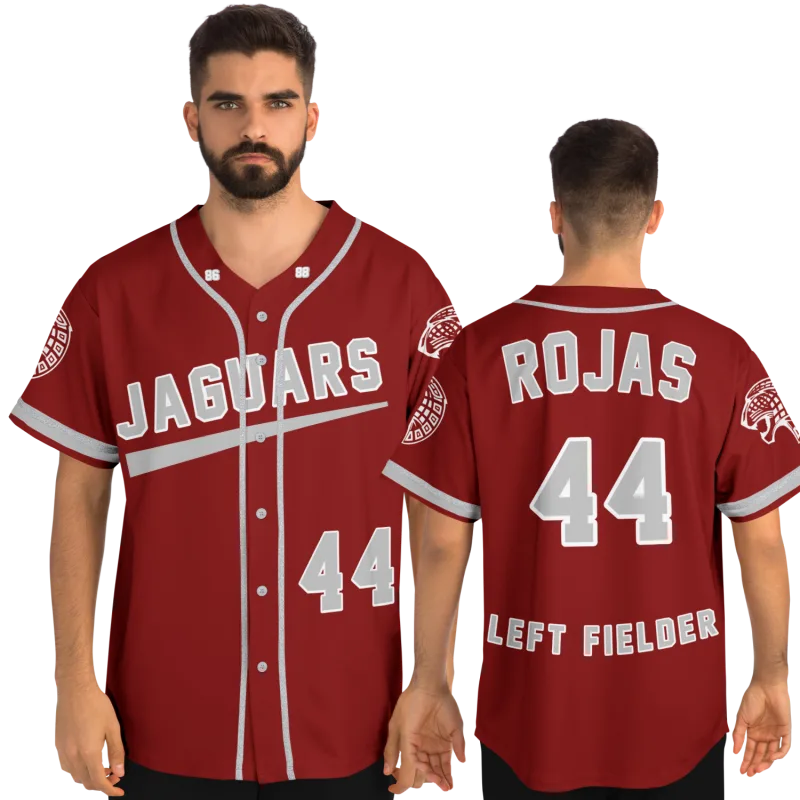

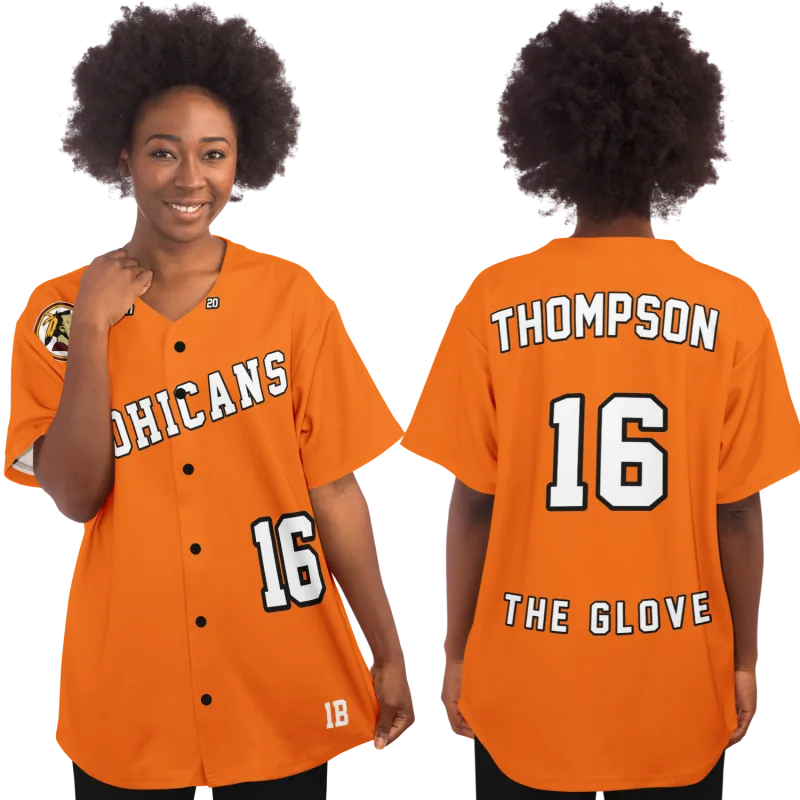

There is a specific moment most former athletes know intimately. You sign up for a 5K, or you finally commit to the gym again, and about three weeks in, something feels completely wrong. Not painful, precisely. Just off. The movements don't connect the way they used to. The progress doesn't come the way you remember. You're working hard, but nothing about it feels like you.
That feeling has a name: you're training like someone who never played.
Here's the part nobody tells you at the gym orientation: your body has not forgotten how to be an athlete. It has been waiting for a training language it already speaks. The disconnect you feel is not lost fitness but a mismatch between the movements you are asking for and the movement library your nervous system already owns. When you train like a stranger, your body hesitates. When you train like the athlete you were, the old timing starts to come back.
Former athlete fitness after 30 is a fundamentally different problem than general adult fitness, and almost every mainstream program misses that distinction entirely. Your body carries a decade or more of sport-specific movement, muscle recruitment patterns, and neuromuscular memory that a generic "beginner workout plan" was never designed to work with. The good news is that history isn't a liability. Trained correctly, it's your biggest advantage.
This is the framework for using it.
That framework has nothing to do with pretending you're 19 again. It is about giving your current body credit for the years you already put in. You don't need an introductory program designed for someone who never kept score. You need a recalibration — a way to find the athlete who's still in there and train the gaps that life and time have exposed.
Your Athletic History Didn't Disappear — It Went Underground
Here's what most fitness content gets wrong about former athletes: it treats them like beginners who happen to be in better-than-average shape. That framing misses everything important.

Think about how you can still ride a bike after years away, or how your hands still know the grip on a bat, a racket, or a ball. That's motor memory. The same system holds your sprint stance, your defensive slide, your breathing rhythm in the water. It doesn't vanish. It gets buried under desk posture, stress, and a few years of workouts that were never meant for you.
When you spent years playing a sport — whether that was soccer, swimming, basketball, wrestling, or track — your nervous system built deeply grooved movement patterns. These aren't stored in your muscles the way people casually say. They're encoded in your motor cortex, in the synaptic pathways between your brain and your body, in the proprioceptive feedback loops that made you move without thinking.
Those patterns don't disappear when you stop competing. They downregulate. They go quiet. And when you try to train them back with a generic chest-and-back split designed for someone who has never sprinted a wing route or dove for a loose ball, you're essentially ignoring the most powerful tool in your possession.
Sport-specific fitness after 30 starts with one foundational question: What did your sport actually train?
The Four Athletic Profiles — And What Each One Needs Now
Not all athletic history is the same. The demands placed on a competitive swimmer's body are categorically different from those placed on a point guard's. Before you design any training approach, identify which profile fits your background, because the profile determines the gaps.
The Power-Rotation Athlete: baseball players, softball players, golfers, tennis players, hockey players. Your sport built elite rotational power, grip strength, and single-plane hip loading. After 30, the gap is usually posterior chain symmetry and hip external rotation range that years of dominant-side bias quietly eroded. Generic "core work" makes this worse. Anti-rotation and contralateral loading makes it better.
The Endurance-Base Athlete: distance runners, cyclists, swimmers, rowers, cross-country skiers. Your cardiovascular system is your legacy. Your mobility and strength-to-mass ratio are often the gaps. After 30, the risk is loading a well-trained aerobic engine on top of joints that never developed the muscular support structure around them. High-rep cardio programs feel comfortable but accelerate the imbalance. Progressive strength training with short aerobic intervals is the correction.
The Explosive-Lateral Athlete: basketball players, soccer players, volleyball players, lacrosse players, field hockey players. Your sport built reactive strength, change-of-direction mechanics, and single-leg stability under fatigue. After 30, the gap is usually deceleration strength — the eccentric control that catches your body when it moves fast and needs to stop. Most gym programs are almost entirely concentric. You need the opposite emphasis.
The Contact-Load Athlete: football players, wrestlers, rugby players, hockey players (again, with added physical contact demands). Your sport built tolerance for impact, isometric strength, and positional force production. After 30, the gap is mobility range that years of bracing and impact absorption compressed. Loaded mobility work — not static stretching — is the intervention.
One way to test this at home: stand in your old stance for twenty seconds. Close your eyes and run the first three steps of a movement you did thousands of times. If you feel an old activation — a twitch, a shift, a readiness — that's not nostalgia. That's your nervous system recognizing a familiar command. The rest of your training should build on that recognition, not ignore it.
The most common mistake is mixing profiles without acknowledging which one applies. A former linebacker trying to train like a former distance runner isn't merely inefficient. That approach actively contradicts the body's established recruitment hierarchy.
The Physiology of the Post-30 Athletic Body
Here is what's actually happening after 30, stated specifically rather than vaguely.
Starting around age 28–32, type II muscle fiber (fast-twitch) cross-sectional area begins declining at approximately 1–2% per year in untrained individuals, but research published in the Journal of Strength and Conditioning Research consistently shows that this rate is dramatically attenuated in athletes who maintain sport-relevant power training. The key phrase is sport-relevant. Bicep curls don't preserve the fast-twitch fibers your body originally built for cutting, jumping, or throwing. Movements that mirror the velocity and loading pattern of your sport do.
Three additional shifts matter for former athletes specifically:
Connective tissue recovery windows lengthen. The cartilage, tendons, and ligaments you stressed repeatedly during competition have a lower cell turnover rate after 30 than your muscle tissue does. This is a reason to load them progressively and give them the recovery input they need, not a reason to avoid loading them. Collagen synthesis is triggered by mechanical loading. Tendon health after 30 requires load, not rest.
Hormonal recovery baseline shifts. Testosterone and growth hormone — the primary drivers of post-training tissue repair — begin a gradual decline through your 30s. Sleep, training volume management, and nutrition timing matter more now, not less. Former athletes who train precisely as they did at 22 but sleep five hours and skip protein at breakfast aren't fighting aging. They're accelerating it.
Motor pattern interference is real. If your sport built a dominant movement pattern (say, the pull mechanics of a competitive swimmer) and you now spend eight hours a day at a desk, the desk is winning the competition for your motor pattern by sheer volume of repetition. Training after 30 has to be intentional about which patterns it reinforces.
Add in a desk job, a long commute, or a few years of running on hard pavement, and those old patterns can get buried even deeper. The solution is to reintroduce the movement slowly, then deliberately strengthen the muscles that balancing it requires, rather than trying to 'get back to what you used to do' at full intensity. The goal is a body that moves like an athlete in your current decade — not a museum piece from your highlight tape.
The Framework: How to Actually Train for Your Sport History Now
This is where the rubber meets the road. The principles above mean nothing if they don't translate into a specific, usable weekly structure. Here is the approach that works.
Phase 1 — Movement Audit (Weeks 1–2)
Before adding load, identify the gaps. This phase is two weeks of deliberate self-assessment across four dimensions:
-
Mobility asymmetry: Can you load both sides of your body equally in the pattern your sport required? A former soccer player should be able to single-leg Romanian deadlift to 90 degrees of hip flexion with control on both legs. Most can't.
-
Strength imbalance: Is your dominant-movement muscle group significantly stronger than the stabilizers that balance it? Former pitchers and quarterbacks almost universally show a significant posterior shoulder weakness relative to anterior strength. Measure it before loading it.
-
Reactive vs. deliberate movement quality: Can you move quickly and recover control? Drop a box step, land on one leg, stick the position for three seconds. If you can't, your deceleration strength is the gap, not your power.
-
Cardiovascular baseline: Not your peak. Your current honest baseline. Former endurance athletes consistently overestimate their current capacity and undertrain strength as a result. Former power athletes consistently underestimate their current aerobic floor and miss the recovery benefit that zone 2 work provides.
Write these results down. Treat the movement audit as a snapshot, not a pass/fail test. You wouldn't skip the tape review before a big game, and you shouldn't skip this step before loading a bar. Too many former athletes jump straight into heavy work, feel a familiar burn, and think they are back. But the old positions have to be earned again — not because you lost them, but because your current body hasn't practiced them under load for years.
Phase 2 — Sport-Specific Foundation (Weeks 3–10)
This phase builds the base. The structure is three training days per week, organized around two principles: sport-pattern reinforcement and gap correction.
Training Day 1 is sport-pattern reinforcement: movements that mirror the primary recruitment pattern of your sport at controlled velocity. A former basketball player: single-leg loading, lateral movement mechanics, vertical jump preparation. A former swimmer: pull-pattern horizontal rows, rotational core work, thoracic extension.
Training Day 2 is gap correction: the movement profile your sport systematically avoided. This is the most important day and the one former athletes most often skip because it feels unfamiliar. Unfamiliar is the point.
Training Day 3 is integrated conditioning: combining sport-pattern movements with metabolic demand in a format that respects your specific athlete profile. For explosive-lateral athletes, this looks like short-burst interval work with lateral change of direction. For endurance-base athletes, this looks like 20–25 minutes of zone 2 steady state with a 10-minute loaded circuit finish.
If you're not sure how to apply this to your youth sport, start with the movement that made you feel most like yourself. For a wide receiver, that might be a three-step break. For a post player, it might be a hard plant and pivot. Recreate a light, controlled version of that movement once a week. You'll be surprised how quickly your body picks up the old rhythm, and how clearly it exposes the areas that need work.
Two rest or active recovery days. One completely unstructured movement day — a walk, a pickup game, a swim — where performance is not the goal. The nervous system needs unstructured play as much as it needs programmed training.
What This Looks Like for a Real Former Athlete
Maya K., 34, swam competitively through her senior year of college — butterfly and individual medley. She trained seriously for 14 years. After graduation, she kept running occasionally and did group fitness classes, but felt consistently "off" in her shoulders and flat in her energy.
When she finally mapped her training against her athletic profile, the pattern was clear: fourteen years of anterior-dominant pull work and thoracic flexion, with almost no posterior shoulder loading and zero thoracic extension work. Her group fitness classes — heavy on planks, push-ups, and forward-fold yoga — were reinforcing precisely the imbalance she already had. Three months into sport-profile-specific training that prioritized face pulls, thoracic extension, and loaded hip hinge work, her shoulder discomfort was gone and her energy consistency in workouts was higher than it had been in years.
She didn't train harder. She trained correctly for her body's specific history.
Your version of this story doesn't have to include Division I or college sports. It only has to include the years you showed up, put on the uniform, and trained your body to do something specific. Whether that was two seasons of JV soccer or four years of small-school basketball, the neuromuscular memory is real. The earlier you stop treating your history as a footnote, the sooner you can train from the advantages it already gave you.
The Recovery Equation Nobody Talks About
Former athletes consistently underinvest in recovery after 30, and the reason is identity-based: rest used to mean detraining. In your competitive years, missing a week of practice had real performance consequences. That mental model doesn't transfer.
After 30, recovery is where adaptation happens. It is training's essential second half, not its absence.
Four specifics that matter more after 30 than they did at 22:
- Sleep duration and architecture: less than 7 hours meaningfully compromises growth hormone release, which peaks in slow-wave sleep. This is the mechanism, not optional advice.
- Protein timing: the anabolic window is real but longer than fitness culture suggests. Distributing 25–40 grams of quality protein across 3–4 meals, including within two hours post-training, maximizes muscle protein synthesis. Former athletes who skip this consistently plateau.
- Loaded rest days: light resistance band work, walking, and swimming all maintain blood flow to connective tissue and accelerate repair without adding central nervous system load.
- Training periodization: planned deload weeks every 6–8 weeks prevent the cumulative fatigue that former athletes misread as "getting older." The culprit is unmanaged load, not age.
Recovery also has an emotional component that former athletes rarely name. In your playing days, rest was built into the season: ice baths on Monday, film on Tuesday, easy jog on Wednesday. Now, rest feels like failure because it has no coach, no structure, no reward. Give it structure. Put a 20-minute walk or a stretching session on your calendar the same way you schedule a workout. When rest becomes part of the plan, you stop fighting it.
The Identity Piece: You're Not Starting Over
The hardest part of former athlete fitness after 30 isn't the training. It's the narrative.
There is a story a lot of former athletes tell themselves in the gym: that they're starting over, that they've lost it, that the person who ran that route or hit that split is gone. That story is factually wrong.
Your athletic history is structural. It's in your neuromuscular architecture, your bone density, your cardiac output ceiling, your proprioceptive sensitivity. None of that vanished. It is waiting for training inputs it recognizes.
The work isn't to become an athlete again. It's to train as one, which means matching your approach to the body you actually built, not the body a generic program was designed for.
That's not a small distinction. It's the whole game.
And when you start training like yourself again, the memories come back in waves. You'll hear the gym floor squeak, smell the grass, remember the exact way your number looked across your shoulder blades. That's why this work matters beyond the physical. It reconnects you to a version of you that still exists. It gives you a way to wear that identity again — not just in the gym, but in how you walk into a room.
Your jersey is still out there waiting.
Design yours in minutes and see your name and number exactly the way you remember it.
Frequently Asked Questions
How is former athlete fitness after 30 different from regular adult fitness programs?
Former athletes have established neuromuscular patterns, movement histories, and often sport-specific imbalances that generic adult fitness programs weren't designed to address. A program built for someone who has never trained will either underchallenge the former athlete's existing capacity or reinforce imbalances that developed over years of sport-specific loading. Sport-profile training works with the body's established patterns and targets the specific gaps each sport creates, which produces faster, more sustainable results than starting from a generic baseline.
How long does it take to see results when training for your specific athletic profile?
Most former athletes notice meaningful improvements in movement quality and energy within 4–6 weeks of profile-specific training. Strength and body composition changes that are visually measurable typically take 10–14 weeks of consistent training. The timeline is faster than generic programs because the nervous system is reactivating established patterns rather than building new ones from scratch. The infrastructure is already there.
Is it safe to train explosively after 30, or should former athletes stick to low-impact exercise?
Explosive training is safe for most former athletes after 30, and it's specifically protective against the fast-twitch muscle fiber decline that accelerates in untrained adults. The key is progressive loading: start with controlled velocity and shorter range of motion, build connective tissue tolerance over 4–6 weeks before adding speed or load, and prioritize eccentric (deceleration) strength before concentric (power) training. Former athletes who avoid explosive movement entirely lose the neuromuscular quality their sport built faster than those who maintain it at appropriate volumes.
What if I played multiple sports? Which athletic profile should I use?
Identify the sport you played at the highest level for the longest duration; that body of training created the dominant patterns. Then consider which sport was most recent, as recent patterns are most strongly encoded. If both sports are in the same profile category (for example, soccer and basketball are both explosive-lateral), train that profile. If they're in different categories, prioritize gap correction for the more physically demanding of the two and use the second sport's pattern as supplemental work.
See also: how to start training again after years away from your sport | the gap between your athletic memory and your current body | athletic identity after high school | adult recreational leagues for former high school athletes
One last thought: the athlete you were is still with you, stored in your tendons, your training habits, your reaction time, and your expectations for effort. When you walk into a gym with that understanding, you are already ahead of everyone who has to learn from zero. The work now is about using where you've been to build where you're going, not about getting back to where you were.
Every time you lace up, you are answering a question your younger self asked a long time ago: was it worth it? The answer is yes. And the proof is in the way your body remembers how to move before your mind does.
If you want to carry that reminder with you — in a jersey with your name, your number, and your school colors — you can design it yourself directly on the iPlayedFor.com custom jersey builder. It's a simple, self-service process that lets you build the piece your highlight reel never gave you. No middleman, no complicated back-and-forth. Just you, your colors, and the number you earned.