

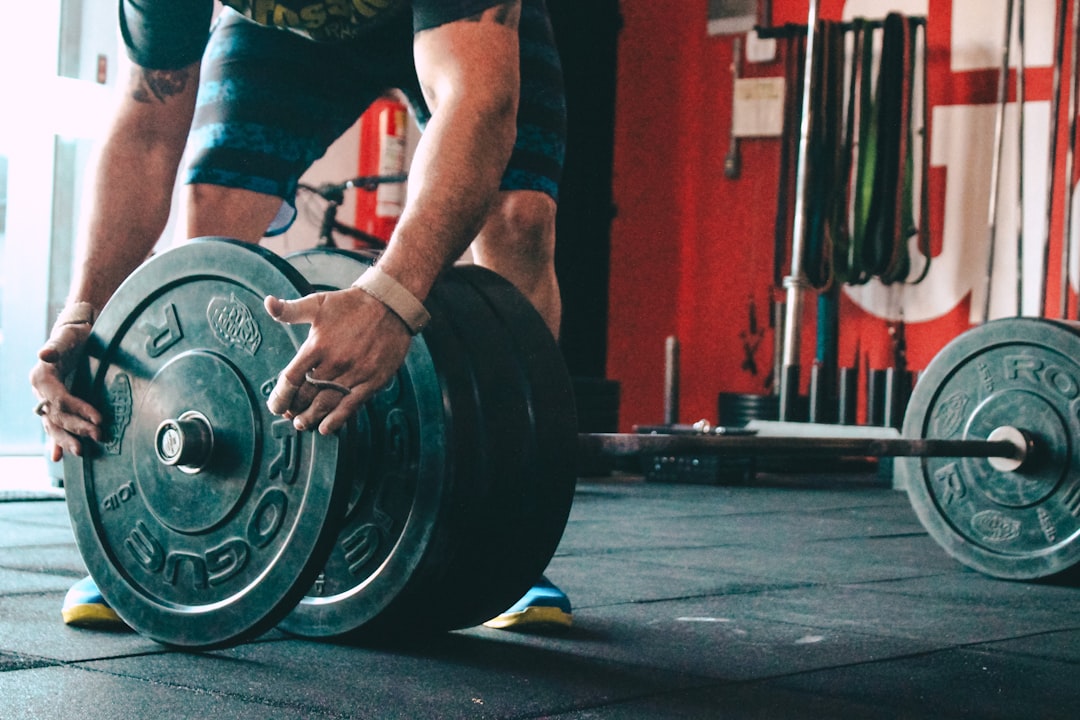




The weight room used to be the easy part. Practice was the hard part: two-a-days, film sessions, the coach running your legs out from under you before the real work even started. The gym was just maintenance. You went in, you moved heavy things, you left. Your body knew what it was for.
Then the playing days ended.
Now you're working out after playing sports (actually trying to stay in shape, maybe getting back to something close to what you had) and nothing feels the way it used to. The movements that once felt automatic feel foreign. The recovery that used to take a night now takes three days. You push hard on Tuesday and your body is still penalizing you on Friday. You look the same age as guys at the gym who have never played a competitive sport in their lives, and somehow they seem more comfortable in there than you do.
That's not weakness. It's not age, at least not in the way you're probably thinking. And it's definitely not something you just have to accept.
There's a specific reason why training feels fundamentally different after competitive sports — and once you understand it, you can actually do something about it.
Your Body Was Built for a Purpose You No Longer Have
Here is what most fitness articles miss when they talk to former athletes: your body was organized around a purpose during your playing days, not merely trained.
Every system (your nervous system, your energy systems, your hormonal response to stress) was calibrated around the demands of your sport. You had a season. You had a game. You had a specific physical identity: a position, a role, a way your body was supposed to move under pressure. Your training was concrete, targeted preparation for something real.
When that something real goes away, your body doesn't just lose fitness. It loses its organizing principle.


This is why working out after playing sports feels different from the inside in a way that's hard to explain to people who never competed. You aren't simply less fit; the fitness you're chasing no longer has a destination. You're training without a game. And your nervous system, which was finely tuned to prepare for competition, doesn't know what to do with that.
The Competitive Nervous System Problem
During your playing years, your body spent years building a stress-response profile designed for intermittent high-intensity output followed by structured recovery. You pushed hard, then you recovered: within a practice, across a week, across a season. The rhythm was imposed on you. You didn't have to choose it.
Now you do. And choosing it turns out to be harder than it sounds.
The instinct for most former athletes is to train the way they always trained: hard, competitive, maximum effort. But without the context of a sport, without a game coming on Saturday, without the external structure that regulated intensity and recovery, that instinct frequently leads to overtraining, injury, or burnout. You don't have a coaching staff managing your load anymore. You're the coach, the athlete, and the athletic trainer all at once, and most of us were never taught how to do that job.
The Motivation Architecture Has Changed
There's another layer here that doesn't get discussed enough: where your motivation actually came from.
When you were playing, motivation was largely external and social. You trained because your team was training. You pushed because someone was watching. You showed up because not showing up had consequences: coaches, teammates, scouts, your own pride in a uniform with a number on the back.
In the gym, alone, three times a week, with no game on the schedule? That external architecture is gone. And for athletes who spent years being powered by it, its absence is disorienting in a way that feels like personal failure. It isn't. It's a structural problem with a structural solution, but you have to recognize it for what it is before you can fix it.
What Actually Changes Physically After You Stop Competing
The physical changes are real, and they're worth naming specifically rather than pretending they're all just "getting older."
Muscle fiber composition shifts. During your competitive years, high-intensity training (sprints, explosive lifts, sport-specific movement) developed and maintained a higher proportion of fast-twitch muscle fibers. Those fibers are the ones responsible for speed, power, and the feeling of athletic responsiveness. Without consistent high-intensity stimulus, they don't disappear overnight, but they do become less responsive. The body is efficient: it maintains what it uses and downregulates what it doesn't.
Your aerobic baseline drops faster than your strength. Most former athletes are surprised by this. Strength holds longer without training than cardiovascular capacity does. Your bench press might feel close to what it was two years after you stopped playing. Your wind is another story. A 2020 review in the Journal of Strength and Conditioning Research on detraining effects found that aerobic capacity markers begin declining within two to four weeks of stopping training — measurably faster than maximum strength output does.
Recovery time genuinely lengthens. This one isn't imaginary. The hormonal environment that supported rapid recovery during your peak athletic years (particularly testosterone and growth hormone profiles) changes after your early-to-mid twenties regardless of training status. A 22-year-old in season and a 32-year-old former athlete doing the same workout are not experiencing the same recovery window. The 32-year-old needs more sleep, more protein timing, and more structured rest to achieve the same adaptation.
Injury risk concentrates in old patterns. The areas you pushed hardest during your playing days (the shoulder from ten thousand throws, the knee from years of lateral cuts, the lower back from years of contact) don't forget. Scar tissue, compensation patterns, and asymmetries that were managed by professional training staffs during your playing years become your own responsibility to manage. Most former athletes don't know where their movement limitations are until one of them becomes an injury.
You can't eat like an athlete anymore. This is the change most former athletes feel before they can name it. During your playing years, you could clear a plate the size of the offensive line and your body burned right through it: two-a-days, games, the constant churn of training. Your metabolism was subsidized by volume. When the volume goes away, the subsidy does too, but the appetite often doesn't. That's the familiar story: the same meals, the same habits, and a scale that no longer cooperates.
It's not only about calories. A 2023 scoping review of midlife former athletes found measurable metabolic shifts in the first couple of years after sport ends (rising blood glucose, cholesterol, and triglycerides) before many of those markers settle back toward normal later on. Your body spends those first two years recalibrating from athlete to civilian, and it's a rough transition if you're still eating like the schedule hasn't changed.
The fix is smaller and less dramatic than a crash diet: rebuild your intake around the training volume you actually have now, not the volume you used to have. Prioritize protein to hold on to the muscle you built. And stop treating food as a reward for surviving a workout that no longer happens. The same recalibration applies to your joints: favor joint-friendly compound lifts, unilateral work, and mobility over the heavy pounding your old program assumed you could recover from.
The Mental Weight of Training Without a Scoreboard
This part is real, and it's under-discussed in fitness content aimed at former athletes.
Training was never just physical when you were playing. It had meaning. It was connected to something you cared about, something that defined you, maybe more than you realized at the time. Your jersey had a number. Your team had a name. Every rep in the weight room was pointing toward something: a season, a game, a scholarship, a championship.
The gym, now, points toward nothing in particular. You're trying to stay healthy. You're trying to maintain something. Those are good reasons, but they're not the same as having a game in four days.
Marcus T., 34, played Division II soccer and now manages a project team in logistics. He told us he spent two years cycling through gym memberships he barely used before he figured out what was actually wrong: "I kept treating workouts like practice. I'd go hard, expect to feel that post-practice feeling, and then feel vaguely disappointed even when I had a good session. It took me a while to understand that I wasn't training for anything, and until I gave myself something to actually train toward — a rec league, a fitness goal with a deadline, anything — nothing stuck."
That's not a motivation problem. That's a purpose architecture problem. And the fix is the same one Marcus found: you have to build the structure that used to be built for you.
How to Actually Train Well After Playing
This isn't about recapturing what you had. It's about building something that works for who you are now.
Stop Training Like There's a Season
The single most common mistake former athletes make is training with the intensity and volume of an in-season athlete without the recovery infrastructure (the training staff, the structured rest, the nutritional support) that made that intensity sustainable.
Three maximal efforts a week with inadequate recovery will not make you fitter. It will keep you perpetually sore, mildly injured, and frustrated. Your body needs periodization even now — maybe especially now.
What periodization looks like without a sport:
- Build blocks with specific goals. Four to six weeks focused on a specific adaptation (strength, conditioning, mobility) rather than trying to do everything at maximum effort simultaneously.
- Schedule your hard days, not just your gym days. Two hard training sessions per week with genuine effort is more productive for most former athletes than four moderate sessions that never fully recover.
- Make recovery a training decision, not a failure. The athletes you admired who seemed to train every day at peak intensity had staff managing their recovery. You are your own staff now.
Find the Competitive Context You Removed
Your nervous system responds to competition in a way it does not respond to exercise. That's not a character flaw — it's a training adaptation you built over years. Use it.
This doesn't have to mean recreational sports leagues, though those work well for many former athletes. It can mean:
- A fitness goal with a public deadline (a race, a powerlifting meet, a fitness test)
- Training with a partner who brings accountability and competitive energy
- A program with measurable progress markers you can actually chase
The specific form matters less than this: your training needs to point toward something. Former athletes don't lose motivation — they lose direction. Point at something real.
Respect the Movement Patterns Your Sport Burned In
You have sport-specific movement patterns that are deeply embedded, and some of them are compensations that were functional during your playing days and are now liabilities.
The shoulder asymmetries in throwers, the hip tightness in linemen, and the knee valgus patterns in cutting athletes don't announce themselves loudly. They accumulate quietly until something gives.
Before adding load, understand where your body has been. A single session with a qualified movement specialist (a physical therapist or certified strength coach who works with former athletes) can identify the specific patterns worth addressing before they become injuries. This is not rehabilitation. This is intelligent maintenance.
Redefine What "Good Training" Feels Like
This one is psychological, and it matters.
When you were playing, a good training session left you depleted. That depletion was the signal: you worked. Now, that's not necessarily the right signal. A training session that builds sustainable capacity, maintains movement quality, and leaves you recovered enough to train again in 48 hours is a good training session — even if it didn't feel like a battle.
The former athlete who learns to define success by adaptation rather than exhaustion is the one who stays healthy, progresses consistently, and actually looks forward to training at 40. The one who keeps chasing the depletion signal gets hurt, burns out, or quits.
The Identity Question Nobody Talks About
Here's the thing that sits underneath all of it.
For most people who competed seriously, athlete wasn't just something you did. It was something you were. It was in your vocabulary: "we had a game," "we lost in the semis," "when I was playing." It was in your body. It was how other people knew you.
And then it ended, often without ceremony. No retirement announcement. No farewell game. Just a last season that was a last season.
Working out after playing sports carries this weight. Every time you walk into a gym and feel like a stranger in a place where you used to belong, some part of that is the identity question asking itself again: if I'm not an athlete competing, what am I?
Here's the answer we'd offer: you're still an athlete. You're an athlete between competitions. The body you built, the discipline you developed, the understanding of effort and recovery you earned through years of training — none of that expired when the last game ended. It's still in you.
The work now is learning how to use it differently.
Your jersey is still out there waiting.
Design yours in minutes and see your name and number exactly the way you remember it.
Frequently Asked Questions
How long does it take to get back into good shape after stopping competitive sports?
The timeline depends on how long you've been away and what your training has looked like since. Most former athletes who were well-conditioned during their playing days can rebuild meaningful cardiovascular fitness in eight to twelve weeks of consistent training. Strength returns faster than conditioning in most cases. What takes longer (sometimes six months to a year) is rebuilding the movement quality and neuromuscular responsiveness that competitive training developed. The honest answer: expect two to three months before it starts feeling natural, and closer to six months before you feel like yourself athletically again.
Is it normal to feel unmotivated to train when you used to train constantly?
Completely normal, and it's not a discipline problem. During your playing years, motivation was heavily externalized: coaches, teammates, seasons, games. That external structure is gone. Most former athletes find that motivation returns when they recreate some version of that structure: a goal with a deadline, a training partner, a competitive event to prepare for. Treating motivation as a character issue keeps you stuck. Treating it as a structural problem gives you something to fix.
What types of workouts work best for former athletes?
The workouts that tend to work best are ones that include some component of the physical qualities that competitive training developed (power, explosiveness, sport-like intervals) rather than purely steady-state cardio or bodybuilding-style training. Former athletes often respond well to training that feels athletic: compound movements, conditioning circuits, sport-specific recreational activities. The specific sport background matters: former endurance athletes adapt differently than former power athletes. The consistent finding is that former athletes thrive when training has structure, progression, and some form of competitive or measurable element, not when it's treated as generic exercise.
Should I try to recapture the fitness I had during my playing days?
That specific peak fitness was the product of a full-time athletic context: coaching, structured recovery, high training volume across years. For most former athletes, recapturing that specific peak state isn't realistic or necessary. What is realistic is building excellent functional fitness that reflects your current life, your current recovery capacity, and your current goals. Many former athletes in their 30s and 40s are stronger, more mobile, and better at managing their bodies than they were at 22 — because they're training smarter rather than trying to recreate the intensity of a season they no longer have. That's not settling. That's evolving.
See also: athletic identity after high school | the gap between your athletic memory and your current body | how to start training again after years away from your sport | grieving the end of your athletic career