

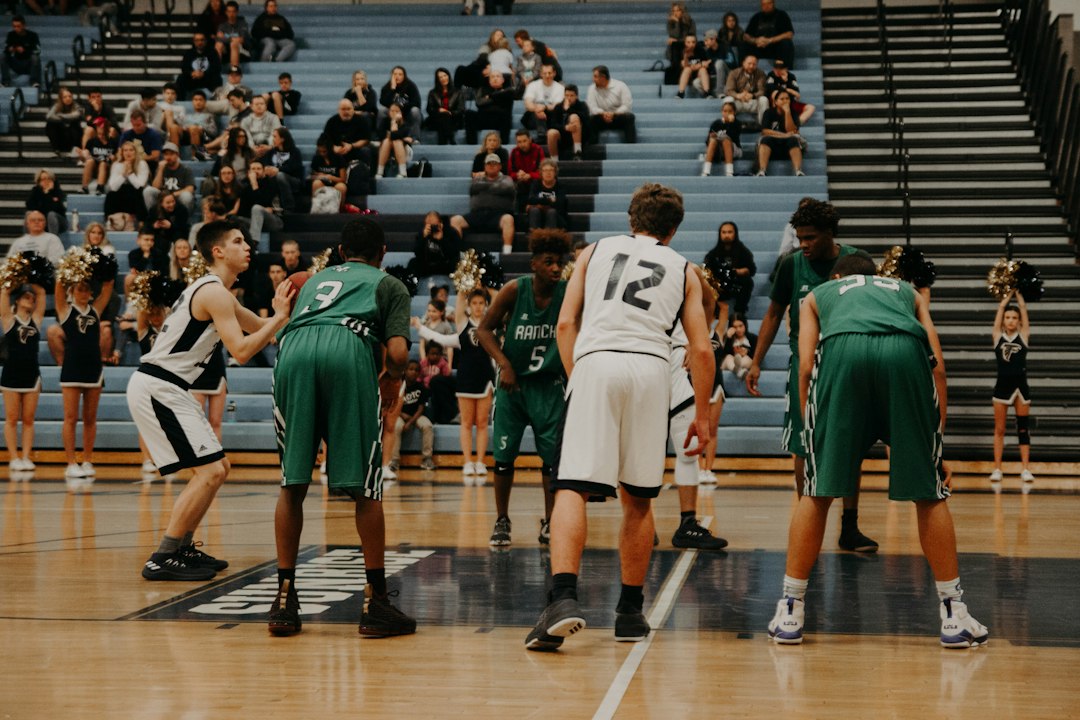




There is a version of the bus ride home after a basketball loss that every player who has ever laced up understands instantly — even if they have never spoken a word about it to anyone.
The engine hums. Someone's knee is pressed against the seat back in front of them. A bag of fast food sits unopened on the floor because nobody is hungry yet. The windows are dark, and somewhere in the fourth row, a sophomore is staring at his hands.
Nobody assigned the silence. Nobody called for it. It just arrived, the way it always does after a loss that mattered — the kind of losing a big basketball game that stays with you past the final buzzer, past the locker room, all the way down the highway and into your driveway at eleven o'clock at night.
This is that ride. And it is one of the most honest, most overlooked moments in all of sport.
What the Bus Smells Like After a Loss
You know before you even sit down.
The smell hits first — the particular mixture of sweat that has cooled on skin, athletic tape that has been on someone's ankle for six hours, the faint ghost of a pregame meal, and whatever pine cleaner they use in the visiting locker room. It is not a bad smell exactly. It is just the smell of effort that did not produce the result everyone wanted.
On a winning bus, nobody notices it. On a losing bus, it is the first thing that confirms where you are.
The equipment manager stows the gear bags in the back compartment and climbs on. The coach sits up front and says nothing for the first twenty minutes. Sometimes he or she puts in earbuds. Sometimes they just stare at the road ahead, working through the same film in their head that the players are running in theirs.


The team silence after a loss is not the same as ordinary quiet. It has texture to it. It has weight. You can feel it pressing on the back of your neck as you find your seat, as you pull your hood up, as you decide — without deciding — that you are not going to be the first person to speak.
The Fourth Quarter Plays on Repeat
The pain of losing does not organize itself neatly. It does not say: here is what went wrong, in sequence. It loops.
You see the turnover. Then you see the timeout that maybe should have been called two possessions earlier. Then the missed free throw — yours, or someone else's — that sat on the rim for a full second before falling the wrong way. Then the turnover again.
This is the specific torture of the bus ride home after a basketball loss: you have nothing to do but replay the game, and the game will not give you a different ending no matter how many times you run it.
Players who have been through this enough times develop different coping habits. Some put in headphones immediately — not to listen to music, exactly, but to build a wall between themselves and the silence. Some stare out the window and let the passing lights blur. Some eat the cold fries eventually, around the forty-minute mark, mechanically, because their body is demanding something even if their mind is elsewhere.
And some just sit with it. Eyes open. Not crying, not quite. Just present inside the loss, turning it over, the way you turn a stone over to see what's underneath.
In our experience covering high school sports and the athletes who played them, this replaying process is one of the most underacknowledged forms of athletic emotional labor. It is not weakness. It is the mind doing exactly what it is supposed to do — reviewing, analyzing, trying to learn. It is just doing it in real time, in a moving vehicle, with fifteen other people who are doing the exact same thing in silence.
The One Kid Who Cries
Every bus has one.
Not always a freshman. Not always the one who played the fewest minutes. Sometimes it is the senior captain who has been holding the season on his or her back for four months. Sometimes it is the quiet starter who barely shows emotion during games but finds it now, in the dark of the bus, where the interior lights are dimmed and nobody has to pretend.
The crying on a losing bus is different from the crying that happens in the moment — the immediate tears on the court after a buzzer sounds. Those are almost reflexive. The bus tears are slower. They come from somewhere deeper, from the part of the season that was invested rather than just played.
Marissa K., 17, center, led her team in rebounds all season. She told the story once of her junior year, a regional semifinal, a loss by three that ended with a shot she was defending. On the bus home she did not cry until mile forty-three — she had counted the mile markers — when she finally understood that the season was over. Not the game. The whole season. "I wasn't crying about the shot," she said. "I was crying about the Tuesday practices. The early mornings. All of it being done."
That is what the cry on the losing bus is actually about. It is grief for the season, not grief for the game.
What the Coaches Know That Nobody Says Out Loud
There is a reason good coaches do not speak for the first portion of the ride home.
It is not avoidance. It is not that they have nothing to say. It is that they understand — from experience or from instinct — that the processing that happens on that bus in that first twenty or thirty minutes of silence is necessary. It cannot be shortcut. It cannot be replaced by a speech.
The coaches who have been doing this long enough know that the players need to feel the loss before they can hear anything about it. A post-game speech that arrives too quickly bounces off. The team is still inside the game. They are not ready to receive perspective. The bus ride creates the distance needed for perspective to land.
Some coaches wait until the team is almost home. Then they say something brief. Not analytical — not yet. Something human. "I'm proud of how you competed" is different from "here's what we need to work on." The first one meets the team where they are. The second one can wait until Monday.
The coaches who get this wrong — the ones who spend the first twenty minutes of the bus ride delivering tactical analysis — often see players stare at the floor and nod without hearing a word. The timing is off. The container is wrong. You cannot pour into a vessel that is still full.
The Assistant Coach in the Third Row
There is always an assistant who handles logistics. Calls parents. Confirms pickup times. Texts the equipment inventory to the athletic director.
Watch this person on the losing bus.
They are the ones who keep the structure of the evening from completely dissolving. They are the ones who remember that, regardless of what just happened on the floor, seventeen people still need to get home safely and someone's mom is waiting in the parking lot back at the school.
The support staff on a losing bus perform a specific, unacknowledged function: they are the evidence that the world still runs, that tomorrow still exists, that there are logistics beyond the score. Sometimes that is more grounding than anything a coach could say.
The Bus Ride Home After a Big Tournament Loss Is Different
There is a particular kind of bus ride that occupies its own category: the tournament loss.
When a regular season loss ends a night, the bus ride home is hard. But the season continues. There are more games. The loss has a container — it is one loss, not the final loss.
The tournament elimination ride is different in kind, not just in degree. The team silence after this loss has a finality to it. There is no next Tuesday. There is no film session that leads to adjustments before Friday. The season ended when the buzzer sounded, and everyone on the bus knows it, and nobody knows quite what to do with that knowledge.
The seniors know it first. You can see it in how they sit — not collapsed, not dramatic, just somehow more still than everyone else. They are already crossing a threshold. The underclassmen feel it too, but differently — they are grieving the season; the seniors are also grieving the team, this version of it, which will never exist again.
Basketball heartbreak at tournament's end is one of the purest forms of athletic grief because it combines the immediate pain of the loss with the longer grief of ending — of a team that will not reassemble in this configuration, of a game that was the last one, even if nobody knew in the moment that it would be.
Why You Never Forget This Ride
Ask any former player — regardless of level, regardless of how long ago they played — and they can describe a specific bus ride home after a specific loss in specific detail.
The highway exit. The song that came through someone's headphones loud enough to hear two seats away. The way the coach's reflection looked in the front window. The smell.
Memory research tells us that emotionally significant experiences encode differently than neutral ones — the amygdala's role in emotional memory consolidation is well-documented. But athletes don't need a study to confirm what they already know: the losses they remember in granular, sensory detail are the ones that shaped them.
The wins are celebrated and then released. They exist as highlights, as memories of joy. The losses stay in the body longer. They live in the specific texture of that bus seat, the specific quality of that silence, the specific feeling of the drive home through streets that looked exactly the same as they always do and somehow felt completely different.
This is not a design flaw in the athletic experience. This is the design.
The losses are the education. The bus ride home is the classroom. What you do inside that silence — how you process, what you decide about yourself and your team, how you choose to arrive at Monday's practice — that is the actual curriculum of competitive sport.
What Carries You Forward
The silence breaks, eventually. Not all at once — in pieces.
Someone says something small. A joke that would not be funny under any other circumstances that lands because the tension needed exactly that. Or a senior says something real — not a speech, just an observation — and the underclassmen hear it and something shifts.
Or it does not break at all, and everyone files off the bus into the parking lot and into the cars waiting for them, and the silence just disperses into the night air, and the processing continues privately, in bedrooms with the lights off, until sleep arrives.
Either way, something has happened on that bus. It was not nothing. That quiet was not wasted. That replay of the fourth quarter, that grief for the season, that cry somewhere around mile forty-three — none of it was wasted.
It was the work. The invisible, uncelebrated, essential work of learning how to absorb loss and come back. Every player who ever sat on that bus and stared at their hands was doing something that no drill can teach. They were learning how to carry something that is heavy and keep going anyway.
That is the thing about the bus ride home after a basketball loss. You think you are sitting still. You are actually moving — not just down the highway, but through something that will stay with you long after the season's record is forgotten.
Your jersey is still out there waiting.
Design yours in minutes and see your name and number exactly the way you remember it.
Frequently Asked Questions
What is the typical atmosphere on a team bus after a tough basketball loss?
The atmosphere is almost universally one of quiet. Players tend to withdraw into themselves — headphones in, hoods up, eyes on the window or the floor. There is usually very little conversation in the first portion of the ride. Coaches often allow this silence deliberately, understanding that players need time to process before they are ready to receive any kind of feedback or perspective. The quiet on a losing bus is not uncomfortable in the ordinary sense — it is purposeful, even if no one decided it should be.
Is it normal for athletes to cry on the bus ride home after a loss?
Completely normal, and more common than most athletes realize because it tends to happen quietly rather than visibly. The grief on a losing bus often surfaces not from the immediate pain of the game but from the recognition of what the season represented — the months of practice, the relationships, the investment. For seniors especially, tears on the bus after a final loss often carry the weight of the whole experience ending, not just one game being lost.
How do coaches handle the bus ride home after a big loss?
The most experienced coaches tend to give the team space for the first portion of the ride before speaking. Immediate post-game analysis on the bus rarely lands — players are still emotionally inside the game and not yet in a state to process tactical information. The most effective coach conversations on the bus tend to be brief, human, and acknowledgment-focused rather than analytical. Full game review typically waits for a film session or practice later in the week.
Does losing a big game in high school actually matter long-term?
Yes — and not in the way that "this loss will make you stronger" platitudes suggest. Research on emotional memory and athletic development consistently points to high-stakes losses as formative experiences. What athletes do inside the loss — how they process, what they decide about themselves, how they choose to respond — shapes competitive character in ways that winning rarely does. The bus ride home is part of that formation. It is not a punishment or a side effect. It is part of the education.
Why do players remember the bus ride home after a loss so vividly years later?
Emotionally significant experiences encode with greater sensory detail than neutral ones. The combination of physical exhaustion, emotional intensity, and the specific sensory environment of the bus — the smell, the darkness, the quiet — creates a memory that is rich in detail and difficult to lose. Former players routinely describe specific losing bus rides decades later with a clarity they cannot apply to many ordinary days. The specificity of that memory is itself a measure of how much it mattered.
See also: the bus ride home after a loss is a shared experience every athlete knows | the grief nobody talks about when your athletic career ends | why your senior season memories are so vivid | athletic identity that made quitting feel like losing yourself | why high school sports still matter to adults