

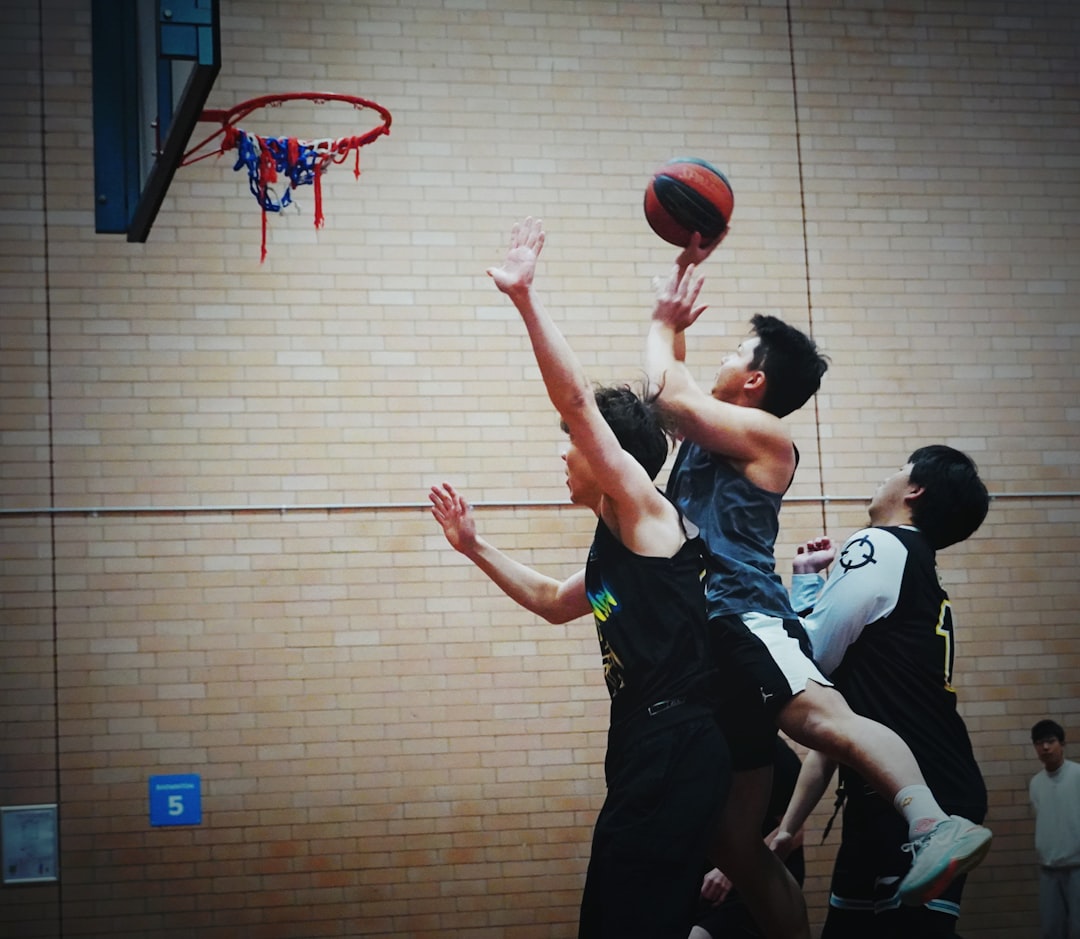




You remember exactly how it felt.
The smell of the gymnasium before a big game. The weight of the uniform. The way your team moved like one organism after three years of playing together. High school athletics wasn't just a thing you did — it was a significant part of who you were.
And then it stopped.
If you're searching for adult recreational sports leagues for former high school athletes, you already know what you've been missing. The question isn't whether you should get back into it. The question is which league is actually built for someone like you — not the person who played twice in middle school and wants some light exercise, but someone who knows what it means to compete.
This guide is built specifically for that person. We're going to break down the best adult rec league options by competition level, time commitment, and social atmosphere, and match each one to the specific type of player you were. Think of it as a matching tool, not a general overview.
What Makes Adult Rec Leagues Different for Former High School Athletes
Here's the honest tension: most adult recreational leagues are designed for the average adult participant. That means the competition level, the structure, and the culture are often calibrated for people who just want to run around for an hour and have a beer afterward.
That might be exactly what you want right now. Or it might feel like showing up to a guitar lesson when you used to play in a band.
The key is matching your expectations to the right tier. Adult rec sports exist across a genuine spectrum: from ultra-competitive "open" leagues that draw former college players, to pure social leagues where the trophy is basically symbolic. Former high school athletes who jump into the wrong tier in either direction tend to end up frustrated and quit within a season.


Here's what you actually need to know before choosing:
- Your competitive floor: the minimum level of play that still feels satisfying, not just adequate
- Your time ceiling: how many hours per week you can genuinely commit, including practices, games, and travel
- Your social priority: whether the social element is a bonus or the whole point
Get these three right, and almost any sport can give you back something close to what you had.
The League Tiers Explained (And Which Player You Were Fits Where)
Not all rec leagues use the same tier language, but across most organized adult sports, whether through YMCA programs, city parks and rec departments, or national platforms like Volo Sports (which now includes ZogSports), you'll find roughly three competitive tiers.
Tier 1: Competitive / "Open" Division
Who runs it: Often called the "Open" or "A" division. Draws former college players, serious club athletes, and former high school standouts who kept playing in some capacity.
What the competition looks like: Real athleticism. Set plays. People who study film sometimes. The gap between a varsity starter and a junior varsity benchwarmer will show up clearly here.
Time commitment: 1–2 nights per week for games, possible practice nights depending on the sport. Playoffs can extend the season.
Social atmosphere: Competitive first, social second. You'll develop camaraderie, but it's built around winning together, not around the bar afterward.
Best fit (the player you were):
- 3-year varsity starter who was genuinely recruited (even lightly) at the college level
- Team captain or all-conference honoree who kept conditioning after graduation
- Former athlete who has stayed active (pickup leagues, CrossFit, regular cardio) and can hang athletically
Honest warning: If you haven't played competitively in 5+ years and haven't maintained your conditioning, this tier will be humbling in ways that aren't fun. Give yourself a season in Tier 2 first. Rebuilding from a long layoff is slower than it used to be, so starting training again at 35 deserves patience before you judge yourself. No shame in it. The competitive division will still be there.
Tier 2: Intermediate / "B" Division
Who runs it: The largest tier in most cities. This is where the bulk of former high school athletes land and stay happily for years.
What the competition looks like: Real effort, legitimate skills, but no one is killing themselves over a regular season loss. You'll see everything from former varsity athletes to people who played club sports seriously. Games are genuinely contested.
Time commitment: 1 night per week for games, occasionally 2 during playoffs. Some leagues offer optional open gym or practice nights.
Social atmosphere: Balanced. Teams compete hard during the game and genuinely enjoy each other afterward. This is the tier where adult rec sports friendships are made.
Best fit (the player you were):
- Varsity player, starter or key reserve, who loved competing but didn't define yourself entirely by your sport
- JV standout who would have been varsity with another year
- Former athlete who has maintained reasonable fitness but not elite conditioning
This is the sweet spot for most people reading this article. The competition is real enough that your skills are rewarded. The social element is real enough that it fills something the competitive tier sometimes doesn't.
Tier 3: Social / Recreational Division
Who runs it: Often called the "C" division, "recreational," or "social" league. High participation, low pressure.
What the competition looks like: Wildly variable. You'll be the most skilled person on the field most nights. Games are often lopsided.
Time commitment: 1 night per week, no additional commitment.
Social atmosphere: This is the primary product. Most teams are built around friend groups, coworkers, or neighborhoods rather than athletic compatibility. The postgame gathering is often the main event.
Best fit (the player you were):
- You played varsity but you're honest that the sport wasn't really your thing: you played for the team, the friends, the experience
- You're returning to sports after a significant absence (10+ years, major life events, injury recovery) and need a low-stakes re-entry point
- You want the social structure more than the competition right now, and you're okay being the best player on the field
There's no hierarchy here. Some former elite athletes choose this tier deliberately because life has changed and they want connection more than competition. That's a completely legitimate choice.
Matching by Sport: Which Adult Rec League Is Right for Your Background
Beyond the tier question, the sport itself matters. Some sports translate from high school to adult rec more naturally than others. Here's a direct breakdown.
Basketball
Competition scaling: Excellent. Pickup basketball has its own culture, but organized adult rec basketball scales beautifully across all three tiers. The skill differential is obvious, which means you'll almost certainly find your appropriate level within a season.
Time commitment range: 1–2 hours per game night, once per week minimum, twice per week in competitive divisions.
For former high school basketball players: This is arguably the easiest re-entry sport. The rules are identical, the game is fast, and your basketball IQ (the thing that took years to build) never fully left. Your body will need time to catch up, but your reads will be ahead of most players you encounter in Tier 2.
The jerseys matter here. Basketball is one of the few adult rec sports where team identity builds fast. Teams that show up in matching custom jerseys — name and number, the way you wore it in high school — develop cohesion that teams in mismatched gear don't. Something about wearing your number again does something to your head. You can design a team kit with your number on it in minutes, and the first time you pull it on, you'll feel the difference.
Flag Football
Competition scaling: Good. Highly organized at the intermediate and competitive tiers through city leagues and regional flag football organizations. Social leagues exist nearly everywhere.
Time commitment range: 1–2 hours per game night, typically Sunday mornings or weeknight evenings.
For former high school football players: Flag football gives you the reads, the routes, and the defensive concepts you spent years learning, without the physical cost of contact. Quarterbacks, receivers, and cornerbacks from high school tend to thrive immediately. Linemen have the biggest adjustment, since the game is entirely about speed and positioning rather than leverage and power.
Honest note: If you were an offensive or defensive lineman in high school, flag football may feel like a different sport. Skill positions translate; line play doesn't. You may want to try 7-on-7 flag specifically, which leans harder on athleticism across the board.
Soccer and Futsal
Competition scaling: Outstanding. Adult soccer has the widest organized infrastructure of any adult rec sport in the United States, and futsal (indoor small-sided soccer) has exploded in popularity in the last decade.
Time commitment range: 1–1.5 hours per game, once per week. Outdoor seasonal leagues often run spring and fall.
For former high school soccer players: The transition is seamless in terms of rules and strategy. The cardiovascular demand is the variable: soccer at any competitive level requires conditioning that most former athletes have to rebuild deliberately. Give yourself 4–6 weeks of cardio before your first competitive season if you've been away for more than 3 years.
For former athletes from other sports: Soccer and futsal are also the best adult rec entry points for former high school athletes who want a change of sport. The learning curve is real but manageable, and social-tier soccer leagues are genuinely welcoming to athletic people learning the game.
Softball and Baseball
Competition scaling: Excellent for softball; variable for baseball depending on your city.
Time commitment range: 1.5–2.5 hours per game (baseball runs long), once per week.
For former high school baseball or softball players: The sport is patient with returning athletes in a way that basketball and soccer are not. The conditioning demand is lower, which means your skill — your swing mechanics, your arm, your reads — is what shows up first. Many former baseball and softball players find adult rec leagues the most comfortable re-entry because the pace allows them to remember what they knew before their body has fully remembered how to move.
Social atmosphere note: Softball leagues specifically tend to have the strongest social culture of any adult rec sport. The postgame tradition is essentially built into the sport's DNA at the recreational level.
Volleyball
Competition scaling: Good, with strong indoor and sand/beach volleyball infrastructure in most mid-size and large cities.
Time commitment range: 1–2 hours per game night, once per week.
For former high school volleyball players: Volleyball skill is highly position-specific. Setters and liberos tend to feel immediately at home in intermediate leagues. Outside hitters may find that the jump training required takes longer to rebuild than they expect. Recreational-tier volleyball is one of the most genuinely social adult rec options available. Co-ed leagues are prevalent and the gender balance tends to be healthier than most other sports.
The Time Commitment Question (Because This Is Real Life Now)
Here's what high school didn't require of you: choosing between a Tuesday night game and a school play, a parent-teacher conference, a work deadline, or the simple need to sleep. Adult life is different, and the former athletes who stay in adult rec leagues long-term are the ones who are honest about this before they sign up.
The full time cost of adult rec sports isn't just the game. It's the commute to the facility, the warmup, the cooldown, the social time after (which is genuinely part of the value), and the recovery time the next morning. A 1-hour game night is often a 3-hour evening.
Before choosing a league, answer this honestly:
- How many evenings per week can you protect? If the answer is one, you need a once-per-week league with no mandatory practice nights.
- What's your travel radius? City leagues vary wildly in facility quality and location. A league 40 minutes from home is a 2-hour round trip before you've played a minute.
- What's your season flexibility? Some leagues run year-round. Others run spring/fall only. If your work life has seasonal crunches, match your season choice to your quieter periods.
The intermediate tier with one game night per week is sustainable for nearly every adult schedule. It's where most former high school athletes land when they're honest with themselves, and it's enough. It genuinely is.
The Story That Plays Out Every Season
There's a version of this that happens constantly. A former starting cornerback signs up for a competitive-tier flag football league three years after his last high school game. He skips the intermediate division because he remembers what he was. Six weeks later, he's quit.
He was technically good enough. He just wasn't in game shape. He knew the concepts better than half the guys on the field and was still getting beaten on pure speed. That's the gap between athletic memory and athletic present tense, and it isn't fun.
The players who last are the ones who start one tier lower than their ego wants, spend a season rebuilding conditioning, and move up when their body agrees. Put a name and a number on a jersey and something in your head shifts. It stops being a pickup game. It becomes a team again.
How to Actually Find the Right League in Your City
Knowing which tier and sport you want is half the battle. Finding a well-run league is the other half. Here's the process in order:
-
Start with your city's parks and recreation department. Most mid-size and large cities run organized adult rec sports through parks and rec, and these leagues tend to have the most transparent tier systems, the most affordable entry costs, and the most stable schedules.
-
Check national platforms with local chapters. Volo Sports and YMCA leagues operate in dozens of cities and have consistent league structures, which makes it easier to evaluate the tier system before you commit.
-
Ask for a trial night before you register. Any well-run league will allow a prospective player to attend a game night before signing up. If a league won't let you observe or trial, find a different one.
-
Talk to the league coordinator about your background. Tell them you played high school varsity and ask which division they'd recommend. A coordinator who knows their league will give you a direct, useful answer. A coordinator who says "just pick whichever you want" is running a disorganized league. Either way, that conversation is your fastest path to finding the right league for your skill level.
Your jersey is still out there waiting.
You've found the league. Now show up looking like you never left. Design yours in minutes and see your name and number exactly the way you remember it.
Frequently Asked Questions
Which adult rec league should I join if I haven't played in more than five years?
Start in the intermediate (B) division of your sport, not the competitive division. This is true even if you were a strong varsity player. A 5-year gap without sport-specific conditioning means your skills will be ahead of your fitness, and fitness is what determines whether you get hurt, get frustrated, or get hooked again. Give yourself one full season at the intermediate level. If you're clearly outperforming the competition, move up the following season. The competitive division will still be there.
What are the best rec sports for athletes who want real competition, not just socializing?
Basketball, soccer, and flag football have the strongest competitive adult rec infrastructure in most U.S. cities. Basketball scales most precisely by skill level because the game is fast and the skill differential is immediately visible. Soccer offers the widest range of options through both indoor futsal and outdoor seasonal leagues. Flag football is the best option for former football players specifically, provided they were skill-position players rather than linemen. If your city has an organized volleyball circuit, competitive volleyball is also worth exploring. It's frequently overlooked by former athletes who didn't play it in high school.
How do I start playing sports again as an adult without getting injured in the first month?
Three things matter before your first game night: cardiovascular conditioning, sport-specific movement prep, and honest tier placement. Most adult rec injuries in the first season happen to former athletes who skip conditioning and jump directly into competitive play. If you'd rather skip the trial and error, read up on the reality of playing adult sports without getting hurt before you register. Spend 4–6 weeks doing sport-specific cardio (running intervals for basketball and soccer, lateral agility work for volleyball, rotational work for baseball and softball) before your first game. Then place yourself in the intermediate tier and let your body remember the movements in a lower-stakes environment before you push into competitive play. Your ego will argue for the higher tier. Your hamstrings will thank you for ignoring it.
Do adult rec leagues require team registration, or can I sign up as an individual?
Both options exist, and the better leagues support both. Team registration means you're joining with a group you already know: coworkers, friends, former teammates. Individual registration means the league places you on a team of other individual registrants. Individual registration is completely normal and often leads to better competitive placement because the league coordinator can assign you to a team at the right tier rather than keeping you with friends who may be at a different skill level. If playing sports again as an adult is your goal and you don't have a ready-made team, register individually. Most players who do this report that their league teammates become genuine friends within a season.
See also: adult recreational leagues for former athletes | athletic identity after high school | how to start training again after years away from your sport | the gap between your athletic memory and your current body | reconnect with former high school teammates