



There's a specific moment every former athlete knows. You're three possessions into the second half of a pickup game, the score is tied, and your body sends a message that your 22-year-old self never received: something is wrong, and it's going to cost you tomorrow.
Most of us ignore it. We've always played through discomfort. That's the identity. That's what made us good at this.
It's also why avoiding injury in adult rec sports is a fundamentally different problem than it was in your twenties — and why every article written by someone who has never felt that specific message misses the point entirely.
This isn't a lecture about stretching. This is the actual conversation about what changes in your body after 30, the specific warning signs former athletes are trained to override, the warmup protocol that takes 12 minutes and prevents most of the damage, and the honest calculus about when the risk-reward line has crossed.
Your Body After 30 Is Not a Broken Version of Your Body at 22
It's a different machine. Understanding that distinction is the foundation of everything that follows.
Here's what actually changes — not vague "you slow down" language, but the specific physiological shifts that explain why your Thursday night basketball session puts you on the couch until Sunday.
Tendon and ligament recovery time extends significantly. Muscle tissue repairs relatively quickly at any age. Connective tissue — your Achilles, patellar tendon, rotator cuff, ACL — operates on a different timeline. The collagen turnover rate in tendons decreases with age, meaning microdamage from a single hard session takes longer to repair than it did when you were 20. You feel fine on Friday. You feel it Saturday morning. You go hard again Sunday. That's how accumulation injuries happen — not from one catastrophic moment but from incomplete recovery stacked across weeks.
Proprioception — your body's real-time sense of joint position — becomes less precise. This is the one that doesn't get talked about enough. When you plant and cut at 23, your ankle and knee joints communicate their position to your central nervous system in milliseconds. That system is slower at 38. The hesitation between "this landing feels wrong" and "my body corrects for it" widens. That gap is where ankle sprains, knee ligament tears, and hip flexor strains live.


Inflammatory response is amplified and prolonged. Younger bodies produce an acute, efficient inflammatory response after exercise and clear it quickly. As you age, that response becomes more pronounced and lingers longer — what sports medicine researchers call "inflammaging," a low-grade, chronic inflammatory state that makes acute exercise-related inflammation harder to resolve.
The practical implication: you cannot train your 38-year-old body with your 22-year-old instincts. The rules of engagement have changed. The body that got you through two-a-days and tournament weekends is the same body — but it is operating under different load tolerances, different recovery curves, and different risk thresholds.
What "Playing Through It" Actually Costs You Now
There is a version of playing through discomfort that builds toughness. And there is a version that converts a Grade 1 strain into a six-month absence.
Former athletes are spectacularly good at the second version while believing they're doing the first. We were selected, trained, and repeatedly rewarded for ignoring signals that would stop a normal person. That skill doesn't go away. It just works against you when the signals are real.
The cost of overriding pain in your 30s and 40s:
- A hamstring pull that would have resolved in 10 days at 24 becomes a 4-6 week partial tear at 40 because the tissue was already carrying accumulated fatigue when you hit it
- Knee swelling you dismiss as "normal soreness" can indicate meniscus damage that worsens with each unmodified session
- The shoulder that "always does this" after overhead contact is not a quirk — it's a developing rotator cuff issue that surgical intervention becomes more likely to fix the longer it goes unaddressed
Playing through it used to be the cost of admission. Now it's occasionally the cost of the sport itself.
The 12-Minute Warmup Protocol That Actually Works for Adult Athletes
Generic warmup advice for adult athletes falls into two useless categories: the high school coach's "jog a lap and do some jumping jacks" or the physical therapist's 45-minute mobility sequence that no one does before a pickup game.
This is neither. This is 12 minutes, in sequence, built specifically around the body parts most likely to fail you in adult rec sports — and the mechanism behind each step.
The goal of a warmup for adult athletes is not to feel loose. It's to elevate core temperature (which improves collagen elasticity in tendons), activate the posterior chain (which takes load off the knee joint during deceleration), and prime the proprioceptive system (which reduces the reaction-time gap described above).
Step 1: 3 minutes of progressive cardiovascular activation
Not jogging. Start with a brisk walk, transition to a slow jog, and spend the final 90 seconds at a pace where conversation becomes slightly difficult. The specific goal here is raising core temperature by approximately 1–1.5°C, which measurably increases tendon extensibility. Cold tendons are stiffer, more brittle, and less capable of absorbing the eccentric load of deceleration. You are not warming up your muscles. You are warming up your connective tissue.
Step 2: 4 minutes of dynamic mobility — NOT static stretching
This is where most adult athletes make the most consequential mistake. Static stretching before activity reduces muscle force output by up to 8% for 30 minutes post-stretch. You are literally making yourself weaker and less explosive. Dynamic mobility — controlled movement through full range of motion — does the opposite.
The sequence that covers the highest-risk joints:
- Hip circles, 10 each direction — mobilizes the hip capsule, reduces the mechanical stress transferred to the lumbar spine and knee during lateral movement
- Leg swings, front-to-back and lateral, 10 each — activates the hip flexor, hamstring, and glute medius eccentrically before they're asked to perform concentrically
- Ankle circles and calf raises, 15 reps — the Achilles is the single most commonly ruptured tendon in adult rec sports; it tears under load when it hasn't been progressively loaded in warmup
- Thoracic rotations (open books), 10 each side — if you play anything involving throwing, reaching overhead, or trunk rotation, this is non-negotiable
Step 3: 5 minutes of sport-specific progressive intensity
Whatever you're about to play — do a lower-intensity version of it first. Basketball: half-speed dribbling transitions, then 75% speed cuts, then your first full-effort play. Soccer: slow footwork patterns, then 50% pace runs with direction changes, then your first sprint. The proprioceptive system needs to rehearse the movement patterns at progressive intensities before it's asked to perform them under game pressure and fatigue.
Most adult rec athletes skip directly from static stretching to full-effort play. That gap — from zero to 100 — is where the ACL tears happen.
Warning Signs Former Athletes Are Trained to Override
Marcus T., 41, had been playing in the same Tuesday night flag football league for four years when he noticed his right knee swelling after every session. Not dramatically — just enough that he could feel the pressure when he climbed stairs the next morning. He played through it for six weeks because it never actually stopped him from playing. His orthopedist found a posterior horn meniscus tear that required surgery and a five-month recovery. "I thought swelling was just what happened," he said. "I didn't know it meant something specific."
Marcus's story is not unusual. It is the modal experience of former athletes in rec leagues. The warning signs below are the ones most commonly rationalized, misattributed, or simply overridden by people whose athletic identity was built on doing exactly that.
Swelling in a joint after activity — any swelling
This is not normal soreness. Muscles can be sore. Joints should not swell. Post-activity joint swelling (effusion) indicates that the joint capsule has been irritated or damaged and is producing excess synovial fluid in response. It is a structural signal, not a fitness signal. Two consecutive sessions with post-activity swelling means you need an evaluation before the third session — not ice and ibuprofen.
Pain that changes your mechanics
If you are unconsciously altering how you run, cut, land, or throw to avoid a specific location of pain, your body has already made the injury worse. Compensatory mechanics transfer load to unprepared tissues. The most common path to a hamstring tear is not a single explosive sprint — it's weeks of altered gait from an unresolved calf or Achilles issue that finally runs out of compensation capacity.
The sharp pain that goes away quickly
Dull soreness during activity can be benign. A sharp, location-specific pain that hits once and then resolves is frequently the more dangerous signal — it often indicates a nerve, tendon, or ligament that has been loaded past its tolerance threshold and is signaling distress. The fact that it goes away does not mean it resolved. It means the load was removed before the full failure occurred.
Fatigue-related form breakdown in the second half of activity
This one is subtler. If your form degrades significantly in the second half of a session — your landing mechanics collapse, your shoulder drops, your trunk rotation disappears — you are generating injury risk with every additional rep after that point. Fatigue-induced mechanics breakdown is when the injuries that end seasons happen. If you notice it, the honest answer is to come out.
Playing Rec Sports in Your 30s and 40s: The Honest Risk-Reward Math
Here's the conversation that doesn't happen in training articles: when does the cost exceed the return?
This is not a reason to stop playing. This is the calculation every former athlete needs to do honestly, because the answer is different for everyone and changes over time.
The return side is significant and real. Regular competitive activity at adult recreational level maintains cardiovascular fitness, bone density, fast-twitch muscle fiber recruitment, and — perhaps most underestimated — competitive identity and mental health. These are not trivial. The research on sedentary behavior in former athletes is not encouraging. Playing rec sports in your 30s and 40s, done intelligently, extends athletic longevity and quality of life.
The cost side requires honesty about factors most of us resist quantifying:
Recovery time versus available recovery time. If a hard Tuesday night game means you're genuinely impaired until Saturday — not mildly sore, but actually impaired — and you have obligations Thursday and Friday that suffer for it, that's a real cost. If your recovery capacity has shrunk to the point where one session per week is the maximum you can responsibly absorb, that's data, not failure.
Accumulation versus acute risk. Single-session acute injury risk is manageable with proper warmup, reasonable conditioning, and honest mechanics monitoring. Accumulation risk — what happens to a body that runs at 90% capacity every week for years without addressing emerging issues — is harder to see and more dangerous. Old athlete injury prevention is almost entirely about managing accumulation, not avoiding freak accidents.
The specific question about pickup basketball
When to stop playing pickup basketball is a question that deserves a direct answer rather than a diplomatic non-answer. The specific situations where the risk-reward line has genuinely crossed:
- You have an unaddressed structural issue (meniscus damage, rotator cuff tear, stress reaction) that your orthopedist has told you will worsen with continued play
- You have altered your mechanics significantly to play through pain and cannot play without doing so
- Your recovery from a single session extends beyond 72 hours with meaningful functional impairment
- You are regularly playing on surfaces or in conditions that amplify injury risk (outdoor concrete on cold evenings, full-speed play with no warmup)
None of these is "you're old, stop playing." All of them are specific, addressable conditions. The difference between a former athlete who plays competitively at 50 and one who doesn't is almost never natural decline — it's whether they treated the early warning signs as information rather than weakness.
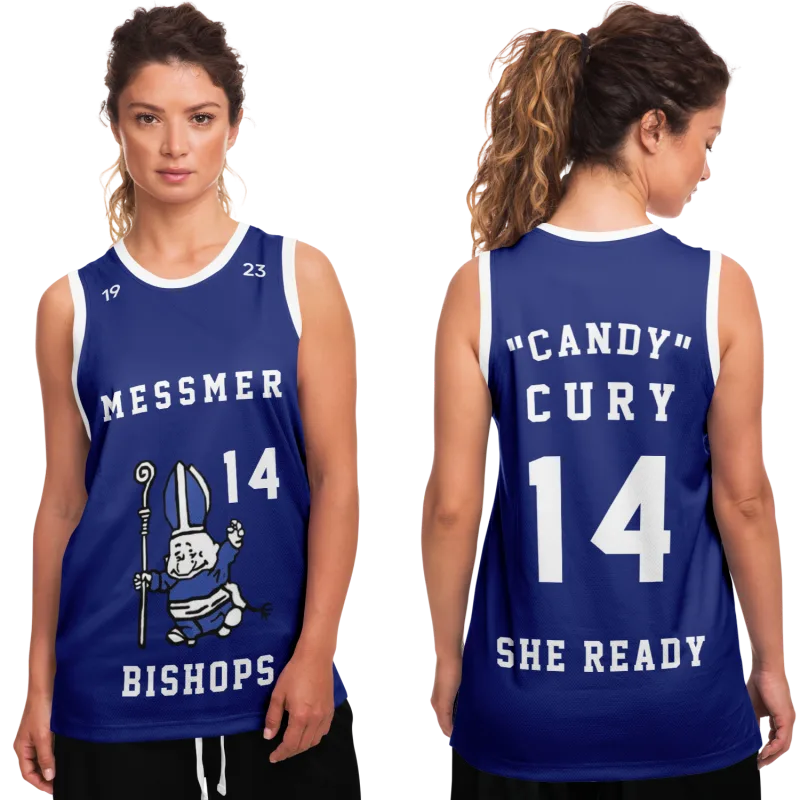
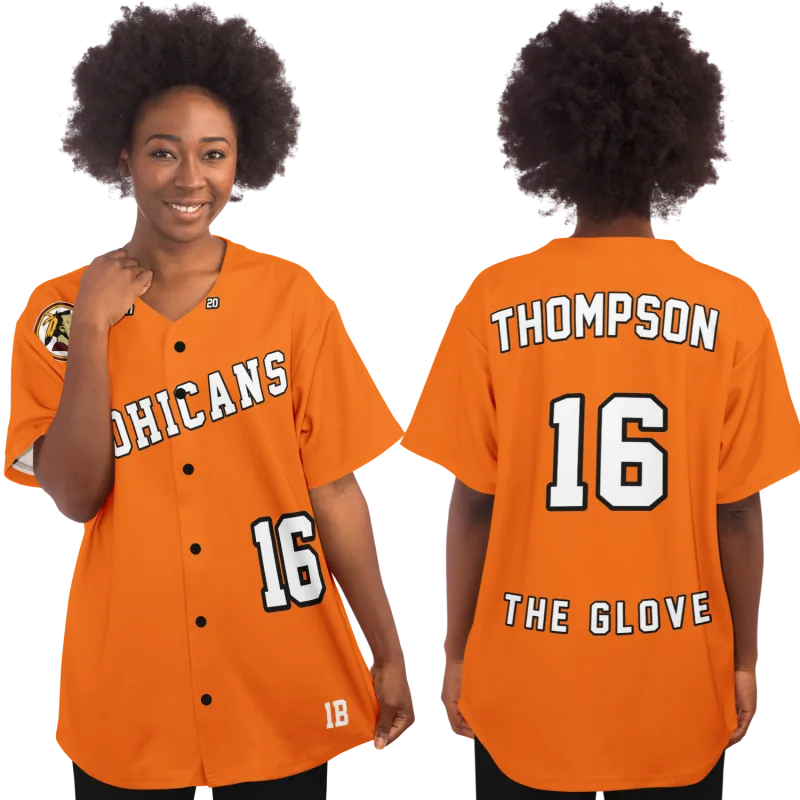
Your jersey is still out there waiting.
Design yours in minutes and see your name and number exactly the way you remember it.
Frequently Asked Questions
How long should I warm up before playing adult rec sports?
The functional minimum is 10–12 minutes of progressive warmup — not static stretching, but dynamic movement that elevates core temperature and rehearses sport-specific patterns at progressive intensities. Less than that and your connective tissue (particularly tendons) has not had adequate time to reach the elasticity threshold that reduces acute tear risk. If you have less than 10 minutes, prioritize the dynamic mobility sequence and sport-specific progressive intensity over the cardiovascular activation — the movement patterns matter more than the temperature increase when time is genuinely constrained.
What's the difference between normal muscle soreness and an injury I should get checked?
Muscle soreness (delayed onset muscle soreness, or DOMS) is diffuse, develops 24–48 hours post-activity, and affects the belly of the muscle rather than the joint or tendon attachment points. It responds positively to gentle movement and resolves within 3–5 days. An injury worth evaluation produces one or more of the following: joint swelling (any amount), point-specific tenderness at a tendon insertion or joint line, pain that alters your mechanics during activity, sharp pain that is location-specific even if brief, or symptoms that worsen rather than improve after 5–7 days of modified activity. When in doubt, a sports medicine evaluation is not an overreaction — it is exactly what the specialty exists for.
Can I maintain competitive fitness for adult rec sports without risking the injuries that come with full-speed play?
Yes, and this is one of the most underused approaches in old athlete injury prevention. Cross-training at lower-impact intensities — cycling, swimming, rowing, resistance training focused on posterior chain development — maintains the cardiovascular base, joint stability, and fast-twitch recruitment that competitive sports require, without the cumulative joint load of full-speed cutting and contact. The athletes who sustain adult rec sports into their late 40s and 50s almost universally treat their sport as the expression of fitness rather than the source of it. Their fitness is built elsewhere. The game is where they spend it.
I've been playing through knee pain for months. Is it too late to address it?
In most cases, no — but the window for conservative management (physical therapy, load modification, targeted strengthening) narrows the longer the issue runs unaddressed. Meniscus tears, for example, exist on a spectrum from minor fraying that responds well to conservative treatment to significant mechanical tears that require surgical intervention. Where yours falls on that spectrum is something imaging and a sports medicine or orthopedic evaluation can determine — and the sooner that determination is made, the more options remain available. Months of playing through knee pain is not a reason to avoid evaluation. It's the clearest possible reason to get one now.
See also: adult recreational leagues for former high school athletes | how to start training again after years away from your sport | the gap between your athletic memory and your current body | athletic identity that doesn't disappear just because the playing days ended