



There is a moment that every former volleyball player carries — and it doesn't come from the highlight reel.
It comes from warmups. The gym half-lit, the squeak of shoes not yet urgent, the rhythm of a ball popped off a forearm and sent upward in a lazy arc that says I know this place. This is mine. Female athlete volleyball memories don't begin at the whistle. They begin right there, in the quiet before everything starts, when the court belongs entirely to the people who showed up to compete on it.
This article is for every woman who was the setter, the libero, the captain — or all three at different points in her career. For every player who learned something about herself between the ten-foot line and the net that no classroom, no job, no relationship has quite replicated. The court was a contained world. And what happened inside it shaped everything that came after.
The Roles She Played — and What Each One Required of Her
Volleyball is one of the rare team sports where every position demands a completely different kind of intelligence. The roles aren't interchangeable. They don't just describe where you stand — they describe how you think, how you process pressure, and what you're willing to sacrifice for the six people beside you.
The Setter: Running the Offense from the Inside
Ask any setter what her job actually was, and she won't say "setting the ball." She'll say something closer to: managing everyone at once. The setter was the point guard, the quarterback, the conductor — except she had less than a second to make her read, and she had to make it look effortless so the other team couldn't track her decision.
Every setter learned early that the ball doesn't lie. An outside hitter can fake confidence. A setter cannot. The moment she hesitated — the moment her hands telegraphed uncertainty — the entire system felt it. So she didn't hesitate. She learned to commit fully to decisions made in fractions of a second, and she learned to move on immediately when the decision turned out wrong.


What she was actually being trained to do: lead under pressure without showing the seams.
That skill doesn't retire when the season ends.
The Libero: The Most Underestimated Athlete on the Court
The jersey was a different color. That was intentional — it told the other team exactly where their serve was going to have the best chance of breaking through. The libero knew that before every match. She wore the target and showed up anyway.
In our experience talking to former players, the libero role produces some of the most deeply felt female athlete volleyball memories precisely because it was so misunderstood from the outside. Parents in the bleachers sometimes saw the different-colored jersey as a consolation — she's not good enough to play the other positions. The players on the court knew the opposite was true.
The libero was the defensive anchor. She read the game one step ahead of everyone else because she had to. She couldn't block. She couldn't attack from the front row. What she had was pure court vision, footwork that bordered on art, and the willingness to put her body on the floor for a ball that nobody else was going to reach.
She dug balls that had no business being kept alive. And she did it in a jersey that made her the most visible player on the court.
The Captain: Carrying the Team When the Score Doesn't Go Your Way
The captaincy looked different on every team. Some captains were the loudest voice in the gym. Some were the quietest — the ones whose stillness in a tight third set communicated more than a speech ever could.
What every captain shared: she was the person the team looked at when things went sideways. Not the coach. Her. The player who, with a glance or a word or the specific way she walked back to serve when they were down five points, told every other player on that side of the net whether this was over or whether it was just getting interesting.
That is an extraordinary thing to ask of a person who is also eighteen years old, also tired, also feeling the same pressure everyone else is feeling.
The captains who handled it built something in themselves that most people never develop. A specific kind of composure. The ability to hold everyone else's emotional state steady while processing their own. That's not a volleyball skill. That's a life skill that volleyball required first.
What the Court Taught Before Anyone Knew It Was Teaching
If you played, you know there was a version of education happening on that court that had nothing to do with the sport itself.
Every former athlete remembers the specific lesson that arrived disguised as a practice rep. The drill that seemed pointless until the moment — sometimes years later, sometimes in a meeting room or a difficult conversation — when that exact discipline showed up and did its job.
Volleyball specifically taught a few things that are worth naming directly.
It taught her that individual failure is public and immediate. A missed serve in volleyball doesn't happen quietly. The ball hits the net in front of everyone. The score changes. Her name is attached to it. There is no hiding. What she learned was how to absorb a public mistake and keep moving — not to stop feeling it, but to refuse to let it compound. That skill — failing visibly without unraveling — is among the most transferable things the sport produces.
It taught her that communication is a physical act. On a volleyball court, calling "mine" or "yours" is not a courtesy. It is a survival mechanism. Two players going for the same ball in silence is the fastest way to lose a point and potentially a teammate. She learned that hesitation in communication costs more than the brief discomfort of speaking up. She learned to call the ball before she was completely certain she could reach it — because the alternative was worse.
It taught her that momentum is real and manageable. Every volleyball player understands momentum in her bones in a way that non-athletes sometimes struggle to articulate abstractly. She felt what happened when a team got on a run — the way the other side of the net started to shrink, the way shots that should have been difficult started landing clean. And she felt what it was like to be the player who interrupted that run. Who served differently, moved differently, broke the pattern. She learned that energy is contagious in both directions, and that one person choosing to compete harder can pull an entire group forward.
The Teammate Bond That Doesn't Have a Name in Any Other Context
Marissa D., 34, played libero for three years at the club level and remembers the tournament in which her team went 0–3 in pool play, then ran the table through the gold bracket on the second day without a single discussion about what had changed. "We just looked at each other differently after that first loss," she says. "I've tried to explain it to people who didn't play and I can't. It wasn't a strategy. It was something that passed between us and then we just played differently. That's the part I miss most."
There is a specific kind of relationship that forms between teammates who have competed together under pressure. It doesn't have a precise equivalent in adult life — not in friendship, not in marriage, not in the best professional partnerships.
It is the bond formed between people who have seen each other at their limits. Who have watched each other make the worst possible mistake at the worst possible moment and then walked back to the service line together anyway. Who have shared the particular exhaustion of a three-set match that went longer than anyone expected, and the particular exhilaration of winning it.
The teammates from those years occupy a specific place in memory. Not because they were the most polished relationships, but because they were formed under conditions that reveal character quickly and completely. She knows things about those women — and they know things about her — that took no time at all to discover and will not be forgotten.
Every former volleyball player has at least one name that surfaces when she thinks about the sport. Not a coach, not a rival, but a teammate. The one who was always talking. Or always silent. The one who she sometimes fought with in practice and would have walked through walls for in a match. The bond is specific. It is irreplaceable. And it does not require maintenance to remain alive.
The Body Memory She Still Carries
Something specific happens to an athlete's body after years of training a movement pattern: the movement becomes stored differently than conscious knowledge. It doesn't live in the mind the same way vocabulary or a phone number does. It lives somewhere lower and older, and it surfaces without being summoned.
Former volleyball players know exactly what this means. The ball comes off a wall at an angle and she's already moved her forearms into platform position before her brain has processed the decision. A balloon drifts across a party and her hands are already in setting posture. The sequence is involuntary — muscle memory firing from a training that ended years ago and never fully stopped.
This is not trivial. It is one of the most interesting things sport does to a person. It rewires the body's response architecture. The hours of repetition — the ten thousand serve-receive reps, the ten thousand sets, the ten thousand approach footworks — become structural. They don't fade the way facts fade. They become part of how the body moves through the world.
Former volleyball players stand differently. They scan space differently. They have a specific awareness of the people around them — their positions, their trajectories — that non-athletes rarely develop to the same degree. The sport is inside the posture, inside the gaze, inside the reflexes. It does not leave.
And most players, if they're honest, don't want it to.
The Teammate She Still Is — Even Now
One of the quieter truths about the former competitive athlete: the identity doesn't turn off.
She's in a meeting and she's running a read on the room — who's open, who needs the ball, where the energy needs to go. She's in a disagreement and she's thinking about how to set up the play two moves ahead, not just respond to what's happening now. She's watching someone struggle and she already knows whether they need a word or silence, because she's been the one who needed both on different nights in different seasons.
This is not a metaphor stretched to fit. It is a direct transfer. The player she was on that court — the one who read the game, who managed pressure, who led without always having the title — is the same person she is in every environment she walks into now. The court just happened to be where she was first required to develop those qualities under conditions that made the development undeniable.
She knows things about herself that she learned in that gym. About how she responds when her back is against the wall. About what she's willing to fight for. About what kind of teammate she actually is when the score goes against her and it would be easy to check out. Those are not small things to know about yourself. They are among the most important things a person can know.
The sport gave her that. Specifically, completely, irrevocably.
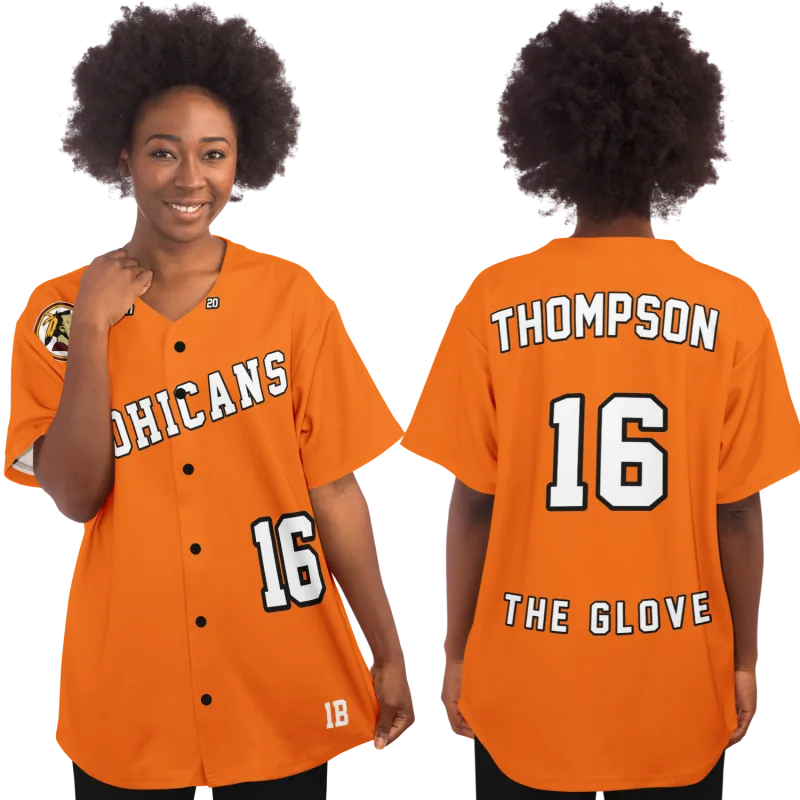
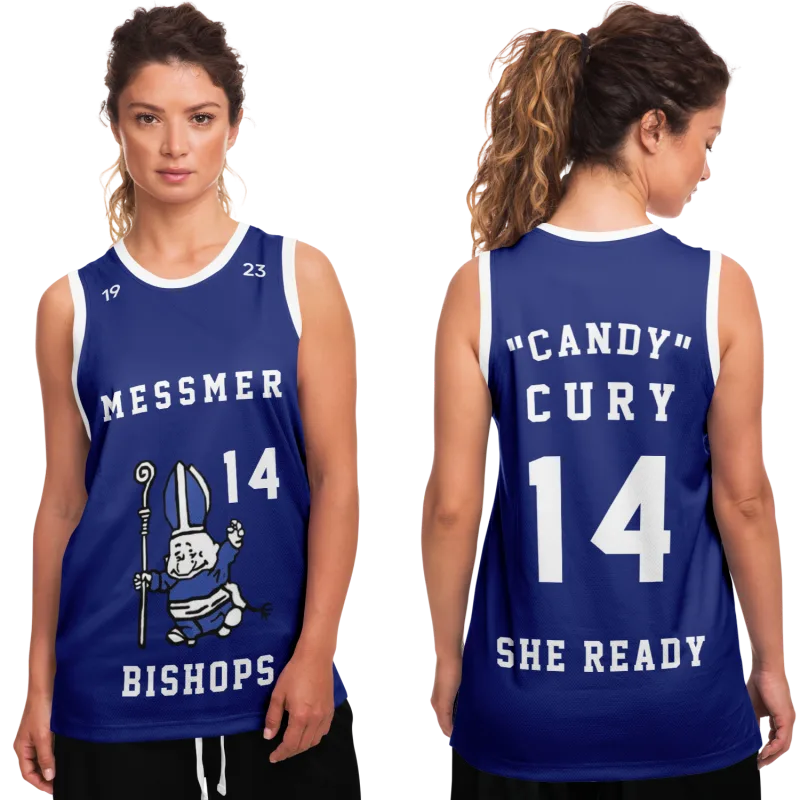
Your jersey is still out there waiting.
Design yours in minutes and see your name and number exactly the way you remember it.
Frequently Asked Questions
What makes volleyball memories so vivid for former female players compared to other sports?
Volleyball's structure creates a specific kind of intensity that burns memories in deeply. Every rally requires six players to communicate, adapt, and respond in real time — with the score visible, the crowd watching, and no place to recover quietly. The combination of public individual performance and tight team interdependence means emotional stakes are always high. Former players often describe remembering not just matches but specific moments within warmups, timeouts, and post-game conversations with a clarity that surprises them years later.
How does playing volleyball as a young woman shape identity long-term?
The roles volleyball assigns — setter, libero, outside hitter, captain — each demand specific cognitive and emotional skills that transfer directly into adult life. The setter develops rapid-decision leadership. The libero develops the willingness to absorb pressure publicly without deflecting it. The captain develops the capacity to hold a group's emotional state steady. These are not metaphorical benefits — they are documented psychological developments that competitive sport accelerates in adolescent and young adult players. Research from the Women's Sports Foundation has consistently linked sustained athletic participation in girls to higher rates of leadership, resilience, and self-efficacy in adulthood.
Why do former volleyball players often feel like the sport is still part of who they are?
Because it is, in a literal physiological sense. Years of repeated movement patterns create procedural memory that persists long after active play ends. Muscle memory for platform passing, setting mechanics, and approach footwork is stored in motor cortex structures differently than declarative memory — it doesn't fade the same way. Beyond the physical, the identity formed in competitive environments is reinforced through thousands of high-stakes experiences during formative years. The player who competed under pressure, led her team, and absorbed public failure — and kept going — knows something about herself that doesn't become untrue just because the season ended.
Is it normal to feel a sense of loss when thinking about playing days?
Completely. The transition away from competitive sport is one of the most under-discussed identity shifts that athletes experience. The court provided a specific combination of purpose, belonging, challenge, and measurable feedback that is genuinely difficult to replicate in adult life. Feeling the weight of what's no longer present isn't weakness or sentimentality — it's an honest response to having loved something real and specific. Most former players describe finding that the loss softens over time into something more like pride. The mourning and the gratitude coexist.
What's the best way to honor the player you were?
The most direct answer is also the simplest: don't let her disappear. Keep something tangible from that part of your life — a photo, a jersey, a connection with old teammates. The player who wore your name and number on her back showed up at five in the morning, ran the drills nobody liked, and competed with everything she had. That person deserves to be remembered specifically, not just in the abstract. The details matter: the number, the name, the colors. They are not trivial. They are the specific record of a specific chapter of your life — and they are worth keeping visible.
See also: the grief that quietly follows the end of your athletic career | how athletic identity shapes who you become after the final whistle | why high school sports memories stay with us so deeply into adulthood | the science behind why those senior season moments feel frozen in time