

There's a specific morning in early September that every high school athlete remembers.
The air is different. Cooler at the edges. The grass holds dew longer. And somewhere between your alarm and your first breath of outside air, something in your chest recognizes the season before your brain does.
Fall high school sports don't announce themselves — they arrive. And for anyone who ever ran a cross country course, contested a volleyball set, or played ninety minutes on a muddy soccer pitch, the arrival of fall doesn't feel like a calendar event. It feels like a call home.
This article is for the athletes who answered that call — and for everyone still running toward it.
The Sports That Don't Get Enough Credit
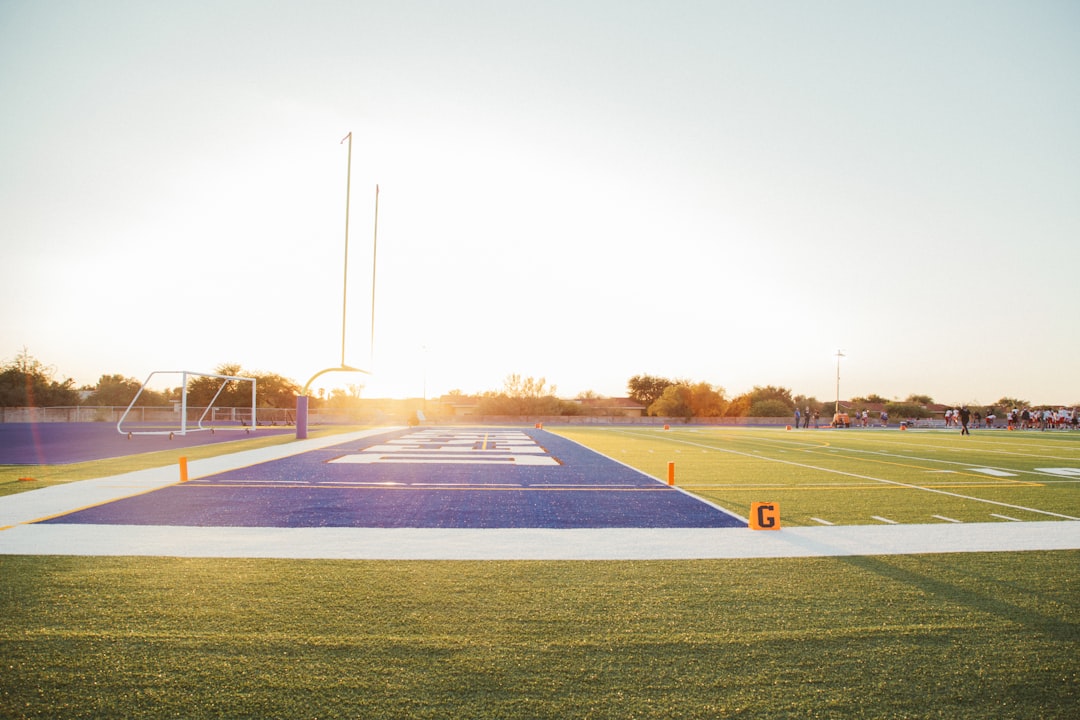
Football owns the fall narrative in a way that obscures everything happening on every other surface in American high school athletics. The Friday night lights, the marching bands, the packed bleachers — all of it collapses into a single image of a single sport.
But fall high school sports are wider and stranger and more varied than that.
They happen on courses marked by flour and surveyor's flags, winding through parks and golf courses at 6 AM. They happen on volleyball courts inside gyms that smell like rubber soles and cafeteria air, with six players moving in patterns so coordinated they've had the same rotation in their bones since August. They happen on grass rectangles where soccer players track back and forth for ninety minutes, communicating in a language of glances and gestures built over years of shared practice.
These sports shaped just as many athletes. Just as many early mornings. Just as many bus rides and team meals and junior varsity rosters and varsity letters.
The fall belongs to all of them.
Cross Country: The Sport That Runs Alone Together
Cross country is the quietest of the fall sports — and the one that leaves the longest mark.

There are no timeouts. No halftimes. No play calls. From the starting gun to the finish chute, a cross country runner is alone with the course and their own breathing and the specific cruelty of knowing exactly how far they still have to go.
What makes cross country different from every other high school sport is that the team score depends entirely on individual effort, combined. The top five finishers score for their school. Every second matters. Every placement matters. A runner who finishes sixth when they needed to finish fifth — that's a team result, not just a personal one.
In our experience covering high school athletics, cross country athletes carry a specific kind of quiet confidence that's hard to manufacture. It comes from having done the thing alone, in the cold, more times than they can count, without anyone watching.
The 5K distance — just over three miles — seems manageable until you're in it. Course terrain shifts from flat to uphill to technical trail within a single race. Elite high school runners finish in under 15 minutes. Most varsity runners compete between 16 and 20 minutes. That window of time, on that kind of course, is among the most physically demanding efforts in prep athletics.
What Cross Country Athletes Remember
It's almost never the races they remember first. It's practice. The 6 AM long runs in August when the team was just a group of tired people moving through fog together. The routes that had names. The recovery runs where everyone talked and nobody cared about pace.
Cross country teams develop a specific culture of shared suffering that bonds athletes in ways that are hard to explain to people who weren't there. You don't have to win to belong to it.
Soccer: Ninety Minutes That Never Feel Like Ninety Minutes
Fall soccer season in high school is one of the most technically demanding athletic environments a young player will ever encounter — and one of the most emotionally complex. And yes, for anyone wondering: soccer is a fall sport at the high school level, with boys' and girls' teams both competing on fall schedules in most states.
A varsity soccer match is ninety minutes of continuous movement, tactical adjustment, and unscripted decision-making. There are no timeouts (except for injury). The clock doesn't stop. Every substitution is a strategic calculation. The game is played in the space between players as much as it is played with the ball.
What distinguishes high school soccer from youth club soccer is the weight of the moment. These aren't travel tournaments with four games in a weekend — not even the Labor Day soccer tournaments that open the calendar, the high school showcases where college scouts line the sideline. A high school soccer season typically runs twelve to eighteen regular season matches, with one loss potentially ending playoff hopes. The stakes for each individual game are higher. The context is richer. The relationships — with teammates, with opponents from rival schools — carry four years of history.
The position groups are their own subcultures within the team. Defenders who understand each other's angles without communicating them. Midfielders who regulate the tempo of the game the way conductors shape a performance. Forwards who live in a specific competitive hunger that coaches can encourage but never fully install.
Priya M., 17, plays center midfielder for her school's varsity soccer team and runs track in the spring. She described fall preseason the same way almost every soccer player does: "The first two weeks are just running. Then one day someone brings a ball out and everything changes." That shift — from conditioning to ball work — is the specific moment when a soccer team starts becoming itself.
The Set Piece Culture
One underappreciated dimension of high school soccer is the corner kick and free kick culture. Because coaching access during a game is limited, teams develop set piece routines in practice that become a form of team identity. The specific choreography of a corner kick — who runs near post, who checks back, who arrives late to the far post — is a piece of team knowledge that lives in muscle memory.
When it works in a real match, in the right moment, it feels like something the team built together.
Volleyball: The Sport That Rewards Collective Precision
Of all the fall sports, volleyball is the one that most completely punishes individual selfishness.
The math is built into the rules: a team gets three contacts per possession. The first contact receives the serve or keeps the ball alive. The second sets. The third attacks. Every touch has a purpose. Improvising — going for a kill shot on a first contact — collapses the system. The discipline of the position sequence is the discipline of the team.
High school volleyball operates at a pace that catches casual observers off guard. A libero reading a serve and moving before the ball crosses the net. A setter who receives an imperfect pass and still delivers a precise set to the outside with enough arc and location to give the hitter an angle. An outside hitter who adjusts her approach mid-run when the set drifts a foot outside.
The individual skills — passing, setting, hitting, blocking, serving — are each technically demanding enough to require years of dedicated work. The team skill — running a system where all six players fulfill their role within a two-to-three second possession window — is something else entirely.
Why Volleyball Teams Are Their Own Kind of Close
The rotational structure of volleyball means that over the course of a match, every player is adjacent to every other player. You pass next to the person you block next to. You serve from the same spot where your teammate just set. The court is small enough —18 meters by 9 meters — that every player is always aware of every other player.
That proximity builds a specific kind of team cohesion. Volleyball players learn each other's tendencies, reads, and tendencies at a granular level. They know which teammate panics on a short serve. They know who thrives in the fifth set. They know the pre-match rituals of every person in the rotation.
That closeness starts before the first serve. For a lot of players, volleyball tryouts were cuts day — the day a friendship was tested against a posted roster — and the team that walked out of the gym was already bonded.
It's a sport that runs on trust — between hitter and setter, between libero and passers, between the bench and the court — and trust is built in practice one repetition at a time.
The Shared Grammar of Fall Athletics
What cross country, soccer, and volleyball have in common — aside from their seasonal calendar — is a specific kind of athletic education that doesn't show up in any box score.
Fall high school sports teach young athletes how to perform under conditions they don't control. Weather. Officials. Opponents who don't behave the way they practiced for. Noise from a home crowd when you're the visiting team. Silence from a gym that expected a different outcome.
The athletes who go through fall sports seasons remember these conditions precisely because the conditions were not ideal. The cross country course that was muddy after three days of rain. The volleyball match played on a court with dead spots that both teams learned mid-game. The soccer field where the sun sat directly in the goalkeeper's eyes for the first twenty minutes of the second half.
Performing anyway — adjusting, adapting, competing — is the education that fall athletics provides and that no classroom fully recreates.
According to the National Federation of State High School Associations, more than 7.8 million students participate in high school sports annually. Fall sports account for a substantial portion of that participation — and the skills those athletes build extend well beyond the seasons they play.
When the Season Is Over and the Number Still Fits
There's a specific kind of absence that arrives in late October or early November, when the season ends.
For cross country runners, it's the last meet. For soccer players, it's the final whistle of a playoff game. For volleyball players, it's the last rotation of the last set of the season, and then the gym is quiet.
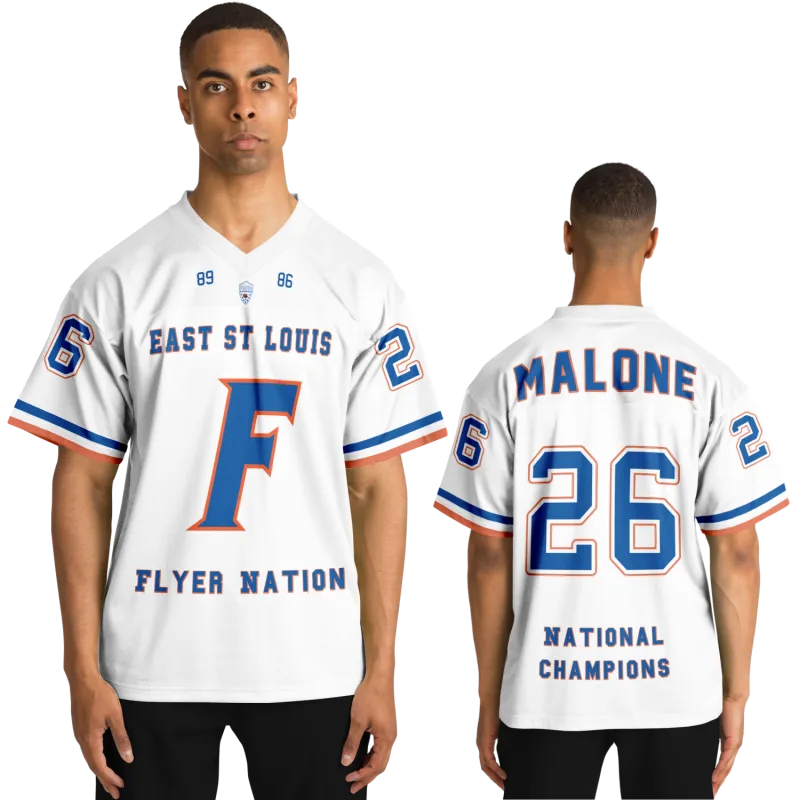
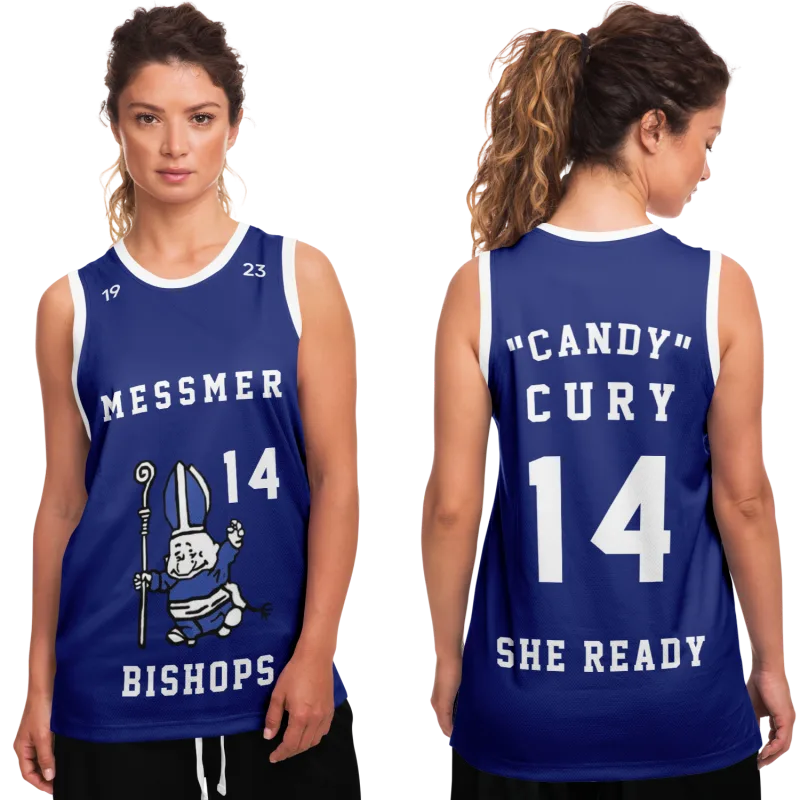
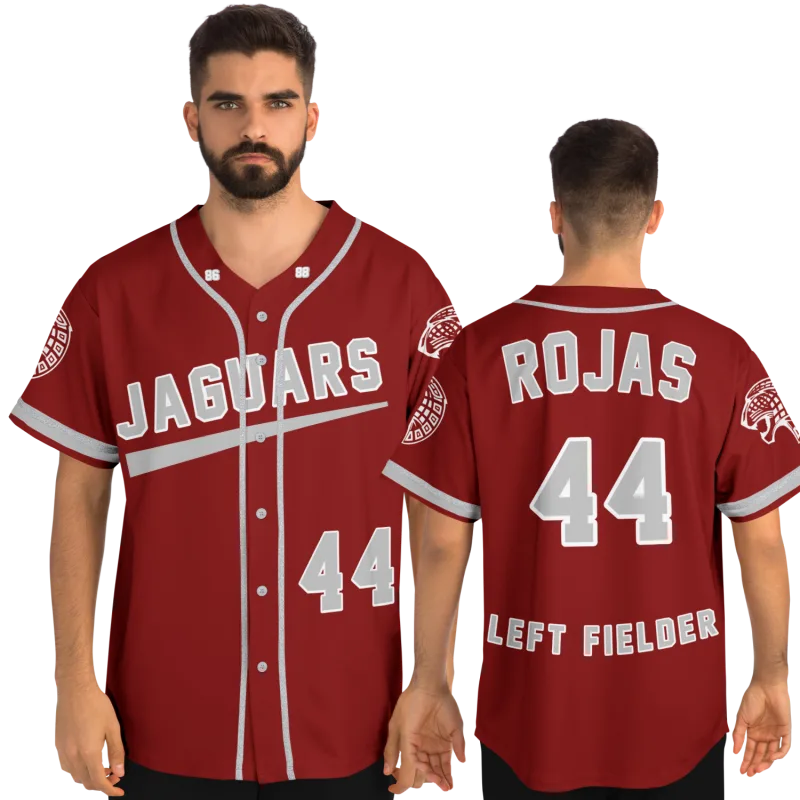
The uniform goes away. The number gets hung up or folded into a drawer. The schedule that organized October disappears.
What doesn't disappear is the identity. The athlete who wore number 7 on the soccer pitch for four years doesn't stop being that person when the last game ends. The cross country runner who wore 145 through three varsity seasons doesn't stop belonging to that team when the roster turns over.
The jersey is the part of the season that was yours specifically. Not the team's. Yours.
That's why former athletes come back to the number. Not because they're living in the past — but because the number is a specific truth about who they were during a specific season of their life. And that truth doesn't expire with the schedule.
Your Jersey Is Still Out There Waiting
Design yours in minutes and see your name and number exactly the way you remember it — the sport, the colors, the font, the feel of having it back.
Frequently Asked Questions
What fall high school sports are offered beyond football?
Fall high school sports programs typically include cross country (boys and girls), soccer (boys and girls), volleyball (primarily girls at the varsity level, though boys programs are growing), field hockey, golf, and swimming and diving, depending on the state and school. The specific roster varies by state athletic association and school size, but cross country, soccer, and volleyball are among the most widely offered fall sports nationally. So yes — soccer is a fall sport in most states, and girls soccer is a fall sport as well, with both running their primary season in the fall.
When does fall high school sports season typically start and end?
Fall sports seasons generally begin with preseason practices in early-to-mid August, with regular season competition starting in late August or early September. Championship tournaments and postseason play typically conclude in late October through mid-November, depending on the sport and state. Cross country championships often conclude first; volleyball and soccer may extend into November in many states.
How do fall high school sports differ from club or travel sports?
High school sports operate under state athletic association rules that govern eligibility, transfer restrictions, and competition schedules. Unlike club or travel programs — which run year-round and prioritize player development and recruitment exposure — high school sports are tied to the school calendar and carry an explicit community and school identity dimension. The relationships built in a high school program, with teammates who share the same hallways and history, carry a different weight than club team dynamics.
Can athletes play multiple fall sports simultaneously?
Generally, no. Most state athletic associations prohibit athletes from competing in more than one school sport during the same season. Some schools allow athletes to practice with a second program after their primary commitment, but this varies significantly by school and athletic department policy. Athletes interested in multiple sports typically stagger them across fall, winter, and spring seasons rather than competing in two sports simultaneously.
What makes fall sports jerseys and uniforms different from other seasons?
Fall sports uniforms reflect the specific needs of each sport. Cross country uniforms are minimal — singlets and shorts designed for uninhibited movement and ventilation. Soccer kits balance breathability with enough structure to accommodate numbers and sponsor marks. Volleyball uniforms are tight-fitting and allow full range of motion for diving, jumping, and lateral movement. Each uniform carries a number that becomes, over the course of a career, as identified with the athlete as their name.
See also: why high school sports still matter long after the final whistle | what high school sports taught you that nothing else could | the grief that comes when your last season ends | why your senior season memories feel sharper than anything else