

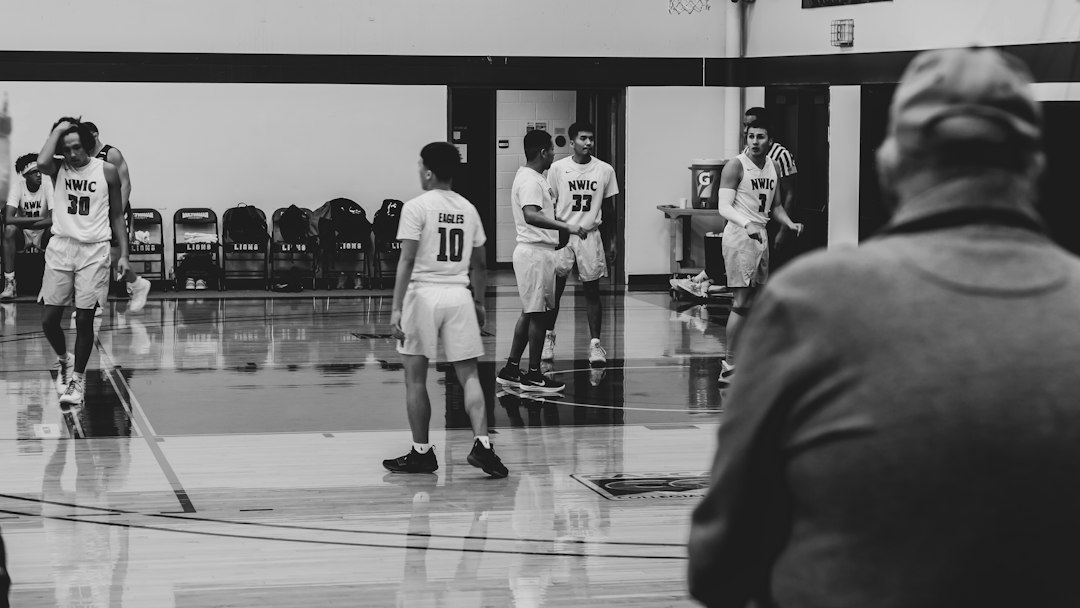




Pull up any custom jersey site right now and you'll see the same word on every product page: sublimated. It's presented like a quality stamp, a signal that the listing is worth clicking. What those pages don't tell you — what they're genuinely not built to tell you, because they were designed for athletic directors ordering 14 units at once, not for former players chasing a specific memory — is what each printing method actually feels like against your skin when you're tucking it in before a match.
This article is written for players who still remember that jersey. Sublimated volleyball jerseys lead the custom market right now, and for legitimate reasons. But sublimation is not the only answer, and it is not the right answer for every recreation goal. Stitched lettering, screen-printed graphics, and dye-sublimated finishes each produce a physically distinct result — different surface texture, different color behavior under gymnasium fluorescents, different weight at the number and name locations. Understanding what each method actually does at the fiber level is the only way to make a confident order.
Here is that breakdown.
The Three Volleyball Jersey Printing Methods, Explained Without the Marketing Language
Most jersey ordering guides frame sublimation, stitching, and screen printing as a price-tier conversation. Entry-level screen printing, mid-range sublimation, premium stitching. That framing is useful for purchasing decisions made purely on budget. It tells you nothing about which method matches what you wore.
The question that matters for a former player is more specific: where does the decoration live relative to the fabric, and what does that physical relationship mean for how the jersey looks, moves, and registers against your body during play?
Sublimation: The Dye That Becomes the Fabric
Dye-sublimation is a heat-transfer process. A design is printed onto transfer paper using sublimation inks, then pressed against polyester fabric at temperatures around 400°F. At that heat threshold, the ink converts from solid to gas and bonds directly into the polyester fiber structure. No layer is deposited on top of the material. The color becomes part of the thread itself.


The practical result: zero surface texture from the graphic. Run your thumb across a sublimated number and you feel the fabric's weave — not the decoration's edges. This is the detail that catches the most former players off guard, because it's the opposite of what stitched lettering does.
What sublimation does well: - Unlimited color gradients and photo-quality designs at a flat cost regardless of color count - Permanent color that cannot peel, crack, or separate from the fiber - Zero added weight — the decoration contributes nothing to the garment's mass
What sublimation cannot do: - Produce the three-dimensional surface of stitched tackle twill - Deposit the slight raised texture that screen printing leaves on the surface - Bond accurately to cotton — sublimation requires polyester; cotton fibers do not accept the gas-phase dye transfer
One limitation that jersey sites rarely surface: sublimation on dark base fabrics loses color accuracy without a white underbase panel. Printing a yellow number directly onto dark navy fabric through sublimation produces a muted, inaccurate result. True sublimation works from a light or white base. Dark-jersey designs often require a panel construction that changes the garment's structure in ways worth knowing before ordering.
Stitched Lettering: What Tackle Twill Actually Means
When former players describe remembering the weight of their number, they are almost always describing tackle twill. Tackle twill is a tightly woven polyester twill fabric cut into letter and number shapes, then sewn onto the jersey surface using a multi-needle machine. The letters sit on top of the base fabric. You can feel the edge where the twill ends and the mesh begins.
That surface behavior is what makes stitched jerseys tactilely distinct. A tackle twill number has mass and edge definition. Fold the jersey and the lettered section resists differently than the surrounding mesh. During floor play — a dig, a dive, a pancake — you register the slight stiffness of the twill panels against your torso in a way that sublimation never produces.
What stitched lettering adds to the jersey: - A three-dimensional surface with visible and tactile depth - The specific hand-feel most former competitive players associate with team-issued quality - Consistent color accuracy regardless of the base fabric's color
The variables worth knowing: stitching density and twill panel weight differ meaningfully between suppliers. A loosely stitched number from a low-cost operation feels and wears differently than a densely sewn panel from a performance-grade manufacturer. "Stitched" is not a uniform specification. Ask for the stitch count per inch and the twill panel GSM before committing to an order.
Screen Printing: The Middle Ground With a Known Shelf Life
Screen printing pushes ink through a mesh stencil directly onto the fabric surface. The ink adheres on top of the fibers rather than bonding into them the way sublimation does or adding an independent fabric layer the way stitching does. A plastisol or water-based ink is applied and then heat-cured.
The surface feel is intermediate: a slight raised edge around the graphic is detectable, but there is no separate material layer. The ink film is thin — typically one to three thousandths of an inch — but it registers under your fingertips in a way that sublimation does not.
The honest performance limitation of screen printing on athletic jerseys is longevity under mechanical stress. Volleyball involves consistent lateral stretch across the torso during setting, swinging, and jumping. Plastisol ink is flexible but not infinitely so. After 40 to 60 wash cycles under regular athletic use conditions, screen-printed numbers on stretch polyester mesh develop micro-cracks at flex points — typically at the corners of block characters. This does not affect function. For a recreation jersey worn occasionally and laundered carefully, it is unlikely to be a practical issue. For any jersey expected to see regular competitive use, sublimation or stitching is the more durable choice.
Screen printing also carries a per-color cost structure: each color in the design requires a separate screen. Gradients are not achievable through standard screen printing. For a two-color solid design on a solid base, screen printing is cost-efficient and visually accurate. For anything more complex, the economics shift toward sublimation.
The Fabric Variable That Changes Everything
Printing method accounts for half of what a finished jersey looks and feels like. The base fabric accounts for the other half, and this is where the custom jersey market's product descriptions consistently fall short.
Competitive volleyball jerseys from the late 1990s through the mid-2010s were predominantly built on heavyweight open-hole mesh — the construction with visible round or diamond apertures and a crisp, slightly stiff hand feel. That mesh has been largely displaced in the current custom market by performance knits: tighter weave structures, moisture-wicking finishes, and four-way stretch constructions designed for maximum athletic performance.
A sublimated design on a modern performance knit behaves differently under gymnasium lighting than an identical design on vintage open-hole mesh. The lighter, more reflective surface of performance knit makes sublimated colors appear slightly more saturated in hand but can cause them to wash out under the overhead fluorescent banks that light most high school and club gymnasiums. Open-hole mesh absorbs light differently — the apertures create microshading across the fabric surface — which gave older sublimated jerseys a slightly deeper, flatter color quality in-person that differed from how they photographed.
According to USA Volleyball's equipment and uniform guidelines, competition jerseys must meet specific construction and numbering standards — which means the fabrics used in sanctioned play have historically been constrained to constructions that balance performance with readability. Understanding that context helps explain why team-issued jerseys from that era had the specific weight and structure they did.
When you're evaluating volleyball jersey fabric for a recreation order, ask specifically:
- Is the base fabric open-hole mesh or performance knit?
- What is the fabric weight in grams per square meter?
- Is the construction 100% polyester, or a polyester blend?
Fabric weight in GSM is the number that most directly matches the physical experience of a jersey. A 130–150 GSM performance knit is standard for current competitive volleyball — light, stretch-capable, and technically superior for active play. A 170–200 GSM open-hole mesh reads and feels heavier and is closer to what many players wore in competitive high school and club programs before 2015. If you're working from a specific memory of how a jersey felt, this number matters as much as the printing method.
Brands like Under Armour volleyball jerseys in their HeatGear performance line use an extremely light, tight-woven construction that is technically advanced but physically different from traditional volleyball mesh. Champro volleyball jerseys in their custom sublimation tier use a standard-weight open-hole mesh designed for team ordering programs — a construction more familiar to players who came up through school and club programs. These are not competing products at the same quality level. They answer different questions.
How a Former Player Should Actually Use This Information
Maria C., 34, played libero for her club team through college. She'd been trying to put together a tribute to her club jersey — the one with the gradient side panel and the tackle twill number she'd feel whenever she adjusted her jersey between sets. She ordered a sublimated jersey first because the site preview matched the colors exactly. When it arrived, the colors were right. The fit was right. But running her thumb across the number felt like touching the base fabric. The three-dimensional quality she remembered wasn't there.
That's not a bad jersey. It's a method mismatch. The right answer for Maria's specific goal was a hybrid construction: sublimation for the gradient side panel, which stitching cannot reproduce because twill is cut to solid shapes, combined with tackle twill lettering for the number. Many custom jersey suppliers offer this construction. Almost none describe it clearly in their product options. Asking for it directly is the move.
Which Printing Method Matches Which Memory
If your jersey had gradient panels or multi-color photo-quality graphics
Sublimation is the only viable method. Color gradients — the kind where navy fades into white across a shoulder — cannot be produced by stitching or standard screen printing. If your jersey had a gradient anywhere on it, your tribute design needs sublimation for those panels. There is no workaround.
If you remember the weight and edge of your number
Tackle twill stitching is what you're remembering. No dye process produces that surface. For a recreation jersey where the physical feel of the lettering matters, specify tackle twill and confirm the supplier can tell you the twill panel weight. Suppliers who can answer that question specifically are worth working with.
If your jersey had solid graphics on a solid base with no gradients
Screen printing is competitive here. A solid-color block number on a solid base fabric reproduces cleanly, costs less per unit than tackle twill for simple character sets, and delivers a surface feel that sits between sublimation's flatness and stitching's bulk. For a jersey worn and washed occasionally, the longevity limitation is a non-issue.
If you're ordering for a reunion or group event where visual consistency matters most
Sublimated volleyball jerseys are the efficient group order choice. Color accuracy is consistent across a full size run, complex designs carry no per-color penalty, and the finished jerseys read identically at distance regardless of size. For group orders built around a shared team identity and visual accuracy, sublimation is the practical answer.
What to Ask Before You Place the Order
Custom jersey sites present printing method as a checkbox. The questions that actually protect your order are:
- What is the base fabric construction and GSM? "Performance mesh" is not an answer. Push for the number.
- For sublimation on dark jerseys: what is the underbase panel construction? If the supplier can't explain how they handle dark-on-dark color accuracy, they haven't thought about it.
- For stitching: what is the stitch count per inch and the twill panel thickness? These numbers predict durability and surface feel. A supplier who can answer them is operating at a different level than one who cannot.
- Do you offer hybrid construction — sublimation for panels with tackle twill lettering for the number? Ask directly. It's not always listed.
- Can I receive a physical fabric sample before ordering? For any order where matching a specific feel matters, this is a reasonable request. Suppliers confident in their product will say yes.
Custom volleyball jersey quality is not determined by which method appears in the product title. It's determined by whether the supplier can answer these questions specifically — and whether the answers match what you're trying to build.
Your jersey is still out there waiting.
Design yours in minutes and see your name and number exactly the way you remember it.
Frequently Asked Questions
Can sublimation and tackle twill stitching be combined on the same jersey?
Yes — this is called hybrid construction, and it is the right approach for jerseys that combined gradient or multi-color graphic panels with raised lettering. The sublimation is applied to the base fabric first during production; the twill lettering is sewn on top as a second operation. Not every custom supplier offers this, so confirm availability before committing. When a supplier does offer it, the result is the closest approach to a jersey that mixed dye-based graphics with tactile lettering.
Will sublimated colors look different on my screen than they do on the finished jersey?
Almost always yes, in the direction of lower apparent brightness in person. Monitor displays use backlit color with significantly higher contrast than fabric under gymnasium fluorescents or standard indoor ambient light. The hue will be accurate, but the visual intensity of the jersey in person will be lower than your screen preview suggests. Requesting a physical color swatch from the supplier before committing to a full order is the most reliable way to calibrate expectations.
How many wash cycles before screen printing shows visible wear on a volleyball jersey?
Under regular athletic use — worn and laundered after each session — plastisol screen printing on polyester stretch mesh typically begins showing micro-cracks at flex points between 40 and 60 wash cycles. Water-based inks on tighter-woven fabrics hold somewhat longer. For a tribute jersey worn occasionally and laundered carefully on cold with an inside-out orientation and air drying, visible wear is unlikely to be a practical concern within any reasonable timeframe.
Does sublimation affect how the fabric breathes or stretches?
No. Because sublimation bonds into the fiber rather than coating the surface, it adds no film that would restrict the fabric's porosity or stretch behavior. The moisture management and mechanical stretch properties of a sublimated jersey are essentially identical to the base fabric's undecorated properties. This is one of sublimation's genuine performance advantages over screen printing, where a thick plastisol film can reduce breathability at the decoration location — particularly noticeable on tight-woven performance knit bases.
What is the practical difference between Champro and Under Armour volleyball jersey constructions for a custom order?
They are built for different purposes and answer different questions. Champro's custom sublimation line uses a standard-weight open-hole mesh designed for team ordering programs — the construction is predictable and familiar to anyone who played in a team-issued jersey from a high school or club program. Under Armour's HeatGear performance knit is lighter, more compressive, and engineered for active athletic output, which means it reads and moves differently than traditional volleyball mesh. For a tribute order where matching a specific tactile memory matters, Champro's construction is typically the closer reference point. For a jersey intended for ongoing training where performance properties take priority, Under Armour's construction is technically superior. They are solving different problems.
See also: personalized sports gifts that actually make a former athlete feel seen | getting your jersey size right before you order | custom softball jerseys follow many of the same printing and fabric rules | why high school sports memories still pull so hard on former athletes