

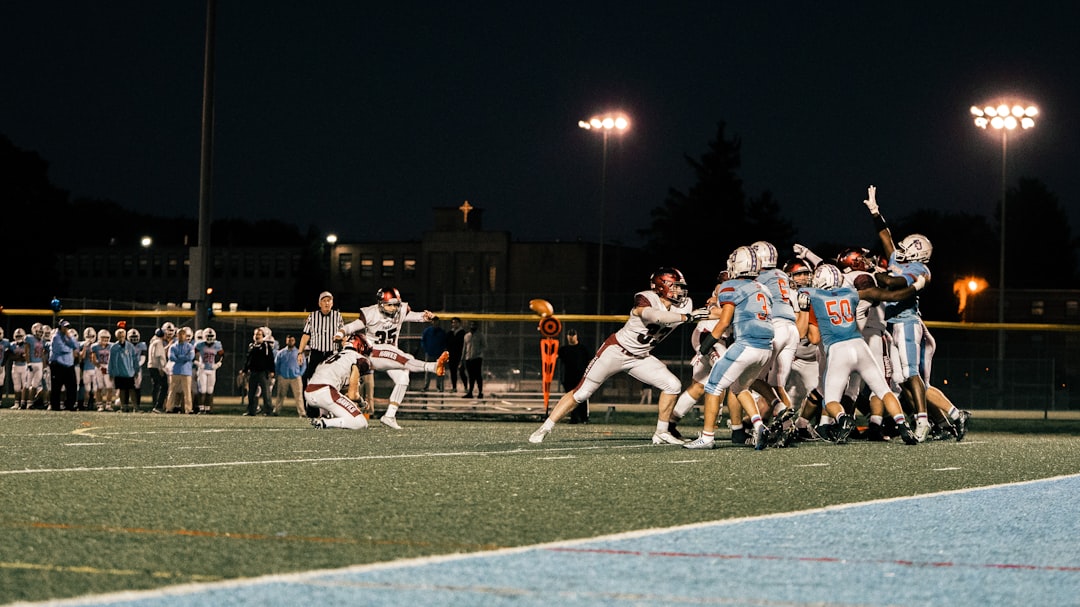



There's a specific moment you still carry with you.
Maybe it's the gym bag bumping against your hip on a Friday afternoon, the exact smell of the locker room before a big game, the way crowd noise wrapped around you the second you cleared the tunnel. Maybe it's one play — the one where everything clicked, or the one where it all came apart — and you can still feel the physical memory of it when it surfaces.
You haven't worn that jersey in two decades. You still know the number by heart.
Why high school sports memories are so powerful isn't a question most of us think to ask out loud. We just know they are. They show up without warning — triggered by a song on the radio, a scoreboard glimpsed through a car window, the smell of fresh-cut grass on a late August afternoon. They arrive with a sharpness that makes more recent memories look blurry by comparison. That sharpness deserves a real explanation.
This article is that explanation. Not a sentimental argument for why sports matter — you already know they do. A genuine look at what your brain was doing during those years, why it kept such careful records, and why the significance of high school athletics reaches further into who you are than most people ever stop to consider.
Your Brain Was Running a Different Program Back Then
The neuroscience begins with a concept called the reminiscence bump — a well-documented pattern in memory research showing that adults recall events from roughly ages 10 to 25 at a disproportionately high rate. Ask someone in their fifties to list the most memorable moments of their life and the majority will land inside that window. The autobiographical memory system treats those years as categorically more important than what came before or after.
The reason is structural. Adolescence is a period of intense synaptic pruning and accelerated neural pathway formation. The brain during those years isn't just registering experiences — it is actively building the architecture of identity. Events don't get filed under "things that happened." They get woven into the emerging self. They become part of the working answer to the question every teenager is really asking: Who am I, exactly?

High school sports drop directly into the center of that process.
Every game, every practice, every long bus ride home after a road loss — your brain was running each of those experiences through a system in full developmental overdrive. The emotional tagging happening in the amygdala, the narrative threading happening in the prefrontal cortex, the identity encoding distributed across the entire autobiographical memory network — all of it was operating at a level of intensity your adult brain rarely reaches.
What the research makes clear is that vivid sports memory psychology isn't a quirk of personality or a sign of someone who peaked early. The vividness is structurally guaranteed by the timing. Your brain during high school athletics was purpose-built for exactly this kind of deep, durable encoding. You didn't have to work at remembering. The system handled it automatically.
The Role of Emotion in Memory Encoding
The specific mechanism works like this: emotional arousal triggers norepinephrine release in the amygdala, which strengthens memory consolidation in the hippocampus. Translated — the more emotionally charged a moment, the more durably your brain stores it.
High school sports generate emotionally charged moments at a rate almost nothing else in adolescent life can match:
- The anticipatory pressure building in the locker room before a rivalry game
- The specific physical exhaustion at the end of a brutal practice in August heat
- The communal surge of a comeback that nobody outside the gym will ever fully understand
- The particular weight of a season-ending loss in the final seconds
Every one of those peaks sent the same signal to your brain: this matters — store it carefully. And it did. This is the direct answer to why you can describe a game from 1997 in precise detail while struggling to remember what you did last Thursday. Last Thursday carried no emotional charge worth encoding deeply. That game carried more charge in a single quarter than most adult experiences produce in a month.
Identity Was Being Built in Real Time
Here is where vivid sports memory psychology moves past neuroscience into something more personal.
High school sports weren't an activity alongside your life. They were one of the primary structures through which you understood yourself. Your position on the team, your role in the locker room, your relationship with a coach who either believed in you loudly or pushed you past what felt fair — all of that was active identity material. You were using it to answer adolescence's central question: What kind of person am I?
Research on athletic identity consistently shows that for high school athletes, the overlap between self-concept and sport role is typically at its lifetime peak during these years. You weren't someone who happened to play volleyball. Volleyball was part of the grammar of how you thought about yourself. It organized your time, your friendships, your sense of what you were capable of.
This is why returning to those memories as an adult feels like returning to something essential rather than something distant. You're not retrieving a hobby. You're retrieving a version of yourself that was still in the process of becoming — and the specific moments that did the most to shape the outcome.
The Team as a Memory Amplifier
There is a social layer that makes high school sports memories particularly durable, and it's worth naming directly: you didn't have these experiences alone.
Shared experiences with high emotional stakes encode with exceptional fidelity. The social context creates multiple simultaneous encoding channels — your own emotional experience, your read of your teammates' reactions, the collective story your team was living through together. The memory gets reinforced not just by what you felt but by what everyone around you felt at the exact same moment.
This is why you and a former teammate can reconstruct the same play in nearly identical detail thirty years later. You weren't encoding it separately. You were encoding it together, from adjacent emotional positions, with identical stakes.
The significance of high school athletics is partly the significance of being young and in it together in a context that genuinely mattered.
The Moment It Stopped — And Why That Freeze-Frames Everything
Marcus T., 41, a former high school cross-country runner from central Ohio, puts it plainly: "I knew going into my last race of senior year that it was the last one. I ran it completely differently — not faster, just more present. I noticed everything. The cold in my lungs, the smell of the course, the sound of my spikes on the gravel. I've run hundreds of races since then. None of them live in me the way that one does."
What Marcus describes has a name in memory research: the ending effect. The brain encodes transitions and conclusions with elevated attention because they represent genuine boundary moments — the close of one chapter, the start of another. A final varsity game, a last race, a senior season's closing match gets processed as a significant life event by the same memory architecture that was paying such close attention all along.
This is why so many former athletes describe their last high school competition with near-cinematic precision. The brain wasn't just present for it. It was narrating a conclusion in real time.
And because the activity ended — because you graduated, because the team dispersed, because the jersey went into a drawer — the memory exists in a kind of permanent, unrevised state. No subsequent seasons blurred the details. No future games overwrote the specific textures of that final year. The story closed at its most emotionally charged point and has stayed exactly that way.
Nostalgia for sports isn't really a longing for youth. It's a longing for that closed story — for the chapter that still reads precisely the way it was written.
What Your Brain Is Actually Doing When the Memory Surfaces
Nostalgia, in its neurological reality, is not a passive state. It's an active reconstruction process. When that pull toward a high school sports memory arrives — the unexpected kind, triggered by nothing you planned — your brain is doing something purposeful.
Psychological research, particularly work developed around the study of nostalgia's psychological functions, has established that nostalgic recall serves a specific role: it reinforces self-continuity. It reminds you that the person you are today has a coherent, unbroken connection to the person you were. In emotional terms, it answers the question I am still that person.
This is what separates nostalgia for sports from nostalgia for, say, a television show you loved at the same age. The show was something you watched. The sport was something you were. When the memory returns, it isn't retrieving entertainment — it's retrieving identity.
In practical terms, this produces a specific and recognizable experience:
- The memory arrives with validating content — you did hard things, you belonged to something real, you found out you were capable
- The emotional texture is bittersweet rather than simply sad
- The net effect is typically energizing — you don't feel worse when it surfaces; you feel, for a moment, more completely like yourself
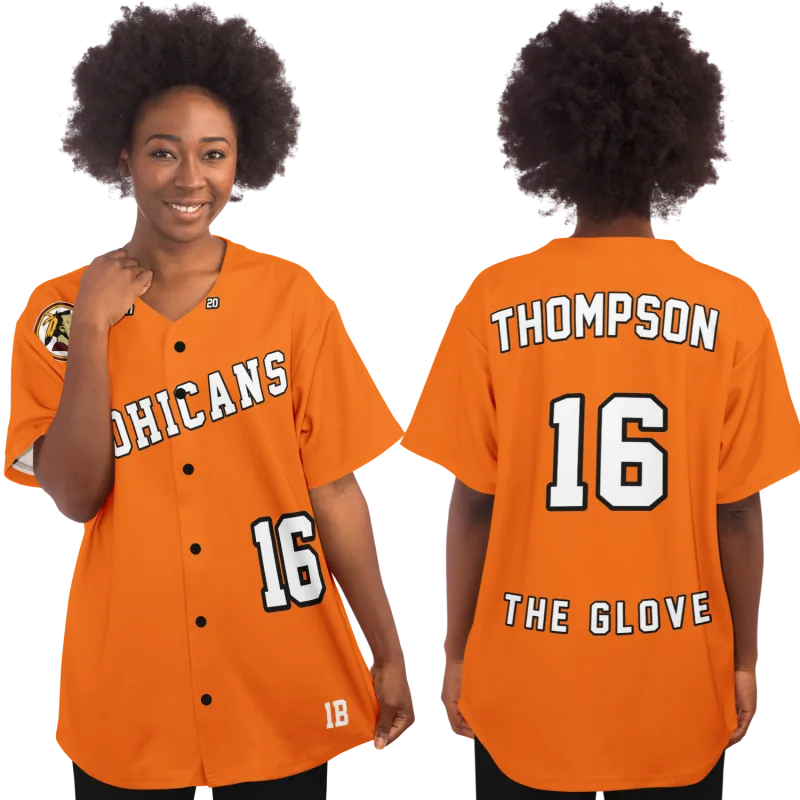
This is also why the objects connected to those memories carry weight that seems out of proportion to what they physically are. A jersey with your name and number on it isn't a piece of fabric. It's an identity artifact. It holds the closed story in tangible form.
Why Certain Moments Hit Harder Than Others
Not every high school sports memory lands with the same force. Some are cinematic. Others are soft, generalized, impressionistic. The difference follows a predictable pattern.
The memories that hit hardest share four characteristics:
- High emotional arousal at the moment it happened — the bigger the charge, the deeper the storage. Championship games, crushing losses, the specific moment a coach said the thing that permanently changed how you saw yourself.
- Social witness — experiences shared with people who mattered to you encode more durably than experiences you had alone. The locker room after the win. The quiet bus ride home after the loss.
- First-time experiences — the brain allocates extra attention to novelty. Your first varsity start, your first playoff appearance, the first moment you understood that you were genuinely good at something.
- Proximity to major life transitions — junior and senior year memories outperform earlier ones, on average, because they exist closest to the boundary of graduation and everything that changed after it.
Understanding the pattern doesn't flatten the memories. If anything, it makes them more remarkable. Your brain was doing extraordinary curatorial work during those years — selecting, tagging, and preserving a specific archive of formative moments with a precision that adult experience rarely produces again.
That archive is yours. It shaped who you became. And the objects tied to it — the number, the name on the back, the colors you wore — carry that weight forward in a way that nothing else quite does.
Your Jersey Is Still Out There Waiting.
Design yours in minutes and see your name and number exactly the way you remember them — a tribute to the years that built you.
Frequently Asked Questions
Why do high school sports memories feel sharper than memories from college or adult leagues?
The timing is the primary factor. High school overlaps almost exactly with the reminiscence bump — the neurologically active period of adolescent identity formation when emotional experiences are encoded with exceptional depth and durability. College and adult sports occur after this developmental window has closed, which means they're processed by a more mature but less formatively active memory system. The emotional stakes also tend to be qualitatively different: high school sports are frequently a person's first sustained experience of real competition, genuine team belonging, and athletic identity — a level of emotional novelty that later leagues rarely reproduce.
Is nostalgia for sports a healthy response, or does it signal being stuck in the past?
Contemporary psychology treats nostalgic reflection as a net-positive psychological function for most people. It improves mood, reinforces self-continuity, and strengthens the sense of social connectedness — particularly when the memories involve shared experiences with people who mattered. The distinction worth making: nostalgic reflection becomes worth examining when it's consistently used to avoid engagement with current life rather than to draw on the identity resources of the past. For the overwhelming majority of former athletes, the pull toward high school sports memories is psychologically healthy and self-reinforcing.
Why do sensory details — specific smells, sounds, the feel of a uniform — come back so clearly even decades later?
Sensory details are encoded alongside emotional memories through a process that links the amygdala, the hippocampus, and the sensory cortex simultaneously. When a memory is formed under high emotional arousal, the sensory context gets packaged into the same storage event. This is why the smell of a particular field or the sound of a gym full of people can place you directly back inside a memory from twenty-five years ago — the sensory trigger reactivates the entire original package. It is also part of why a jersey bearing your name and number in the colors you wore carries immediate emotional weight. It isn't functioning as clothing. It's functioning as a sensory key to a closed and carefully preserved story.
See also: the psychology of athletic nostalgia | why your senior season memories are so vivid | why you still dream about high school games | what high school sports taught you that nothing else could | the athletic identity you carried long after the final buzzer