


There is a smell you remember, even now.
Stale shoulder pads, fresh athletic tape, someone's pregame deodorant applied one too many times — and underneath all of it, something electric. Something that had nothing to do with the score or the opponent or the weather. It was the ritual. The specific, unspoken, absolutely non-negotiable sequence of events that had to happen exactly right before the lights came on.
If you played high school football, you know what high school football game day rituals feel like in your bones. And if you never played, you can still see it in the eyes of anyone who did the moment you bring it up. There is a recognition there — a warmth and a sudden vividness — that no amount of time seems to diminish.
This isn't about Kobe's pregame routine or the NFL player who eats the same meal at the same restaurant on the same table before every game. This is about the JV sophomore who refused to put his left cleat on before his right, every single Friday, for two full seasons. The starting center who needed to be the last man through the locker room door. The entire varsity defense that had to hear one specific song — the same forty-two seconds of it, specifically — before they'd take the field.
These are the rituals that belong to Friday night. The ones that formed in high school hallways and weight rooms and bus rides through unfamiliar towns. The ones that players still think about, still describe in precise detail, decades later.
The Locker Room Is Where It Starts
Walk into a high school locker room three hours before kickoff and you are not walking into a room. You are walking into a ceremony.
The football pre-game rituals begin here, long before the team is dressed, long before anyone has said anything about X's and O's. There is a specific quality to that space on a Friday afternoon — a silence that is not really silence, punctuated by the rhythmic tear of athletic tape being pulled from a roll, the percussion of cleats on a concrete floor, someone running through the same playlist they've run through every week since August.

The playlist itself is often the first ritual. In our experience covering Friday Night Lights culture, few things generate more passionate specificity from former players than the exact songs that had to be playing, in the exact order, at the exact volume. One team in rural Texas played the same three-song sequence from a battered CD player from 2003 through 2007 — nobody touched the player, nobody skipped a track, nobody suggested an update. The sequence was sacred. A player who accidentally bumped the skip button during warm-ups in 2006 still brings it up at reunions.
It isn't irrational. It is deeply human. The pre-game ritual is a technology for producing a specific internal state — focus, controlled aggression, belonging — using the only tools available to a sixteen-year-old who doesn't have sports psychologists or biofeedback monitors. The ritual IS the mental preparation. The specific song is not a preference; it is a trigger.
The Music Has to Be Right
Different teams build their playlist around wildly different genres, but the common thread is always intensity and identity. Some programs run gospel. Some run hard rock. Some run whatever the senior captain decided was the soundtrack to the season. What's consistent is that the music is non-negotiable.
One player from a small program in Ohio described the ritual this way: "We had to hear [a specific track] before the second warm-up period ended. If it didn't come on, something was wrong. You could feel it — guys looking at each other, the energy shifting. The coach finally just made it an official rule because the one time it didn't happen, we lost by twenty-three points. He never tested it again."
That story repeats, in different forms, from locker rooms in Florida to Montana. The music isn't background. It is load-bearing.
The Taping Sequence
The next ritual layer is physical — and it is astonishing how specific players remember it, even twenty years out.
Athletic taping is functional. Every trainer will tell you it prevents ankle rolls, supports the joint, provides compression. But for most high school players, the taping sequence becomes something else entirely: a ritual of transformation. Being taped is the moment the player stops being a kid in a hallway and becomes someone who is about to play football.
Many players developed exact requirements around the sequence:
- Which ankle first (always the same one, never reversed)
- How tight, and whether the player or the trainer controlled the final pull
- Whether shoes went on immediately after or after a specific pause
One lineman from a program in Georgia insisted on taping his own ankles, sitting in the same corner of the locker room, starting at exactly 90 minutes before kickoff, every game for three seasons. When a scheduling conflict pushed kickoff back by 45 minutes his senior year, he still started his taping at his usual time. "The clock didn't matter," he said. "My clock mattered."
The Superstitions Nobody Admits to Coaches
Sports superstitions exist at every level, but high school football game day superstitions have a particular texture — more personal, more localized, occasionally more elaborate — because they form without the oversight of sports science departments or professional consultants. They form out of experience: something happened once, and then it happened again, and now it must always happen.
Marcus T., 34, played inside linebacker for his high school team in central Illinois and describes his pregame superstition with the specific calm of someone who knows exactly how it sounds and doesn't care. "I had to eat a peanut butter sandwich — not peanut butter and jelly, just peanut butter — on white bread, cut diagonally, four hours before every game. Not three and a half hours. Four. I did that from the first game of sophomore year through my last game of senior year. I ate a lot of peanut butter sandwiches."
He pauses. "We went 24-4 those two seasons. I'm not saying it was the sandwich. I'm also not saying it wasn't."
This is the internal logic of sports superstition, and it is not unique to teenagers. The human brain is a pattern-recognition machine. It noticed that something good happened the first time a specific behavior occurred. It filed that correlation with the weight of causation. And then — this is the part that matters — the ritual stopped being about luck and started being about identity. The sandwich isn't magic. The sandwich is the declaration that this is a game day, and I have prepared correctly, and I am ready.
The Team Superstitions Are Different
Individual superstitions emerge quietly. Team superstitions emerge through collective agreement — sometimes explicit, usually not — whether it's the team chants and handshakes that bind a roster or the unspoken rules everyone just follows.
Some of the most durable team superstitions involve what players are NOT allowed to do on game day:
- No one speaks the opponent's name in the locker room (common in programs that had a painful loss to a specific rival — the name became bad luck)
- No one touches the coach's whiteboard before he has written on it
- No looking at the scoreboard until the end of the first quarter
The "no looking at the scoreboard" rule appears in multiple programs across multiple states, and it always traces back to the same origin: a game where someone looked up at the wrong moment, said something about the score, and the lead promptly evaporated. The scoreboard became dangerous. Ignoring the scoreboard became armor.
One receiver from a Texas program described a team ritual that developed mid-season: "After our third win, someone noticed that the guy who'd grabbed the door handle on the way out of the locker room every game was the same person. Nobody planned it. But the week he forgot to do it before warmups, we fumbled on our first drive. He grabbed it every game after that. Coach eventually just asked him to do it officially. He did it through the playoffs."
Running Out: The Moment That Lives Forever
If you ask any former high school football player what they remember with the most physical clarity, a significant number will describe the same moment: the run out.
The specific way a team emerged from the locker room or tunnel onto the field — the exact sequence of who went first, what was said, what the noise sounded like, what the air felt like — is often described with the kind of sensory precision that everyday memories don't carry. This is because the moment is not ordinary. It is the threshold between preparation and performance, and the brain marks it accordingly.
The game day routine for the run out was, in many programs, the most meticulously maintained tradition of all.
Some programs had a specific player — usually the captain, sometimes the senior with the most tenure — who was the last one out. That player stood alone in the locker room for thirty seconds after everyone had left. Just stood there. Then walked out. No explanation was ever given that was satisfying to anyone who asked. The explanation was that it had always been done this way.
Some programs had a specific chant, call, or noise that happened at a specific point in the tunnel — the moment before the crowd could see the team. A release. A declaration. Something that had no official name but that every player who ever made that run could reproduce from memory in an instant.
The Helmet Tap
Perhaps the most universally practiced high school football tradition — across programs, across decades, across every level of talent — is the helmet tap.
The sequence varies in its specifics: sometimes it is every player tapping the helmet of the player in front of them in line. Sometimes it is the captain moving down the line, tapping each helmet before the run out. Sometimes it is a specific player who taps a specific surface — a doorframe, a wall, a sign — that has become charged with meaning through repetition and outcome.
The helmet tap is not taught. It arrives. And once it arrives, it stays.
In our experience, the helmet tap is the ritual that former players describe most consistently when asked to name the one moment from their pregame routine that they would most want to relive. Not the game itself, not the wins — the tap. The specific pressure of a hand on a helmet — the weight of the helmet — in a specific order, in a specific sequence, in a room that smelled like tape and preparation and Friday night.
What These Rituals Actually Do
Sports psychologists have studied pregame routine and superstition across decades, and the research from the Journal of Sport and Exercise Psychology consistently finds that ritualized behavior before performance reduces anxiety, increases focus, and improves consistency of output — regardless of whether the ritual has any mechanical connection to the activity itself. The ritual is not magic. The ritual is cognitive architecture.
But for the players who lived these moments, that explanation is simultaneously true and completely beside the point.
The point is that on a Friday night in October, in a locker room somewhere in America, a sixteen-year-old pulled tape from a roll in the same corner where he always pulled it, listened to the same song he always listened to, and felt — for a few minutes — like he was exactly where he was supposed to be, doing exactly what he was supposed to be doing. Fully prepared. Fully present. Himself, but more so.
That feeling does not belong to the NFL. It does not belong to Division I programs with sports science budgets and recovery protocols and nutritionists.
It belongs to Friday nights. It belongs to the high school traditions that no one planned and no one officially sanctioned and no one could have stopped if they tried.
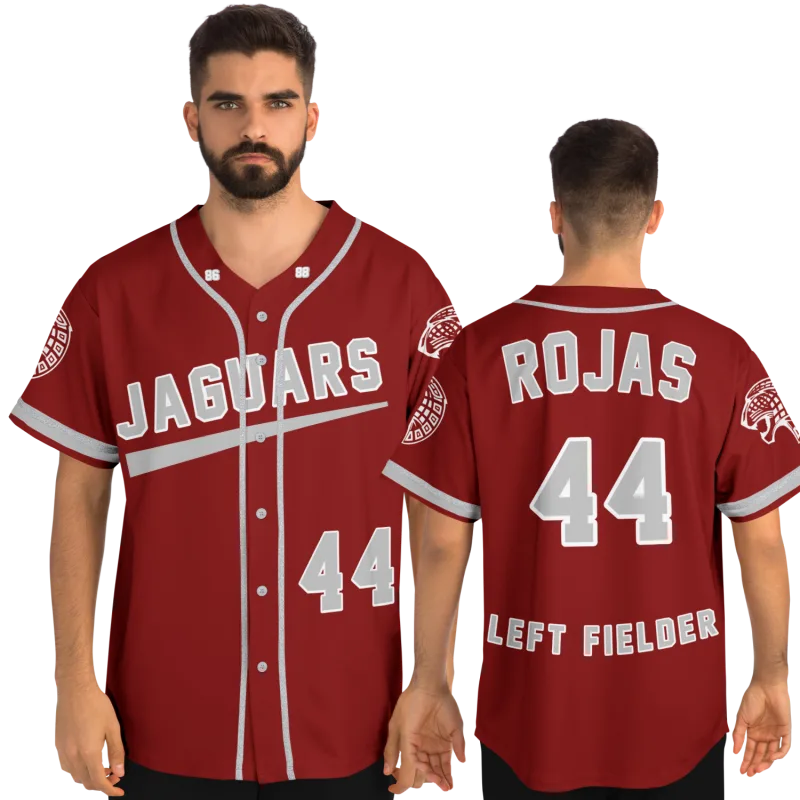
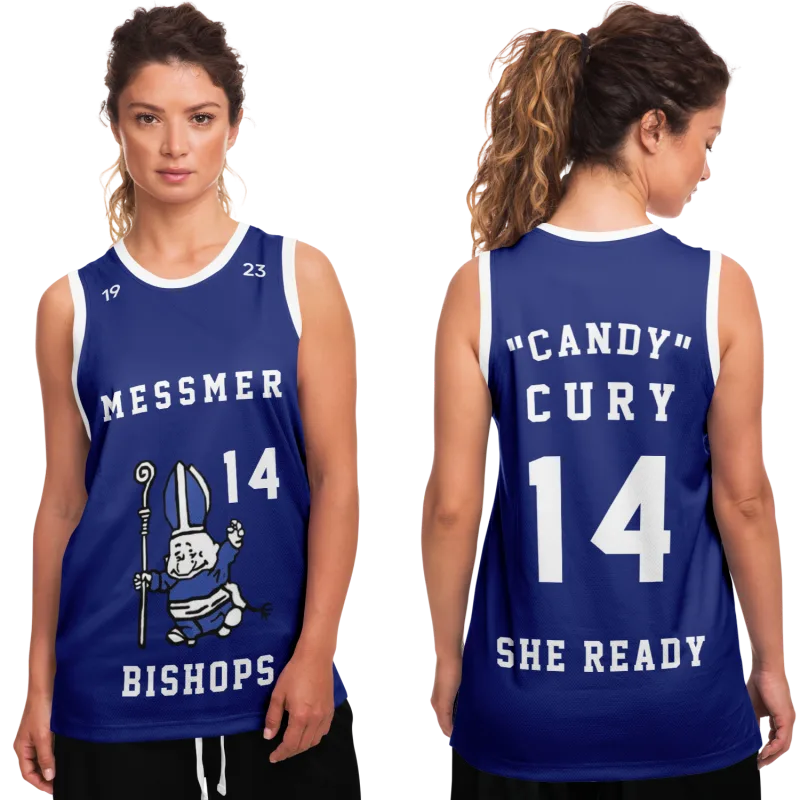
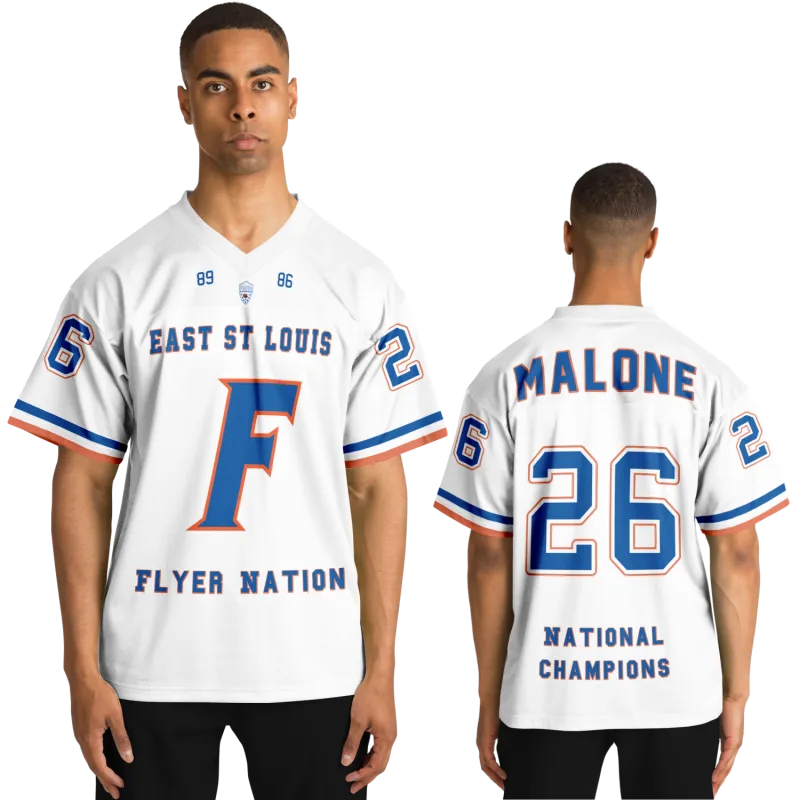
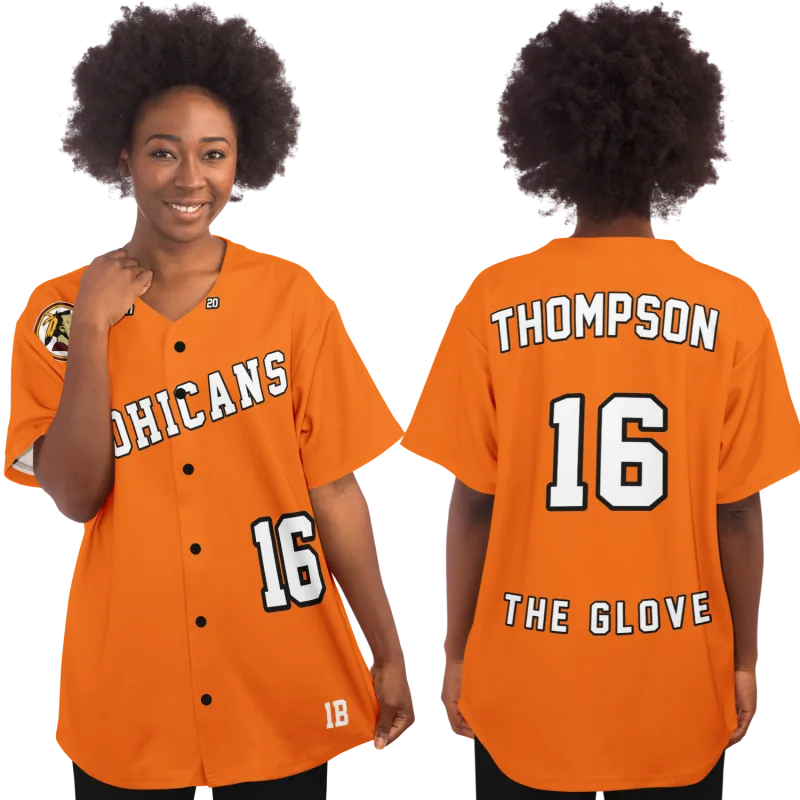
And it belongs to the jerseys that made those moments visible — that turned a kid from a hallway into a player on a field, with a number and a name and a team and a ritual that made the whole thing feel permanent. It even carried into the Saturday morning after — the former-player ritual that quietly made the heroes who came next.
Your jersey is still out there waiting.
Design yours in minutes and see your name and number exactly the way you remember it.
Frequently Asked Questions
Why do high school football players develop superstitions and rituals?
The ritual serves a real psychological function: it creates a reliable path from everyday consciousness to competitive readiness. When a player repeats the same sequence before each game, the brain begins to associate that sequence with performance. The ritual becomes a trigger — executing it signals the brain and body that competition is imminent, which produces measurable reductions in pre-performance anxiety and improvements in focus. It does not matter whether the specific action (eating a particular food, wearing a specific item, following a precise sequence) has any mechanical connection to football. The consistency and repetition are what produce the effect.
Are high school football game day rituals different from professional athlete superstitions?
Yes — in texture and origin, if not in function. Professional athletes often develop rituals with input from sports psychologists, performance coaches, and team staff. High school rituals emerge organically, from shared experience and collective agreement among teenagers who are figuring out how to manage the enormous pressure of game day without professional support structures. This gives high school rituals a particular specificity and personality — they trace directly back to a specific moment, a specific outcome, a specific group of people who agreed without ever quite agreeing. They are more personal, more local, and often more elaborate precisely because no one is officially managing them.
How do team-wide rituals form in high school football programs?
Most team rituals begin with a coincidence that the group decides to repeat. A player does something unusual before a win. Someone notices. Someone mentions it. The next week, it happens again — and whether the team wins or loses, the ritual gains either validation (we won) or additional urgency (we need to do it better). Over the course of a season, informal behaviors harden into non-negotiable tradition. Coaches often adopt these rituals officially once they observe their effect on team cohesion and focus — not because they believe in the superstition, but because they recognize that the ritual is doing genuine psychological work.
What is the most common high school football pregame tradition?
The helmet tap — in its various forms — appears more consistently than any other single ritual across programs, regions, and eras. Whether it involves the captain moving down the line before the run-out, every player tapping the player in front of them, or a specific surface being touched at a specific moment, the gesture of physical contact before the threshold moment (leaving the locker room, entering the field) is nearly universal. It is a physical declaration of shared purpose — a non-verbal agreement that everyone in this group is in this together, right now, and ready.
See also: why high school sports still matter so deeply to adults | what playing under the Friday night lights actually felt like | why your senior season memories remain so vivid decades later | the bus ride home after a loss that every player remembers | what high school sports teach you that nothing else could