

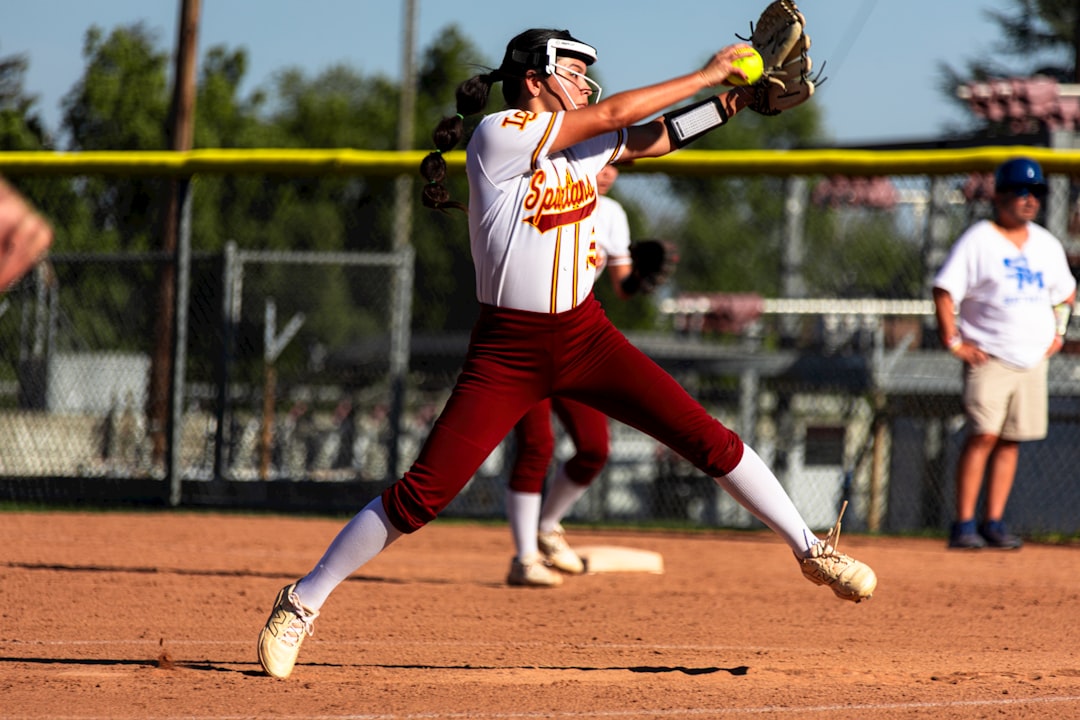




You remember it exactly. The sequence, the grip, the sound — the specific slap-and-lock handshake your point guard invented sophomore year that somehow became the thing everyone did before every tip-off, without anyone voting on it or writing it down. You just knew it. Every single person on that bench knew it. And the season it quietly disappeared — the year two key players graduated and nobody thought to keep it going — something felt off in a way that took a while to name.
High school sports superstitions and rituals occupy a strange, underexamined corner of athletic culture. Most coverage treats them as quirky footnotes — the lucky jersey, the pre-game meal, the chant nobody outside the locker room could ever fully decode. But that framing misses almost everything that actually matters. Because those rituals were never really about luck. They were about belonging, trust, and the specific kind of social cohesion that forms when a group of teenagers commits, together, to a shared set of behaviors that exist only for them.
The sociology and psychology behind why athletes are superstitious tells a more compelling story than "athletes are creatures of habit." It tells the story of how identity is built, how trust is accelerated, and why some of the most durable memories of your life came wrapped in a locker room chant nobody else in the world knows.
The Ritual Is the Relationship, Not the Result
There is a persistent temptation to explain sports superstitions as anxiety management — a psychological trick the nervous athlete plays on themselves to feel more in control. That explanation is not entirely wrong. But it accounts for maybe 20 percent of what is actually happening.
The more interesting mechanism is social. When a team develops a shared ritual — a call-and-response chant, a specific order for touching the locker room door, a handshake sequence that takes 45 seconds and still gets done every single time — they are not primarily managing individual anxiety. They are creating a behavioral boundary between "us" and "everyone else." They are manufacturing insider status. And insider status, in the specific social pressure cooker of high school, is one of the most powerful forces a young person can experience.


Anthropological research on ritual behavior consistently shows that groups who engage in synchronized, shared physical behaviors — even arbitrary ones — report higher levels of trust, increased willingness to cooperate, and stronger feelings of group cohesion than groups that do not. The ritual does not have to be ancient or meaningful in advance. It becomes meaningful by being shared.
In our experience talking to former athletes across dozens of sports, the rituals they remember most vividly are almost never the ones with obvious logic attached. They are the ones invented in the moment and then repeated until they became law. The stranger the better, in some ways — because the strangeness itself became a marker of belonging. You had to have been there to know.
Why the Pre-Game Ritual Is a Trust Machine
Consider what a synchronized team ritual actually requires of its participants. You must:
- Learn the sequence precisely enough to perform it without error
- Show up to perform it — even when you are distracted, nervous, or running late
- Trust that every other person in that locker room is going to show up to perform it too
That third requirement is the key. The ritual functions as a daily, low-stakes rehearsal of the trust that high-stakes performance will demand. Every time the team completes the pre-game sequence together, they are providing each other with evidence: I showed up. I held my part. You can count on me. Multiply that evidence across an entire season and you have something that functions, sociologically, like an accelerated trust-building protocol.
This is why pre-game rituals for teams often feel more emotionally significant than the games themselves. The game tests the group. The ritual built it.
The Chant You Still Know by Heart
Somewhere in your memory, there is a chant — probably ridiculous by any objective standard, likely incomprehensible to anyone who was not on that team, possibly involving sounds that cannot be reproduced in print — that you could perform right now without a moment's hesitation. You have not thought about it in years. You will not forget it.
This is not sentimentality. It is neuroscience operating on social experience. Emotional memory — the memory of experiences tied to strong feeling states — encodes differently than factual memory. It is more durable, more detailed, and more readily accessed. When a group of teenagers performs a chant together in a high-arousal pre-game environment, the conditions for deep memory encoding are nearly perfect: shared physical movement, synchronized vocalization, high stakes, and the specific intensity of group belonging.
The chant gets stored in the brain alongside the emotion that surrounded it. Which is why hearing the fight song from your old school, two decades later, produces something that is not quite nostalgia and not quite joy and not quite grief — but some particular combination of all three that has no clean name in English.
What the Superstition Was Actually Protecting
Marcus T., 34, played varsity basketball in rural Indiana and still keeps his warmup routine alive on the one recreational league night he plays each week — same sequence, same order, same quiet focus before the first whistle. He says it stopped being about superstition a long time ago. It is about entering the right mental state. "That routine was how we told ourselves: this is real now. We're here. It's time." The ritual was the signal, not the magic.
That distinction is worth sitting with. Team traditions in high school are almost universally described by former athletes as superstitions — as if they were irrational behaviors that happened to work. But the framing of irrationality is mostly wrong. The behaviors were not irrational. They were producing real, measurable effects on the internal states of the people performing them. The lucky socks do not affect the game. But the act of choosing them, wearing them, being seen wearing them by teammates who know exactly what they mean — that affects the athlete. And the athlete affects the game.
Sports psychology has a cleaner term for this than superstition: pre-performance routine. The distinction shifts the question from "does this ritual have magical properties?" to "what does this ritual do to the person performing it?" The answer to the second question is specific and rich:
- It reduces the cognitive load of transitioning from ordinary time to performance time
- It activates a conditioned state of readiness built across dozens of repetitions of the same sequence
- It signals — internally and to teammates — that the pre-game version of yourself is being set aside in favor of the in-game version
None of those mechanisms require luck. They require repetition, shared commitment, and the willingness to take the ritual seriously even when part of you knows it's a sock.
The Geometry of Team Superstitions — How They Form and Why They Spread
Team rituals almost never begin as rituals. They begin as accidents. Someone does something before a win, someone notices, someone repeats it, and then the team decides — tacitly, without a meeting — that this thing now happens before every game. The transition from accident to tradition to law happens faster than anyone consciously tracks.
What makes this spread possible is the specific social structure of a high school team. You have a bounded group with clear membership, shared stakes, daily proximity, and a hierarchy that makes certain behaviors spread from certain individuals faster than from others. If the team captain does it, it spreads. If a freshman does it, it waits to be validated.
The four conditions that accelerate the formation of team rituals:
- High shared stakes — the ritual needs to feel important enough to be worth repeating
- Regular proximity — daily practice means the behavior gets reinforced constantly
- Clear social hierarchy — rituals that flow from respected figures become norms faster
- Early success — a win after the first performance of a behavior is all the evidence most teams require
That last condition explains something important about why high school athletes are superstitious at higher rates than their recreational counterparts: the competitive season is short, the games are high-stakes, and the evidence threshold for "this works" is extremely low. You do something new before a win, do it again, win again — and the ritual has already taken root. The sample size is not the point. The shared experience of repeating it is.
The Jersey in the Locker and What It Carried
There is a specific kind of superstition that attaches not to a behavior but to an object. The lucky jersey is the canonical example — the one that could not be washed during a winning streak, the one that had to hang in the same spot in the locker before every home game, the one with your name across the back and your number on the front that had a specific weight and texture your hands recognized before your conscious mind caught up.
Objects function differently than behaviors in ritual psychology. A behavior requires active participation — you have to show up and do it. An object carries meaning passively. It only has to be present. This makes the jersey a more portable, more durable ritual anchor. The group behavior can drift as rosters change. The object travels with the player.
What gives that jersey its weight is not the fabric. It is the density of experience stored in the association — every game worn in it, every memory attached to performing in it, every moment a teammate pointed at the name on the back and said something worth remembering. All of it gets encoded into the object through repetition and emotional reinforcement. The jersey becomes a portable summary of the team, the season, the version of yourself that existed inside that locker room.
This is partly why so many former athletes feel a specific, disproportionate pull when they encounter a version of their old uniform — even decades later. The object holds the association intact. The sight of the number activates the memory of what wearing it felt like.
How Ritual Becomes Identity
The most lasting function of high school sports rituals is not psychological preparation and not even immediate social bonding. It is identity formation — the creation of a self-concept that persists long after the final game.
When a group of people perform the same behaviors together, repeatedly, over an extended period, those behaviors become definitional. You are not a person who happens to do these things. You are a person for whom these things are characteristic. The ritual has been incorporated into who you are.
This is why former high school athletes describe their team rituals with a specific pride that goes beyond nostalgia. They are not just remembering something that happened to them. They are describing something that is still part of who they are. The chant, the handshake, the locker room sequence — these are not memories of a past self. They are evidence of a self that was built in that specific crucible and has persisted since.
The shared vocabulary of ritual is part of this too. Your team had phrases that meant specific things — references that landed instantly in the locker room and would have required ten minutes of context anywhere else. That private language is a form of identity insurance. A set of cues that, when activated, return you to the version of yourself that existed inside that team. You hear the old fight song, or you run into a former teammate and one of them says the thing, and for a moment the 34-year-old version of you is standing in that locker room again, completely certain of where you are and who you are with.
Your jersey is still out there waiting.
Design yours in minutes and see your name and number exactly the way you remember it.
Frequently Asked Questions
Why do high school athletes develop superstitions more intensely than recreational players?
The conditions of competitive high school athletics create a near-ideal environment for ritual formation: bounded team membership, daily practice, a short and high-stakes season, and a clear social hierarchy. Recreational leagues typically lack the daily proximity and shared stakes that make rituals feel necessary. When a ritual forms in a competitive context after a meaningful win, the emotional intensity of the experience makes the behavior feel causally significant even when it is not. High arousal plus high stakes equals deep encoding — and that is exactly what a varsity season delivers.
Are pre-game rituals actually useful, or are they purely psychological placebo?
Both — and the distinction matters less than it might seem. A pre-game ritual is genuinely useful because it activates a conditioned state of readiness. Athletes who have paired a specific routine with competitive performance across dozens of repetitions enter that state more readily when the routine is performed. The placebo framing understates what psychological preparation actually produces. A conditioned readiness state is a real physiological shift, not merely a belief about one. What the ritual does not do is affect the opponent, the field, or the ball. But it reliably affects the athlete — and the athlete is the variable that matters.
Why do team rituals feel so significant decades after the season ends?
Emotional memory — formed during high-arousal, high-meaning experiences — encodes more durably than ordinary factual memory and is retrieved more readily when activated by associated cues. A team ritual in high school forms under nearly optimal encoding conditions: synchronized group behavior, high emotional intensity, clear social belonging, and repeated reinforcement across a full season. The result is memory that is both deeply stored and strongly cued. It gets activated by sensory triggers — a song, a phrase from a former teammate, the sight of an old uniform — and returns with unusual vividness. That intensity is not nostalgia bias. It is the direct product of the conditions under which the memory was formed.
Do team traditions in high school have any lasting social effect beyond individual memory?
Yes — and the effect is primarily relational. Former teammates who shared rituals report higher rates of sustained connection over time than those who played together without developing shared behavioral traditions. The private language, the handshake, the chant — these remain activatable bonding cues long after the season ends. In this sense, the ritual's social function does not expire with the final whistle. It becomes a portable, permanent piece of the relationship between everyone who was inside it together.
See also: why high school sports still matter so deeply to adults | the athletic identity that forms during those years | what high school sports teach you that nothing else could | why your senior season memories remain so vivid decades later