




You remember the exact moment the tunnel opened up.
Not the game. Not the score. Not even the play you still replay at 2am when you can't sleep. The moment the locker room door swung wide and the noise of the stadium — that specific, low, building roar — hit you for the first time that night. The walk from the locker room to the field in high school football lasted maybe 47 seconds. Nobody prepared you for what it would feel like. Nobody told you it would become one of the most vivid sensory memories you'd carry into your thirties, your forties, your fifties.
This is what was actually happening to you during those 47 seconds.
The Locker Room Right Before It Happened
You don't get to the walk without understanding what preceded it.
The locker room twenty minutes before kickoff is one of the strangest social environments a seventeen-year-old ever enters. The same room where guys joke about everything — homework, girls, coaches, the cafeteria food — goes quiet in a way that has nothing to do with anyone asking for quiet. It happens on its own. Someone's tape job rips and he fixes it without saying a word. Someone else is sitting with his helmet between his knees, staring at the concrete floor like it owes him money.
The smell is distinct enough that you could be blindfolded and know where you were: analgesic balm, the sharp medicinal bite of it, mixed with rubber from the cleats and something underneath that — nervous sweat, the particular salt-and-adrenaline chemistry of a room full of bodies that are about to do something violent and deliberate. In our experience talking with former players, it's the smell that returns first, before the sounds, before the visuals. The olfactory memory is the deepest storage system the brain has, and it filed that room under something it considered important.

The coaches say their last things. Some of them pace. Some of them are quietly terrifying. Some of them say the same thing they've said before every game all season, and it works because of repetition, because ritual has its own momentum.
Then someone near the front of the room stands up.
And then everyone stands up.
And nobody told anyone to stand up.
The Door Opens: The Specific Neuroscience of That Moment
Here is what your body was doing that you had no vocabulary for at the time.
The moment the locker room door opened and the crowd noise entered the room — not full crowd noise, not yet, but the directional pressure of it, the sense that something large and alive was out there waiting — your hypothalamus triggered a cortisol and adrenaline release that sports physiologists describe as competitive state anxiety converting to eustress. The difference between those two states is the story of the walk itself.
Competitive anxiety is what you felt in the locker room. The tight chest. The stomach that didn't want whatever you ate at four o'clock. The brief, irrational thought that maybe your knee was actually hurt.
Eustress — the technical term for the performance-enhancing version of the same neurochemistry — is what happened the moment you stepped into the corridor.
The conversion isn't automatic. Something has to trigger it. And the walk from locker room to field is, functionally, the trigger. The movement itself. The direction. The specific sensation of cleats on hard flooring shifting to cleats on grass or turf. Your nervous system reads the physical transition and updates its threat assessment in real time: we are going toward the thing, not away from it. That shift — from anticipating to approaching — is where the adrenaline before a football game stops feeling like dread and starts feeling like fuel.
Your body knew what you were doing before your mind caught up.
The Sensory Architecture of 47 Seconds
Let's be specific about what you actually experienced, because the experience was specific.
The sound came in layers.
First, muffled. The door between the locker room and the corridor absorbed it. Then directional — you could tell where the field was without seeing it because the noise had a source, a pull, a physical pressure that increased with every step. Then, when you cleared the tunnel or rounded the last corner, it hit you the way a wave hits you when you're not quite ready for it. Not loud so much as dimensional. Sound from all directions simultaneously. Sound that had weight.
And underneath the crowd: the PA system, a song you'll never be able to hear in a bar or a car without being seventeen again instantly. The specific song varies. The effect does not.
The light changed.
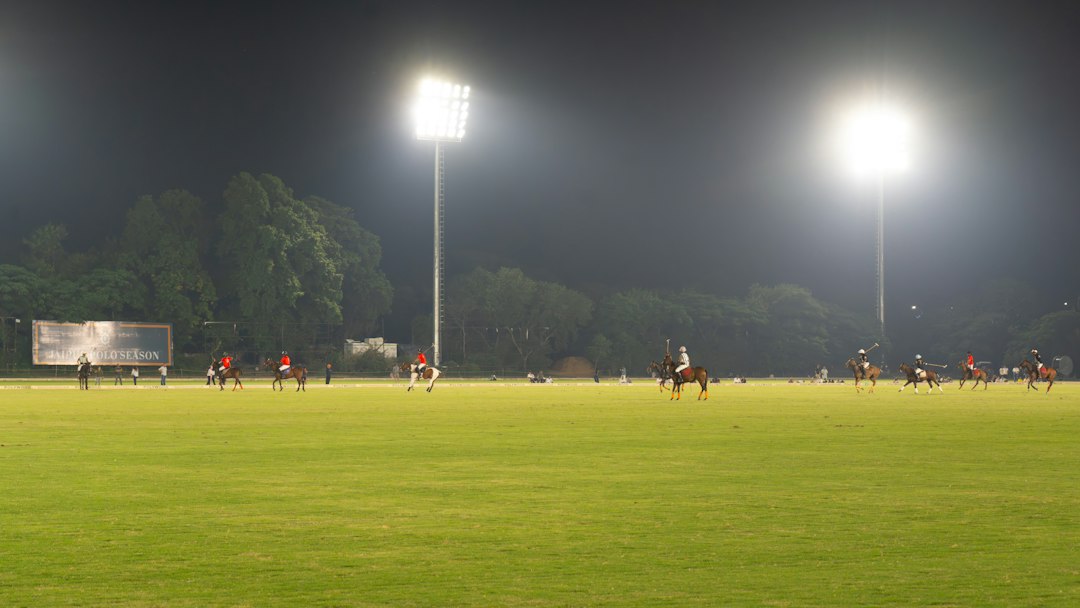
Stadium lights on a Friday night in October have a particular quality. They're not the flat, overhead light of the locker room. They're directional, dramatic, and they make everything on the field look slightly more significant than it actually is. The first visual of the field — the bright green of it, the white lines, the end zones — registered in a part of your brain that wasn't processing information analytically. It was registering this is real and it's happening now.
The air was different.
Fall air. Cold, or cold-adjacent. The kind of air that clears your sinuses and makes your breath visible if it's late enough in the season. After the heat and compression of a locker room full of bodies, the open air felt like a physical expansion. Your lungs took a full breath, maybe the first genuinely full breath in an hour.
Your equipment was suddenly present.
The helmet in your hand. The shoulder pads redistributing their weight as you moved at a different pace. The specific sensation of cleats on concrete — that clicking sound, that particular resistance — transitioning to the give of grass or the harder response of turf. These weren't background details. In that 47 seconds, they were the most real physical objects you had ever touched.
What the Walk Was Actually Doing to Your Identity
Here is what no pregame routine article will tell you, because most of them are written about logistics, not psychology.
The walk from the locker room to the field was a threshold crossing. Every culture across human history has built rituals around threshold crossings — moments of deliberate passage from one identity state to another. You were, in the most literal sense, crossing from one version of yourself into another. The person who walked out of that locker room was not the same person who walked into school that morning.
That sounds dramatic. It isn't. Ask anyone who played.
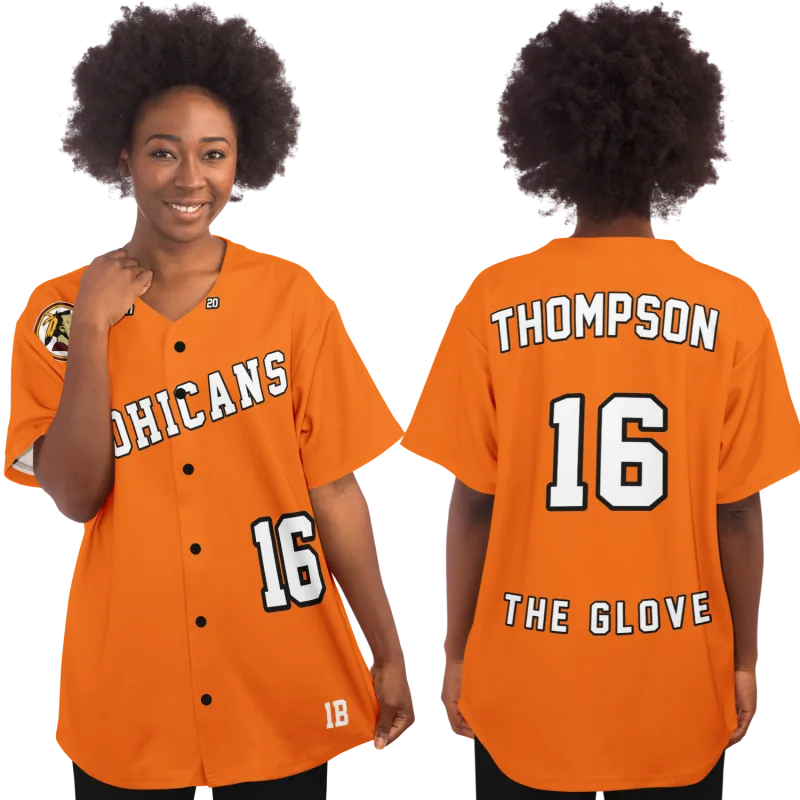
The jersey had something to do with it. Not as a superstition, but as a physical signal. The jersey is not your school clothes. It is not your practice gear. It carries the number you were assigned, the colors your community recognizes, the name — your name, or your school's name — that marks you as belonging to something larger than yourself. Putting it on earlier in the evening was step one of the identity transition. The walk was step two. The moment you cleared the tunnel and the crowd saw you — you, specifically, or you as part of the unit — was step three.
Jordan M., 34, played linebacker for a 4A school in rural Missouri and still describes the walk as "the only time in my life when I felt like the person I was supposed to be." He doesn't say that to be dramatic. He says it because it's precise. The walk created a temporary but total alignment between his interior sense of himself and his exterior circumstance. The crowd was there for him — not him personally, but the version of him wearing that jersey and crossing that threshold. For 47 seconds, those two things lined up completely.
That alignment is rare. That's why it's remembered.
The Psychological Preparation No One Explicitly Taught You
The best players on your team — the ones who seemed to arrive at the field already locked in — weren't doing something you couldn't do. They had, through repetition, learned to use the walk as an active tool rather than a passive experience.
Breath was the first mechanism. The transition from the tunnel's compression to the open field gave your lungs permission to expand. The players who understood this — consciously or not — took that full breath deliberately. Not a deep breath as performance, but as a genuine reset of the nervous system. One full inhale, one full exhale, somewhere in those 47 seconds.
Gaze direction mattered. Looking at the ground during the walk — common in anxious players — kept the nervous system in threat-assessment mode. Looking at the field, at the goal posts, at the opponents warming up across the way — this is what sports psychologists now call "approach orientation," and it triggers the eustress conversion faster. The players who walked out looking at things were converting anxiety to activation. The ones looking down were still processing threat.
The body led the mind. Shoulders back, chest open, chin level — these aren't coaching clichés. They are postural signals that the body sends to the brain about its current status. The brain receives posture as information. Wide, open, forward-moving posture signals to the hypothalamus that the organism is in control of the situation. The brain adjusts its neurochemical output accordingly. You didn't have to feel confident to walk like you were. The walking like you were confident created the confidence, in the 20-to-30-second lag time between posture and neurochemical response.
The psychological preparation football coaches talk about in terms of "mental toughness" and "being locked in" lives in these small physical decisions. None of it requires special equipment. All of it happened, or could have happened, in those 47 seconds.
What Happened at the End of the Walk
The walk ended when you hit the field. Specifically, when the cleats engaged the grass or the turf and your body felt the familiar resistance of game-surface underfoot.
At that moment, one of two things happened.
For most players, the nervousness didn't disappear — it transformed. It became something that felt like being very alive, a heightened sensory state where the colors were slightly brighter and the sounds were slightly sharper and your own body felt more present than it usually did. This is the eustress conversion completing. This is your nervous system deciding that everything it was generating in the locker room was, in fact, useful and purposeful, and deploying it accordingly.
For some players — the ones who were in genuine flow states — the walk ended and the game simply began. No transition, no moment of adjustment. The psychological preparation football demands was so complete by the time they cleared the tunnel that the game was already happening in their mind before the ball was snapped.
Either way, the walk had done its work.
You were someone else now. You were the number on your back. You were the colors. You were the position and the assignment and the preparation and the weeks of practice. The regular-Tuesday version of you had been left in the locker room with your street clothes.
You didn't get that version back until well after the final whistle.
Why You Can Still Feel It
The memory of the walk from the locker room to the field is not nostalgia in the soft, sentimental sense. It's something more specific.
It's body memory.
The neuroscience of embodied cognition tells us that intensely physical experiences — especially those tied to strong emotional states — are stored not just in declarative memory (what you remember) but in procedural and somatic memory (what your body remembers). When you recall the walk, you don't just remember it. You feel the echo of the cleats on the concrete. You feel the air change. Your shoulders may move slightly back without you noticing.
That's not nostalgia. That's your nervous system treating the memory as a resource.
A lot of former players report that the feeling before a high school football game — the specific pre-walk anticipation — was the most intensely alive they have ever felt in a controlled, purposeful setting. Not the biggest moments in the game. The walk to the game. The anticipation, it turns out, was part of the experience. The 47 seconds between who you were and who you became was, for many, the point.
If you played, you know this to be true without needing it explained.
If you didn't play, there is no explanation that fully translates it.
That gap — between knowing it from the inside and understanding it from the outside — is exactly why that walk meant what it meant. It was yours. It was specific to your body, your jersey, your number, your stadium, your Friday night in October.
No one can take the memory. But you can hold the thing that carries it.
Your jersey is still out there waiting.
Design yours in minutes and see your name and number exactly the way you remember it.
Frequently Asked Questions
What does the walk from the locker room to the field feel like psychologically?
The walk triggers a conversion from competitive anxiety — the tight-chest, uneasy anticipation of the locker room — to eustress, the performance-enhancing neurochemical state that makes the body feel alert, capable, and ready. Most players describe it as a shift from dread to fuel. The physical movement toward the field, combined with the sensory input of crowd noise, open air, and stadium lights, is the specific mechanism that completes that conversion. It's not accidental. It's your nervous system using the walk as calibration.
Why do former high school football players remember the walk so vividly decades later?
The walk was a high-intensity, multisensory experience tied to a strong emotional and identity state. Neuroscience of memory suggests that experiences combining physical sensation, strong emotion, and novel or high-stakes circumstances are encoded more deeply than ordinary events. The walk checked every one of those boxes. The smell of analgesic balm, the specific acoustic quality of the crowd, the feeling of cleats transitioning from concrete to turf — these are stored in somatic and procedural memory, not just declarative memory. They come back as felt experience, not just recalled information.
How did the best players use the locker room walk as psychological preparation?
The players who arrived at the field already locked in had typically learned — consciously or through repetition — to use the walk actively. Three specific mechanisms: deliberate breath (one full inhale-exhale as the tunnel opened, resetting the nervous system), gaze direction (looking toward the field and opponents, not at the ground, which activates approach orientation rather than threat response), and posture (shoulders back, chest open, chin level — postural signals that the brain reads as confidence and adjusts neurochemical output accordingly). None of these required explicit coaching. Most players who did them arrived at the behavior through instinct and repetition.
Is the pregame adrenaline rush in football different from other sports?
The neurochemistry is similar across high-stakes athletic performance contexts, but the specific experience of the locker room walk in football is shaped by several factors that amplify it: the physical nature of the game (the body is primed for controlled contact, which creates a distinct anticipatory state), the equipment (wearing the jersey and pads is itself an identity-state cue), the Friday night cultural context (for many players, high school football on Friday night represents something larger than athletics — community, identity, belonging), and the specific architecture of the locker room-to-field transition, which in most high school stadiums involves a literal passageway or tunnel that dramatizes the threshold crossing.
See also: why high school sports still matter to adults decades later | the way playing under the lights felt like nothing else | why your senior season memories are still so vivid | the athletic identity you built and what happened when it ended