





If you played organized football — youth league, high school, college, anything — you already know more about this game than most people who have been playing fantasy football for years. The problem isn't knowledge. The problem is translation.
Fantasy football tips for beginners usually assume the reader knows football the way a fan knows football: from the couch, through a broadcast, with a broadcaster explaining what just happened. You don't have that problem. You know what a route tree looks like from the inside. You know what it feels like to read a coverage pre-snap. You know that a running back's production on a given Sunday has a lot more to do with his offensive line than his own legs.
That knowledge is worth something. This guide is about figuring out exactly what it's worth — and how to stop leaving it on the table.
The Moment Every Former Player Hits in Fantasy Football
Every former athlete who enters a fantasy draft for the first time hits the same moment about forty-five minutes in. You've been watching your league-mates panic over injury reports and snap count percentages, refreshing apps you downloaded two days ago, and making picks based on numbers that feel disconnected from anything you actually understand about the sport.
Then someone takes a wide receiver you've never heard of in the third round because of his "target share," and you realize: this feels nothing like playing football.
That's not a knowledge deficit. That's a translation problem. The language of fantasy football — points per reception, air yards, red zone targets, opportunity share — is a dialect built on top of real football. You already speak the base language. You just need the dialect.
The good news is the dialect is not complicated. And once you understand it, your football IQ stops being something you have to set aside and becomes the thing that separates you from the people in your league who are guessing.


Why Most Beginner Advice Misses Former Players Entirely
The standard fantasy football beginner guide assumes you're starting from scratch — that you need someone to explain what a touchdown is, why quarterbacks score points, and why a running back who gets 20 carries a game is valuable. You don't need any of that.
What you need is the bridge: a clear map from what you already know about real football to what it means in the fantasy scoring system.
Most beginner content skips this bridge because most beginners aren't former players. They're fans who understand football conceptually but have never lined up under center, never run a crossing route, never had a linebacker in their face before they could set their feet.
You have. That experience creates two specific advantages that no amount of studying statistics can replicate:
You understand game context. You know that a quarterback's completion percentage in the fourth quarter of a blowout means almost nothing. You know that a running back getting 25 carries in a game where his team was losing for three quarters is not the same as 25 carries in a game his team controlled. You understand that not all production is created equal — because you've been on the field when momentum shifts and the whole game plan changes in one series.
You can evaluate talent in a way fans can't. When you watch a receiver run a route, you notice the separation technique, the hands, the way he adjusts to an underthrown ball. When you watch an offensive line, you see the angles and the leverage, not just whether holes appeared. These observations matter enormously in fantasy — and they're not things you can learn from a stat sheet.
The mistake most former players make is assuming that because the scoring system is unfamiliar, their football knowledge doesn't apply. It applies everywhere. You just need to know where to point it.
The Four Things Former Players Get Wrong First
Before getting to the strategic advantages, it's worth naming the specific traps that catch former players in their first season. Knowing these going in prevents the errors that otherwise require starting over.
1. Overvaluing players at your position. This one is almost universal. If you played quarterback, you will instinctively trust your judgment on quarterbacks — which is correct — but you'll also tend to reach for them earlier than optimal, because you understand their value in ways that feel invisible to you. In most standard fantasy scoring formats, quarterbacks are abundant enough that you can wait until the middle rounds to get a quality starter. Your position knowledge is an asset in evaluation. Don't let it become a liability in draft strategy.
2. Dismissing statistics you don't immediately understand. Target share, air yards, snap count percentage, yards after contact — these numbers look like analytics for analytics' sake until you understand what they're measuring. Target share, for example, is just a way of quantifying something you already know: the more a receiver is the primary read in the passing game, the more production he's going to generate regardless of the defensive scheme. When you translate the statistic back into football terms, it stops feeling foreign.
3. Forgetting that injury matters differently in fantasy than in real football. On a real team, a backup running back getting 15 carries because the starter is banged up is filling a role. In fantasy, that backup running back is an absolute necessity to own if you can get him. The fantasy scoring system rewards individual production regardless of context. A player filling a role you'd never notice on your real team can be a weekly starter in fantasy.
4. Underestimating schedule. You know this from playing: there are opponents you look forward to and opponents that keep your coach up on Thursday night, the kind of matchups your game day rituals and superstitions once revolved around. The same principle applies in fantasy. A running back playing against a defense that gives up 150 yards on the ground every week is a different player than the same running back against a team that hasn't allowed a 100-yard rusher all season. Checking your players' upcoming schedules before lineup decisions is one of the highest-value habits in fantasy — and your instinct for matchup advantages is already trained for exactly this.
Your Football IQ Translated: The Four Places It Matters Most
Here is where the translation happens. These are the four specific areas where playing experience creates a measurable advantage over fantasy players who have only ever watched the game.
Reading an Offensive Line
Marcus T., 34, played offensive line through two years of college ball before a shoulder injury ended his career. His first fantasy season, he finished last in his league. His second season — after deliberately applying his line evaluation to running back selection — he finished second. The single shift: he stopped picking running backs based on their statistics alone and started evaluating the lines blocking for them.
What changed his approach was realizing that the running back he'd been high on in his first season was running behind a line with a legitimate liability at left guard — the kind of technique problem he recognized immediately from film but hadn't connected to fantasy production. That running back spent the whole season getting hit in the backfield on runs to the left side.
If you've played on or against offensive lines, you can evaluate them in ways that pure stat analysis misses. A running back behind a dominant line is a different asset than his stats from a previous team suggest. This is not a common analytical skill. It's yours.
Recognizing Real Route Runners
Fans evaluate wide receivers on big plays. Former players — especially those who lined up across from receivers in practice or in games — evaluate them on route discipline, release technique, and the ability to create separation against press coverage.
In fantasy, the difference between a receiver who looks good in highlight clips and a receiver who is genuinely dangerous to a defense is exactly this: consistent, reliable route running that generates separation on any down, not just when the defense breaks. Your ability to watch a receiver's release off the line and know whether he can beat press coverage in December is not something a target share statistic can tell you.
Understanding Quarterback Tendencies
If you played quarterback, or played in a system where you had to understand the quarterback's reads to run your routes correctly, you already know something most fantasy analysts don't: quarterbacks have tendencies that are remarkably stable. The first read. The check-down instinct. The preference for one side of the field under pressure.
These tendencies matter in fantasy because they affect which receivers on a given team are actually going to see the ball in critical moments. A receiver who is consistently the third read on the quarterback's progression is not going to put up the same numbers as the first read, regardless of athletic ability. Your ability to evaluate this from film is a real advantage.
Evaluating Game Scripts
You've been on teams that were ahead by 17 in the fourth quarter. You know what happens: you run the ball, you run the clock, you don't throw into coverage unnecessarily. You've also been on teams that were down by 14 with eight minutes left. You know what that looks like too: you throw short and fast, you accept checkdowns, you try to get out of bounds.
These game scripts affect fantasy production in ways that raw statistics obscure. A team that leads games frequently will produce running back statistics. A team that trails games frequently will produce passing statistics — but not necessarily passing statistics from the kinds of drives that generate big plays. Your intuitive understanding of how game flow affects play-calling is translatable, directly, to smarter lineup decisions.
The Process: Getting Started Without Overthinking It
The barrier for most former players isn't understanding fantasy football once they're in it. It's the system itself — the drafts, the waiver wire, the weekly decisions — that feels opaque before the first season. Here is the simplest reliable entry path.
Step 1: Draft running backs and wide receivers early, then fill in everything else. This is the single most consistent piece of strategic advice across fantasy formats. Running back and wide receiver production is the least fungible — good ones are scarce and losing them to injury without a backup costs seasons. Quarterback and tight end depth is abundant enough that you can draft quality starters in the middle-to-late rounds. Your football knowledge tells you this intuitively: skill positions are not created equal, and the truly elite ones are rare.
Step 2: Use your evaluation skills on every pick, but check the numbers first to see if your instinct matches the consensus. When they diverge — when your film evaluation tells you a player is better or worse than his draft position suggests — trust your football knowledge and be able to explain why. "He runs clean routes against press coverage and his line is better than last year" is a better reason to take a receiver than "he went in this round last season."
Step 3: Set your lineup on the matchup, not the name. The best fantasy players don't start their best players every week automatically. They evaluate the matchup and start the player with the best combination of ability and opportunity against that specific opponent. You already do this instinctively with real football; apply the same lens to your roster every week.
One note on waiver wire strategy: this is where leagues are actually won. The draft sets your floor. The waiver wire raises your ceiling. Check it every week, specifically looking for running backs who have suddenly inherited carries due to injury — because of the three positions in fantasy, running backs benefit most from opportunity increases, and opportunity increases fastest when a starter goes down.
What Your Playing Career Already Gave You
If you played football, you understand something about the game that cannot be learned from broadcast coverage, podcast analysis, or three seasons of fantasy experience: you understand what the game looks like from inside it.
That perspective — knowing what it costs to get separation, knowing what a dominant offensive line feels like to run behind, knowing what a quarterback is actually processing pre-snap — is not an abstraction. It's lived knowledge. And lived knowledge, pointed at the right questions, is the most reliable analytical tool in fantasy football.
The former players who thrive in fantasy are not the ones who set their football knowledge aside to become data analysts. They're the ones who use the data to confirm and sharpen what they already see on film — and trust their football IQ when the data doesn't tell the whole story.
You spent years building that IQ. This is one more game it applies to — and if someone's ever shopping for you, a gift guide for former football players is a good place to start.
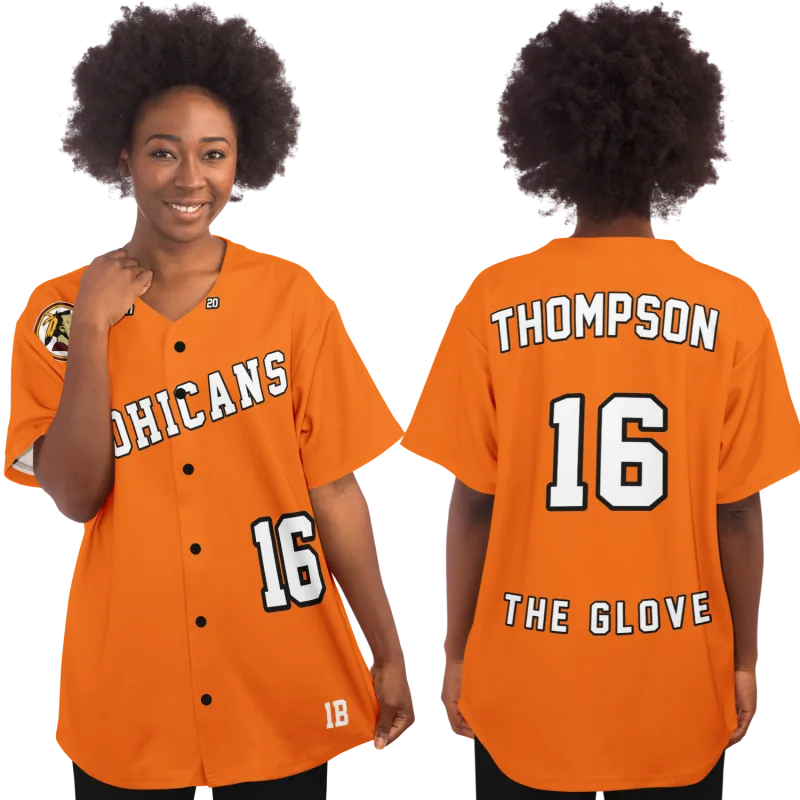
Your jersey is still out there waiting.
Design yours in minutes and see your name and number exactly the way you remember it — just get your adult sizing right first, since your shoulders are probably bigger than they were at 17.
Frequently Asked Questions
Do I need to know a lot of statistics to be competitive in fantasy football?
Not to start. Your football knowledge — understanding of positions, game flow, matchups, and talent evaluation — is more useful than raw statistical literacy in your first season. Over time, learning which statistics reflect genuine opportunity (target share, carry percentage, snap count) will sharpen your decisions, but they translate directly to concepts you already understand. Target share is just a number for "who does the quarterback trust most." Snap count is just a number for "how much is this player actually on the field." The football concepts are already yours.
How early in the draft should I take a quarterback?
In most standard scoring formats (non-PPR or standard PPR leagues), quarterbacks are plentiful enough that waiting until rounds 5–8 is optimal. The elite quarterbacks are worth taking slightly earlier, but the gap between the top quarterback available and the tenth quarterback available is smaller than the gap at running back or wide receiver. If you find yourself torn between the best remaining running back and a top-five quarterback in round three, take the running back. Apply this same logic to tight end — unless there are one or two clearly elite options available, depth at the skill positions matters more early.
What is the single most common mistake in the first week of lineup decisions?
Starting players based on season-long reputation rather than the specific matchup that week. The player you drafted in the first round is not automatically the right starter every week — if he's running into a top-ranked run defense while your backup is facing a team giving up 160 yards a game on the ground, the backup starts. This is a matchup game, and your instinct for opponent analysis from your playing days is directly applicable. Check the matchup before you set your lineup, every week without exception.
How do I evaluate a player I've never watched?
Start with opportunity metrics — how many carries, targets, or snaps is this player getting? High opportunity is the prerequisite for high production. Then watch film if you have access, even three or four plays, to evaluate whether the player's technique and separation ability suggest he's maximizing that opportunity or leaving production on the field. Your talent evaluation eye, applied to even a short film sample, will give you more useful information than most written analysis.
See also: what high school sports actually teach you that carries into adult life | the difference between a sports fan and someone who actually played | athletic identity that stays with you long after you stop playing | adult recreational leagues if you want to get back on the field