

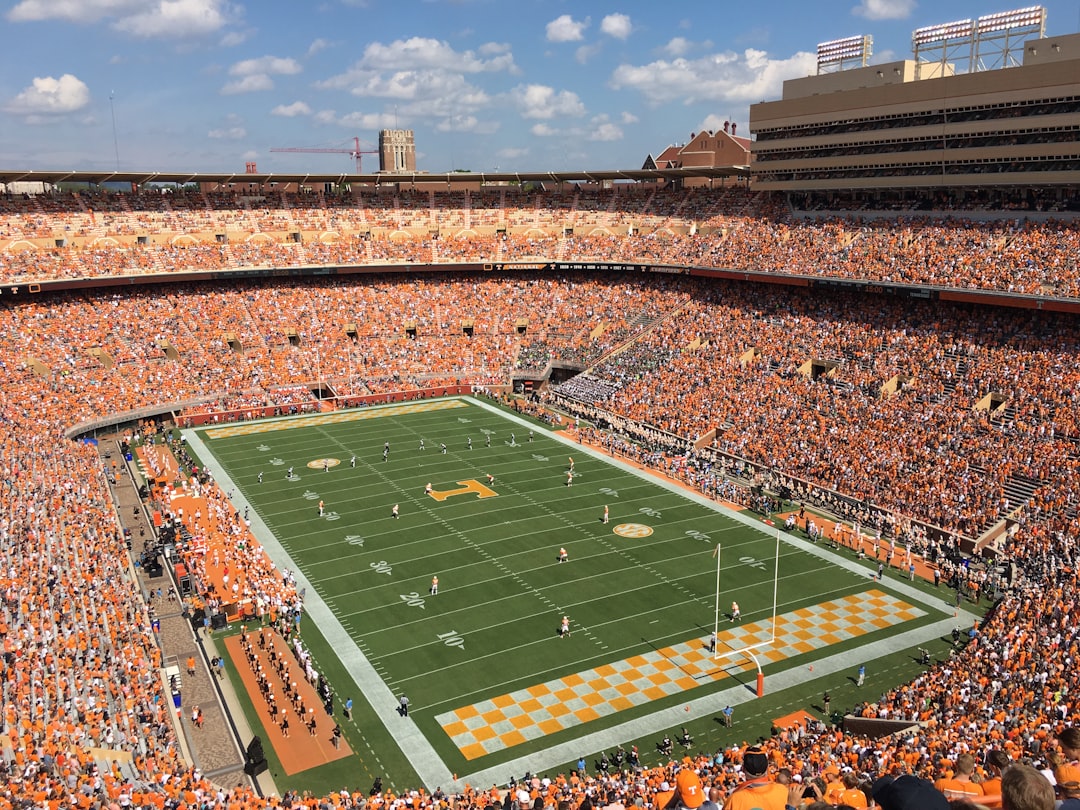
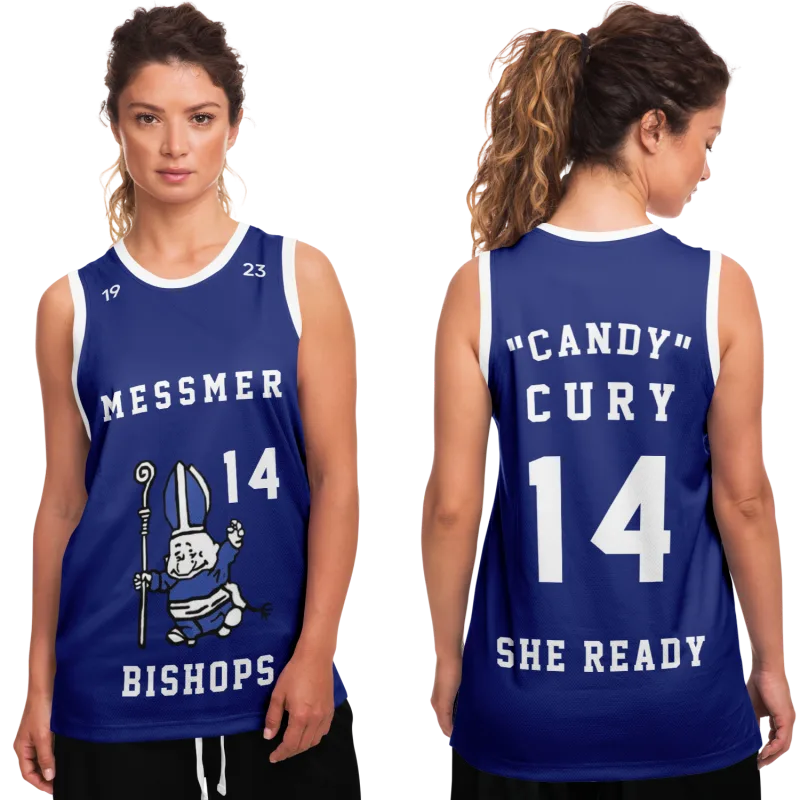
There's a specific quality to the light on a college football Saturday afternoon that doesn't exist on any other day of the week.
It comes in low and gold through the upper deck, cuts across the field in long diagonal shadows, and lands on a crowd that has been building toward this exact moment since the season opener. The band is already in formation. The student section is already loud. And somewhere in the parking lot, someone's tailgate speaker is playing a song that makes everyone within earshot feel like they're twenty years old again.
That's the thing about a college football Saturday. It doesn't just ask you to watch a game. It asks you to remember one.
If you played — if you ever wore a numbered jersey, heard your name called at warmups, felt the particular weight of your shoulder pads settle into place before kickoff — then a college football Saturday carries a layer that the rest of the crowd can't quite access. It's not nostalgia exactly. It's more specific than that. It's the memory of what it felt like to be on the other side of those stands.
This article is for people who know exactly what that feels like.
What Makes College Football Saturday Different From Every Other Game Day
Professional football is a product. College football is a ritual.
The NFL is polished and global. The camera angles are cinematic. The halftime show is produced. The experience is designed to be consumed from a distance, even when you're in the stadium.
College football Saturday is the opposite. It belongs to its place. It belongs to its people. The traditions at [your school] exist nowhere else on earth, and that specificity — the exact chant, the exact formation of the band, the exact moment in the pregame ceremony that gives everyone goosebumps — is what makes it matter in a way that a franchise sport simply cannot replicate.

The NCAA's college football attendance data consistently shows that college football draws over 35 million fans per season across stadiums — numbers that rival any sporting competition in the world. But the statistic undersells the experience. Those 35 million people aren't just watching football. They're participating in something that connects them to a specific place, a specific time in their lives, and a specific version of themselves.
That version of yourself — the one who wore the number, ran the routes, knew the playbook by heart — is the one that a college football Saturday brings back into focus.
The Pageantry Is Not Decoration. It's the Point.
The marching band. The tunnel walk. The coin toss ceremony that takes four times longer than it needs to because everyone in attendance needs a moment to absorb the fact that it's actually happening again.
None of this is incidental to the game. It is the game.
If you ever played college or high school football — or any team sport that brought you out in front of a crowd on a Saturday — then you know that the pregame ritual is where the real preparation happens. By the time you hit the field for warmups, the physical preparation is done. What's left is the mental and emotional calibration that only pageantry can provide.
The band plays the fight song and something shifts in your chest. Your heartbeat adjusts. Your shoulders drop and then rise. You stop being a person who has midterms and a car payment and a landlord. You become, for three hours, the athlete you trained to be.
That transition is what the pageantry is for. And it's why watching a full Saturday of college football as a former player feels different from watching it any other way.
The Rivalry Is Geography Made Personal
There is something about a rival school that is impossible to explain to someone who didn't go to either institution.
It's not that the other team is bad. It's that they represent a fundamentally different answer to the question of who you are. Their colors are wrong. Their traditions are objectively inferior. The fact that they exist at all, three hours down the highway, is a mild affront to the natural order of things.
This is irrational. Everyone involved knows it's irrational. No one cares.
Because the rivalry isn't really about football. It's about identity — the kind that forms when you're young enough for it to go deep. Your first rival game isn't just a game. It's the first time you understood that where you're from, where you go to school, what you play — these things mean something. They mark you. And they stay marked.
In our experience, the rivalry game hits differently for former players than it does for any other category of fan. You know what it cost. You know the preparation. You know the specific weight of playing that game under that kind of pressure. Which is why watching it from the stands, years later, produces an emotion that's harder to name than simple nostalgia.
It's something closer to recognition. You recognize the athletes on the field because, once, in some important way, you were them.
The Saturday Afternoon That Stays With You
Ask any former athlete to describe their best game, and they'll usually give you a specific sensory detail before they give you a score — a memory that often begins with the Saturday-morning build-up before kickoff, hours before the game ever starts.
The crunch of frost on the field at the 7 AM warmup before an early-season game. The particular smell of the locker room at halftime — equal parts liniment, chalk, and adrenaline. The way the crowd noise cut out completely the moment you were about to make a play, replaced by something that felt more like silence than actual silence.
These aren't memories of achievements. They're memories of being fully, completely present in a moment that mattered.
Maria T., 34, played three seasons of college lacrosse at a Division II school in the Midwest and still talks about the November afternoon when her team went to overtime in the conference final. "It wasn't even the winning that I remember most," she says. "It was the walk from the locker room to the field for OT. Everything felt very slow. Very clear. I remember exactly what the air smelled like." She keeps her game jersey framed in her apartment. Not the championship one — the regular season jersey with her number, worn thin in the shoulders from two years of use.
That's the jersey she earned.
That specificity — the sensory precision of a memory that mattered — is what a college football Saturday restores. Not the full experience, not the physical reality of competing, but the emotional truth of what it was like to exist inside that experience.
For two or three hours on a Saturday afternoon in the fall, the world narrows back down to the size of a playing field, and you remember who you were when that was the right size for everything.
The Traditions That Belong to No One Else
Every college football Saturday is built on traditions that exist nowhere else and cannot be exported.
Not the general category of "running out of a tunnel" — every program does that. The specific tunnel at your specific stadium, built in the specific year your program needed a new locker room facility, with the specific handprint mural your teammates contributed to, because that's what your program does.
Not "the band plays the fight song" — the specific arrangement of your school's fight song, performed by your specific band, at the specific moment in the pregame sequence that your school has choreographed over the past sixty years.
These particulars are what loyalty is made of. And they're exactly why a college football Saturday hits differently when you have a personal connection to the field.
What Former Players See That Fans Don't
There is a read that experienced athletes do automatically and unconsciously that casual fans never develop.
You watch the offensive line's stance and know before the snap whether it's a run or a pass. You track the safety rotation before the ball is hiked and know exactly which coverage they're in. You see the receiver's route break two steps early and know whether it's by design or desperation.
This isn't showing off. It's just the visual language that gets embedded when you've run enough reps.
And watching college football Saturday through that lens produces a specific kind of pleasure — the satisfaction of expertise, the pleasure of understanding what you're watching at a level that goes deeper than the scoreboard. You're not just watching a game. You're translating it.
That's one of the gifts that playing gave you. It doesn't expire.
The Friendships That Only Form on a Team
Here is the other thing about a college football Saturday that goes beyond the game itself:
At some point during the broadcast, or from your seat in the stadium, or over a tailgate that started two hours before kickoff, you will look at someone who was also there — who also ran those routes, held those positions, sat in those same film sessions at 6 AM — and exchange a look that contains an entire conversation.
No one else in the stadium can read that look. It belongs to the people who made it.
Team friendships form under conditions that civilian friendships rarely encounter: shared exhaustion, shared failure, shared recovery, shared victory. The trust that develops in those conditions is not a metaphor. It's a functional, tested reality — the knowledge that this person will do their job when it costs something, because you've watched them do exactly that.
A college football Saturday is a reunion of those friendships, whether or not those people are physically present. The game brings them back.
Making the Memory Physical: Your Jersey, Your Number, Your Name
There is a specific thing that happens when you see your name and number on a jersey again after years away from the game.
It's not vanity. It's recognition.
The number you wore was assigned, chosen, or earned in a context that no longer exists. The people who called you by that number knew a version of you that your current life doesn't always get to see. Your name in that font, on that style of fabric, in those colors, is a document — proof that a particular chapter happened, that a particular person existed, that a particular Saturday afternoon was real.
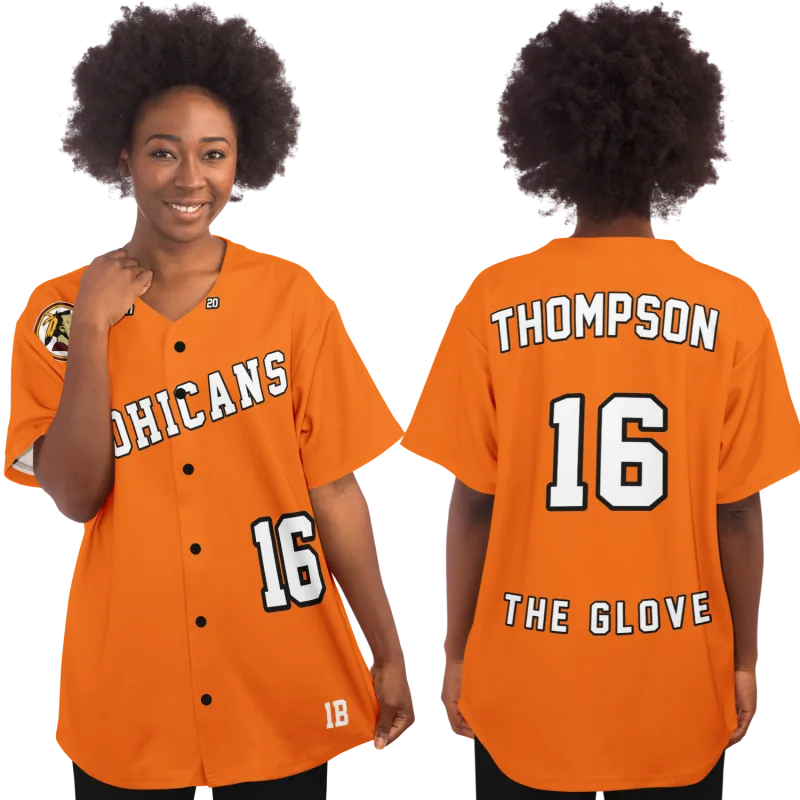
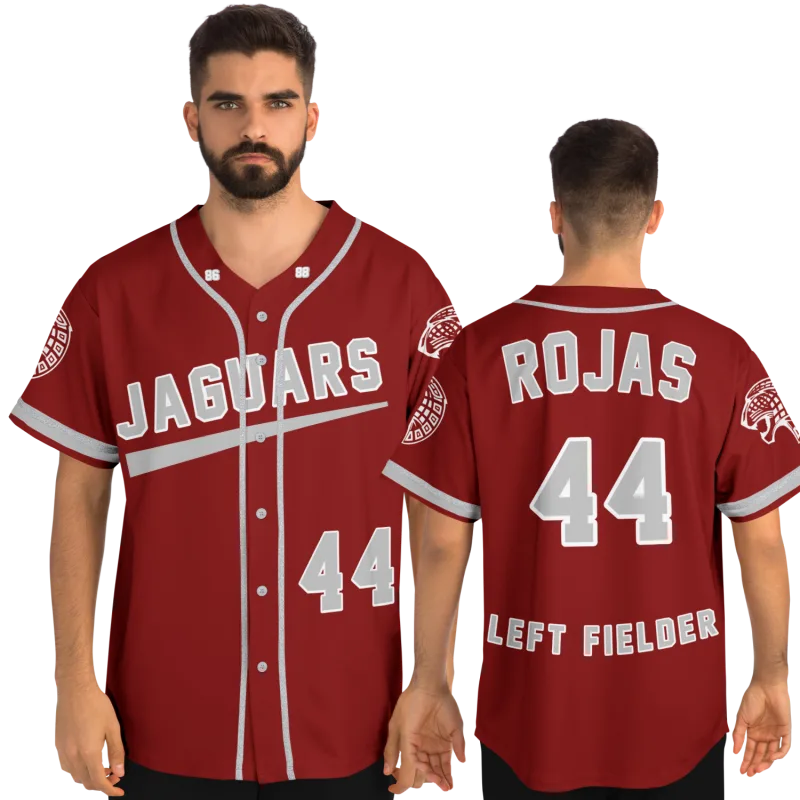
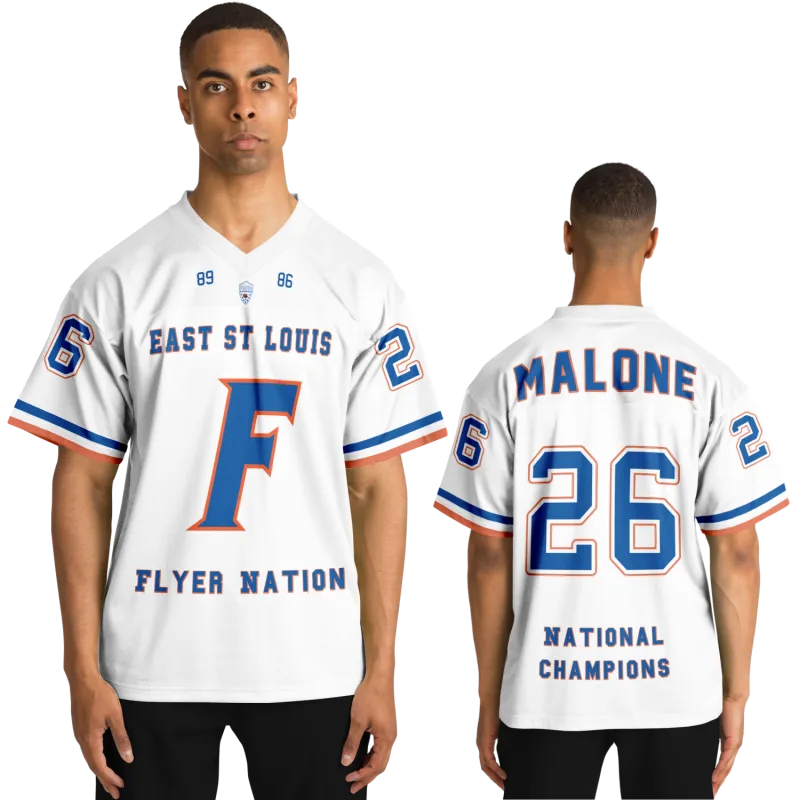
That's what a custom jersey does that no highlight reel or photograph can quite match. It puts the artifact back in your hands. You can hold it. You can wear it. You can put it on during a college football Saturday and feel, for a few hours, like the number on your back still means something to someone on a field somewhere.
In our experience, the detail that matters most to former athletes when they're designing a custom jersey isn't the colorway or the fabric weight. It's the number. And then the name. And then the exact placement of both.
Because those specifics are the memory. Get them right, and the jersey works. Get them wrong, and it's just clothing.
Your jersey is still out there waiting.
Design yours in minutes and see your name and number exactly the way you remember it — then wear it for the next college football Saturday.
Frequently Asked Questions
What makes college football Saturday different from a professional game day?
College football Saturday is built on institutional identity, longstanding rivalry, and traditions that are entirely specific to individual schools and programs. Unlike professional football — which is a national, franchise-based product — college football is rooted in place. The pageantry, the band, the specific pregame rituals, and the rivalries all emerge from a particular school's history and geography, making each game day an experience that belongs to that community and cannot be replicated anywhere else. For former athletes, that specificity connects directly to personal memory in a way that a professional broadcast cannot.
How do former athletes experience college football Saturday differently than casual fans?
Former athletes bring an embedded visual and tactical literacy to watching the game that develops through years of repetition and film study. They read formations, coverage rotations, and route concepts instinctively — which adds a layer of analytical pleasure to the viewing experience. Beyond that, the atmosphere of a college game day activates specific sensory memories from their own playing days: the pregame routine, the crowd noise, the particular emotional state of competing in front of a home crowd. The experience is simultaneously nostalgic and analytical in a way that's unique to people who've been on the other side of the stands.
What's the best way to honor a college football career or playing memory?
The most lasting way former athletes preserve the memory of their playing days is through physical artifacts: game film, photographs, and — most commonly — the jersey itself. A custom jersey with your name, number, and school colors recreates the most personal element of the playing experience and can be worn during game days, displayed in your home, or given as a gift to someone who shared the season with you. The specifics matter: the correct number placement, the correct font, the correct colorway. Getting those details right is what turns a piece of clothing into a genuine document of what happened.
Is college football Saturday still relevant if you played a different sport?
Absolutely. The college football Saturday experience — the campus atmosphere, the crowd, the rivalry, the sense of seasonal occasion — resonates deeply with former athletes from any sport. The game itself may be football, but what it activates is the memory of your own Saturday afternoons: the team, the competition, the feeling of being present inside a moment that mattered. Former swimmers, lacrosse players, soccer players, and track athletes all report the same phenomenon — a college football Saturday brings back the emotional truth of competing, regardless of the sport you played.
Can you design a custom jersey if you played in high school rather than college?
Yes. Custom jerseys can be built to match the colors, numbers, and name formats of high school programs just as accurately as college ones. The emotional significance of a high school jersey is often equal to — and sometimes greater than — a college jersey, because for many athletes, high school is where the formative Saturday afternoons happened. The design process is the same: your name, your number, your colors, your memory.
See also: why high school sports still matter to adults | the most football-obsessed states in America | what playing under the lights actually felt like | the science behind why those game-day memories stay so vivid | what it felt like to walk away from the game after your senior season