



There is a moment every former player carries somewhere specific in her body.
Not in memory exactly — deeper than that. In the place where your legs knew before your mind did that you had to run. In the steadiness that came over you right before a corner kick. In the particular silence of the field at the whistle, the whole world reduced to a rectangle of grass and eleven other people who wanted exactly what you wanted.
If you played, you know the moment. You don't need it described. You need it named.
Women's soccer athlete identity is one of the more quietly profound things that happened to an entire generation of girls — not because the sport was special in the abstract, but because it arrived at precisely the right moment in millions of individual lives and said, without ceremony: you are an athlete. Get on the field.
What happened next shaped more than how those girls ran. It shaped what they believed was possible for themselves.
The Field Was a Different Kind of Classroom
There are things you cannot learn at a desk. Not because the desk fails you, but because some knowledge has to move through your muscles before it lives in your mind.
Soccer taught girls to read space. To anticipate bodies in motion. To make a decision in under two seconds with incomplete information and stand behind it. To lose a 50-50 ball and go back for the next one without commentary, without ceremony, without waiting for someone to tell you it was okay to keep going.
None of that was listed in any curriculum. None of it showed up on a report card. But every girl who played it learned it somewhere in her body, in the accumulating weight of seasons, and carried it into every room she entered afterward.
The specific texture of that education was this: the field did not care what you looked like. It did not care how you were dressed, whether you were popular, whether you had the right brand of anything. It cared whether you could hold your position, communicate under pressure, and execute when it mattered. That is a profoundly unusual environment for a young girl to inhabit: one in which the only currency is performance, and performance is completely within her control.

Every former player who walked off a pitch having scored, having defended, having simply shown up and competed absorbed a data point about herself that the rest of her life could not easily erase. The data point was simple: I did that.
What It Means to See Yourself As an Athlete
Identity is not a statement you make. It is a picture that accumulates.
For a generation of girls who grew up with soccer as a fixture of childhood and adolescence, that picture built slowly and then suddenly became something permanent. The cleats in the hallway. The grass stains that never fully washed out. The Saturday morning ritual that reorganized the whole family's weekend around one game. The way you introduced yourself — not "I kind of play soccer" but I play soccer, with the flat certainty of someone describing a fixed fact about the universe.
That certainty matters more than it sounds. Women, particularly young women, are often taught, in subtle and not-so-subtle ways, to qualify themselves. To shrink the claim. To add the caveat. Soccer had no mechanism for that. You either started or you didn't. You either took the shot or you passed it off. The game forced a kind of declarative self-definition that very few other environments provide.
Underneath all of that ran a lesson even fewer people name: the one about the body. Girls are taught, in a thousand small ways, that their bodies are fragile: something to keep clean, keep quiet, keep safe. Soccer handed you a field where none of that was true. You were expected to sprint full speed toward someone sprinting full speed toward you, to win a shoulder-to-shoulder challenge, to slide in and get back up with grass down your shin and keep playing. Somewhere in the middle of one of those moments you found out, possibly for the first time, that your body was not something to be careful with. It was something you could use — hard, on purpose — and the world did not break, and neither did you.
The bruises were the proof of it. Every former player remembers the first grass burn or stud mark that felt less like an injury and more like a receipt, a record that you had been in the contest rather than watching it. Nobody framed those marks as something to be upset about. They were badges. That small reordering, from my body is something to protect to my body is something I can commit to a challenge, is the quiet hinge the whole identity turns on. You did not become an athlete in your head first. You became one in your legs and shoulders and lungs, and the self-concept simply followed the body to where it had already gone.
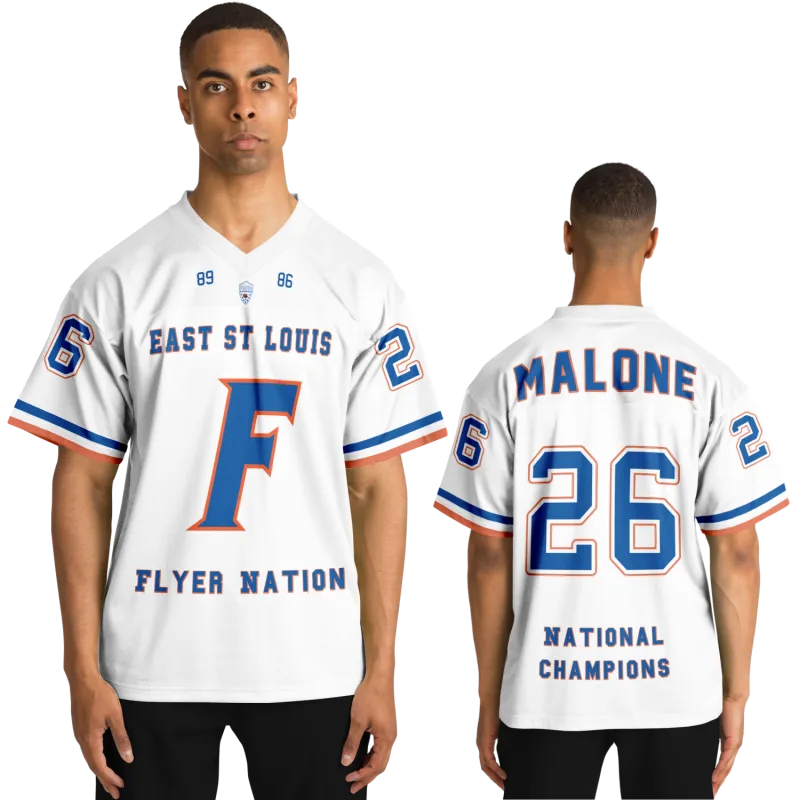
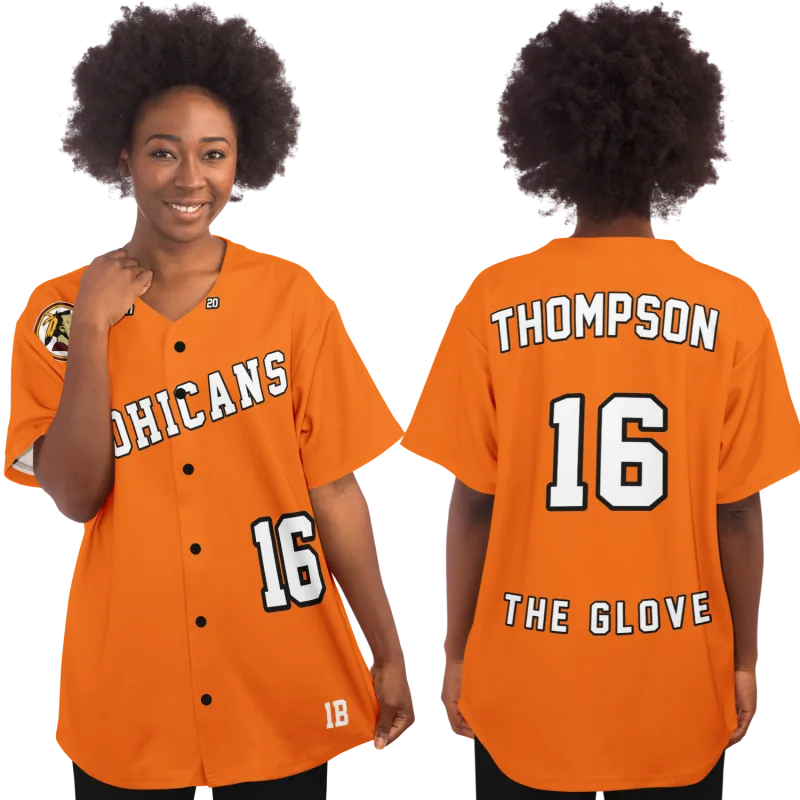
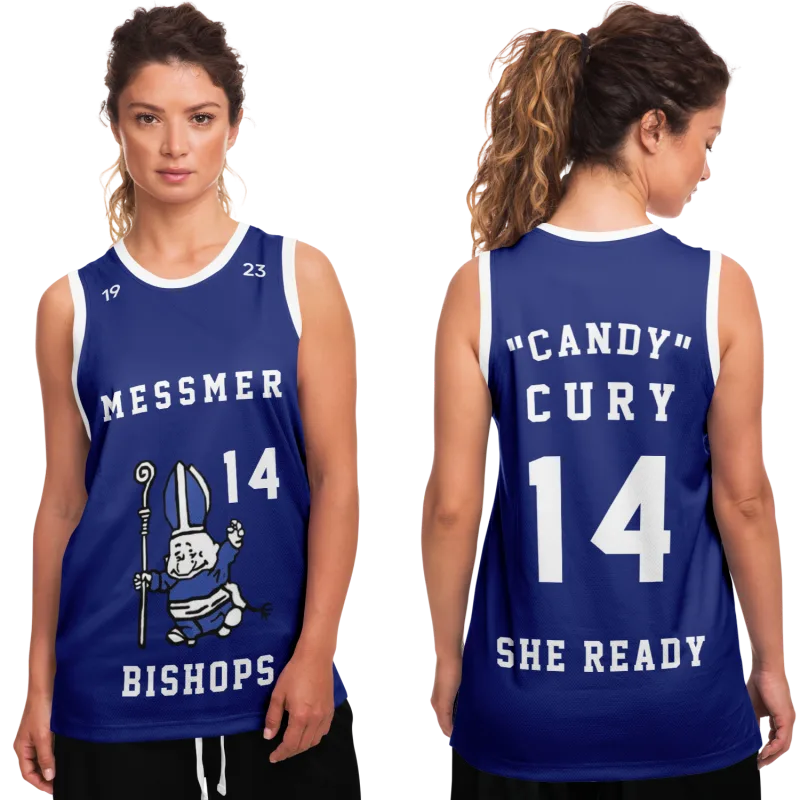
The jersey was part of this too, in a way that deserves more credit than it typically receives. There is something about having your name and number on your back — something about the visual declaration of I belong here, I have a designated place in this formation — that does real psychological work. The jersey is not a costume. It is a uniform in the original sense: a visible statement of belonging to something organized, serious, and worth showing up for.
Wearing one told the world what you were. And the world watching (parents, coaches, younger girls on the sideline) reflected that back to you.
The Teammate You Became (And Took With You)
Here is something no one talks about enough when they talk about what team sports gave girls: the specific education in collective accountability.
You cannot hide on a soccer field. Not really. Every gap in the defensive line is visible. Every run that wasn't made shows up in the space that opened and closed without a body filling it. Soccer made the contribution (and the absence of contribution) legible in real time, to everyone on the field and everyone watching from the sideline.
That is a sophisticated thing to teach a young person. The idea that your individual choices ripple outward. That your performance is never only about you. That the team is a system, and you are a component of it, and components have responsibilities that exist independent of how you feel that morning.
Every former athlete remembers the game where she wasn't right (tired, distracted, off) and played through it anyway because her teammates needed her to. And she also remembers, precisely, what it felt like to be carried by a teammate who gave more than she had to, on a day when she couldn't. Both experiences are formative. Both arrive only inside the context of genuine competition, genuine stakes, genuine shared purpose.
What those girls became in adulthood — the colleague who doesn't let the team down, the manager who reads the room and adjusts, the friend who shows up when it's inconvenient — that person was partly assembled on a soccer field. At age nine, at thirteen, at seventeen, in the hundred repetitions of having to figure out together how to win something that mattered.
The Specific Thing That Changed When You Won — And When You Lost
Winning and losing both teach. But they teach different things, and soccer, over a long enough career, guaranteed you a thorough education in both.
Winning in a team sport has a specific texture that individual achievement doesn't replicate. It is distributed. It belongs to everyone. You cannot take it away from the girl who played beside you, cannot claim more of it than she can, cannot hoard it. The shared nature of team victory is its own instruction: that some of the best things in life arrive in a form you have to share, and that sharing them does not diminish them. If anything, it amplifies them. The pile-on after a goal. The end-of-season celebration in a gym or a parking lot or a living room that suddenly got too small for all the joy in it.
Losing, meanwhile, delivered something harder and more durable: the specific experience of being disappointed and having to continue. Not being told to continue. Not being consoled into continuing. Just — the whistle blowing, the score being what it was, and both teams walking off the same field, and the world still being there the next morning requiring your participation.
That is not a small thing. The capacity to absorb a loss and get up the next day and put your cleats on again is one of the most practically useful things a person can develop. It is not optimism. It is not resilience in the motivational-poster sense. It is a specific, trained ability to distinguish between this ended badly and I am over.
Girls who played soccer through enough seasons — through upsets and shutouts and tournaments that ended in the quarterfinals — developed that capacity in the most reliable way it develops: repetition. Enough times that it became reflex.
One Story That Says It Better Than Analysis Can
Tamara J., 31, played club and high school soccer from age seven through her senior year, then spent her twenties in project management before returning to recreational leagues in her city. She told us she didn't realize until she was twenty-eight and managing her first cross-functional team that the mental model she was using — who's on the ball, who's covering, who needs to be where before the play develops — was the same mental model she'd been running since she was a midfielder at thirteen. "I didn't think of it as soccer," she said. "I just thought of it as how you think. Then someone asked me how I read situations so fast and I realized: I've been doing this for twenty years. I just used to do it in shin guards."
That is not a metaphor. That is how identity works. The habits of attention you build in one arena migrate. They don't announce themselves. They simply become the way you see.
The Jersey Never Really Comes Off
There is a reason former athletes keep their jerseys.
Not for nostalgia in the sentimental sense — not because they want to go back. But because the jersey is evidence. It is a document. It says: I was this. I was part of this. I showed up for this, regularly and seriously, and I earned the right to have my name on the back of this thing.
That proof carries extra weight for athletes whose effort was never seen or named — a story we explored in a post about what it means to compete like an athlete without anyone calling you one.
The physical object carries the identity forward in a way that photographs and trophies don't quite replicate. A jersey is wearable. It is something you can put on your body and re-inhabit, briefly, the physical reality of being the person who wore it. The weight of it. The specific color. Your number.
In my experience as a former player, the athletes who come back to their jerseys — who look for them in a closet or a storage box, who think about having a new one made — are not chasing a moment. They are affirming a permanent fact about themselves. That they were an athlete. That the game formed them. That the identity is still there, underneath everything else that accumulated on top of it.
The women who played soccer, who froze at early-morning practices and ran fitness tests and learned to head a ball and argued calls and celebrated in parking lots, did not leave that behind when they graduated. They took it with them into every meeting, every hard conversation, every decision that required holding their position under pressure.
The game is over. The formation is permanent.
There is a reason those four words — "I played" — still carry so much weight decades after the final whistle. The science behind why those four words still define us examined why the identity formed on the field refuses to fade.
Your jersey is still out there waiting.
Design yours in minutes and see your name and number the way you remember them.
Frequently Asked Questions
Why does soccer specifically have such a strong impact on athlete identity for women?
Soccer arrived at scale for girls during a generational window when team sports for women were becoming genuinely mainstream, which meant it was one of the first sports where a girl could look at both her peers and visible competitors above her and see the same activity taken seriously at every level. The combination of genuine competition, team structure, and visible representation gave the sport an identity-forming weight that individual activities or less visible team sports couldn't fully replicate in the same way. The team context specifically matters — individual sports build self-reliance, but team sports build a sense of collective belonging and role-based contribution that shapes how athletes move through group environments for the rest of their lives.
How does the athlete identity formed in soccer carry over into adult life?
The transfer tends to happen through cognitive habits rather than conscious decision-making. Athletes trained in reading spatial relationships, communicating under pressure, managing collective accountability, and absorbing failure without collapsing tend to bring those habits to professional and personal environments without necessarily recognizing them as athletic skills. Research on how youth sports carry over into career outcomes has found that former team-sport athletes are disproportionately represented in leadership roles, and the most cited mechanism is exactly this: the translation of competitive team skills into collaborative, high-stakes environments.
Does the identity stay with you if you stopped playing young?
Yes — and often more durably than people expect. The foundational identity patterns that form through athletic participation tend to calcify early. A girl who played seriously through early adolescence and then stopped carries the cognitive and emotional patterns she developed for the rest of her life, whether or not she continues competing. What changes without continued practice is fitness and technical skill. What does not change is the underlying orientation toward challenge, teamwork, and performance accountability that the game instilled. Former athletes who stopped playing at fourteen often recognize themselves in descriptions of athlete identity more readily than non-athletes who have played casually for decades.
What makes a soccer jersey meaningful beyond its function as a uniform?
A jersey works as an identity artifact in a specific way: it was earned in a context where belonging required demonstrated commitment. Unlike most clothing, which you acquire, a jersey was given to you as recognition that you were part of something. That history embeds itself in the object. When former athletes describe the significance of their jerseys, they consistently return to the same element — the name and number — because those two things made the collective visible while also making the individual permanent. Your specific contribution to the team was documented, literally, on the back of a garment. That is a form of recognition that most adults encounter rarely, if at all, outside athletic contexts.
See also: athletic identity after high school | what high school sports teach you that nothing else could | the grief that comes when a playing career ends | why high school sports still matter so much to adults