

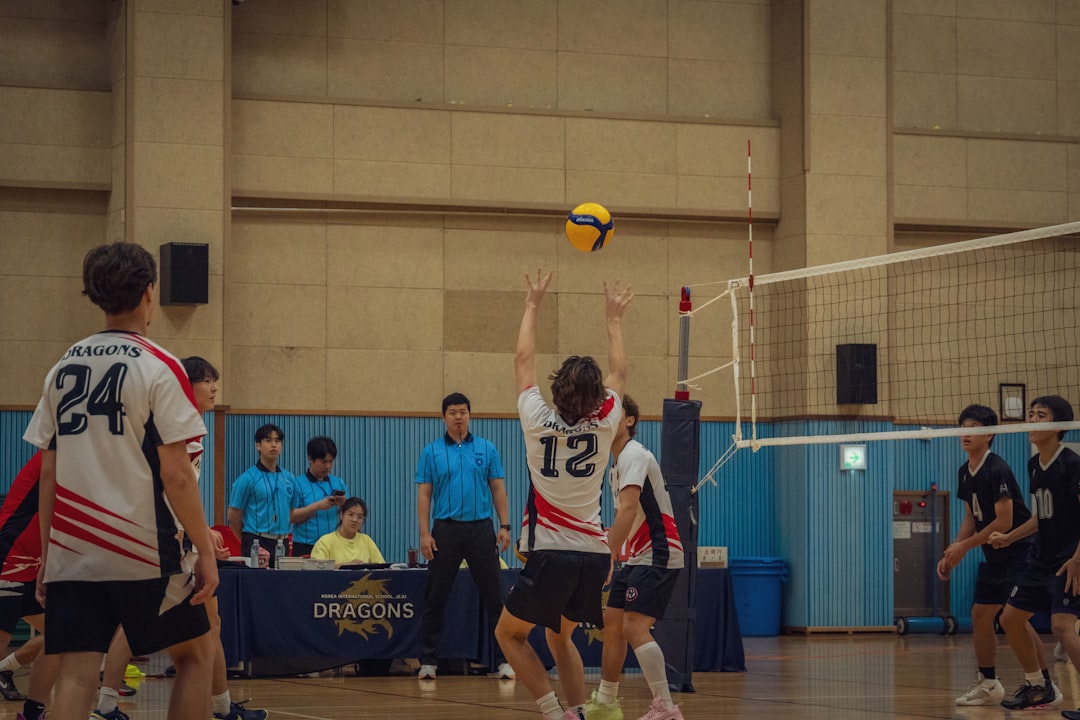

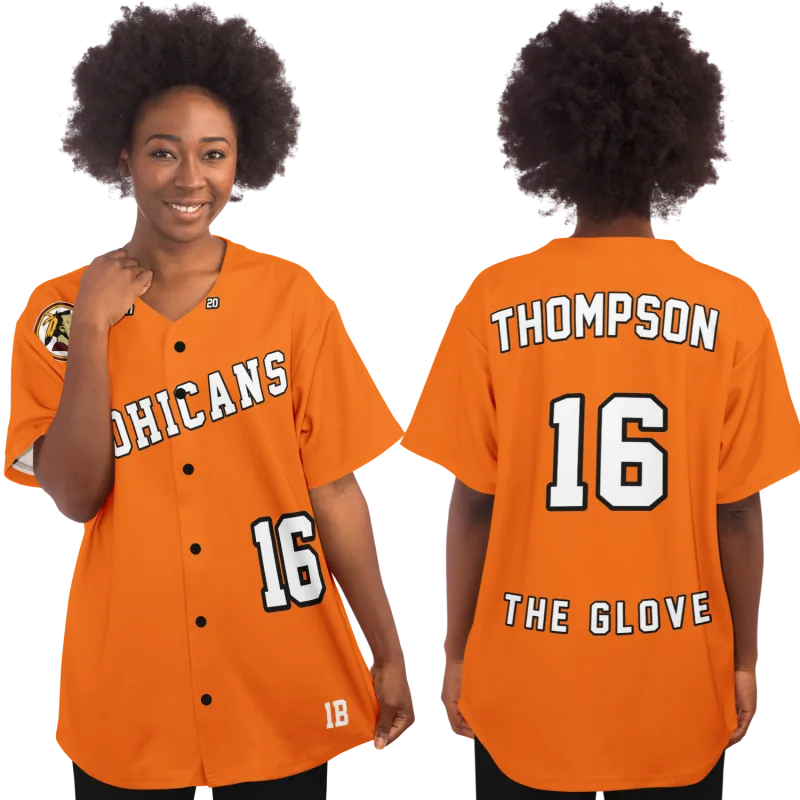


You kept your grades up, showed up to practice when you were exhausted, learned to read a defense, and competed in front of a crowd that expected you to perform under pressure. The word female athlete recognition sports professionals use today — the one that gets applied to women in major leagues and Olympic arenas — somehow never quite made it down to your gym, your court, your floor routine, your sideline.
Nobody handed it to you. And you may have spent years wondering, quietly, whether that was fair.
It wasn't. And if you played — in any sport, at any level — you already know that.
The Definition Was Never the Problem
Here is what an athlete actually is: a person who trains systematically, develops physical and technical skill over time, performs under competitive pressure, and accepts the physical cost of doing so.
That's it. That's the whole definition.
There is no asterisk that says unless the sport involves a uniform with a skirt or unless the competition happens on a gymnasium floor instead of a field or unless the performance requires grace in addition to power. The definition does not change based on whether the crowd is loud or small, whether the scoreboard tracks points or judges award them, whether the sport appears in a Friday night headline or gets mentioned in the school paper on Tuesday.
Every former athlete remembers the moment they first felt the gap — the space between what they knew about themselves and what the culture around them was willing to acknowledge. Maybe it was a relative at Thanksgiving asking when you were going to try a "real sport." Maybe it was a coach from another program who described your training as "more of an activity." Maybe it was something subtler: the absence of the word itself in how people described what you did.


You trained. You competed. You sacrificed. But the word — athlete — was withheld like a credential you hadn't quite earned.
That gap is not a misunderstanding. It is a cultural habit with a long history. And the people it affected most are the ones who deserved the recognition most: the women and girls who did all the work and received none of the credit.
What the Training Actually Looked Like
There is a tendency, when people dismiss certain sports, to imagine that the training is somehow proportionally softer. That if the sport doesn't look aggressive enough, the preparation must be casual. That if you're performing to music, you couldn't possibly be working as hard as someone performing in silence.
This is not a hypothesis that survives contact with a real practice schedule.
Competitive cheerleaders train tumbling, stunting, and choreography combinations that demand explosive strength, precise timing, and the physical trust to throw and catch another human being at height — a skill set that takes years to develop and carries genuine injury risk. Dance competitors rehearse routines thousands of times to the point where technical execution becomes automatic, because the performance moment requires all available cognitive bandwidth for artistry and presence. Volleyball players develop the kind of fast-twitch reaction speed and court reading ability that coaches in other sports specifically point to as elite athletic markers.
In our experience covering the former athlete space, the sports most often dismissed as "not really athletic" are consistently the ones that demand the hardest combination of things to train simultaneously: physical conditioning AND technical precision AND performance composure AND team synchronization. Any one of those elements alone takes years to develop. Developing all four at once, at competition level, is what an athlete does.
If you played, you know what your body felt like after a full practice. You know what it cost to compete injured. You know the specific kind of focus it takes to perform your best when everything in your nervous system wants to retreat. That is not an activity. That is athletics.
The Sports That Got Dismissed the Hardest
Not every sport gets dismissed equally. There is a specific pattern to the dismissal — and it tracks almost perfectly with which sports are predominantly female.
Competitive cheer and sideline cheer got the sharpest end of this. The association with support — with cheering for someone else — made it easy for observers to overlook the competitive version entirely. The fact that elite competitive cheer programs run two-a-days, maintain strict conditioning standards, and compete for national titles on a stage in front of thousands of people was invisible to anyone who had only ever seen the sideline version and stopped looking.
Dance — whether competition, performance, or pom — suffered from the art-versus-sport binary that culture has never cleanly resolved. If it's beautiful, people decided, it can't be brutal. If it requires grace, it must not require strength. Neither of those equations is true. The training that produces a flawless performance is invisible by design. That invisibility became an excuse for dismissal.
Volleyball occupies a middle space — it's widely recognized as a sport, but the female athletes who play it have historically received less institutional weight than their male counterparts in more culturally dominant sports. The dismissal is subtler here, but present: fewer resources, smaller crowds, less coverage, and a persistent cultural tendency to treat women's volleyball as the junior version of something that matters more.
Synchronized swimming, gymnastics, figure skating — any sport where a judge evaluates a performance rather than a clock or a scoreboard — get classified as "not really competitive" by people who have never felt the weight of a score that decides your season.
The pattern is consistent: if the sport is predominantly or historically female, and especially if it involves aesthetics alongside athleticism, the cultural reflex has been to subtract the word athlete from the description of the people who practice it.
That reflex was wrong. It remains wrong. And the women who lived through it deserve to have that said plainly.
It Wasn't Personal — It Was Structural
None of this happened in a vacuum. The reason the word athlete was withheld from the women in your gym, on your court, and across your floor routine is that the systems around girls' and women's sports were built to overlook them — and that architecture, not your effort, was always what was wrong.
The funding gap is the most visible version of it. When college basketball's marquee tournament pays out in the hundreds of millions to the men's side while the women's tournament receives a small fraction of that, the message is unambiguous: one set of athletes is worth investing in, and the other is expected to compete anyway. That resource gap runs down through every level — smaller budgets, fewer coaches, older equipment — and it predates any individual athlete's talent.
The same pattern shows up in pay. The U.S. Women's National Team won world championship after world championship while being compensated at a fraction of a men's national team that had never matched that success. Equal pay did not arrive because someone noticed the unfairness; it arrived because the players fought for it and won.
Media coverage closes the loop. Women's sports receive a sliver of airtime, and when the cameras do show up, the framing tilts toward appearance or toward the backhanded compliment — that a woman "plays like a man," as though athleticism itself were the anomaly rather than her skill.
And through all of it, one law stands as proof that the gap was policy, not ability. Title IX, passed in 1972, required schools that receive federal funding to invest in girls' sports on equal terms. The moment the rules changed, participation exploded — not because girls suddenly got stronger, but because they were finally given the same chance. That is the entire point.
The woman in your gym was never the problem. She was competing inside a system built to overlook her — and that system, not her training, is what deserved the asterisk.
The Sacrifice Was the Same
Brianna M., 34, played competitive volleyball through high school and into a club program after graduation. She describes being at a family gathering in her early twenties, mentioning that she was still playing, and watching a relative ask — with genuine confusion — "But when are you going to do something serious with your time?"
She had been training four days a week, managing a conditioning program on off-days, maintaining her grades under that schedule, and competing regionally. The training was serious. The time investment was serious. The only thing that wasn't serious, apparently, was the way the people around her perceived it.
That story is not unusual. It is, in the experience of anyone who has spent time in the former athlete community, almost universal among women who played sports that didn't receive mainstream cultural validation. The sacrifice was real. The time was real. The physical cost was real. The dismissal arrived anyway.
Here is what that sacrifice actually looked like across sports:
- Early morning practices before school that meant alarm clocks before 5am
- Conditioning work that continued through injury, managed rather than rested, because the competitive calendar didn't pause
- The mental load of maintaining performance standards in school and sport simultaneously
- The specific emotional weight of competing at high stakes in front of an audience that may not have fully understood what they were watching
Every former athlete who reads that list will nod. Not because these experiences are dramatic, but because they are ordinary. They are what the training life actually looked like, across sports, across levels, across decades. The sacrifice was identical. The recognition was not.
What Recognition Actually Costs — and What It Gives Back
The argument is sometimes made that recognition doesn't matter — that the experience of competing is its own reward, and that needing external validation is a kind of weakness. This argument is almost always made by people who received the validation automatically and therefore never noticed it was there.
Recognition matters because identity matters. The word athlete is not a trophy. It is a category of self-understanding. When a person trains systematically, competes at a high level, and organizes a significant portion of their developing years around the discipline of sport, they are building an identity. That identity shapes how they understand their own capability, their relationship to effort and challenge, their sense of what they can endure.
When the culture declines to reflect that identity back — when the word is withheld, when the sport is minimized, when the training is treated as optional rather than serious — it does not just fail to reward the effort. It actively works against the athlete's ability to claim what she earned.
The former athletes who feel most settled in their identity are not the ones who competed in the most culturally prestigious sports. They are the ones who, at some point, heard clearly and specifically that what they did was real, that what they gave was genuine, and that the word athlete applied to them without qualification.
If you played, that word applies to you. It applied to you then. It applies to you now.
Carrying the Identity Forward
Here is what is interesting about athletic identity: it does not expire with the last competition. The former athlete carries forward a specific set of internal resources — a phenomenon we examined in detail in our exploration of the psychology of athletic identity — the capacity to endure discomfort, the habit of preparation, the understanding that performance improves with repetition and degrades without it — that remain functional long after the sport itself is finished.
In our experience, the former athletes who most struggle with the post-competition years are the ones whose identity was most contested while they were competing. When the culture refused to call you an athlete, you may have internalized some of that refusal. You may have minimized your own experience. You may have described your sport with an apologetic qualifier — "I did volleyball, but it wasn't like a serious sport" — to preempt the dismissal rather than receive it.
That minimization is worth examining. Not to manufacture grievance, but to recover what was always yours.
If you kept your grades up and your conditioning up and your nerves together on competition day, you were operating at a level that most people who dismissed your sport never approached in anything. The discipline was real. The identity was real. The only thing that was constructed — artificially, unfairly, by a culture with a blind spot — was the idea that your effort didn't qualify.
It always qualified. Every former athlete who played, trained, competed, and gave what it required is an athlete. The word is not a gift that gets bestowed. It is a description of what you did. You did it. The word belongs to you.
Your jersey is still out there waiting.
Design yours in minutes and see your name and number just the way you remember it.
Frequently Asked Questions
Does the word "athlete" really apply to sports like cheer, dance, and volleyball?
Yes — without qualification. The definition of an athlete is someone who trains systematically, develops physical and technical skill over time, and competes under pressure. Competitive cheer, dance, and volleyball all require precisely that. The cultural habit of withholding the word from these sports tracks almost entirely with their demographic composition, not with their actual physical demands. The training is real. The word applies.
Why do some sports get dismissed as "not real sports" even when the training is demanding?
The pattern of dismissal tends to follow two fault lines: sports that are predominantly female, and sports where aesthetic performance is part of the evaluation. The false assumption is that if a sport requires grace or involves a judging panel rather than a scoreboard, it must not be genuinely athletic. Neither assumption is accurate. The training required to produce a performance that looks effortless is, in almost every case, more demanding than training that is allowed to look difficult.
Is it too late to reclaim an athletic identity if you stopped playing years ago?
No. Athletic identity is built on the reality of what you did, not on the current status of your playing career. If you trained seriously, competed at a meaningful level, and gave what the sport required of you, that experience is part of who you are — it shaped your relationship to effort, discipline, and performance in ways that remain active. The identity does not require current competition to be valid. You earned it when you were playing. It remains yours.
How do I talk about my sport without minimizing it the way I was conditioned to?
Start by removing the qualifiers. Instead of "I did volleyball, but it wasn't really serious," try "I played volleyball through high school and into club." Instead of "I cheered, but it was more for school spirit," try "I competed in cheer." The qualifier is a preemptive defense against dismissal — but the dismissal was never accurate in the first place, so the defense was never necessary. Describe what you did at the level you did it. The word competed is accurate. Use it.
See also: what it means to carry an athletic identity after your playing days end | the grief that comes with never being fully seen as an athlete | the difference between someone who watches sports and someone who actually competed | how personalized recognition can finally make a former female athlete feel seen