
Something pulled it back out of storage — a reunion coming up, a kid's first practice, a box you finally committed to sorting through — and there it was. Your jersey. The number still legible, just barely, but the fabric thinning around the collar. The letters lifting at their edges. The material gone soft in a way that has nothing to do with how many times it's been washed and everything to do with how many years have passed.
If you've been searching for what to do with an old falling apart jersey, you already know the hesitation isn't really about the fabric. It's about what the fabric represents. Throwing it away feels like discarding something that can't be recovered. Keeping it as-is means watching it disappear a little more every time you handle it. The same hesitation follows other pieces of your athletic past: your old varsity letter jacket probably sits in the same storage box, carrying the same weight.
There are three real paths forward: professional repair and restoration, straightforward replacement with a comparable piece, or recreation (a new custom jersey built to your exact original specifications, carrying the same identity forward without the physical deterioration). Each path fits a different situation. This guide works through all three so you can identify which one is actually yours.
Read the Damage Before You Decide Anything
The single most common mistake people make with a deteriorated jersey is choosing a path before they understand what kind of damage they're actually dealing with. The type of deterioration determines which options are viable and which ones will cost you money for a result that fails in a year.
The Four Ways Old Jerseys Break Down
Cracking and peeling numbers or letters. This is the dominant failure mode for heat-pressed and screen-printed jerseys produced from the late 1990s through the early 2010s. The plastisol or vinyl application separates from the base fabric at the adhesive layer, and once that delamination begins, it continues regardless of how carefully the jersey is handled. Stabilization is possible. True reversal is not.
Fabric thinning and hole formation. The collar, underarms, and back shoulder panels are the first to thin. This is structural failure of the base material itself, not surface damage. Once the underlying fabric is compromised, any repair work sits on an unstable foundation: visible, impermanent, and likely to fail again.
Fading and color loss. UV exposure and repeated washing deplete the original dye from the fibers. This is visual deterioration rather than structural, but it's also irreversible through any repair process. The color that's gone is gone. The only real responses are acceptance or replacement.
Seam separation. The stitching connecting the jersey's panels has failed. This is actually the most repair-friendly damage type, provided the base fabric on both sides of the seam is still intact. A tailor or alterations specialist with experience in athletic wear can re-stitch separated seams cleanly, often invisibly. According to the Textile Care Allied Trades Association, synthetic athletic fabrics require specific needle gauges and thread types that differ from standard garment repair, which is why finding someone with athletic wear experience specifically matters here.
Understanding which of these you're looking at isn't just academic. Many people bring a jersey with delaminating letters to a general tailor, get an optimistic "we can try," and walk away with a repair that holds for a season before failing again, because the real problem was never the letters themselves but the adhesive chemistry underneath them. Diagnosing first saves you the repair bill and the disappointment.
Path One: Professional Repair and Restoration
Repair is genuinely the right answer when two conditions are simultaneously true: the base fabric is structurally sound, and the damage is localized enough that restoration work won't cost more than the sentimental value of keeping the original alive.
Where Repair Delivers Real Results
Seam separation with intact surrounding fabric is the clearest case for a repair investment. Shops with experience in dance costumes, cheer uniforms, or competitive athletic wear are better equipped for this than general tailors. They work regularly with mesh panels, stretch fabrics, and the reinforced seam constructions common in sports jerseys. Typical cost for seam repair runs $15–$45 depending on seam length and location.
Minor cracking across a limited number of letters is sometimes addressable through a clear coat sealant applied by a screen printing shop or memorabilia restoration specialist. The sealant stabilizes the remaining vinyl or plastisol and slows continued delamination. It won't restore the original appearance, but it arrests further deterioration, a meaningful outcome if the goal is preservation rather than display-quality restoration.
If the lifting is just starting and the jersey carries no real value, there's a DIY stopgap worth knowing. An iron on low heat can sometimes press a lifting corner back down — but never let it touch the vinyl directly. Put a sheet of parchment or plain printer paper between the iron and the number, press briefly, and let it cool before you check. A dab of washable fabric glue under a stubborn corner buys a little more time. Just be clear-eyed about what this is: on old jerseys, the adhesive underneath has already degraded, so this is a band-aid, not a cure. It might carry you through one more wear. Anything you genuinely care about belongs with a pro.
Where Repair Becomes the Wrong Investment
The honest threshold: if lettering is more than 35–40% delaminated, no surface application will hold reliably. The adhesive failure is occurring below the visible surface, and any patch work sits on a substrate that continues to separate underneath it. The repair may look acceptable for six months. It will not hold.
Similarly, if the base fabric has thinned to semi-transparency or has developed holes in the jersey's body panels (not just at seams), repair is cosmetic work on a garment whose structural life has ended. It may survive in a display frame behind glass. It will not survive handling, wearing, or anything resembling regular use. For jerseys in this condition, framing and displaying them at home may be the most meaningful way to preserve what remains, a way to honor the artifact without asking it to be something it can no longer be.
If the jersey has moved past the point where framing feels right but you're not ready to let it go, there's a middle path that gets skipped too often: upcycling it into a keepsake you'll actually use. A section of the body becomes a tote bag or a backpack panel. A few jerseys cut into squares become a quilt panel carrying every season in one place. A smaller cut gets reworked into a display piece: a pillow cover, or a framed fabric swatch with the number front and center. It's not museum-grade preservation, and it's not disposal. It's letting the material take a new shape instead of watching it fall apart on a hanger.
The genuinely useful answer here, even if it's not what people want to hear: most old jerseys falling apart have passed the repair threshold. That's not a failure of the jersey or the owner. It's just time arriving at its honest conclusion.
Path Two: Replacement — What It Delivers and What It Doesn't
If the jersey represents a program that still operates, replacement through official channels is sometimes available. High school athletic departments occasionally connect alumni with current apparel vendors or carry surplus stock. College programs frequently offer alumni apparel lines. For professional team affiliations, licensed team apparel remains widely available through official channels. The National Federation of State High School Associations notes that many member schools maintain relationships with uniform vendors who can assist with alumni inquiries specifically.
The Real Limitation of Straight Replacement
Replacement gives you a jersey. It does not give you your jersey. The number is different. The name on the back belongs to whoever currently wears it, or to no one. The year is absent. You receive something that represents your team's identity in the abstract (which is meaningful) but not your specific identity within that team, which is what the deteriorating original actually held.
For some people, that distinction doesn't matter. If the goal is a wearable piece representing team affiliation in the present, replacement is a clean, simple solution. But if what you're actually looking for is your name, your number, your place in that program's specific history, replacement is solving a different problem than the one you have. Understanding that difference before you spend money on it matters.
The Moment That Makes the Decision Clear
Marcus T., 34, played varsity basketball in Illinois and held onto his #24 jersey through two moves, a marriage, and ten years of storage. When he finally pulled it out to take a photo with his son (who had just gotten his own first jersey), the back lettering was more than half gone and the left collar seam had fully separated. He looked into repair options first. The screen printing shop he visited was straightforward with him: the letters were too far deteriorated for a sealant to hold, and re-applying the lettering would require stripping what remained and starting fresh on a fabric that had already seen better days.
He ended up designing a new jersey instead — same colors, his actual name, the same number, a font that matched his original as closely as he could remember it. When his son held both jerseys together for the photo, Marcus said it meant more than the original had in years. The old one had become an artifact. The new one was the identity, still living.
That shift — from artifact to living piece of identity — is what recreation actually offers. And it's available in a way that many people don't realize until they're already deep into the repair conversation.
Path Three: Recreation Through Custom Jersey Design
Recreation isn't a fallback. For a significant number of people with a deteriorated jersey, it's the most direct path to the outcome they actually want. They simply didn't know it was an option.
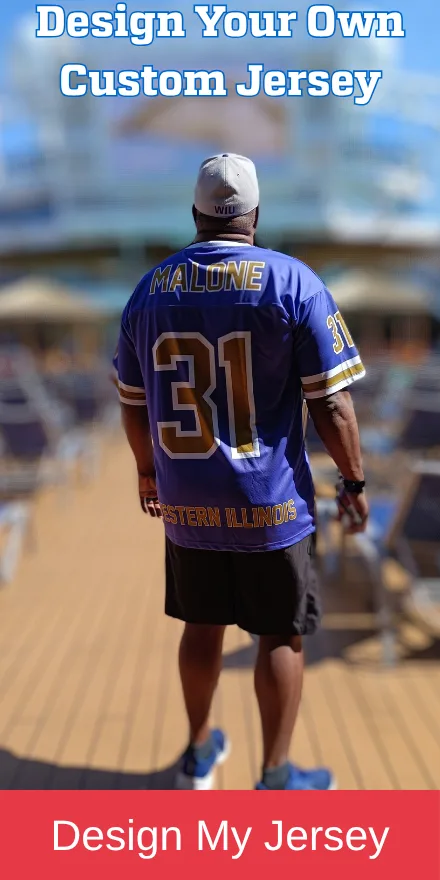
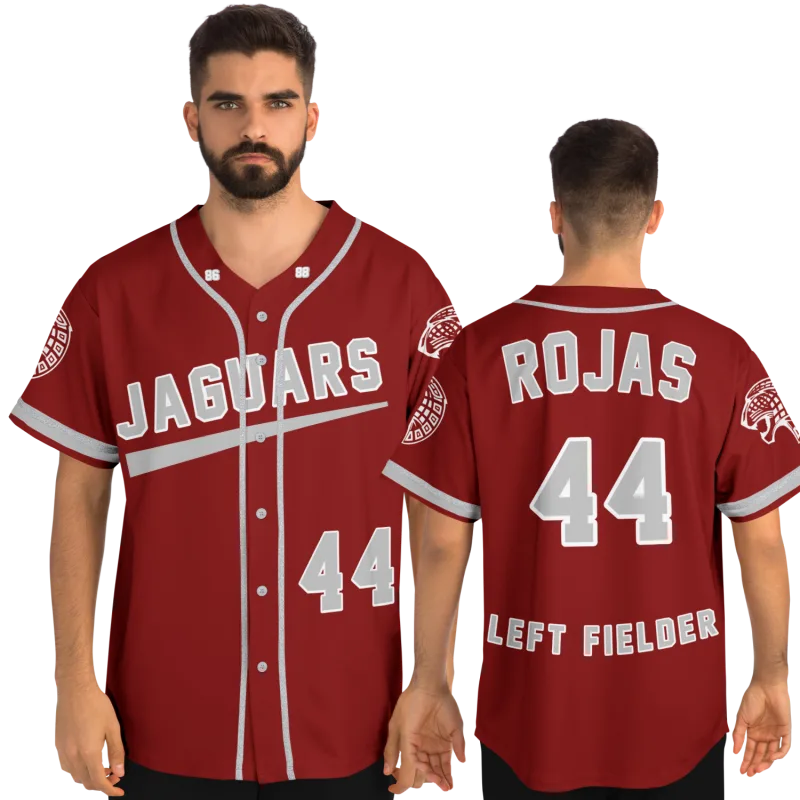
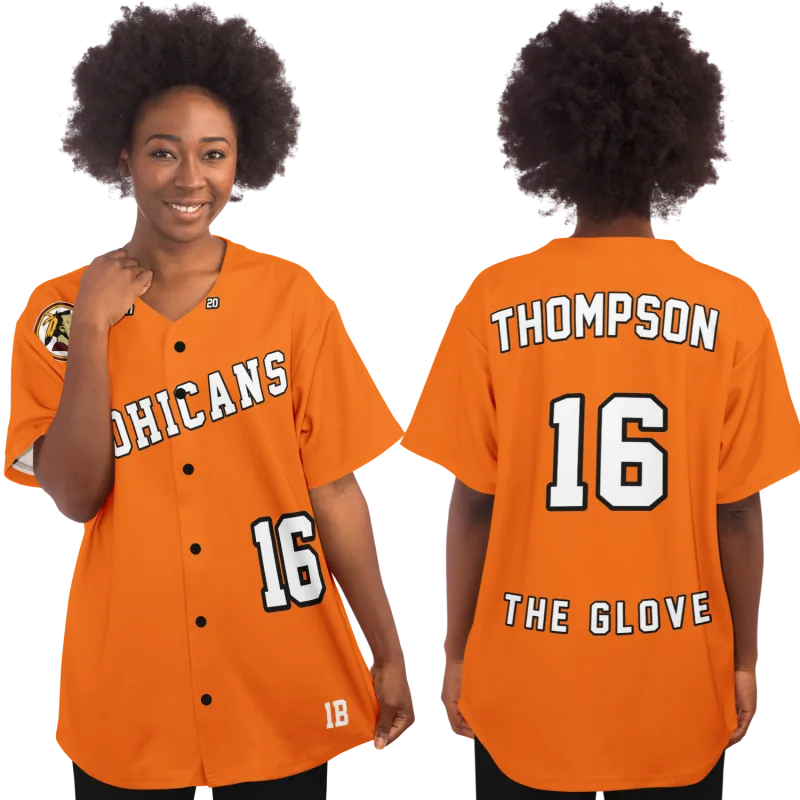
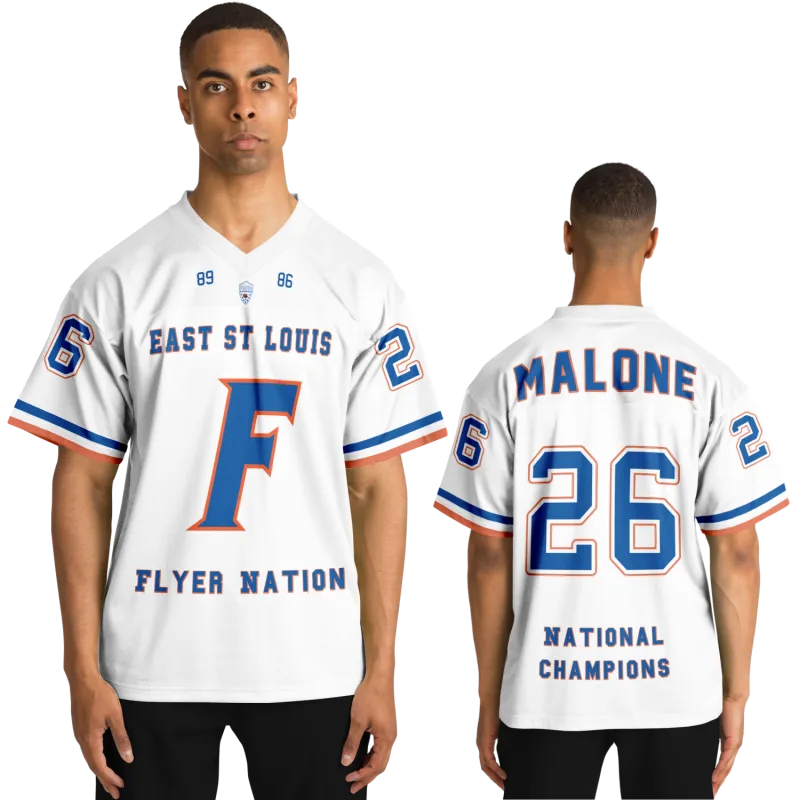
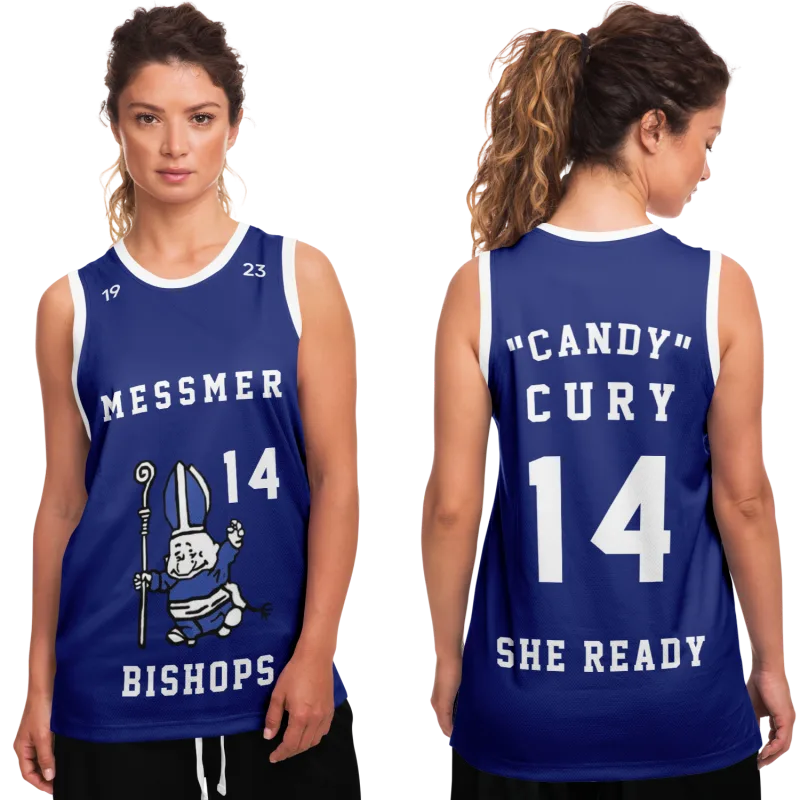
Custom jersey recreation means commissioning a new jersey built to your exact original specifications: your name, your number, your team colors, your sport's standard construction. Not a generic off-the-shelf jersey. Your jersey, as you wore it, in new fabric with modern print quality that won't delaminate within a few years of ownership. Modern dye-sublimation printing bonds color directly into the fabric fibers rather than sitting on top of them as a separate layer, which is why sublimated jerseys resist the cracking and peeling that plagued heat-press applications from earlier decades.
What You Can Specify in a Recreation
The customization range available through quality jersey builders now covers essentially every element that made your original jersey specifically yours:
- Your name and number in a font style appropriate to your sport and era
- Team colors matched precisely. Most builders accept hex codes or Pantone references if you have them from the original
- Fabric weight and mesh style suited to your sport's construction standard
- Number placement across front, back, and sleeve
- Sublimated or sewn lettering (sublimated is now the standard for long-term durability)
- Sleeve striping, panel coloring, and collar style
The result is not a knockoff of what you wore. It is a new version of the same identity — your identity — in material built to outlast the original by a significant margin.
The Emotional Mechanics of Saying Yes to Recreation
There's a specific resistance worth naming: recreation can feel like admitting the original is gone. Like choosing a copy over the real thing.
That feeling reliably inverts itself once the new jersey is in hand. The original's value was never located in its particular threads — it was in what those threads represented. A recreation doesn't erase that representation. It carries it forward in a form that can be worn, displayed, handed to someone who matters, and used. The original becomes what it actually is at that point: a physical artifact that served its years faithfully. The recreation becomes what you actually want: a living piece of identity that can continue the story.
The parents who design a recreation of their own high school jersey the same week their kid earns a number of their own — those are the people who understand this most clearly without needing it explained.
How to Work Through the Decision Without Going in Circles
Follow this sequence rather than weighing all three options simultaneously:
-
Diagnose the specific damage type first. Is the base fabric itself failing, or is the damage confined to the surface applications? Intact fabric with localized damage is worth a repair quote. Body-panel fabric failure means repair is cosmetic work on a garment past its structural life.
-
Clarify what outcome you actually want. Team affiliation in a wearable form, or your specific name and number back in your hands? The first is a replacement problem. The second is a recreation problem. Repair addresses neither if the jersey is past the threshold.
-
Get a written repair estimate before committing. Shops with athletic wear experience specifically. Ask them directly about expected longevity, not just about whether the repair is technically possible. A repair that holds for 14 months on a jersey you've kept for 15 years is not a solution.
-
If recreation is where you're landing, design with the original in front of you. Hold the deteriorated jersey while you work through the design. You'll notice details (a specific stripe width, a number style, a color note in the collar) that you wouldn't have caught from memory alone. The old jersey becomes your reference document for what comes next. Our step-by-step guide to recreating your high school jersey walks through the full design process: from color matching to font selection to final review.
The jersey you remember hasn't gone anywhere — it just hasn't been made yet.
Design yours in minutes and see your name and number the way you remember it, in colors that never crack, peel, or fade.
Frequently Asked Questions
Can cracked or peeling letters on an old jersey actually be repaired, or is restoration a lost cause once the damage starts?
Cracking letters can sometimes be stabilized, but not restored to their original appearance. Screen printing shops and memorabilia restoration specialists can apply a clear coat sealant over partially cracked vinyl or plastisol that slows continued delamination and prevents the cracking from spreading further. This works best when the lettering is less than 35–40% delaminated and the underlying fabric is structurally sound. Beyond that threshold, the sealant has insufficient intact surface to bond to, and the repair will fail again within a season of regular handling. Ask any specialist you consult to give you a direct assessment of expected longevity — not just whether the repair is technically possible.
Is it possible to recreate a jersey from an era when my school used different colors or a different logo than they do today?
Yes. Custom jersey builders work entirely from the specifications you provide, not from current institutional branding. If you played during a specific era when your school's color scheme or wordmark was different from what they use now, your recreation can reflect that specific historical version. Bringing reference photos of the original jersey to the design process (even phone photos taken at arm's length) is the most reliable way to match era-specific details accurately. The recreation documents your specific chapter in the program's history, not the program's current identity.
How do I know which of the three options is actually right for my situation without spending weeks going back and forth?
The fastest decision framework: get a repair quote from a specialist with athletic wear experience before you do anything else. If the quote comes back high, or if the specialist advises against it based on the damage type, you've eliminated one path without spending money on it. From there, the question is simple: do you want team affiliation without personalization, or do you want your specific name and number back? The first points to replacement. The second points to recreation. Most people who search for old jersey falling apart options find that recreation was the right answer the whole time; they just needed the repair conversation to clarify it.
What do people typically do with the original jersey after commissioning a recreation?
There's no single answer, and there shouldn't be. Some people frame the original alongside the recreation — the historical artifact next to the living version, displayed together. Some archive the original separately, kept but no longer pressured to be something it can no longer be. Some find that once the identity has been carried forward into the new jersey, the weight of preserving the original lifts naturally, and letting it go no longer feels like loss. The deteriorated jersey served its years. The recreation carries the identity forward. They occupy different roles, and those roles don't compete with each other.
See also: what to do with your old varsity letter jacket | why high school sports still mean so much to you as an adult | turning old gear into a custom sports shadow box | the athletic identity you built around that number and that name | personalized options that actually make a former athlete feel seen