

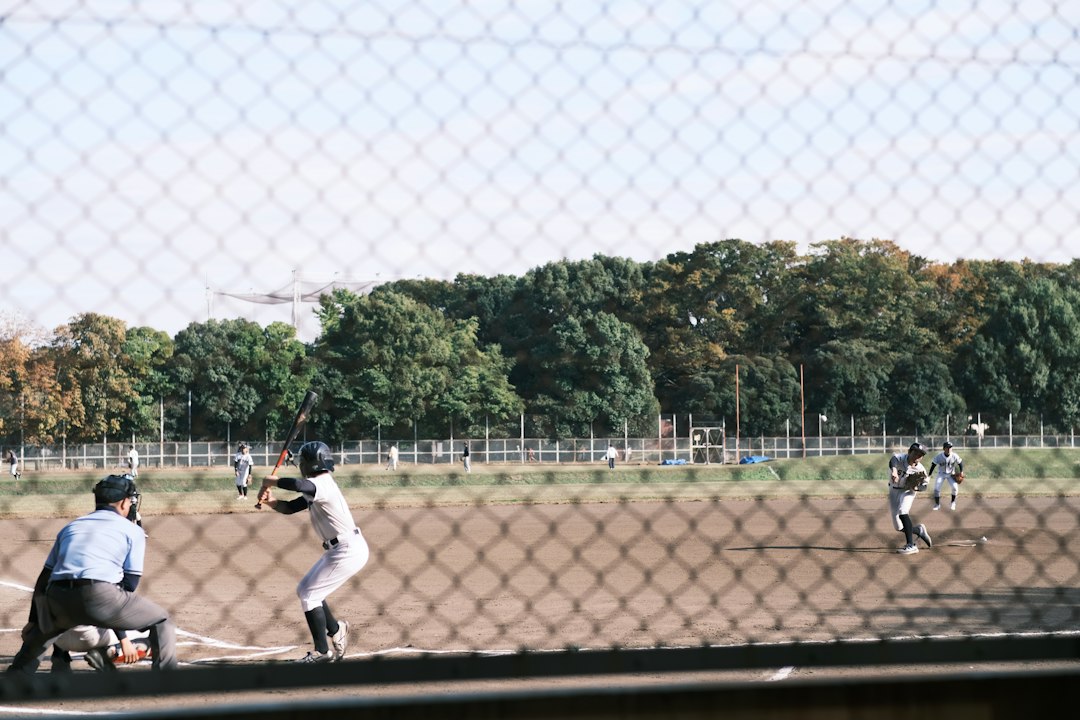



The muscle memory of a baseball swing is one of the most durable things the human nervous system stores — and for most former high school players, it outlasts nearly everything else from those years. The facts fade. The faces blur. The score of the game you remember as your best? Gone at the edges. But the hands know where to sit on the handle. They always will.
This is not sentiment. It is a specific neurological architecture — and once you understand what actually happens inside the brain when a swing gets encoded over thousands of repetitions, the experience of picking up a bat after fifteen years and feeling your grip find its place before your mind has caught up makes complete sense.
What Procedural Memory Actually Is (And Why It Outlasts Everything Else)
Not all memory ages the same way. That distinction is worth sitting with, because most people assume memory is one thing — a single system that stores everything and gradually loses fidelity across the board. It isn't.
The kind most people mean when they talk about memory — explicit, declarative memory — is what allows you to recall names, faces, scores, the sound of a specific coach's voice during a specific at-bat. This lives primarily in the hippocampus, and it is genuinely fragile. Details blur. Timelines collapse into each other. Ask any former player to reconstruct the exact sequence of their best game and you will get a narrative with gaps where the real events used to be.
Procedural memory operates differently at every level. It stores how to do things — riding a bike, fingering a chord, throwing a punch, swinging a bat. And it doesn't live in the hippocampus. It lives in the cerebellum and the basal ganglia — structures that are evolutionarily older, more protected, and far more resistant to the ordinary erosion of time and disuse.


Research on long-term motor skill retention from motor neuroscience consistently demonstrates that procedurally encoded skills — particularly those trained to automaticity through sustained, high-repetition practice — exhibit remarkable retention even after years without rehearsal. The motor programs built during intensive training appear to be stored in a qualitatively different way than episodic or semantic memory. They don't fade the way facts do.
For a high school player who took batting practice four days a week across three or four years, the repetition count runs into the tens of thousands of swings. Each one reinforces the same neural pathway. Each one thickens the myelin sheath around the axons that carry the signal from motor cortex to muscle — making the transmission faster, more precise, more automatic. By the time that player walked off the field for the last time, the swing had ceased to be a learned skill in the ordinary sense. It had become part of the physical architecture of the body itself.
The Grip Comes Back First — Here Is the Specific Reason
Of every element in a baseball swing — stance, load, stride, hip rotation, bat path, extension through contact — the grip returns first. Every time. There is a specific neurological reason for this, and it goes deeper than the hands being the point of contact with the bat.
The palms and fingertips contain an extraordinary density of sensory receptors. Meissner's corpuscles and Pacinian corpuscles — the mechanoreceptors that specialize in detecting pressure, texture, and fine proprioceptive position data — are packed into the hands at a concentration that exceeds almost any other surface of the body. The hands are the most informationally rich point of contact between body and object.
When you trained your swing during those years, every single repetition began at the same place: the hands finding the handle. Before stance, before load, before the first conscious preparation for the pitch — the grip was established first. That proprioceptive signal, repeated tens of thousands of times as the initiating input of the swing sequence, became encoded as the trigger. The grip was always the on switch.
So when you pick up a bat today — at your nephew's practice, in the back of a sporting goods store, in a batting cage you walk into on a Wednesday afternoon with no particular plan — the same sensory signal fires. And the system downstream of it activates in the sequence it was trained to follow.
The reason why your hands remember the bat before your mind has decided anything is precisely this: the hands were always first. Your nervous system filed the grip as the initiating event, and that filing hasn't been cleared.
How the Swing Got Built: The Neuroscience of Automaticity
Understanding why the memory persists requires a clear picture of how it was constructed in the first place.
During the years of practice that produced a high school swing, the brain was executing a specific transformation: converting a conscious, effortful, attention-demanding process into an unconscious, automatic one. Motor neuroscientists call this motor chunking — the gradual compression of a complex movement sequence into a single, efficiently-stored motor program that can be executed without consuming working memory.
Early in learning, a swing is fragmented. The developing hitter thinks about each component separately. Stride timing. Hip rotation. Keeping the hands back through the load. Each element requires explicit attention, and the cognitive cost is visible — which is why young players look mechanical. They're running a checklist, not executing a unified motion.
With repetition, those fragments consolidate. The motor cortex and cerebellum learn to treat the entire swing as a single unit of execution rather than a chain of sub-units. The program compresses. It becomes faster. It demands less from conscious oversight. Eventually — after enough reps, over enough time — it crosses a threshold and drops below the level of conscious control entirely. At that point, it has been transferred into the most durable storage the nervous system has.
What matters for the former player is this: that compression is permanent. The motor program does not un-chunk itself during years of disuse. The pathway weakens somewhat — execution quality and physical capacity degrade with deconditioning — but the structural encoding, the synaptic architecture that holds the shape of the swing, degrades slowly and incompletely. The old baseball swing memory is not gone. It is stored at a level of the nervous system that simply does not discard things the way conscious memory does.
You are not starting over when you come back. You are reloading something that was never erased.
Marcus T., 34 — The Return at His Son's First Practice
Marcus T., 34, picked up a bat for the first time since his senior season at a fall baseball clinic where his son was one of the youngest kids on the field. A coach asked him to demonstrate a batting stance and Marcus almost declined — sixteen years without a swing, no warmup, no context. But he stepped in, the bat found his hands, and his body loaded before he'd made a single conscious decision about mechanics. "My son looked at me like he'd never seen me before," Marcus said. "I think I looked at myself the same way."
What "Rusty" Actually Means — And What the Swing Still Has
When former players describe their swing as rusty, they are naming a real experience — but usually misidentifying what has actually changed.
What stays intact:
The fundamental motor program. The blueprint of the swing at the level of neural encoding. The proprioceptive signature of the grip. The procedural sequence from load through contact, compressed and stored in the cerebellum. The hands-to-handle automaticity that feels, when it fires, less like remembering something and more like the body resuming a conversation it never fully ended.
What genuinely degrades with time away:
Bat speed — which is primarily a function of fast-twitch muscle fiber activation, and fast-twitch fibers respond to training stimulus and detrain meaningfully with extended disuse. Live-pitch timing — the predictive sensory calibration that experienced hitters use to read pitch speed and trajectory is a perishable skill that requires regular live reps to stay sharp. The automatic micro-corrections that happen mid-swing — the fine-tuning adjustments that experienced hitters make below conscious awareness — require recent practice to remain accessible.
In practical terms: a former high school player returning to recreational baseball after ten or fifteen years off will not immediately match the bat speed they had at 17. They will not pick up a 78 mph fastball on the first night back the way they once did. But the swing will look like their swing from the first at-bat. The mechanics will be recognizable. The hands will be in the right place. The shape will be there — because the shape is what the cerebellum stored, and the cerebellum does not easily let go of what it was trained to hold.
Baseball muscle memory after years away is not a faded copy of the original. It is more like a instrument that hasn't been played — the instrument is still in tune, roughly. What requires work is the player's relationship to it.
Coming Back: What Actually Works When You Return to the Plate
The question most returning players carry isn't whether the memory is still there — they can feel it is. The question is what to do with it. The approach that works is not rebuilding the swing. It is reloading it.
Start with tee work and soft toss, not live pitching or cage speed. The stored motor program needs to run without time pressure before it can tolerate the demands of a real pitch. Ten deliberate minutes of tee work — focused on letting the body execute without conscious correction — activates more stored motor memory than two rounds at full cage speed. Let the hands lead. Watch what comes out before you start adjusting anything.
Give the first session permission to just be a first session. The temptation when the swing starts coming back is to immediately start fixing and refining. Resist it. The body needs to remember before it can be improved. Most returning players are surprised by how much returns without coaching in the first session — and surprised again by how much sharper it is in the second.
Build load gradually — bat weight, pitch speed, session length. The motor program is intact. The musculature that executes it has deconditioned. Overloading unprepared muscles in the first week back is the primary reason returning players get hurt and don't return. Two weeks of low-intensity work before adding cage speed is not overcaution. It is the actual path back.
Expect the timeline to feel faster than it should. The consistent experience of former players coming back to recreational ball: the first session feels alien, the second session feels familiar, and by the fourth week, the swing doesn't feel like something being remembered. It feels like something being done. The neural pathway, once regularly accessed again, rebuilds its efficiency at a rate that a brand-new motor skill never could — because the underlying structure was never gone.
The Part That Isn't About Mechanics
The hands remembering the bat is not only a neuroscience story. For most former high school players, it is the first concrete evidence they've had in years that who they were on the field didn't disappear when the season ended for the last time.
There is a specific kind of loss that comes with the end of competitive play — particularly when it ends with graduation rather than a deliberate choice, when the game simply stops because the next stage of life doesn't have room for it. The skills begin to feel like they belonged to a different version of yourself. The body at 16 or 17, when the swing was at its sharpest, starts to feel like a different person's body entirely.
And then the hands remember.
That recognition — I still have this — carries more weight than rational accounting would suggest it should. But it is real, and it is not irrational. The procedural memory of the swing is not just a motor program. It is stored evidence of the hours, the repetitions, the teammates, the at-bats, the specific weight of the bat in the specific hands of a specific person who cared about this. The grip coming back is not just the hands finding a handle. It is continuity with a former self that the rest of memory has made increasingly hard to reach.
The science explains the mechanism. This is why the mechanism matters.
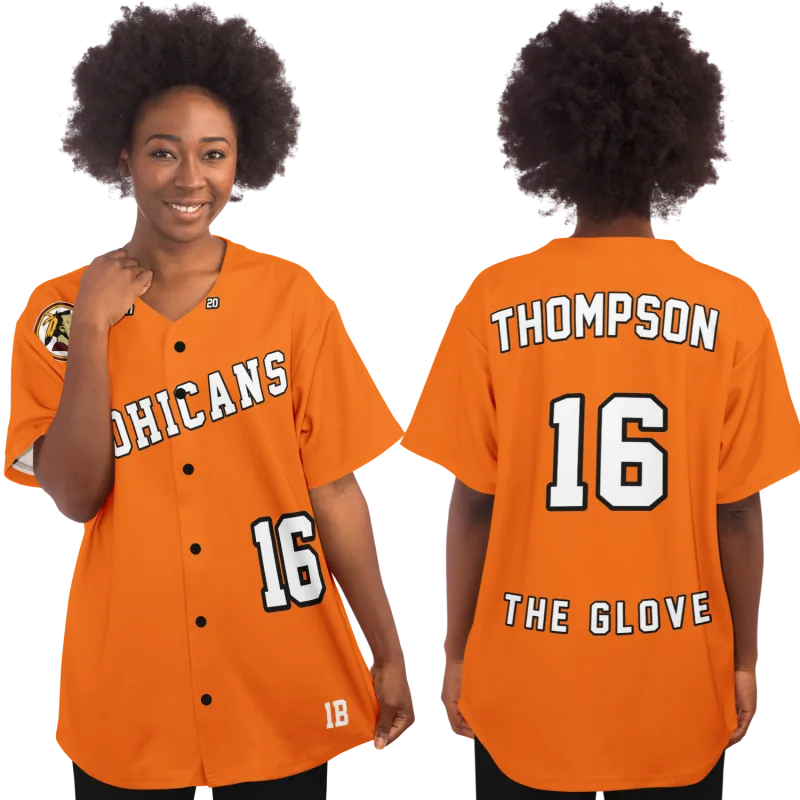
Your jersey is still out there waiting.
Design yours in minutes and see your name and number exactly the way you remember it.
Frequently Asked Questions
How long does baseball muscle memory last after you stop playing?
Procedural motor memory — the kind that encodes the mechanics of a baseball swing — is among the most persistent forms of memory the brain produces. Unlike episodic memory (what happened during a specific game) or semantic memory (facts and names), procedural memory is stored in the cerebellum and basal ganglia in ways that resist ordinary decay. Former players who haven't swung in 10, 15, or 20 years consistently report that the fundamental shape of their swing returns within the first session back. What degrades over time is execution quality — bat speed, timing against live pitching, fine micro-corrections — not the underlying motor program itself. The structural blueprint of the swing stays stored.
Why do my hands go straight to the grip even after years away from baseball?
The grip was always the first input in every swing you took during training — the proprioceptive signal your hands sent to the nervous system before any other element of the swing began. That signal was encoded as the trigger for the entire motor sequence. When you pick up a bat today, the same sensory input fires, and the stored program activates downstream of it. The hands know before the conscious mind does because deeply automated procedural memory works that way: action precedes intention. The extraordinary density of sensory receptors in the palms and fingers makes the hands particularly reliable at holding this kind of tactile-procedural encoding across long stretches of time away.
Will my old swing come back if I return to recreational baseball as an adult?
Yes — with specific distinctions. The fundamental mechanics of your swing, as stored in procedural memory, will be recognizable from your first session back. The shape returns before conscious reconstruction is possible. What takes longer to restore is execution quality: bat speed (requires rebuilding fast-twitch muscle condition), timing against varied pitching (requires live reps to recalibrate the predictive sensory system), and the automatic mid-swing adjustments that experienced hitters make below conscious awareness. A realistic timeline: the swing feels familiar within the first session, functional within two weeks of consistent low-intensity practice, and genuinely satisfying — not just recognizable — within four to six weeks of regular play.
Is the muscle memory of a baseball swing stronger if you played all four years of high school versus fewer?
Duration matters, but it is not the only variable. What drives the depth of procedural encoding is the density and quality of repetition — how many swings were taken, how consistently, and how close those sessions brought the skill to true automaticity. A player who took focused, high-quality batting practice for two years can encode a more durable motor program than one who practiced casually for four. That said, four years of consistent varsity-level play — with regular batting practice, game at-bats, and the specific pressure of competitive performance — typically produces a deeply encoded swing. One where the hands-to-handle recall is functionally automatic for the rest of the player's life.
See also: the psychology of athletic nostalgia | why your senior season memories are so vivid | the gap between your athletic memory and your current body | athletic identity after high school | still dream about high school games