

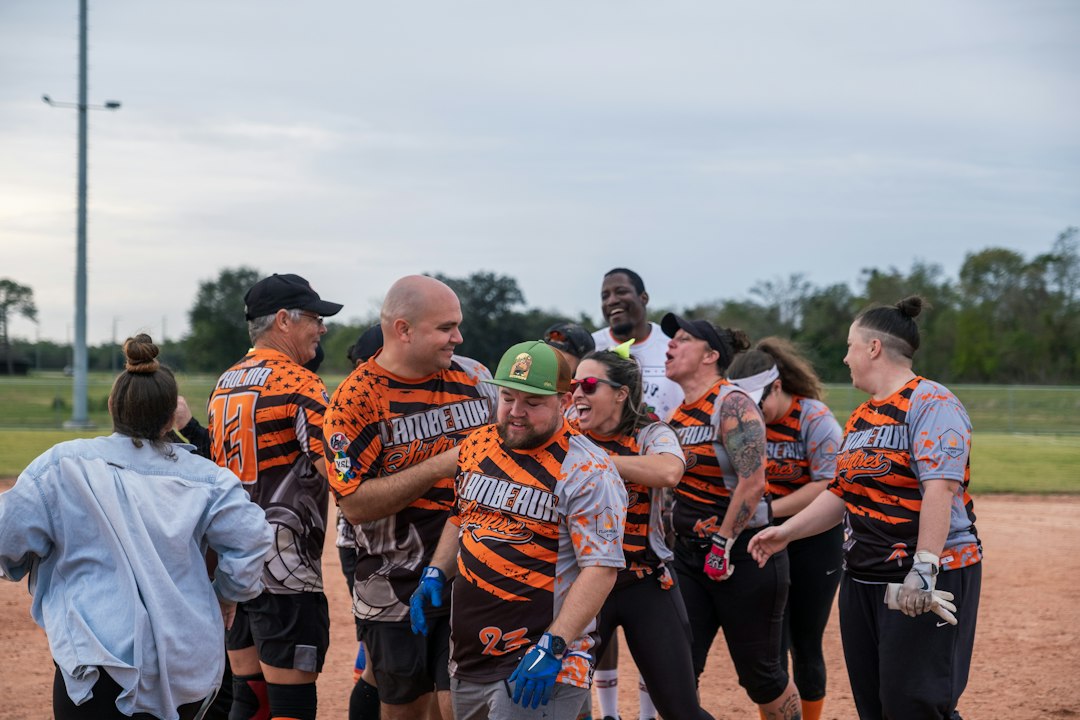
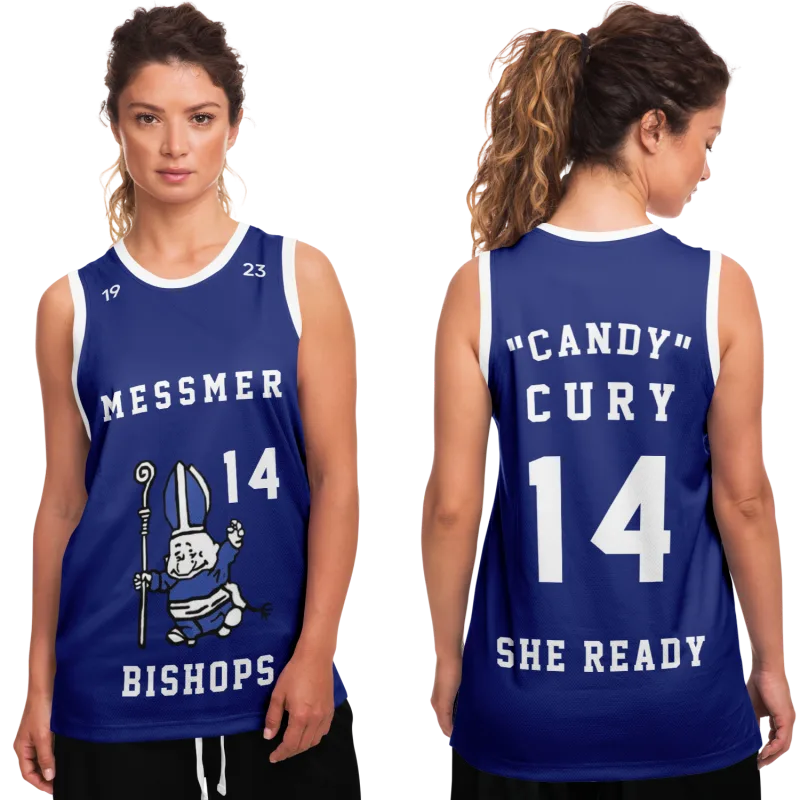
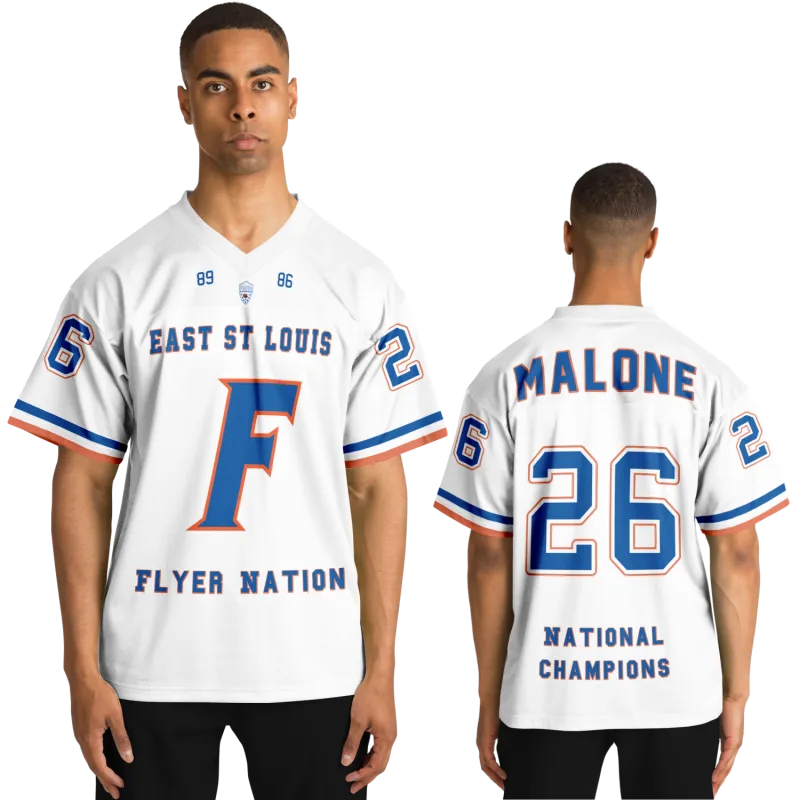
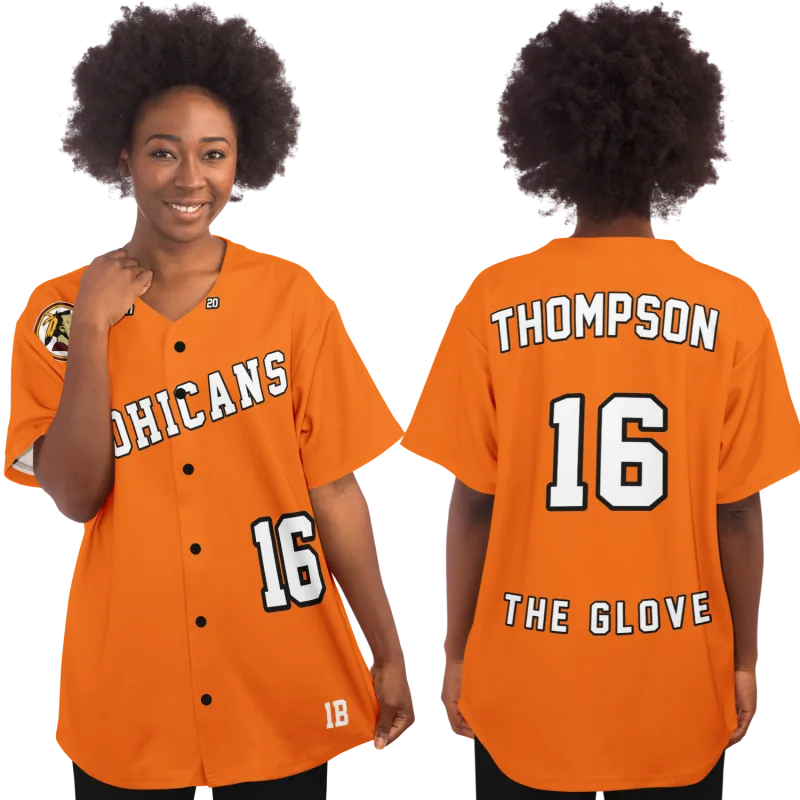
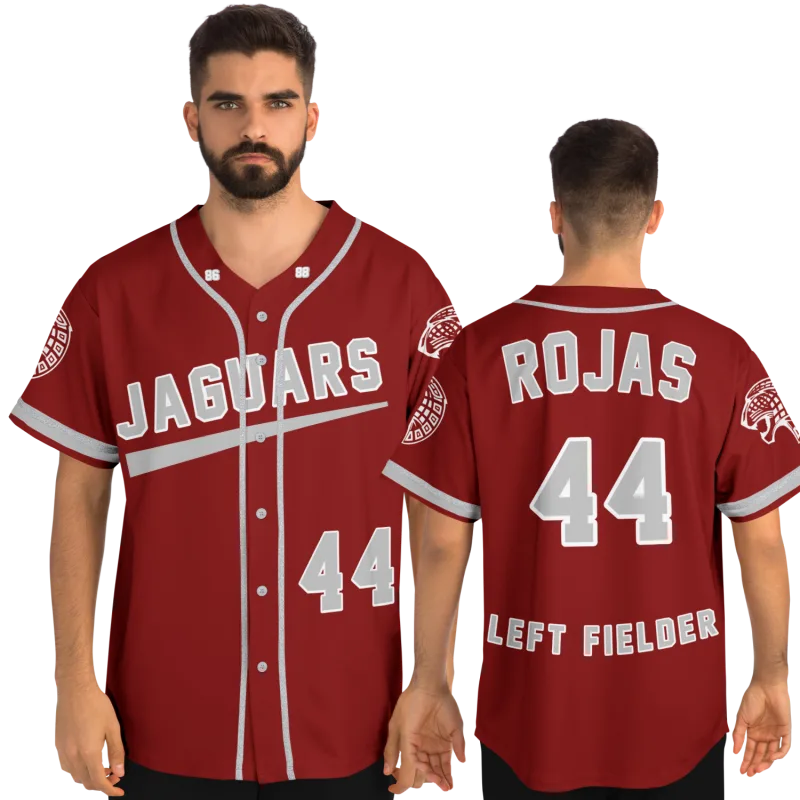
You remember the weight of it.
Not heavy — softball jerseys never were — but present in a way that ordinary clothing isn't. The fabric settling on your shoulders the first time you pulled it over your head. The moment you looked down at the number on your chest and understood, without anyone having to say it, that something had changed. You weren't just a kid who played softball anymore. You were a player. You had a number. You had a name on the back. You had a team.
That moment — in a locker room, a dugout, or your bedroom mirror — is one of the most quietly significant moments in a young athlete's life. Almost nobody writes about it. Every manufacturer page, every uniform retailer, every bulk-order site treats the softball jersey as inventory. A SKU. A set of measurements and color options and fabric specifications.
This is not that.
This is about what the jersey actually was. What it meant the first time you wore it, what it meant by senior year, and why — decades later — you can still recite your old number without pausing to think.
The First Time You Put It On
There is a difference between a shirt and a jersey, and any former player recognizes it immediately.
A shirt is something you wear. A jersey is something you earn.
For most high school softball players, that earning happened after tryouts — after the nerves, the drills, the long wait while a coach held a clipboard and said nothing. The roster going up on a gym door. Your name on it. And then the jersey handed to you, folded or stuffed into a bag with your number visible, and the understanding settling in: this is real. You made it.
In our experience talking to former players across multiple generations, the detail they recall most precisely is almost never the stats from their best game. It is the specific feeling of that first jersey. The way the name on the back looked. Whether the number was the one they'd asked for or one they grew into over time. The color combination that still — to this day — they associate with competition, with effort, with the particular feeling of belonging that high school sports can produce at their best.
That isn't sentimentality. The brain encodes emotionally significant moments — especially identity-forming ones — with a specificity that ordinary memory doesn't reach. You might not remember what you ate the day you received that jersey. You remember the jersey.
What the Number on Your Back Actually Meant
Ask any former high school softball player their number, and watch what happens. There is no pause. No searching. It arrives before the question finishes — still wired into a part of their identity that doesn't update the way other information does.
Numbers weren't random, even when they were technically assigned by availability. Players who had a choice gravitated toward specific numbers for reasons that mattered only to them: a player they admired on television, a number that felt right in a way they couldn't articulate, a number a sister or older cousin had worn before them. And when they wore it long enough, the number stopped functioning as a designation and started functioning as a name.
By senior year, your teammates didn't call you by your number. But every opposing player knew it. Every parent in the bleachers scanning a game-day program knew it. Your coach used it in shorthand during practice. If your name appeared in the local sports section — the kind of small-town coverage that meant everything when you were seventeen — the number appeared beside it.
The number on your back was a social object. A way you were identified within the specific world of competition. A small, exact piece of your athletic identity that belonged to you alone for as long as you wore it.
What the Uniform Represented Beyond the Wins and Losses
There's a reason former players describe themselves in the present tense. Not "I used to play shortstop" but "I'm a shortstop" — or "I was a pitcher," spoken with a weight that makes clear the past tense is grammatical convenience, not emotional truth.
The softball jersey was the artifact that made the identity official. In the years you wore it, the uniform stood for things that had nothing to do with the name of the school printed on the chest:
- Accountability. The jersey made you visible. You were representing something larger than yourself, and the way you handled a bad call or ran out a grounder you already knew was an out — it all happened in those colors. The uniform created a contract that a practice shirt never could.
- Belonging. Few experiences in adolescent life deliver the sensation of genuine belonging as cleanly as making a team. The jersey was the physical proof of that belonging — uniform in the literal sense, making you one of a specific group, visually and symbolically. In a developmental period organized around the anxious question of where you fit, the jersey answered: here. On this field. With these people.
- Competence, named by someone else. You didn't just believe you could play. A coach, a process, a standard confirmed it — and issued the uniform as documentation. That external validation of competence, made concrete in stitching and color, is a significant part of why the jersey carries the weight it does long after the eligibility expires.
The specific design details — cut, color, font on the nameplate — are secondary. The primary fact is what wearing it meant you had become.
The Eras and the Aesthetics: What Your Jersey Looked Like and Why It Was Specific to Your Time
For female athletes who played in the 1980s and early 1990s, the high school softball uniform was a particular kind of institutional object. Often polyester. Often in school colors unchanged since the building was dedicated. Frequently a fit designed for function and nothing else. The numbers were heavy felt or screen-printed block letters. The socks were high. The whole uniform communicated a single thing: this is sport. This is not decorative.
By the late 1990s and through the 2000s, the aesthetic shifted considerably. Brands like Nike moved into the team uniform market with sublimated designs, moisture-wicking fabrics, and customization options the prior generation of uniforms couldn't approach. Nike softball uniforms and Nike softball jerseys brought a performance vocabulary to what had been a purely institutional garment — and for players who came up in that era, the uniform became both an athletic object and an aesthetic one. The difference between a Nike softball uniform built through a team customization process and the old block-letter polyester version was visible from the third-base line.
Champro softball jerseys and Champro softball uniforms became standard issue for many programs managing tighter budgets through the 2000s and 2010s — reliable, consistent, and prevalent enough that their specific visual language became part of the memory for an entire generation of players. Rawlings softball jerseys carried similar institutional weight in certain regions, particularly where the brand's deep roots in baseball translated naturally to the softball field.
Adidas softball uniforms and Under Armour softball uniforms arrived with a different set of priorities — performance-first and brand-forward, shaped by a moment when team sports intersected with broader athletic culture, and when players were increasingly aware of how the uniform read in photographs as well as on the field.
For players and programs in Canada, custom softball jerseys from Canadian distributors and softball jerseys through Canadian suppliers served a parallel culture of high school and community league play with the same range of aesthetics — from institutional basics to fully sublimated custom designs. The geography differed. The experience of earning the uniform did not.
None of these aesthetic differences change the underlying truth. Regardless of which brand manufactured your jersey, regardless of whether it was sublimated or screen-printed, regardless of whether your program had the budget for full custom softball jerseys or was working with whatever the distributor had in stock — the jersey was yours. The inside of the moment you wore it is what lasted.
The Jersey as a Marker of a Specific Chapter
Rachel M., 34, played third base for a small-school program in rural Ohio from 2004 to 2007. She still has her junior year jersey — the one from the season her team went to regionals — folded in the top drawer of her dresser. She doesn't take it out often. But she knows exactly which drawer it's in.
"It's not about the games anymore," she said. "It's about who I was when I wore it. I was somebody specific in that jersey. I was a third baseman. I was somebody my team counted on. I'm still that person — I just don't have anywhere to wear the proof."
That phrase — I don't have anywhere to wear the proof — captures something most former players carry quietly. The jersey marks a chapter that closed. Not badly, not tragically. Just the way chapters close. You graduated. The season ended. The jersey went into a drawer or a box or the back of your parents' closet. And the identity it represented went underground: still present, just no longer visible.
This is what makes a high school softball jersey different from almost any other object a person accumulates during adolescence. It is not a trophy, which is purely commemorative. It is not a yearbook, which is a record. It is a garment — something designed to be worn, something that requires a body inside it to be what it is — and it outlasted the context that gave it meaning.
What It Meant to the People Who Watched You Wear It
The jersey wasn't only about the player inside it.
If you had a parent in the bleachers — and most high school players did — the moment your number appeared on a lineup card or turned up in a box score was a specific event for them. They knew that number. They had washed it, smoothed it out, tracked it across a crowded outfield, found it immediately in a fielding rotation when every other player looked the same from a distance. The jersey was how they followed you when the field made everyone equal.
For younger siblings, it functioned differently — as aspiration made tangible. Proof that the thing you were working toward was real. That someone in your family had already worn it, and that a uniform was waiting on the other side of all those practices. The softball jersey identity a former player carries is partly formed by how other people saw them in it.
The women's high school softball jersey occupied a particular cultural space for female athletes who played in the post-Title IX era — competing in a context where girls' sports had institutional support but were still, in many schools, treated as secondary. Wearing the uniform in that context was an act of visibility as much as athletic identification. You were there. You were a player. The jersey made that visible to everyone in the stands.
Why You Still Know Your Number Without Thinking
A simple test: if someone asked you right now what number you wore in high school softball, the answer is already there. You didn't retrieve it. It was present before the question ended.
That's what the jersey did.
Research on athletic identity and self-concept consistently demonstrates that the degree to which sport participation is central to a person's identity remains stable well beyond active play. Former high school athletes continue to describe themselves through the sport they played, the position they held, and the team they belonged to — long after any practical relevance has passed. The identity doesn't expire when the eligibility does.
The jersey is the physical object that anchors that identity. Not because it carries any particular power, but because it was the artifact of the specific period when the identity formed. Wearing it was the visible expression of being that person. Keeping it is the lasting evidence that the person existed.
Your old number isn't a fact you memorized. It's your name from a chapter of your life that still carries weight.
Your jersey is still out there waiting.
Design yours in minutes and see your name and number exactly the way you remember them — in the style of the uniform you earned, built for the player you still are.
Frequently Asked Questions
What did your high school softball jersey number actually mean — was it assigned or chosen?
It varied by program. In many schools, upperclassmen had first selection from available numbers, and incoming players received what remained. In others, coaches assigned numbers based on roster position or long-standing program tradition — some followed the convention of reserving specific numbers for specific positions, the way certain baseball programs do. Regardless of how the number arrived, players almost universally developed a specific attachment to it over time. It became theirs in a way that made the original assignment logic irrelevant.
Why do so many former softball players still define themselves by the position they played?
Athletic identity research consistently shows that the self-concept formed during active sport participation remains durable across a lifetime. Playing a specific position required a specific skill set, a specific role on the team, and a specific way of reading the game — all of which become integrated into how a person understands themselves. A shortstop thinks differently from a catcher. A pitcher's relationship to pressure is shaped by her position in ways that don't disappear when the cleats come off. The jersey is the artifact. The identity is the underlying formation that the jersey made visible.
Is it worth keeping your old high school softball jersey?
The short answer is yes — and not primarily for sentimental reasons. The jersey is a specific, irreplaceable artifact from a period that formed significant parts of your identity, your understanding of accountability, and your experience of what it means to be part of something larger than yourself. Unlike trophies or photographs, it's an object that requires a body to be complete, which makes it a different category of memento entirely. Many former players report that simply knowing where their jersey is provides a specific kind of continuity. Keep it.
What changed about softball jersey designs across different decades?
The primary differences are fabric technology, customization capability, and aesthetic philosophy. Pre-1990s jerseys were predominantly polyester with felt or screen-printed lettering — durable and institutional in character. The late 1990s through the 2000s brought performance fabric into the team uniform market, with brands offering moisture-wicking materials and more sophisticated design options. The 2010s introduced sublimation printing — where the design is embedded into the fabric rather than applied on top — which allowed for full-color gradients and the kind of individualization earlier manufacturing couldn't approach. Across all of these eras, the experience of earning the jersey held constant. Only the aesthetics of the artifact changed.
Can you get a new jersey made in the style of the one you wore in high school?
Yes. Modern custom jersey builders allow you to specify your number, name, position designation, and color combination — and produce a tribute to the uniform you earned, built with contemporary fabric and printing technology. The result won't be a time-stamped original, but it can be a faithful, wearable expression of the same visual identity you carried. For many former players, that's the point — not to preserve the past, but to carry forward the part of it that still belongs to them.
See also: personalized versus generic sports gifts | custom softball jerseys | athletic identity you built in those years | the grief that comes with hanging up your uniform for the last time | what to do with the physical relics of your playing days