

You smell it before you see it.
The bleachers haven't come into view yet. The warm-up chatter is still too far away to parse. The chalk lines on the infield are somewhere ahead, bright white against red-brown clay — but none of that has reached you. The smells of a baseball field get there first. Damp clay. Freshly cut outfield grass. The faint signature of sunscreen and pine tar drifting through humid summer air. If you ever played on a high school diamond, your nervous system just confirmed every word of that sentence. That isn't sentiment. That's the most reliable form of memory the human brain produces.
Smell is the only sense that skips the brain's rational filtering center entirely and routes directly to the amygdala and hippocampus — the structures that store emotion and experience. Which is why ten, fifteen, twenty years can pass without a single visit to a ball field, and the moment someone opens a fresh glove in a sporting goods aisle, you are seventeen again. Chalk dust on your cleats. The on-deck circle. Whatever you were feeling that day.
This piece is about those smells. Every one of them. The ones you've carried without ever finding the right words. We're going to find them.
The Infield That Smells Like Rain It Hasn't Had Yet
Morning on a high school infield has a smell that belongs to no other moment in sport.
Before the groundskeeper has dragged the clay, before anyone has taken ground balls, before the sun has had time to pull the overnight moisture out of the surface — the infield carries a damp, mineral-rich, faintly metallic scent that sits in the exact space between wet and dry. It smells like the earth is still making up its mind.
High school fields typically use a composition of calcined clay, sand, and silt, sometimes with a reddish decomposed granite mixed in for drainage. That specific mineral combination, still cold from the night before and barely touched by dew, produces one of the most chemically particular scents in all of athletics. It is not mud. It is not dust. It occupies the narrow corridor between the two, and it is unmistakable.

When a brief rain passes through before practice — ten minutes of it, nothing more — the infield clay takes on something close to petrichor, the scientific term for the smell of rain on dry earth. That scent is produced by geosmin, a volatile compound released by soil bacteria the moment moisture reaches the surface. On a baseball infield, geosmin combines with the iron content of the clay and the dry-grass edge of the warning track to create something that has no official name. It doesn't need one. Anyone who has ever slid headfirst into second base on a wet afternoon knows it without being told.
In our experience covering high school baseball and softball across multiple regions, the dirt and clay baseball field smell after rain is the single sensory memory former players name most often when you ask what they miss. Not the wins. Not the saves. Not the stats. The smell of the field.
The Dirt Under Your Fingernails
The infield story has a secondary character that rarely gets named: the ball itself, after several innings of use on a dirt infield.
A baseball treated with Lena Blackburne Rubbing Mud — the standard in organized ball — carries a quiet organic smell, somewhere between river clay and aged leather. By the third or fourth inning, a game ball has absorbed the specific mineral fingerprint of the field it's being played on. When a fielder scoops a hard grounder and the ball kicks a small cloud of infield dust before settling into the pocket of the glove, that's not just a defensive play. That's the smell of the field passing directly into the moment, transferred in under a second.
The Outfield Is a Different Country
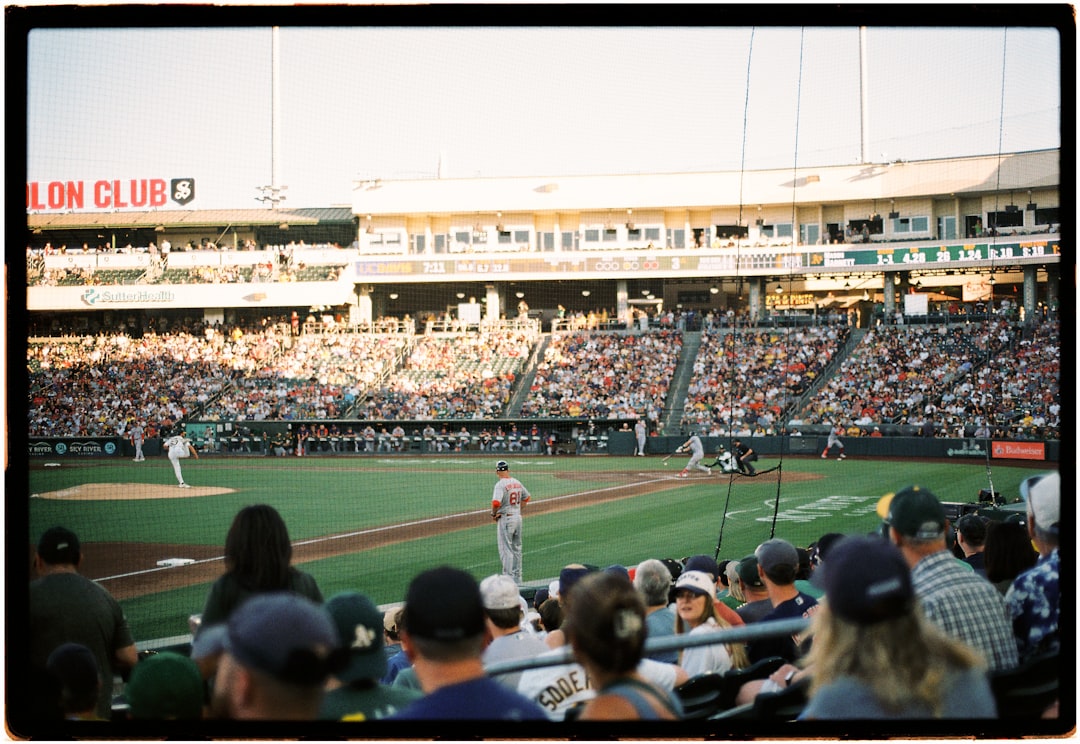
Walk from the infield to the outfield in the hour before first pitch and you cross a sensory border as distinct as any in sport.
The scent of fresh cut grass in baseball occupies its own category of sensory nostalgia — sharper and more emotionally loaded than most people expect until they try to explain it to someone who never played. Freshly mowed Kentucky bluegrass, Bermuda, or fescue releases a compound called cis-3-hexen-1-ol: a green, slightly sweet volatile that the human brain has been associating with warm weather and open space for as long as people have spent summers outdoors. The specific calm it produces in former players is not incidental. Their nervous systems filed it under good days, early and repeatedly, and the association has held ever since.
On fields where the mowing pattern creates alternating stripes — the visual effect you see on well-maintained diamonds — those stripes are also different in scent. The shorter-cut sections release more volatiles than the slightly longer ones, creating faint bands of smell that an outfielder running a route passes through in sequence. Nobody talks about this at practice. But if you played outfield regularly and you close your eyes right now, there is something in that description your body recognizes before your brain does.
Dew in the Grass at 7AM Practice
If your coach believed in early-morning conditioning, you know the specific smell of outfield grass before the sun has lifted the dew off it: cold, sharply green, slightly fungal in the way that healthy soil always is. Your cleats breaking into that wet grass at every stride released a concentrated burst of it. By the time the sun cleared the tree line behind the left-field fence and practice shifted into its second hour, the smell had already changed into something warmer, drier, and entirely different in character.
That early-morning outfield smell is specific to high school baseball. It does not exist at later levels in the same way, where field maintenance schedules and practice times are organized around different priorities. It belongs to the era of playing before anyone was paying you, before the game had become a career calculation. Which is part of why it surfaces with such force when something summons it back.
The Glove: The Most Personal Smell on the Field
Every player's glove smells different. That is the starting point for any honest conversation about the smell of a leather glove in baseball.
A new glove fresh from the factory — stiff, pale tan, and sharp-edged — smells like tannery leather: dry, faintly smoky, with a waxy top note from whatever conditioner the manufacturer applied before shipping. That smell is good. But it is the smell of potential, not of history. It is the smell of something that has not yet become yours.
The glove that has been broken in properly — worked with neatsfoot compound or lanolin, pounded at the heel with a mallet, and then used to catch thousands of balls across two full seasons — smells like something different entirely. The leather has absorbed sweat, outfield grass, infield clay, and the accumulated residue of whatever the owner conditioned it with over the years. The result is a scent so particular to that specific glove and that specific player that you could locate your own among a dozen others with your eyes closed.
This is why players keep old gloves long after they've stopped playing competitively. The smell is a physical archive of every game it was present for.
The First Time You Oiled It
The first application of glove oil is a ritual that former players recall with unusual sharpness. Neatsfoot oil has a dense, slightly animal, deeply conditioning smell that, combined with the existing factory leather scent, produced something that felt like a ceremony of ownership. This glove is mine now. I am making it mine. The smell was the formal moment of that transition.
Subsequent applications built up in the leather's grain over seasons, layering the scent into something increasingly specific. A player who used the same glove for four years of high school ball was carrying an olfactory record of four seasons on their hand every time they took the field.
One Player's Memory
Marisol V., 34, who played shortstop at a high school in central Texas, keeps her senior-year glove on a shelf in her home office. Her daughter noticed it one afternoon and asked what it smelled like. Marisol didn't answer with words — she just held the glove out. Her daughter leaned in, took one breath, and said "oh" with a kind of quiet recognition that surprised them both. That glove is twenty years old. The leather has darkened to the color of strong coffee. Whatever it smells like now is the accumulated record of every game, every conditioning session, every dugout afternoon. It is the most specific object in the house.
The Dugout: Where All the Smells Converge
If the outfield is a country and the infield is its capital, the dugout is the kitchen — close, warm, and completely saturated with the combined sensory output of fifteen people who have been working hard in the heat since before lunch.
The primary scents of a high school dugout, present in some combination at every game:
- Sunflower seeds: the specific mixture of salt, vegetable oil, and accumulated shell debris that builds up across a nine-inning game, concentrated in the pile in front of the bench
- Pine tar: thick and dark, with a faint sweetness underneath the resin — the smell of grip being applied to a bat handle by someone who is thinking about nothing except the next pitch
- Helmet foam: the mildly plasticky, slightly musty interior of a batting helmet that has absorbed several seasons' worth of nervous sweat
- Sport sunscreen: the coconut-and-chemical compound that someone's mother packed in the equipment bag, and which now functions, decades later, as an involuntary time-travel mechanism on warm afternoons
The combination of all of these, concentrated in an enclosed concrete or aluminum structure on a July afternoon, is objectively not glamorous. It is also completely irreplaceable. No commercial fragrance company has successfully bottled the inside of a high school dugout in mid-game. If one ever does, it will sell out immediately to former players who cannot fully articulate why they need it.
The Water Jug
Any complete account of dugout smells has to include the water jug: specifically, the large plastic cooler that has been sitting in partial sun since early morning, and the faintly mineral, faintly plastic-adjacent smell of the water inside it by the fifth inning. You drank it without hesitation. You would drink it again.
Why These Smells Don't Fade
Sensory nostalgia in sport is not a soft phenomenon. It is a function of how the brain encodes experience.
When you are young and encountering something significant for the first time — your first varsity start, the first time you stepped onto a field you had only ever watched from the stands — your brain marks that experience with every available sensory detail. Smell is one of the dominant tracks in that recording, because the olfactory system routes directly to the limbic system without the thalamic filtering that other senses pass through first. Research on olfactory memory consistently shows that scent-cued memories surface with more emotional intensity and are rated as more personally meaningful than memories triggered by sight or sound alone.
Former athletes already know this without needing the neuroscience. You don't need a study to explain what happens in your chest the first time you walk past a freshly dragged infield in late May.
What is worth naming, though, is what that emotional intensity actually represents. These smells are not simply pleasant callbacks. They are access points to a version of yourself that was completely present — physically, emotionally, socially — in a way that adult life seldom permits. The specific quality of late-afternoon light in left field in October. The weight of the bat during a critical at-bat. The sound of your teammates in the dugout behind you.
The smell is the door back to all of it.
Carrying It Forward
Former players who stay connected to the game — as coaches, as parents watching their own kids play, as recreational softball players on weeknight leagues — describe a shift that happens over time with these sensory memories. The smell of the field stops being a trigger for what was and starts becoming part of what is. The dugout scent, the wet clay, the leather — they become the context for a continuing chapter of the same story, not just a memorial to a finished one.
That continuity is one of the quieter gifts that a game played on a dirt diamond with grass in the outfield and a broken-in glove on your hand makes possible. The rules may be the same as they were when you were seventeen. The field still smells the same. And the version of you who played on it is still in there, accessible through that specific combination of geosmin and pine tar and conditioned leather — ready whenever the right smell opens the door.
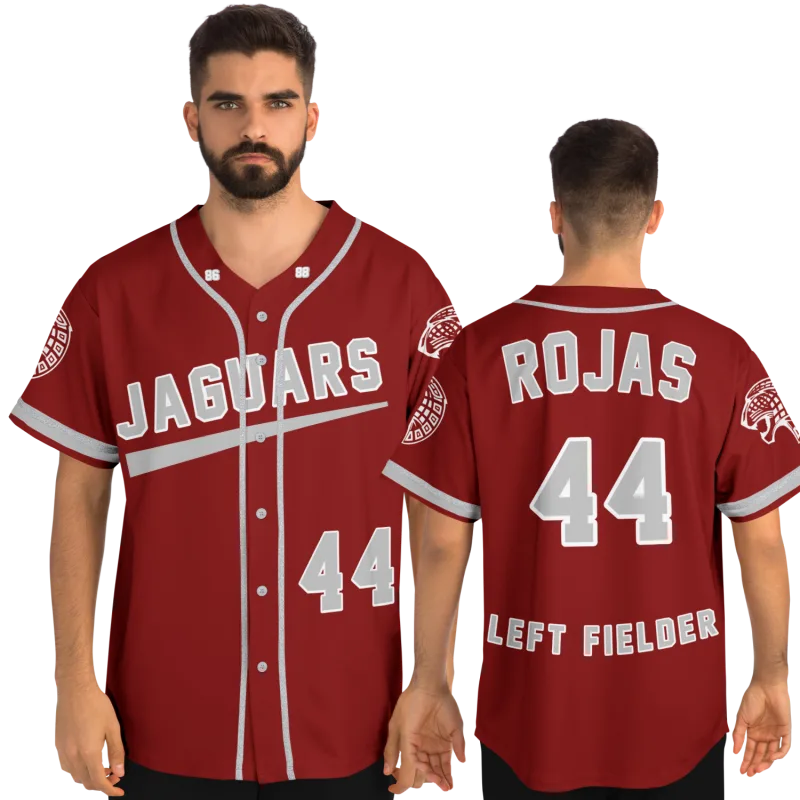
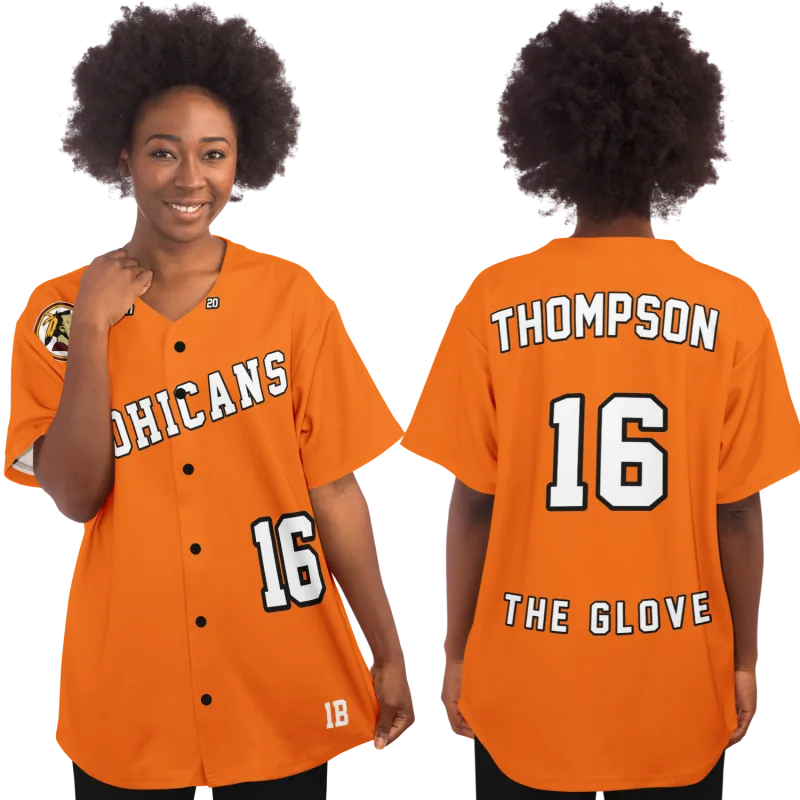
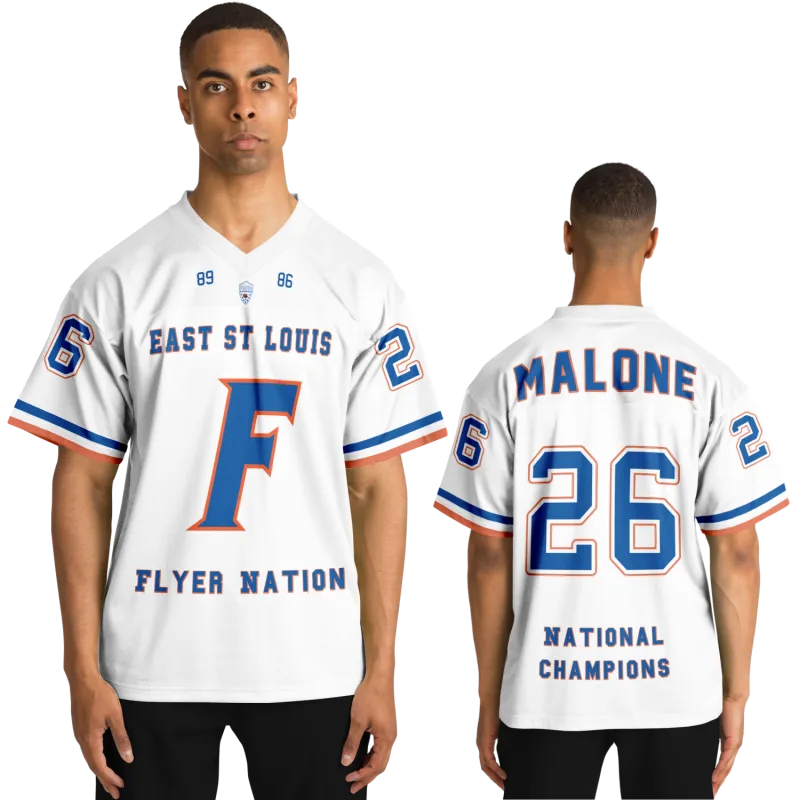
Your jersey is still out there waiting.
Design yours in minutes and see your name and number exactly the way you remember it.
Frequently Asked Questions
What causes the specific smell of a baseball infield after rain?
The post-rain smell of a baseball infield comes primarily from geosmin, a volatile compound released by soil bacteria — specifically actinomycetes — when moisture contacts dry earth. On a baseball infield, geosmin combines with the mineral composition of the clay, typically calcined clay and decomposed granite, and with the oxidized iron in the soil to produce the particular damp-clay scent that former players consistently describe as the most recognizable smell of their playing days. It differs from the petrichor you experience after rain on a lawn because the clay-heavy infield composition shifts the chemical profile significantly — it is more metallic, more mineral, and more specific to the infield environment.
Why does the smell of a baseball glove feel so distinct and personal?
Every glove develops a unique scent profile based on several compounding factors: the leather source and tanning method used in manufacturing, the specific conditioner applied during break-in, the individual player's sweat and skin chemistry absorbed across seasons of use, and the environmental residue of every field where the glove has been used. Over a high school career of two to four seasons, a glove absorbs enough of these layers that its smell becomes genuinely specific to that player and that glove. This is why players often hold onto old gloves long after they are no longer functional — the smell is the record of the experience, and there is no way to transfer it to a new one.
Is there a practical way to reconnect with the smell of a baseball field if you no longer play?
Working with the individual source materials is more effective than any commercial recreation. Neatsfoot oil or lanolin applied to leather produces the glove-conditioning scent with reasonable accuracy. Freshly cut fescue or Kentucky bluegrass releases the same volatile compounds as a well-maintained outfield. Damp calcined clay is harder to find, but infield conditioner products sold for backyard practice diamonds come close to the specific mineral character of a game-day infield. None of these reconstructs the full combination of the dugout at 2PM in July — but for former players looking to access individual threads of that sensory memory, the real source materials work better than anything synthesized.
Why do smells from athletic experiences trigger such strong emotional responses compared to other memories?
Olfactory signals travel directly to the limbic system — including the hippocampus and amygdala, which govern memory storage and emotional processing — without first passing through the thalamus, which filters most other sensory input. This means scent-associated memories are encoded with a higher degree of emotional context than memories formed primarily through sight or sound. When those memories were laid down during emotionally significant experiences — competitive sport during adolescence, when stakes felt high and identity was being formed — the encoding is particularly durable. The smell of a baseball field isn't stored as neutral information. It is stored alongside the emotional state of the entire experience, which is why it surfaces feeling complete rather than faded.
See also: why sensory memories from high school sports hit so differently | what the smell of leather and grass really means to a former athlete | the feeling of playing under the lights on a Friday night | preserving those memories in something you can actually display