

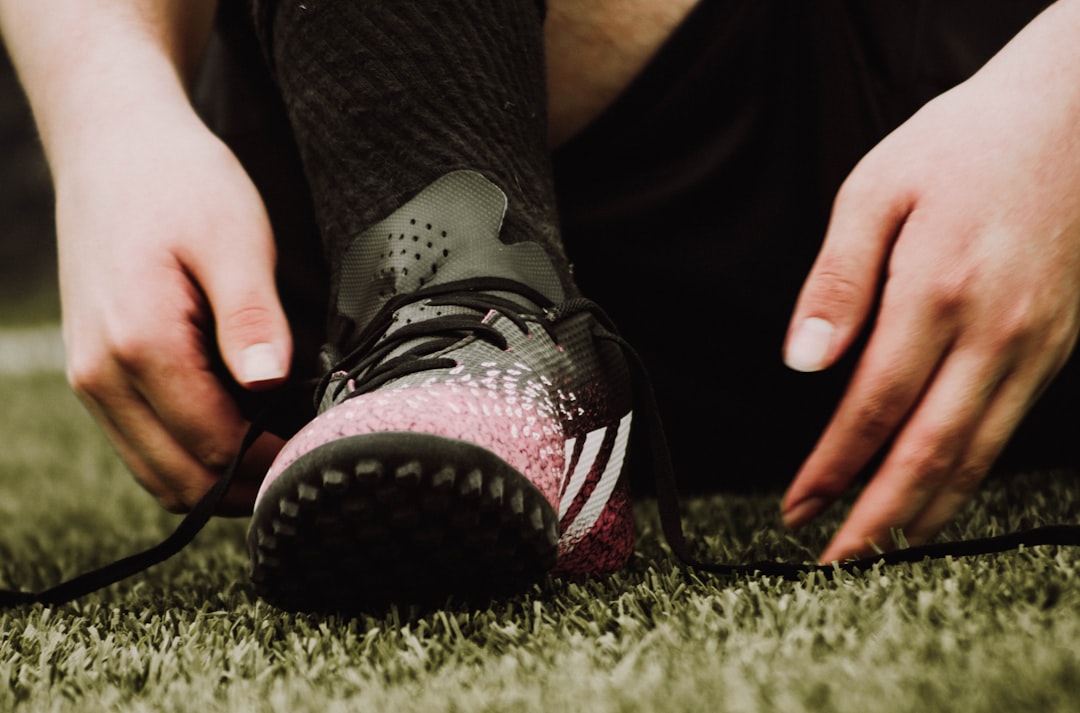




The sensory memories of playing sports don't arrive politely. They ambush you — in a parking lot, in the aisle of a sporting goods store, driving past a high school complex on a Saturday with the windows down. One second you are a functioning adult with a commute and a dentist appointment. The next, you are back in warmups, feeling the weight of your bag on your shoulder, hearing your cleats on the pavement outside the locker room.
Not a highlight. Not a photograph. A smell.
Cut grass still damp from the morning. The rubber-and-dust combination of a gymnasium that has been used hard for decades. Chalk from a baseline. Pine tar on your hands. The specific old-leather smell of a glove that took two seasons to break in properly. These smells don't remind you of playing. They put you back inside it — briefly, completely, without asking.
This article is for the former player. Not the fan in the bleachers, but the one who laced up and went out there. Because what smell does to your playing-day memories is a categorically different experience from what any other sense can produce — and it's worth understanding exactly why.
Why the Field Still Lives in Your Nose
The science behind how smell triggers athletic memories is not complicated, but it is genuinely remarkable once you understand the mechanism.
Every other sense — sight, sound, touch, taste — routes through the thalamus before it reaches the brain's memory and emotion centers. There's a processing step. An editorial layer. Smell does not have one. Olfactory signals travel directly to the amygdala and hippocampus, the structures most responsible for emotional memory and autobiographical recall. The smell arrives and the memory opens, immediately and without the thinking brain's involvement.
This is why a single inhale can do what an entire highlight reel cannot. The reel goes through your conscious mind. The smell bypasses it entirely and lands somewhere older and deeper.


Research published in Chemical Senses has documented what neuroscientists call the "Proust phenomenon" — the consistent finding that odor-cued memories are rated as more emotionally intense, more vivid, and more accompanied by the sensation of actually being present in the moment than memories triggered by any other sensory cue. Marcel Proust named it first in literature — a single taste and an entire childhood reassembled from nothing. Former athletes live the sports version of this regularly, and most have never had a name for what's happening to them.
The olfactory memory of sports is also disproportionately anchored to first experiences and peak emotional moments. Your nervous system encodes early, high-stakes encounters with particular fidelity. The first time you walked into a varsity locker room. The first away game, the unfamiliar field that smelled like someone else's home turf. The pre-championship warmup when everything felt different. Those smells were written into memory during periods of maximum arousal, maximum investment, and maximum personal meaning. They don't un-write.
The Difference Between Fan Memory and Player Memory
This distinction is worth sitting with, because it is real and it is significant.
A fan's strongest sports memories tend to be visual. The arc of a shot. A scoreboard. The color of a uniform under stadium lights. That's the primary sensory channel available from the stands — you watch, and your eyes do the recording.
A player's memory was built inside the smell of it. The grass was under your hands when you dove. The chalk was in your lungs after a slide. The rubber of the track radiated heat up through your spikes. The sweat had a specific, familiar smell that meant you were working the way you were supposed to be working. You were not observing the sensory environment of your sport. You were immersed in it, for years, during some of the most emotionally loaded periods of your life.
When smell pulls you back, it pulls you back into that immersed version — not the spectator's view but the player's body memory. The felt experience of being inside the thing, not watching it. That is a categorically different kind of remembering, and it explains why the ambush is so complete when it happens.
The Specific Smells That Take Former Players Back
Ask a group of former athletes which smells bring back their playing days, and the answers arrive fast and specific. There is no searching, no hesitation. These are not memories they have to locate. They are memories that find them.
The smells former players name most consistently:
- Fresh-cut grass on a morning field — the version with dew still on it, before warmups have started, when the groundskeeper has just finished. If you played any field sport at any serious level, this one needs no elaboration.
- Leather and lanolin from a broken-in glove — baseball and softball players name this as one of the most precise and transportive smells they carry. A new glove doesn't have it. It takes a full season or two to develop. That specific combination of treated leather, conditioning oil, and accumulated use is irreplaceable and unmistakable.
- The rubber-and-dust smell of a gymnasium — basketball players, wrestlers, volleyball players. The combination of rubberized flooring, athletic chalk, and decades of hard use that exists only in a gymnasium that has actually been used. Not a fitness center. A gym.
- Pool chlorine at high concentration — former swimmers report that a strong chlorine smell doesn't just remind them of practice. It can produce the pre-race anxiety response in the body before the conscious mind has even registered where the smell is coming from.
- Pine tar, dirt, and dugout concrete — baseball players who competed at any serious level describe this combination as a complete sensory package. The dugout has its own smell, and it belongs to no other place.
- Neoprene and cold water — rowers, water polo players, open-water swimmers. The smell of a wetsuit is not pleasant in any objective sense, but for former players it carries an entire athletic identity.
What stands out across all of these is the specificity. Former players are never vague about this. It is not just "grass." It is morning grass, specifically, with dew, before anyone else has arrived. It is not just "leather." It is the inside of a glove that has been broken in through two seasons and conditioned three times. Remembering the grass and the dirt is not soft, general nostalgia. It is high-resolution sensory recall stored during years of physically total, emotionally significant experience.
A Thursday Night in October
Maria C., 44, pitched varsity softball for four years in rural Ohio and another two at the junior college level before a shoulder injury ended her pitching career in her sophomore year. The following two decades were logistics work, weekend coaching for her daughter's recreational league, and largely not thinking about how much she missed it.
Last fall, she walked into a sporting goods store to buy her daughter new cleats and caught the smell of a display rack of new leather gloves near the entrance. She stood there for what she describes as "an embarrassingly long time" — not sad, not wistful, just suddenly and completely back at sixteen, reading a pitcher's grip from the left-handed batters' box.
"I wasn't even primarily a position player," she says. "I was a pitcher. But that glove smell took me straight back to batting practice, not the mound. The brain doesn't care about your position."
She bought the cleats. She also bought a softball glove she has no current use for. It sits on her desk now. Some mornings she picks it up before she starts working, and for a few seconds she is back somewhere that mattered in the way very few things have mattered since.
What Your Brain Is Actually Doing When the Smell Hits
The experience Maria describes — the involuntary transport, the emotional completeness of it, the way it arrives before the thinking mind can intercept it — is the olfactory memory of sports doing exactly what it was built to do.
Memory is not stored as a file. It is stored as a network of associated sensation, emotion, context, and meaning. When a smell activates one node of that network, the rest of the network can fire alongside it. The smell of a gymnasium doesn't deliver the neutral message "this is a gym." It reactivates the emotional state you inhabited when you first learned what a gymnasium smells like in a way that mattered to you personally. The pre-game coil of anxiety and readiness. The post-game exhaustion that felt indistinguishable from satisfaction. The sound of sneakers on hardwood that your brain stored in the same network as the smell of the floor.
This is why smells that remind you of sports can feel more like being there than like remembering being there. You are not retrieving a stored record and reviewing it. You are partially re-entering a state that your nervous system knows at a structural level.
For former athletes, those states are among the most emotionally loaded of their lives. Years of practice, competition, team identity, physical peak, personal stakes — all of it encoded during high-arousal, high-investment moments. The smells from those moments carry a neural weight that ordinary daily memories simply do not.
What Changes When the Sport Is Behind You
There is a particular quality to how former players experience this that differs from what active athletes feel.
When you are still playing, the sensory world of your sport is present and ordinary. It is not nostalgic — it is Tuesday. The smell of the field is the smell of work, of routine, of the thing you do. You take it for granted the way you take for granted the smell of your own home.
It is only when the playing stops — graduation, injury, the slow drift of life — that those smells become portals instead of backgrounds. The neural pathways stay live. The experiences stop occurring. And then, years later, the smell finds an opening and the whole thing comes back — not as a highlight but as a felt state. As the version of you who existed when this was the most important part of your life.
In our experience exploring what separates former players from fans, this is the sharpest dividing line: fans miss watching. Former players miss being. The olfactory memory of sports puts the former player back into the body that was doing the thing — and for a few seconds, they are back inside that version of themselves, complete.
Keeping the Connection Alive
The sensory thread back to your playing days does not require you to still be competing. For former athletes who want to honor that connection deliberately rather than just stumble into it, a few approaches hold genuine weight.
Coach or volunteer in your sport at the youth or high school level. You will be back on the field or in the gym. The smells will be exactly right — not a professional stadium, which is a different environment entirely, but the level you played, which is the level your memory stored. And helping someone else learn what you know turns out to be a different and surprisingly whole form of still being in it.
Go to games at the level you played, not the professional level. The high school game. The college game on a Tuesday night. The recreational league on Sunday morning. The smell of the field at that level is the smell you remember. Your nervous system is not looking for a major league stadium. It is looking for the specific field where it learned what competition felt like.
Keep something from your playing days. Maria kept the glove. Other former players keep a game ball, a pair of cleats in the back of a closet, a batting helmet on a shelf in the garage. These are not trophies. They are sensory anchors — objects that carry smell and texture and physical memory in a way that photographs and highlight videos cannot approximate.
Tell the people around you what it was actually like. Not the scores. The what-it-smelled-like. The weight of the equipment. The specific sound of the locker room before a game. The feel of the grass under your cleats on a cold morning. These are the details that transfer the actual experience. Everything else is just information about it.
The connection is not gone because you stopped playing. It is stored with more fidelity than you probably realize — waiting for the right molecule, in the right ratio, on the right morning, to open it back up completely.
Your jersey is still out there waiting.
Design yours in minutes and see your name and number exactly the way you remember it.
Frequently Asked Questions
Why do smells from playing sports feel more powerful than looking at old photos or watching game film?
Photographs and video engage your visual cortex and then route through memory retrieval — there is a processing step, a distance between the stimulus and the emotional response. Smell has no equivalent step. Olfactory signals travel directly to the amygdala and hippocampus, the structures most responsible for emotional memory, without passing through the thalamus first. This direct routing is why smell doesn't just remind you of a moment — it can partially re-activate the emotional and physiological state of that moment. A photograph shows you the past at arm's length. A smell can put you briefly back inside it.
Is it normal to have a strong emotional reaction to a sport-related smell years or even decades after you stopped playing?
Completely normal, and well-documented in the neuroscience literature on olfactory memory. The neural pathways formed during emotionally significant periods — which competitive athletics almost always are — remain structurally intact long after the experiences that created them have ended. They don't atrophy the way physical skills do without practice. When a smell activates part of that network, the associated emotions and memories can fire with it at full intensity. The strength of the reaction typically correlates with how emotionally significant the original experiences were, not how recently they occurred.
Can you deliberately access the sensory memory of playing sports, or does it only work when you encounter a smell unexpectedly?
Both work, though they feel different. Accidental encounters tend to be the most emotionally complete because you have no anticipatory framework — the smell arrives before your conscious mind can prepare a response, and the memory opens fully. Intentional access is real and worth pursuing — this is part of what makes coaching at the level you played, keeping equipment from your playing days, or visiting the specific type of field or gym where you competed so effective. The key is specificity: the professional stadium won't do it if you played high school ball. The right field, the right gym, the right locker room will — whether you arrive there on purpose or by accident.
See also: the psychology of athletic nostalgia | why your senior season memories are so vivid | why you still dream about high school games | what playing under the lights actually felt like