
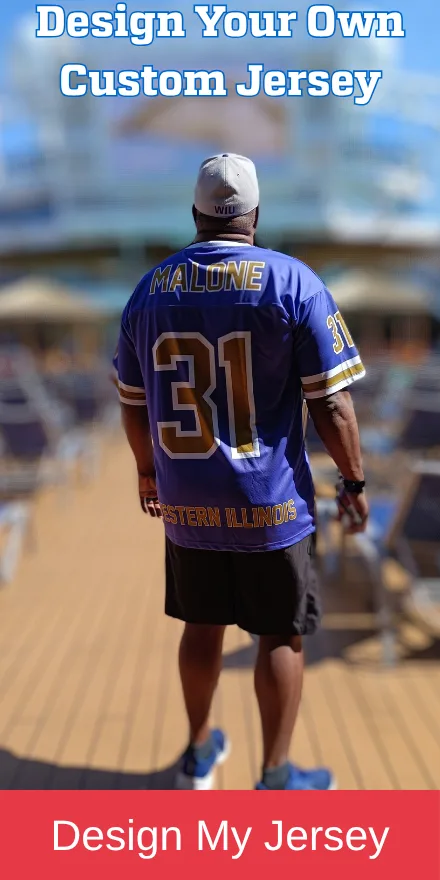
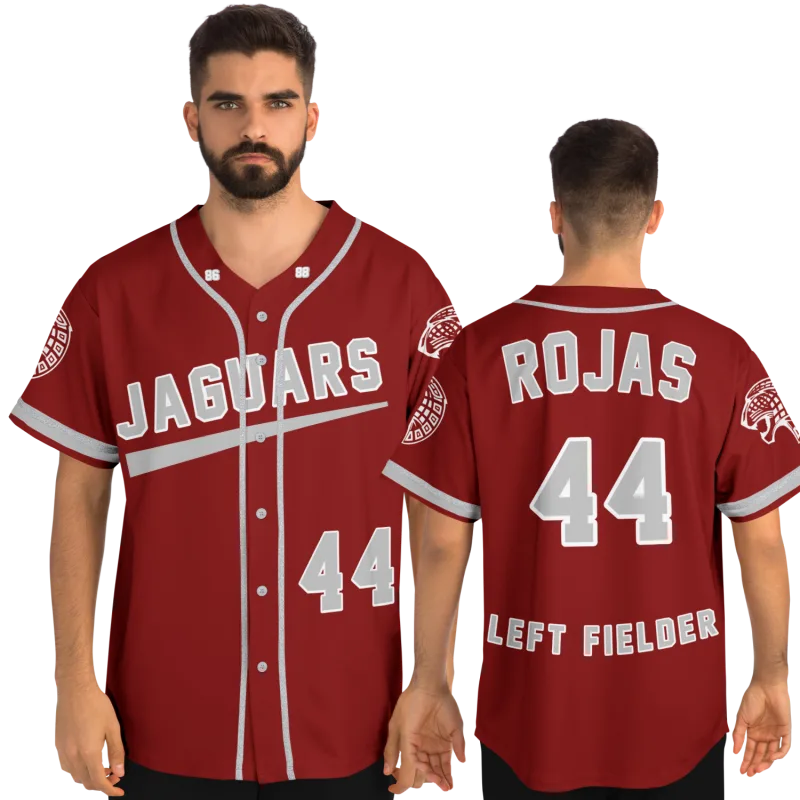
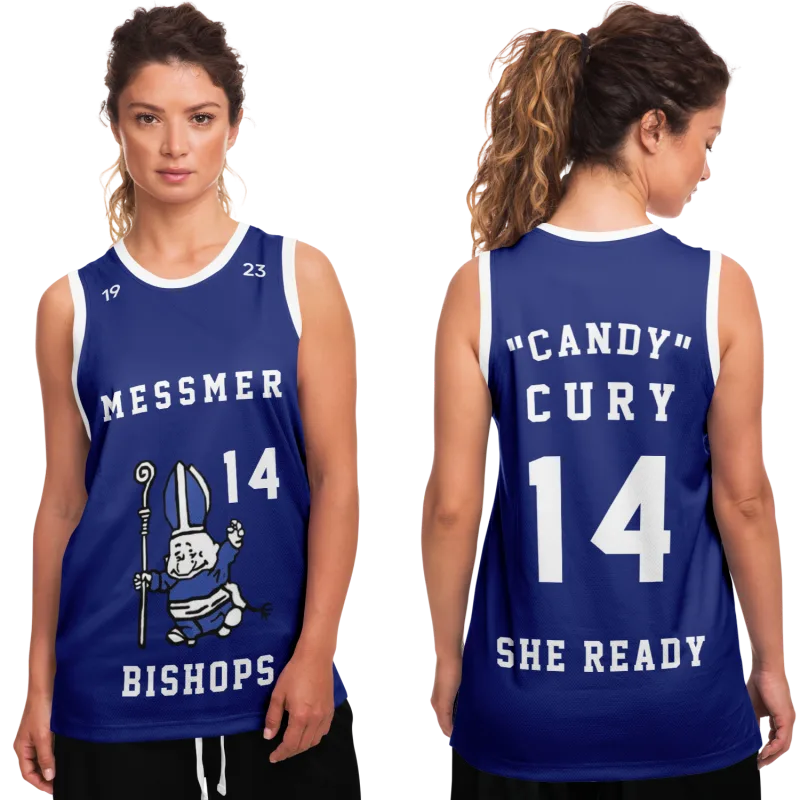
There is a specific sound.
It happens when you drag your thumbnail across the raised edge of a sewn number — that rough, satisfying catch of thread against skin, a small friction that says this is real. You probably haven't thought about that sound in years. But your hands remember it. And somewhere beneath the surface of this decision — how to honor your playing days on a custom jersey — that sensation is exactly what you're searching for, even if you haven't named it yet.
This authentic jersey stitching vs sublimation guide was written for that moment. Not for the casual fan scrolling through options on a lunch break. For the former player who needs the jersey to carry weight — literal and otherwise. The one who understands, without having to think about it, that a number sitting on a fabric and a number woven into the architecture of a garment are two completely different objects with two completely different meanings.
What follows is a full breakdown of how jersey construction translates into sensory experience, emotional authenticity, and lasting identity. If you're preparing to order an adult custom jersey to mark something real — a championship season, a team reunion, a career that ended too quietly — this is the guide that will make sure what arrives in the mail can actually carry that meaning.
The Physics of Memory: Why Your Hands Know Before Your Eyes Do
Long before your conscious mind renders a quality verdict, your hands have already filed their report.
Pick up a sublimated jersey and a stitched twill jersey in the same moment and you don't need to examine them. One gives you information about color and graphics. The other gives you information about itself — its architecture, its layered construction, the fact that someone made deliberate decisions about what would go where and how it would hold together over time.
This is not sentimentality. This is material science communicating through touch receptors.
What Stitched Twill Construction Actually Does
Twill, in jersey construction, refers to a specific weave pattern — a diagonal interlace of warp and weft threads that produces a fabric with more body, drape, and abrasion resistance than a plain weave. When manufacturers cut twill letters and numbers and heat-bond or stitch them onto a base fabric, they are adding a second structural layer to the garment. That layer has mass. It has edge. It occupies physical space above the surface plane of the jersey.
The number on a properly constructed twill jersey is not printed. It is built. Traditional tackle twill construction includes a felt underbase — a wool-blend or polyester felt backing that gives the character dimensional height before the twill face fabric is applied on top. Run your finger across the edge of that number and you feel a ridge. Press the center and it resists. Scratch it firmly and it produces that specific sound — muffled, fibrous, the sound of material with consequence.
The durability implication is direct: twill numbers, properly bonded or sewn, hold their edge definition through hundreds of wash cycles. The color in a twill number lives in the fiber of the twill fabric itself — not suspended in an ink layer over a base material. It does not crack, peel, or fade the way surface-applied color does. According to the Sporting Goods Manufacturers Association, sewn and embroidered decoration methods consistently outperform heat-applied alternatives in long-term wear testing across athletic uniform categories.
What Sublimation Actually Does
Dye sublimation is a printing process in which heat converts solid dye particles directly into gas, which then bonds at the molecular level with polyester fibers. The result is a design that is, technically speaking, inside the fabric rather than on top of it.
This is genuinely sophisticated technology. A sublimated jersey can reproduce photographic-quality graphics, seamless full-color gradients, and designs of unlimited visual complexity without adding any physical layer to the garment. The fabric weight is uniform across every inch of the jersey. There are no edges. No raised surfaces. No points of friction.
That last sentence contains the relevant limitation.
A sublimated number passes the thumbnail test in silence. No catch. No ridge. No dimensional sensation. To a former player whose body-memory of a jersey is partly tactile, that absence registers — not always consciously at first, but it registers. The jersey looks right from across a room. In your hands, something is absent.
In our experience working with former players on commemorative designs, the complaint rarely sounds like a quality objection. It sounds like this: "I kept looking at it and it looked fine. But it didn't feel like it was from that time."
That sentence is the whole story. Sublimation recreates the image of a jersey. Stitched twill recreates the object.
The Fabric Question Beneath the Construction Question
Most jersey quality guides start and stop at stitching versus sublimation. That's the right comparison for numbers and letters. It's the wrong question for the base fabric — and the base fabric is where the feel of authentic jersey fabric lives before you ever touch the number.
Double-Knit Polyester: The Weight of the Real Thing
The standard athletic jersey fabric from roughly the late 1960s through the mid-1990s was double-knit polyester — a heavier, more structured construction than the performance mesh fabrics that dominate current athletic wear. Double-knit fabric uses two interlocked layers of loops, creating a garment with body, firmness, and a characteristic weight when held.
If you played during that era, this is what a jersey felt like. It had presence. It sat on your shoulders with authority. It had a slight stiffness when new that softened over a season of wear. The number on the front had mass, the fabric beneath it had mass, and together they communicated something about the occasion — that this was a garment built for something that mattered.
Double-knit polyester jerseys are still produced for custom orders. They are not the default on most platforms, because default options have drifted toward lighter performance fabrics. But if sensory fidelity to a specific era of play is what you're after, double-knit is the specification worth requesting explicitly.
Moisture-Wicking Mesh: What Performance Gained and Gave Up
Contemporary performance mesh jerseys — the fabric used across most current professional and collegiate programs — prioritize airflow, moisture management, and minimized weight. Engineered to perform during competition, this is the right material choice in an athletic context.
As a commemorative fabric, it produces a different outcome. The garment is lighter. Softer. More immediately comfortable against the skin. It also feels less substantial — the number, whether stitched or sublimated, sits on a base that doesn't push back the same way. For former players whose association between jersey weight and occasion-weight is deeply conditioned, this reads as a reduction of meaning.
This is not a construction flaw. It is a design choice with emotional consequences. Know which one you're making before you finalize the order.
The Sensory Checklist: Four Tests That Tell You Everything
Marcus T., 44, a former high school basketball point guard from Indianapolis, ordered a custom jersey as a tribute to his 1997 state championship season. The color matched his memory. The number matched. The name across the back was right. When it arrived, he said what nearly every former player says: "It just didn't feel like it was from that time." He had ordered sublimation on a performance mesh base. His original had been twill on double-knit. Visually, nearly identical. As objects held in the hand — completely different.
Before you finalize any custom jersey order, run through these four sensory benchmarks. Each one maps to a construction decision you can specify at the time of ordering.
The Thumbnail Test. Drag your thumbnail firmly across the edge of the number on any jersey you remember as feeling authentic. If it catches — if you feel a definite ridge — that's twill construction. If your nail slides across without resistance, that's sublimation or a heat-press application. Your new jersey should pass the same test.
The Sound Test. Scratch the face of the number with your fingernail. Twill on a felt backing produces a muffled, fibrous sound — somewhere between scratching heavy card stock and scratching canvas. Sublimation produces the sound of scratching the base fabric because the design and the fabric are materially the same thing. Know which sound belongs to your memory.
The Hold Test. Grip the jersey at the shoulder seam and hold it out horizontally. Double-knit holds its shape; it does not drape limply. Performance mesh falls immediately. The weight difference between construction types is apparent in a single grip. If your original jersey had body and structure, specify double-knit.
The Edge Test. Examine the boundary where the number meets the jersey fabric. On properly constructed twill, this boundary is defined — a clean, physical line where one material ends and another begins. On a sublimated jersey, there is no edge because there is no boundary; the design is continuous with the fabric. Both can look sharp to the eye. The edge test is primarily for your hands.
Sublimated Jersey vs. Stitched: Matching Construction to Purpose
This is not a ruling in favor of one method over the other. It is a framework for matching the right construction to what the jersey is actually meant to do.
When Sublimation Is the Correct Choice
Sublimation produces results that stitching cannot approach. Full-color photographic graphics, complex multi-color gradients, designs that span the entire surface of the garment without seams or panel breaks — these are achievable only through sublimation. If your jersey design includes:
- A custom illustrated graphic or logo with more than four colors
- A gradient that transitions across the body of the jersey
- Photographic elements or detailed artwork
...sublimation is the technically appropriate choice. Attempting to reproduce a six-color graphic in twill construction would be prohibitively expensive and structurally awkward.
Sublimation is also the right choice when the jersey is primarily a visual artifact — something that will be framed, photographed for a team wall, or displayed rather than repeatedly worn and handled. At distance and in photographs, sublimation and stitching are indistinguishable.
When Stitched Twill Is the Correct Choice
If what you're recreating is a jersey in the style of classic athletic construction — block numbers, a traditional nameplate, a solid or two-tone team color base — then twill is the correct specification. Not because it photographs more authentically. Because it is more authentic to that construction era, both in method and in the experience of wearing it.
The former player whose body-memory is specific to twill on double-knit will notice the difference in the first thirty seconds of handling their new jersey. A tribute to a championship season or a playing career built on sublimation alone gives you the image of that time. Twill construction gives you an object that belongs to it.
The sublimated jersey vs stitched comparison ultimately reduces to one question: are you recreating a visual record or a physical memory?
Reading a Custom Jersey Spec Sheet: The Four Terms That Actually Matter
Most custom jersey ordering platforms present construction options using terminology that assumes familiarity. In our experience, these are the four terms that appear most often and cause the most ordering errors.
Tackle Twill means the number and letter characters are cut from twill fabric and applied to the base jersey as a separate structural layer. "Tackle twill with felt backing" indicates a dimensional underbase beneath the twill face, producing the raised-edge effect and the characteristic scratch texture. This is the specification to request when sensory authenticity is the goal.
Embroidery refers to thread-based construction in which the number is stitched directly in thread rather than applied as cut fabric. The surface is denser and harder than twill — more rigid, with a different tactile character. Common on caps and outerwear, less common on jersey bodies. It passes the thumbnail test but sounds and feels distinct from twill.
Heat-Pressed Numbers occupy a middle ground: pre-cut vinyl or similar material bonded to the jersey with heat application. There is a slight edge at the number boundary, but it is the edge of vinyl rather than woven fabric. The scratch sound falls closer to sublimation than to twill. In durability terms, heat-press falls below tackle twill; in visual complexity, it falls below sublimation.
Dye-Sublimated / Full Sublimation means the entire jersey — base fabric and all graphics — is produced through the sublimation process. This is a single-layer garment with no applied numbers, no edges, and no friction points. The visual quality ceiling is high. The tactile depth is limited to the texture of the base fabric alone.
When you order adult custom jersey using these specifications, the price difference between sublimation and tackle twill typically runs 15–30% higher for stitched construction. For a jersey intended to represent something that actually happened, this is usually the right investment.
Your jersey is still out there waiting.
Design yours in minutes and see your name and number exactly the way you remember it.
Frequently Asked Questions
Can I specify tackle twill numbers on a modern performance fabric, or do I have to use double-knit?
Tackle twill numbers and the base fabric are independent construction decisions — you can mix and match them. If you want the tactile authenticity of stitched numbers but prefer a lighter jersey for wearing comfort, specifying tackle twill on performance mesh is a reasonable middle path. The number will pass the thumbnail and sound tests. The overall jersey will feel contemporary in weight and drape rather than era-specific. For most former players, this is a workable compromise between sensory fidelity and everyday wearability.
How do sublimated jerseys hold up over time compared to stitched twill?
Sublimation is exceptionally durable in terms of color retention. Because the dye bonds at the molecular level with polyester fibers, it does not crack, peel, or fade the way screen-printed or heat-pressed designs do. A well-maintained sublimated jersey can hold its color fidelity for a decade or more under normal care. Tackle twill is durable in a different register: the twill fabric is resistant to abrasion, and the color is inherent to the woven thread rather than applied on top of it. The potential failure point in twill construction is the bond between the twill layer and the base fabric — inadequate bonding adhesive can cause edges to lift over time with repeated washing. Both construction types are genuinely durable. They age differently and fail for different reasons.
What does "felt number" mean on a custom order form, and is it the same as tackle twill?
Related, but not identical. "Felt number" refers specifically to the backing layer in tackle twill construction — the wool-blend or polyester felt underbase that provides dimensional height to the character before the twill face fabric is applied over it. When a spec sheet reads "felt number with twill overlay" or similar language, it is describing complete tackle twill construction: felt base plus twill face, bonded or sewn to the jersey body. Some lower-cost configurations apply felt numbers without a twill overlay, producing a softer, slightly textured surface rather than the firm woven-face character of full tackle twill. If full sensory authenticity is the goal, specify tackle twill with felt backing rather than felt construction alone.
Does sublimation color-match accurately to specific team colors or Pantone standards?
Sublimation color accuracy depends on two variables: the quality of the color calibration process used by the manufacturer, and the polyester content of the base fabric. Because sublimation dye bonds only with polyester fibers, a 100% polyester fabric produces the most accurate and saturated color. Any cotton content in the base fabric will produce muted, less accurate results. For color matching to specific Pantone references or official team color standards, request a printed proof before committing to a full production run, and confirm the base fabric is 100% polyester. Tackle twill color matching is determined by the inherent color of the sourced twill fabric and is generally consistent across production runs from the same supplier.
See also: why personalized details make a former athlete feel truly seen | what to do with your old varsity letter jacket | the psychology of why athletic nostalgia runs so deep | how to build a custom sports shadow box that honors the real thing