

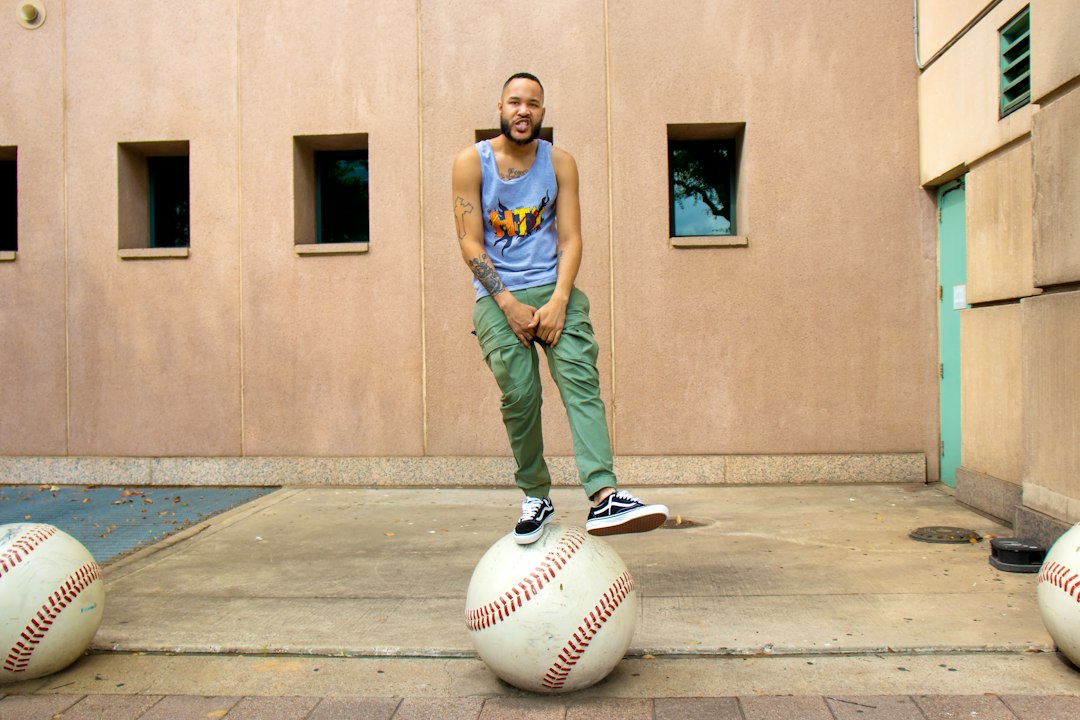




Your feet still know where to go.
That's the detail nobody warns you about. Seventeen years off the field, and the moment you step back onto a diamond or a court or a pitch, something bypasses the thinking brain entirely. The weight shifts. The hands come up. The body finds its old geometry before you've consciously decided anything.
That is not sentiment. That is not wishful thinking. That is your nervous system delivering a message your conscious mind has spent years quietly doubting: you never fully left this game.
Reconnecting with sport after decades away is one of the most psychologically significant decisions an adult can make — and one of the most persistently second-guessed. The question that arrives somewhere between registering for the league and actually showing up is some version of: Is this a ridiculous thing to want? This article exists to answer that question with specificity and without hedging. The answer is no. Here is exactly why — and here is what the return actually looks like when it goes well.
The "Is This Silly?" Problem Is the Wrong Question Entirely
The internal objection is nearly universal among adults who feel the pull back toward their sport. It runs something like: I'm 44. I have a mortgage, a knee that protests stairs, and a Saturday already claimed by three other people's schedules. What exactly am I doing here?
The objection sounds grounded in adult reality. It is not as grounded as it sounds.
What the self-critical voice is dismissing as "silly" is one of the most neurologically coherent drives a human being can experience. When you played your sport at a formative level — high school, college, or even deeply committed recreational — your brain was encoding two distinct things simultaneously. The first was procedural memory: the specific motor patterns of your game, stored in a part of the brain that persists across decades of non-use with startling fidelity. The second was something more foundational: an identity schema. A structured, deeply embedded sense of who you are that became partly inseparable from the physical rituals of that sport.


The procedural memory is why your feet find the right spot before your mind catches up. The identity schema is why returning to sport after years away feels less like picking up a hobby and more like recognizing something you misplaced.
You didn't stop being an athlete when the games stopped. You stopped expressing it.
In our experience talking with returning athletes, the people who hesitate longest before showing up are often the most fluid once they get there. The hesitation is not physical. It's the friction between the version of yourself you've been performing for twenty years — the professional, the parent, the responsible adult — and the version that your nervous system still recognizes as home. Returning to sport closes that gap. It is not a retreat from adulthood. It is an integration of something that was always part of the picture.
What Your Brain Is Actually Doing When You Return
There is a specific neurological reason that returning to your sport feels categorically different from starting a new fitness routine. Different, and for most people, considerably more compelling.
When you exercise inside a context loaded with personal history — a sport you once loved, with the sensory signatures of that sport (the smell of a gym floor, the particular crack of a bat, the sound of a ball on a hardwood court at an hour when nothing else is happening) — your brain activates what researchers call episodic memory networks. These are the same neural systems that fire during the recall of emotionally significant life events. The body is not simply exercising. It is remembering at a structural level.
This is the specific mechanism that separates returning to your sport from taking up any new physical activity. A new activity might produce fitness. Your old sport produces fitness and the neurological experience of being fully yourself. Research in Psychology of Sport and Exercise has examined how sport-specific identity persists in former athletes long after active participation ends, and how re-engagement activates self-concept clarity in ways general exercise does not.
The feeling of this is who I am that arrives when you step back into your game is not romantic projection. It is a measurable psychological event with documented downstream effects on wellbeing, stress regulation, and what researchers call identity coherence — the sense that the person performing your daily life and the person you understand yourself to be are the same individual.
For a lot of adults in their 40s, that coherence has been quietly fraying for years. Playing again in your 40s is one of the more direct ways to restore it.
The Identity Homecoming — What Nostalgia Gets Wrong
Nostalgia is oriented backward. This is not that.
The adult who returns to sport in their 40s is not trying to recover something lost. They are not running from their current life or pretending the intervening decades didn't happen. What they are doing — usually without being able to articulate it this precisely — is moving toward a version of themselves that existed before certain kinds of social performance became mandatory.
That version had two specific qualities worth naming:
- Unself-conscious competence. You knew your sport. You knew your position, your reads, your role. In a world where most adult professional life involves managing the appearance of competence you're not always certain you have, this is rare and valuable. On the field or the court, there is no performance. There is only what you can and cannot actually do.
- Earned tribal belonging. A team, a bench, a dugout, a locker room — a group of people bound by shared physical purpose rather than professional proximity or social obligation. Adult life produces plenty of acquaintances. It rarely produces the specific kind of belonging that a team generates.
These are the two things your brain is reaching for when the pull toward your old sport surfaces. Not the championship. Not the highlight reel. The specific internal experience of being exactly where you belong, doing exactly what your body was built to do, with people who are in it the same way you are.
That is homecoming. It does not belong in the same category as nostalgia.
The Returning Athlete Is Not Who They Were — In the Ways That Count, They're Better
The hesitation always assumes that the version of you returning to sport is a diminished copy of the one who left. This assumption is worth examining carefully, because it is mostly wrong.
Sandra K., 46, played competitive volleyball through college and spent the better part of two decades away from the game while building a career in healthcare administration. She joined a women's recreational league in her city half-expecting to spend most of her time embarrassed by the gap between memory and execution. What she didn't expect was the degree to which her reading of the game had continued developing even in her absence. "I'm not jumping the same way," she said. "But I see the whole court differently than I did at 22. I know where the ball is going before it gets there. Young women are more athletic than me and I'm still putting the ball in the right place."
This pattern holds across sports and across returning athletes. The old athlete comeback almost always reveals a player who has lost measurable quantities of raw athleticism and gained something the younger version didn't have: the ability to read the game at a level that only arrives through accumulated years of understanding what actually matters. Positioning. Pattern recognition. Composure when the moment is difficult. The generosity to make a teammate better at a cost to your own statistics.
You are returning as a different instrument. Not an inferior one.
Picking Up Sport After Years: What the Practical Homecoming Actually Looks Like
The psychological case is made. The practical one is worth being equally specific about.
Here is what returning to sport as an adult looks like when it works — drawn from the consistent patterns of people who make the transition successfully rather than those who start strong and drift away before week eight.
1. Start with the game before you optimize anything else.
The most reliable mistake the returning athlete makes is deciding to get fit before returning to the sport. The logic sounds sensible. It runs backward. The sport is both the fastest path to sport-specific conditioning and the only sustainable motivating force. Isolated preparation without the game is an obligation. The game is a gravitational pull. Lead with the pull.
2. Find the right competitive context immediately — not eventually.
The adult recreational sports infrastructure in most cities is far more organized than most returning athletes realize. Over-35 leagues, over-40 divisions, masters-level competition, co-ed recreational formats — the options exist because demand is genuine and substantial. The single most important early decision is finding the tier that matches your current physical reality without insulting your athletic intelligence. Too easy produces boredom. Too hard produces injury. The right context produces the conditions for sustained return.
3. Withhold judgment for eight weeks.
The first month back is not representative of anything. The body is relearning motor sequences it hasn't used in years. Connective tissue is adapting to stresses that weren't present during the years away. Timing and rhythm are recalibrating. Week eight is the first honest assessment point. The athletes who quit before week eight almost universally quit too early.
4. Anchor the return with something tangible.
The adults who sustain the return long-term are the ones who create visible, physical markers that the new chapter is real. A regular practice block in the calendar. A team that expects you on Tuesday nights. And — more than most people would predict — a jersey with your name and number on it.
There is something specific that happens when you put on a jersey that declares, in the right colors and font, who you are and what team you play for. It is not vanity. It is commitment made physical. It sends a signal to your own nervous system: this is real, and I am this person. The adult who shows up in a pinnie grabbed from a storage bin is sending a different internal signal than the adult who shows up looking like they belong there — because they designed something that says exactly that. A jersey in the style of your sport, built for your team, with your name across the back, is not a costume. It is an anchor for an identity you are actively reclaiming.
The Objections That Keep People Gone — And Why They Don't Hold
A small set of objections circulate reliably among adults who feel the pull and don't yet act on it. Each one deserves a direct answer.
"My body isn't what it was." Accurate. Neither is your court vision, your patience, your ability to read a defense, or your understanding of what actually produces results under pressure. The body is different. The athlete is not lesser.
"People will notice I'm rusty." Everyone in a recreational adult league is rusty to some degree. The players who look least rusty are the ones who have been back the longest. Give it three months. The rust will not be the story.
"I don't have time." The same 168 hours that exist for everyone in that Tuesday night league exist for you. The people in the league found the hours. The real question is whether this is important enough to claim yours. The fact that you are reading this article suggests you already know the answer.
"It feels self-indulgent." Returning to sport produces documented improvements in stress response, sleep architecture, executive function, and emotional regulation. Something that serves only personal pleasure with no downstream benefit is self-indulgent. This does not qualify.
Your Jersey Is Still Out There Waiting
Design yours in minutes and see your name and number exactly the way you remember it — or exactly the way you've always wanted it to look.
Frequently Asked Questions
Is it realistic to return to sport in my 40s after 20 or more years away?
It is realistic and it is common. The critical variable is choosing a competitive context calibrated to where you are physically right now — not where you were at 22. Recreational adult leagues, masters divisions, and over-40 formats exist specifically because the population of returning athletes is large and the demand is genuine. Most people who make the return are surprised by how much game intelligence and skill has been retained, and by how quickly sport-specific conditioning returns once training resumes. Returning to sport as an adult is not an unusual decision. It is, increasingly, a normal one.
Which sports are most accessible for adults returning after a long break?
The most accessible returning sports share two characteristics: organized adult recreational infrastructure, and a reward structure that values experience and positioning alongside raw athleticism. Baseball and softball rank high because timing and technique matter as much as physical output. Basketball and soccer have robust over-35 and over-40 leagues in most metro areas. Tennis and volleyball reward placement and anticipation over top-end speed. The right answer for any individual depends on their sport history and what's available locally — but meaningful options exist across nearly every sport category.
How do I handle the mental gap between who I was as a young athlete and who I am returning now?
The most useful reframe is this: you are not returning to recover who you were. You are returning to express who you still are, with twenty years of additional experience layered on top. The physical gap between your younger self and your current self is real and worth acknowledging honestly. The identity gap is largely constructed. You are the same athlete who learned this game, who understands this game, who still reads this game — now housed in a body with different strengths than the one you had when you were young. Work with the instrument you have. It is more capable than the hesitation suggests.
Should I see a doctor before returning to sport after years away?
If you have been largely sedentary for an extended period, have known cardiovascular risk factors, or have a joint issue that was never properly addressed, a sports medicine consultation before returning is a sensible step — not because returning is inherently dangerous but because starting with accurate information about your physical baseline prevents the early injury that disrupts momentum before it builds. Most returning adult athletes do not require formal medical clearance. If you have a specific physical concern, addressing it before week one is considerably better than discovering it during week two.
See also: the grief that comes with losing your athletic identity | finding your way back to training after years away | the gap between who you were as an athlete and who you are now | adult recreational leagues built for former athletes like you