

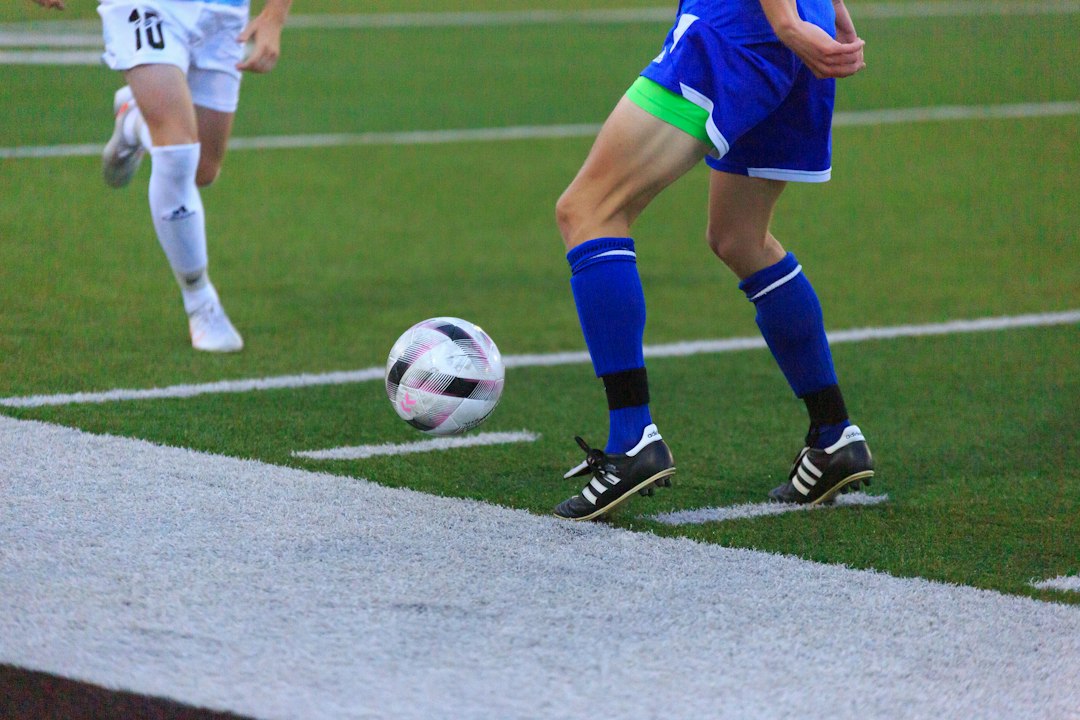




There's a specific moment — maybe you've already had it, maybe it's coming — when you pull on a jersey and feel the weight of it differently than you did at 17. Not heavier. Just more loaded with meaning.
The first time playing your sport again as an adult doesn't announce itself the way you expect. You think it's going to feel like coming home. It does. But it also feels like showing up to your childhood home and discovering someone rearranged all the furniture — the bones are the same, the muscle memory is there, but your body is reading a room it only half-recognizes.
This is an honest account of that first game back. The things nobody puts in the recreational league brochure. The things your 22-year-old self couldn't have prepared your 42-year-old self for — and the things that are going to surprise you with how good they feel.
The Lung Thing Happens to Everyone. Everyone.
Let's start here, because if nobody tells you, it will blindside you somewhere around the 8-minute mark.
Your cardiovascular system has not kept up with your identity.
You still carry the mental model of yourself as someone who could run the full 90. You remember closing down defenders, tracking back, making the run into the box on a throw-in. That memory is real. The fitness that supported it is not currently in the building.
Coming back to soccer as an adult — or any sport that demands sustained aerobic output — means confronting a gap between the player your brain believes you are and the player your lungs are currently able to support. Research on adult athletic deconditioning is consistent on this: VO2 max declines roughly 1% per year after age 25 without sustained training, which means a 45-year-old returning after a 20-year layoff may be working with a cardiovascular baseline 20% below their peak — even if they've stayed active in other ways.


What this feels like in practice: you make a run, you receive the ball, you look up — and you need to pause before you can think about the pass. Your brain issued the command. Your body executed it. But your lungs filed a formal complaint somewhere in the middle.
This is not a failure. It is the exact, predictable, entirely solvable consequence of returning. In our experience covering the adult athlete comeback, the players who thrive in the first month are not the ones who were secretly still fit. They're the ones who went in knowing about the lung thing, adjusted their positioning early in the game, and gave themselves permission to work into the fitness over four to six weeks rather than expecting it on day one.
What helps: - Play a position that lets you manage your runs rather than chasing the game — a central midfielder who can dictate tempo rather than a winger covering every blade of grass - Commit to two sessions between games that are purely aerobic, not technical — 25 to 30 minutes of sustained effort is enough to accelerate the readaptation - Expect weeks three and four to feel categorically different from week one
The lung thing is not who you are. It is where you are on day one. Those are different things.
The Younger Players Are Not There to Humble You
The second thing nobody tells you: the demographics of recreational leagues have gotten younger, or you have gotten older — probably both, definitely both — and the psychological adjustment is its own separate sport.
Adult athlete identity shock is real, and it tends to crystallize around the first time a 24-year-old runs past you without what appears to be any particular effort. There is a moment in that experience where you are simultaneously processing: I used to be that fast. I am not currently that fast. That person doesn't know I used to be that fast. Should I tell them?
You should not tell them.
Here is what to remember: the younger players in your league are not the measure of what you are. They're a different data set. They have fast-twitch muscle fibers that haven't started the slow, inevitable migration. They don't have the spatial awareness you've accumulated over decades of watching the game, playing the game, thinking about the game while doing entirely unrelated things like grocery shopping or sitting in meetings.
Marcus T., 49, who came back to basketball after a 22-year absence, described his first scrimmage this way: "I got beat on the first drive so clean I wanted to apologize to my younger self. But by the third quarter I was anticipating passes that kid didn't know he was going to make yet. The body is slower. The brain is faster. You learn to use that."
That exchange — speed for anticipation, athleticism for intelligence — is the real story of playing your old sport after 20 years. The players who struggle most with the return are the ones who try to play like they're 22. The players who find joy fastest are the ones who figure out, quickly, what 40-something brings to a game that 22-year-old cannot.
What you have that they don't: - Pattern recognition built from thousands of hours of play and observation - Emotional regulation under pressure (you've been in tighter spots than a recreational league final) - The ability to read the game two seconds ahead of the action — which, at slower speeds, is actually more useful than raw pace
The Muscle Memory Will Wreck You in the Best Possible Way
Nobody prepares you for this one. Not even close.
At some point in your first game back — it might be minute four, it might be the second half — you will do something on pure instinct that you have not consciously practiced in ten, fifteen, twenty years. A first touch that takes the ball out of traffic exactly right. A defensive header at the correct angle. A throw from the outfield that releases from exactly the right arm slot. A penalty kick that lands precisely where you aimed it without conscious aim.
The muscle memory is intact.
Not all of it, not always, not reliably. But it's there — encoded in procedural memory systems that do not degrade the way cardiovascular fitness does. Motor patterns laid down through thousands of repetitions in your teens and twenties are stored differently than episodic memories. They don't require the same active maintenance. They're waiting.
When the first one surfaces — and it will — you will feel something that is hard to name but easy to recognize. A kind of return. The sensation of your body remembering something your conscious mind had filed away. It is, for most adults coming back to their sport, the moment the whole enterprise starts to feel worth it.
In our experience, this is also the moment that separates the players who stay in the league from the ones who drop out after three sessions. The ones who stay felt that flash of memory and chased it. They understood, correctly, that it was pointing toward something recoverable rather than something lost.
The Thing That Actually Catches You Off Guard: What It Does to Your Head
Here's the part that gets left out of every "adults returning to sport" piece, every recreational league FAQ, every enthusiastic Instagram post about "getting back out there."
It's emotional in ways that have nothing to do with the score.
Playing your old sport after 20 years is a time machine that doesn't ask permission. You will, without warning, be standing at the edge of a field and briefly be the version of yourself who played on that field at 16. Who had your whole career ahead of you. Who didn't yet know what you would and wouldn't become. Who didn't know that a knee, a job, a move, a family, a pandemic would eventually put the cleats in a box in the garage for two decades.
This is not nostalgia. Nostalgia is pleasant and soft. This is sharper. It is an encounter with continuity — the recognition that this person standing on this field in their 40s is the same person who stood on a field in their teens, and that the intervening years did not erase that, only interrupt it.
Some people cry on the drive home after their first game back. Not from sadness. From something that doesn't have a clean name but sits somewhere between relief and grief and gratitude all at once.
Nobody writes that in the recreational league brochure either.
What helps: let it be what it is. You don't need to process it immediately or explain it to anyone. The emotion is accurate. The sport held something for you that daily adult life didn't have room for, and it is handing some of it back to you. That is worth feeling without immediately analyzing.
The Practical List: What to Actually Expect in Weeks One Through Four
Because the emotional truth and the practical reality both need to be covered, here is what the timeline typically looks like for adults returning after a significant absence:
Week one: - Lungs and legs both register protest by the second half - Muscle memory surfaces in flashes — often in moments of low-pressure play rather than high-stakes moments - Post-game soreness in muscles you genuinely forgot existed (hip flexors, in particular, will lodge a formal grievance) - Identity shock peaks here — the gap between the player you remember being and the player you currently are is most visible in week one
Week two: - Cardiovascular recovery begins — the protest happens later in the game rather than earlier - Social layer starts to develop — you learn your teammates' tendencies, they learn yours - The good moments start to outnumber the humbling ones within a single session - Soreness pattern shifts — it's still there, but it's the productive soreness of adaptation rather than the shocked soreness of week one
Week three: - The game starts to slow down perceptibly — your pattern recognition is clicking in more consistently - You make a run without thinking about your lungs first - One clean sequence — a combination, a defensive stop, a shot on target — happens entirely on instinct, and you remember exactly why you're doing this
Week four: - You stop counting your deficits and start counting your moments - The identity shock has either resolved or transformed into something more interesting: an expanded identity that holds both the 17-year-old and the 45-year-old at the same time - You start thinking about next season
Your Jersey Is Still Out There Waiting
Your name on the back. Your number on the front. The way it felt to wear something that meant you belonged on that field.
Design yours in minutes and see your name and number exactly the way you remember it.
Frequently Asked Questions
How long before I'm actually fit enough to enjoy the game rather than just survive it?
Most adults returning after a layoff of five or more years report a meaningful shift somewhere between weeks three and five of consistent play. "Consistent" means at minimum one game per week plus one to two additional aerobic sessions. The shift is not from unfit to fit — it's from fighting your body through every run to having enough reserve to actually think about the game while you're playing it. That shift is when enjoyment stops being theoretical and starts being the actual experience.
Is it normal to feel emotional coming back to a sport I played as a teenager?
Completely normal, and more common than recreational leagues tend to acknowledge. Sport at a formative age carries identity weight — it was part of how you understood yourself. Returning to it as an adult is a reunion with a version of yourself that most daily adult life doesn't give you access to. The emotional response is proportional to how much that sport meant to you, not to anything going wrong. Let it be there.
What position should I play when I first come back, to set myself up for success rather than frustration?
Play toward your intelligence, not your athleticism. Central positions that let you see the whole field and influence the game through decision-making rather than pace tend to suit returning adult athletes best in the early weeks. You can always push into higher-effort positions as fitness returns. Starting in a position that punishes cardiovascular deficits before you've addressed them will make week one harder than it needs to be and may discourage you from seeing it through to week four — which is where it gets genuinely good.
What about the physical risk? Should I be concerned about injury coming back after a long layoff?
The highest-risk period for injury is the first four to six weeks, specifically because the enthusiasm to play at the level you remember outruns the conditioning that would support it. The most common adult recreational league injuries are soft tissue — hamstrings, hip flexors, Achilles — all of which are overload injuries rather than contact injuries. The mitigation is straightforward: warm up longer than you think you need to, exit the game before exhaustion rather than through it, and treat the first month as a conditioning block with a game attached rather than peak competition. Your future seasons depend on getting through the first one healthy.
See also: adult recreational leagues for former high school athletes | how to start training again after years away from your sport | the gap between your athletic memory and your current body | athletic identity you thought you left behind after high school