

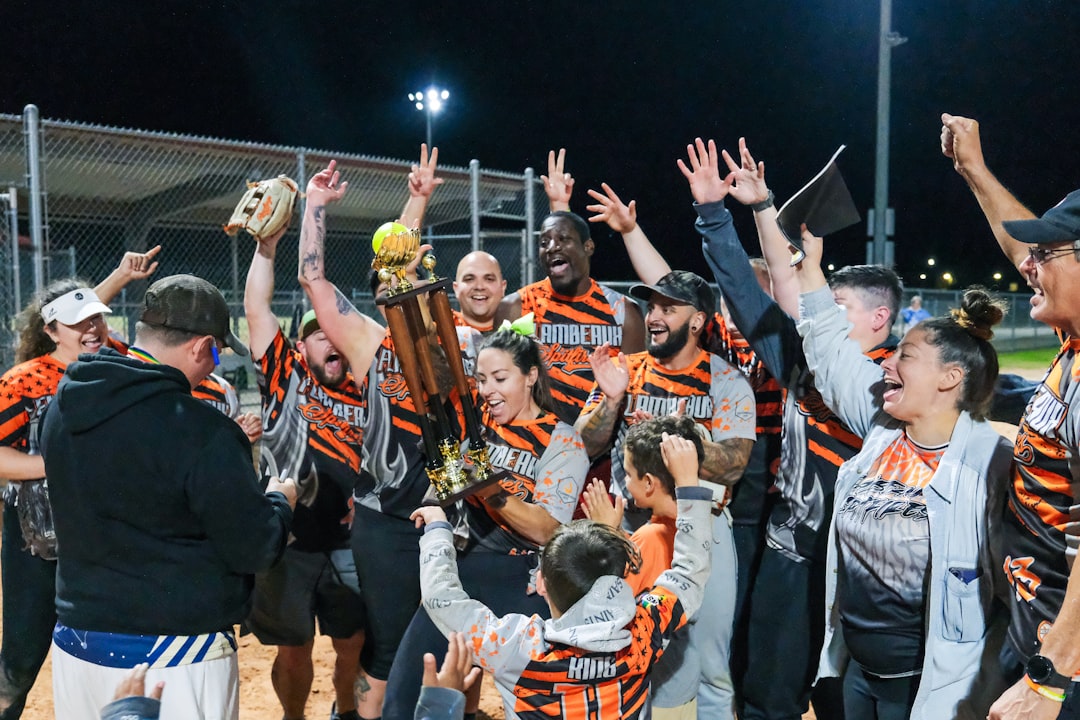



For any high school championship memories athlete carries into adult life, the local ones — the titles won in gyms nobody outside your county has ever visited — tend to cut the deepest and last the longest.
Not the professional championship. Not the nationally televised kind that earns documentary deals and ceremonies in cities that couldn't find your hometown on a map. The local kind. Announced over a PA system to a crowd of parents, classmates, and a handful of people who drove in from the next town because they knew someone wearing a number.
If you were one of those people in the jersey — carrying the full weight of a season into that final moment — you hold something that doesn't translate cleanly to anyone who wasn't in the room. You've tried. You've watched the eyes of the person across from you go politely distant. They nod. They say "that's amazing." They mean it, mostly. But they don't know. They can't.
This is written for the athletes who know.
The Scoreboard Resets. What You Felt Doesn't.
Every former athlete can locate the exact moment their season ended in a win. Not the box score. Not the recap someone posted. The moment — the precise air quality of that gym, who you turned toward first, what came out of your body before you had time to choose a response.
That clarity is not nostalgia. It isn't sentiment wearing memory's clothes. It is the neurological fingerprint of an experience that registered at a cellular level. Research in sports psychology has documented that peak competitive moments produce some of the most durable autobiographical memories the human brain creates — more emotionally precise, more sensory-complete, and more resistant to distortion over time than nearly any other category of lived experience.
You didn't need the study. You already knew.
You could describe that locker room at halftime — down by six, the specific texture of silence before the coach pushed through the door — in enough detail to make someone feel the cold metal bench through your words. You remember the particular quality of your coach's voice. Not necessarily the content of what was said. The way the room reorganized itself around the sound.


The scoreboard from that night has been reset thousands of times since. The announcer moved on to the following season before summer was over. The local paper ran the photo below the fold on page nine, and that issue has been in a landfill or a basement box for years now.
The feeling lives somewhere the scoreboard can't reach. It lives in the part of you that enters every room.
What It Costs to Win Somewhere Nobody's Watching
There is a specific dignity to the local championship that people outside athletic culture rarely understand and rarer still can name.
The professional athlete performs under lights designed to capture everything. Cameras running. Audience counted in millions. Legacy assembled in public, documented in searchable databases, verifiable by strangers who were never present. That achievement exists in the world in a form that can be retrieved and confirmed on demand.
Yours existed in a gym. Or on a field with aluminum bleachers and a hand-operated scoreboard. Or in a natatorium where the echo off the water made it hard to hear your own name. In front of people who drove forty minutes on a weeknight because they knew someone wearing a number. You were playing for a town that showed up every Friday — not because the game had playoff implications, but because the people on the field were theirs.
The championship you won there was real in a way that required no outside confirmation to be real.
This is what former athletes understand about competition that people who never played often miss: the significance of an achievement is not proportional to the size of its audience.
The effort was total. The mornings before school when the parking lot held only your coach's car and yours. The offseason when you kept working because stopping felt like a betrayal of something unfinished. The losses earlier in that same season — the ones that sat heavily for days — that gave the final win its particular weight. None of that was provisional. None of it was a rehearsal for the real thing.
It was the real thing. Most athletes experience exactly this version. For most athletes, this is the version they carry longest.
The People Who Were In That Room
Marcus T., 38, played point guard for a 2A school in a rural district that consolidated its athletic program the year after he graduated. The team he played on was the last to carry that school's name into a regional final. He keeps the team photo not framed on a wall but folded in his wallet, behind his license — not as a museum piece, but as a daily acknowledgment that it happened with those specific people, in that specific season, and no version of that story exists anywhere else.
If you played, you know exactly what that photo represents. It isn't documentation of a scoreline. It is documentation of a group of people who agreed together that this thing was worth chasing — who shared the full cost of the pursuit and then stood together in the moment of having gotten there.
The teammates from that final game occupy a particular room in your memory that doesn't connect to any other room. You may have grown apart. You may not have stayed in close contact. But the teammate you still think about decades later — the one whose presence in that season shaped yours as much as any outcome did — never really leaves your peripheral vision. You might run into one of them at a hardware store and feel twenty years compress into a handshake and a "I can't believe how long ago that was." But you were there together. The specific gravity of shared athletic achievement — built from practice reps and bus rides and early-morning conditioning and the accumulated pressure of a full bracket — creates a bond that doesn't require maintenance to remain true.
Those people know something about you that most people in your current life have never seen. They know what you look like when everything is on the line and you choose to keep going anyway.
The Version of Yourself the Final Buzzer Confirmed
Here is the part that never made the write-up.
The championship wasn't won on the night of the final game. It was won in the accumulation of every session, every decision, every moment of choosing to stay in it — the sum of everything that got you to the starting line of that game in competitive condition. The version of yourself on the court in those final minutes, when the outcome was genuinely open, had been constructed deliberately over months. That person wasn't an accident. Every athlete has the season that changed everything about who they were becoming, and this one was yours.
That version knew how to operate under pressure. Not because pressure is comfortable — it isn't, it wasn't, and anyone softening that memory is doing exactly that — but because you had spent enough time inside discomfort to function within it without losing your thread.
In our experience talking to former athletes across many sports and years, the most consistent thing we hear is this: it wasn't the win they return to most in their thinking. It was the specific sensation of being in the late stages of a close game — knowing exactly what was at stake, feeling the full weight of it, and discovering that they could remain functional inside that weight. The win confirmed it. The discovery was the thing that stayed.
That discovery doesn't remain in the gym.
It appears in the conference room when the numbers are bad and someone needs to say the difficult thing plainly. It appears late at night when you're finishing something that needed finishing and the easier path was available an hour ago. It appears every time you choose to stay in something hard when leaving would be simpler.
The gym taught you that. The gym where nobody outside your town has ever stood.
The Championship Nobody Recorded — Except the People Who Mattered
There is a kind of pride that belongs specifically to the local champion. Quieter than the pride of broad recognition. It doesn't announce itself at parties. It doesn't need an audience to sustain it.
Every former athlete who brought a team to a title that mattered only to the people in that building understands this: the outside world doesn't need to confirm it happened. You were there. Your teammates were there. The people in the stands who stayed through the final buzzer were there. The coach who had believed in that season before the season gave anyone reason to was there.
That is enough. It has always been enough.
The championship you won that nobody outside your town remembers is not diminished by the limits of its audience. It is defined by the complete commitment of everyone who made it possible — which is, in fact, the definition of how championships work at every level. The only variable is the size of the room where the final moment happens.
Yours happened in a specific room. With specific people. At the end of a season that cost everyone involved something real.
Nothing revises that. Not the decades since. Not the renovated building, the dissolved program, or the scattered teammates. The championship exists in the permanent past — the portion of time that is already closed and therefore cannot be reopened or undone.
You won it. The record doesn't change.
What You Walked Out of That Building Carrying
What the outside world consistently underestimates about the local champion is the durability of what was constructed in the process of becoming one.
The specific athletic skills erode with time. The conditioning fades. The particular reads and muscle memories blur at the edges over years. What doesn't erode is the internal architecture that competitive sport builds — the personal knowledge of what you are capable of when preparation is complete and the situation demands everything available.
Former athletes carry this in ways they don't always articulate directly. It surfaces sideways — in how they talk about standards, in how they respond when something goes badly wrong, in the benchmarks they hold themselves to in contexts that have nothing to do with a court or a field. Ask a former athlete why they're still at their desk finishing something when good enough was available two hours ago, and the answer traces back, in some form, to a season. To a practice nobody watched. To the version of themselves that was built during a year when the only thing at stake was whether they could look their teammates in the eye.
The championship you won — the one nobody outside your hometown has thought about since the following school year began — was the graduation ceremony for a version of yourself that has been showing up ever since.
That isn't sentiment. That is what sport does when it works correctly. It constructs the person. The game is the method. The person is the outcome.
The gym was just the room where it happened to you.
Your jersey is still out there waiting.
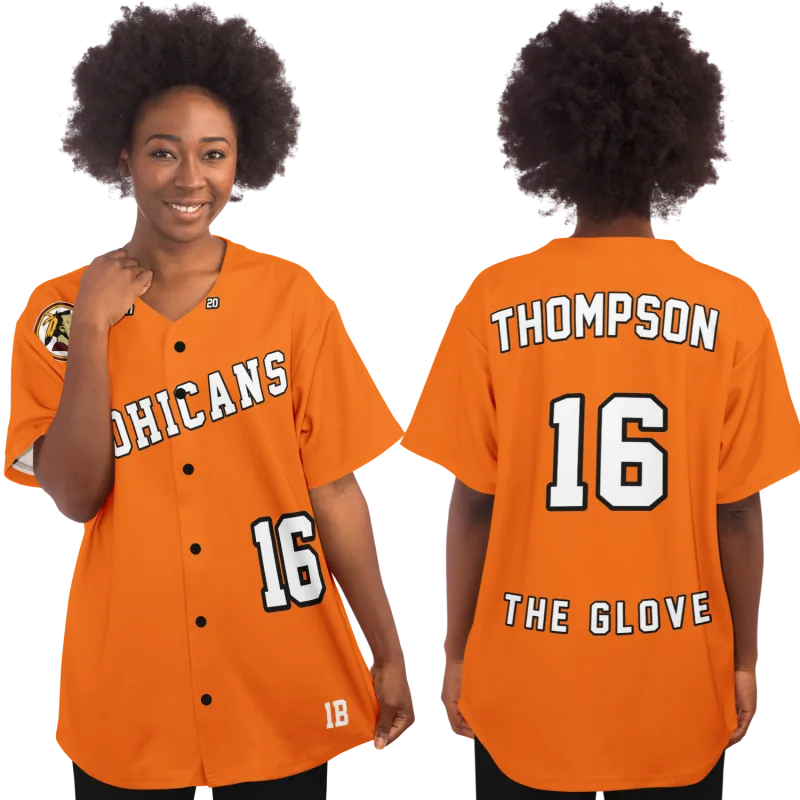
Design yours in minutes and see your name and number exactly the way you remember it.
Frequently Asked Questions
Why do high school championship memories feel more vivid than most other memories from that period of life?
Peak athletic competition produces some of the highest-intensity emotional experiences in adolescent development — a convergence of physical exertion, genuine social stakes, collective effort, and a clearly defined outcome. That combination creates unusually durable autobiographical memories. Former athletes consistently report that championship moments, and even the practices and setbacks that preceded them, remain more emotionally precise and sensory-complete than most other memories from the same years. The brain encodes experiences differently when the stakes are real and the effort is total.
Is it normal for a local or small-school athletic achievement to still feel central to your identity as an adult?
Not only is it normal — it reflects something accurate about how identity is formed. Athletic participation during formative years shapes a person's internal sense of capability and standard in ways that persist for decades, particularly when the competition demanded genuine commitment and produced moments of real consequence. The athlete who won a regional title and never played past high school has still experienced something formative and identity-shaping. Carrying that forward isn't living in the past. It's knowing accurately where part of who you are came from.
Why do local championships often feel more personally meaningful than larger-scale competitions?
The relationship between audience size and personal significance in athletic achievement isn't linear — it's often inverse. Athletes who competed in smaller, more local contexts typically experienced a closer relationship between their individual effort and the team's outcome, knew their teammates and coaches at a more personal depth, and competed in an environment where the championship meant the most to the specific community it represented. The intimacy of the local championship — the fact that everyone present understood exactly what the season had cost — frequently produces a more durable personal sense of achievement than competition in larger, more anonymous settings.
How do you honor a championship that left no lasting public record?
The most permanent way to honor it is through the things that archives cannot hold — the standards you maintain, the way you respond when conditions are hard, the story you pass to someone younger about what a full season of genuine commitment looks like. Beyond that, the physical artifacts carry real weight: the team photo, the jersey, the program from the final game. Recreating or preserving those objects — including designing a custom jersey with your name, number, and the identity of that specific team — is one concrete way to give the achievement the permanence it earned.
See also: why high school sports still matter so deeply to adults | why your senior season memories feel so impossibly clear | the grief that quietly followed the end of your athletic career